When it comes to winter Olympic sports and standout looks, figure skating is usually the first thing that comes to mind. Yet there is one discipline that stands out in the long list of sports and deserves special attention: skeleton.
If you happened to watch the competitions in recent days – live or on television – you may have found yourself wondering how such a sport was even invented. The answer is simpler than expected and fairly intuitive: in the second half of the 19th century, a group of English tourists vacationing in the Swiss Alps began, for fun, to race headfirst down snowy slopes. A few years later, proper tracks started to be built. In 1928, skeleton was declared an Olympic sport, but it only became a permanent fixture in the competition schedule in 2002.
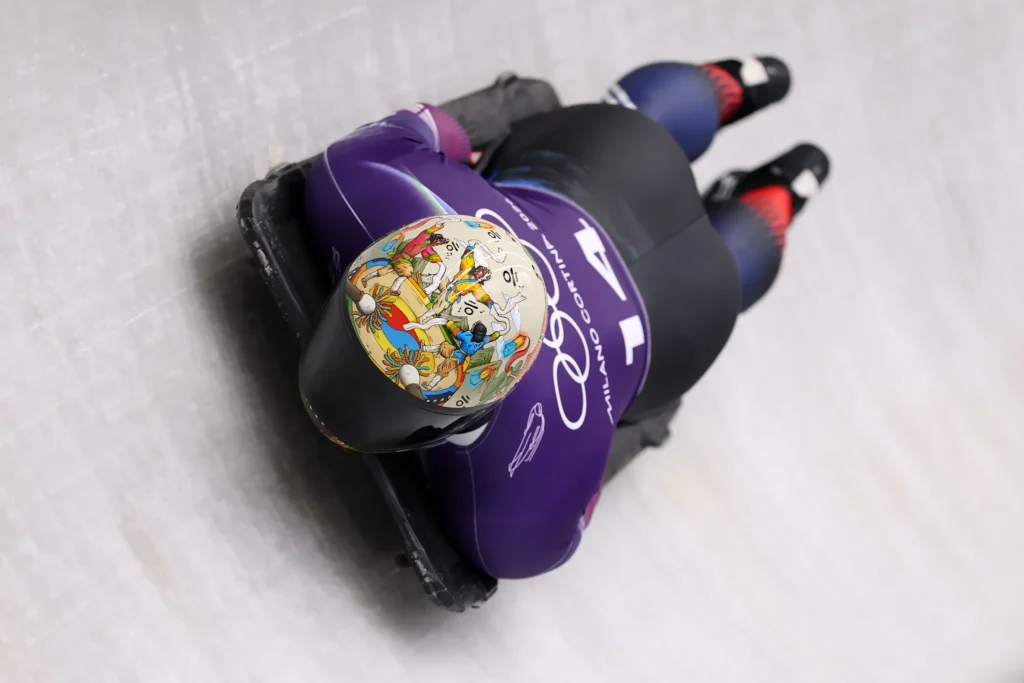
But what does aesthetics have to do with it? The skeleton uniform includes a helmet that – perhaps influenced by other sports such as F1, ice hockey, or cycling – has over the years become a symbol of each individual athlete and a means of personal expression. The carbon-fiber structure naturally features full-face coverage and a protective visor; what is printed or painted on it, however, is up to the athlete wearing it, free from contracts or sponsors.
So, while watching yesterday’s training sessions, beyond the sheer spectacle of skeleton, we found ourselves fascinated by the aesthetics of the helmets gliding down the icy track.


From Amedeo Bagnis’ reinterpretation of the Italian tricolor to Valentina Margaglio’s winter-inspired pattern, from the celebration of Aztec symbols on Puerto Rican athlete Kellie Delka’s helmet to American Austin Florian’s tribute to Venom.
Some athletes have also chosen to use the space offered by their helmet to shift attention away from the competition and toward what is happening beyond the arenas. Ukrainian athlete Vladyslav Heraskevych, for instance, decided to honor athletes killed during the war in Ukraine with a helmet depicting their faces in black and white.
The IOC (International Olympic Committee), referring to Rule 50 of the Olympic Charter, which prohibits political statements and propaganda during the Games, reiterated its ban on Heraskevych wearing the helmet. A ban the Ukrainian athlete chose not to respect, wearing it anyway and honoring his fellow athletes who lost their lives due to the war.
We are certainly not in a position to say whether Vladyslav Heraskevych’s action or the IOC’s stance is right or wrong, but we have always admired how a blank space — whether a canvas, a wall, or a racing helmet — can become a place of personal expression or a manifesto of values and ideals.