A tennis court should be one of the most regulated spaces that exist, precise lines, precise measurements, a net at the center and a perimeter that establishes exactly where the game can happen. Spok Brillor starts from precisely this rigidity to do something completely opposite: make it seem as though the court no longer has a limit.
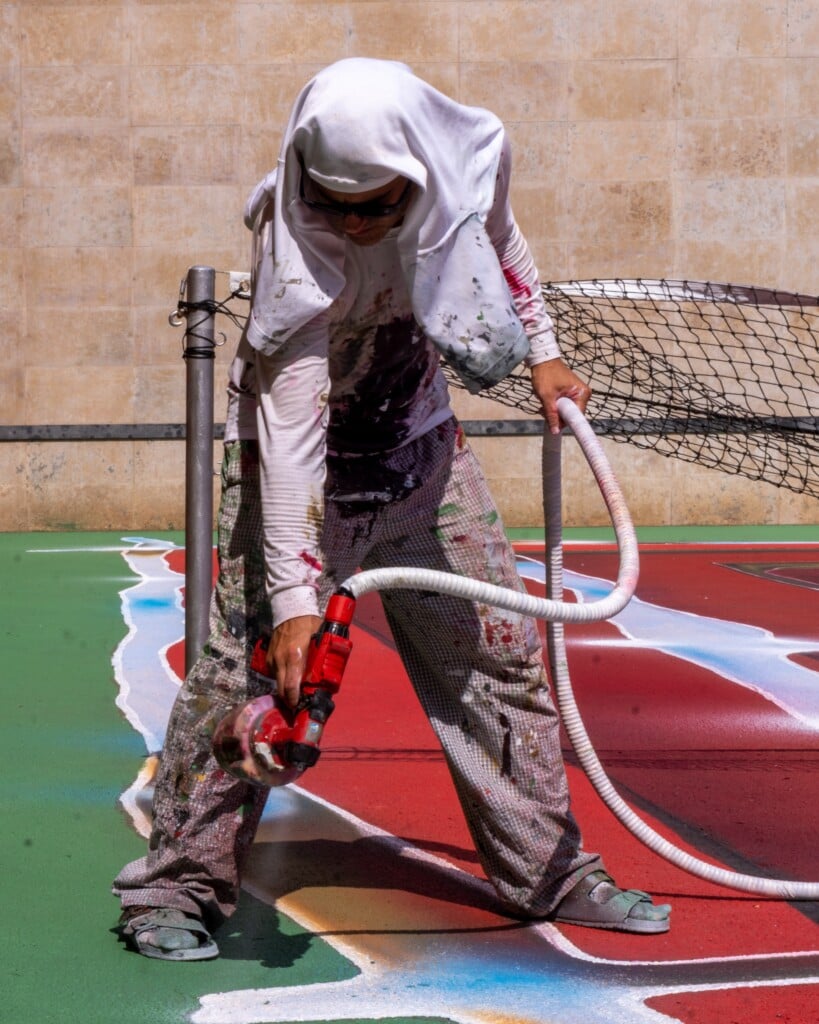
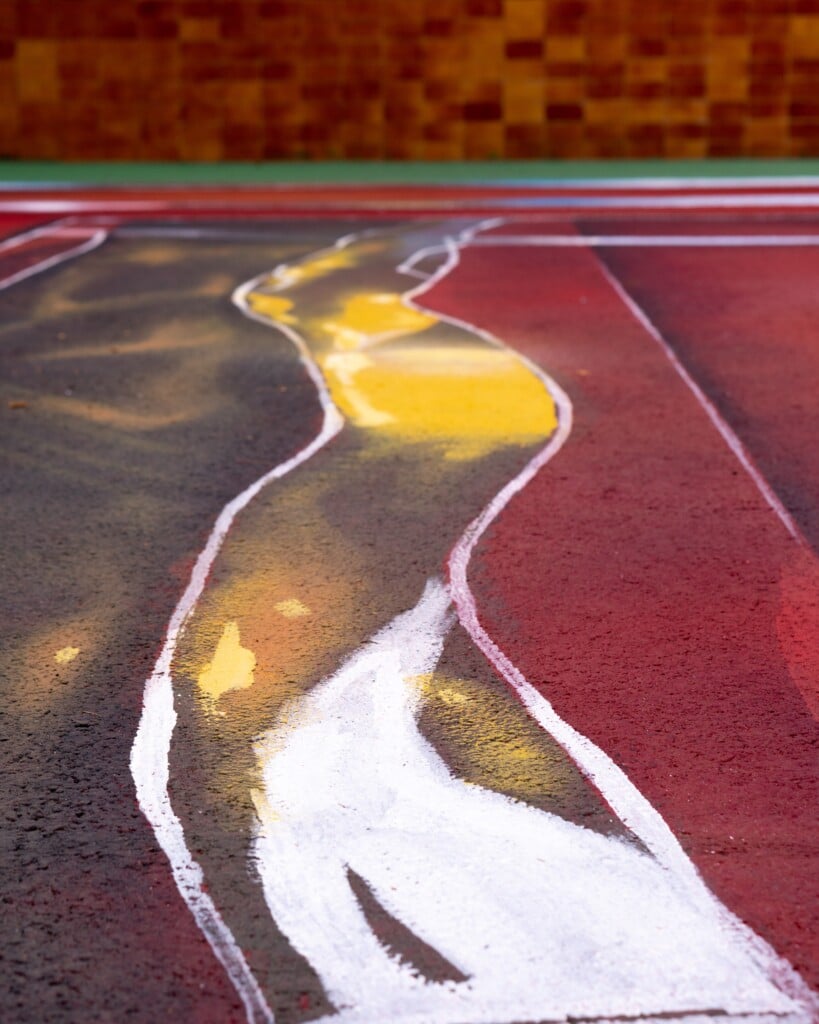
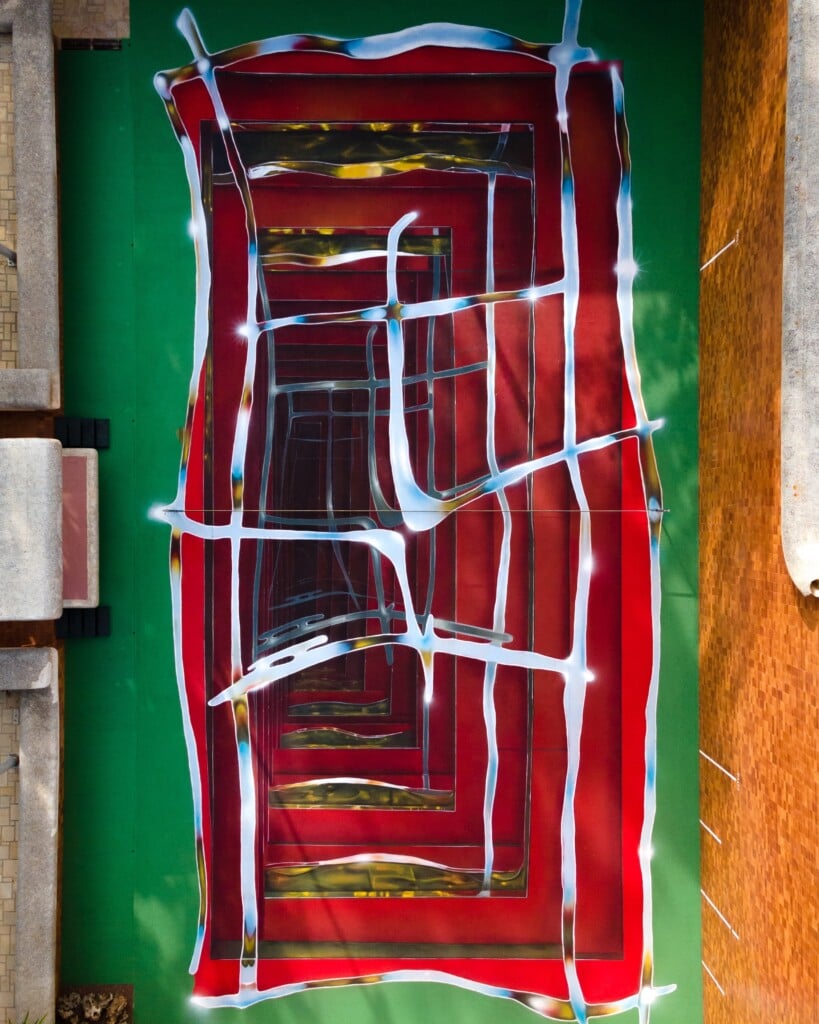
At Casa Axis, the creative space founded by Felipe Pantone in L’Eliana, near Valencia, the Spanish artist has transformed the tennis court into Hard Court 2, a pictorial intervention that alters the perception of the surface without ceasing to be a court that can be played on. The lines that normally serve to mark out the game are replicated, shrunk and pushed toward the center until they create the impression that the ground opens up in depth.
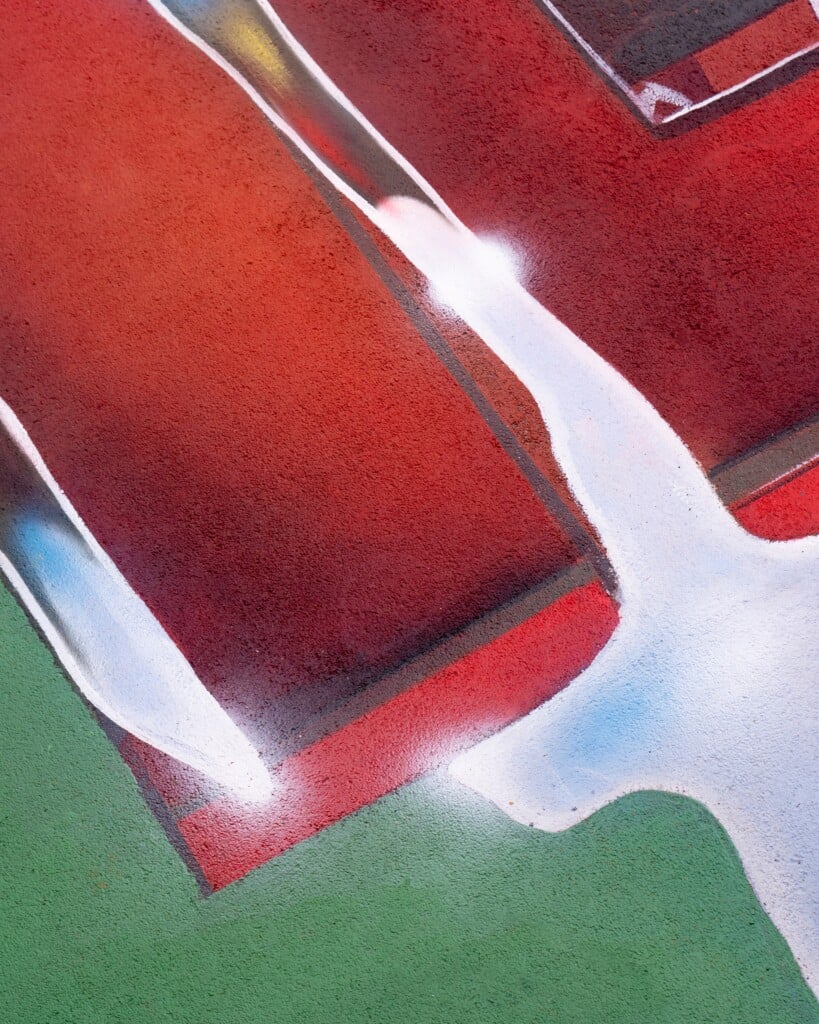
Seen from above, Hard Court 2 almost looks like a digital image. The red surface is crossed by white, light blue, black and yellow lines that seem to reflect off a metallic material. The court’s original geometry is repeated inward, generating a succession of ever-smaller planes. The eye interprets those shapes as overlapping layers and ends up perceiving a depth that does not physically exist. The court seems to sink beneath itself, as if beneath the real surface there were others, potentially infinite.
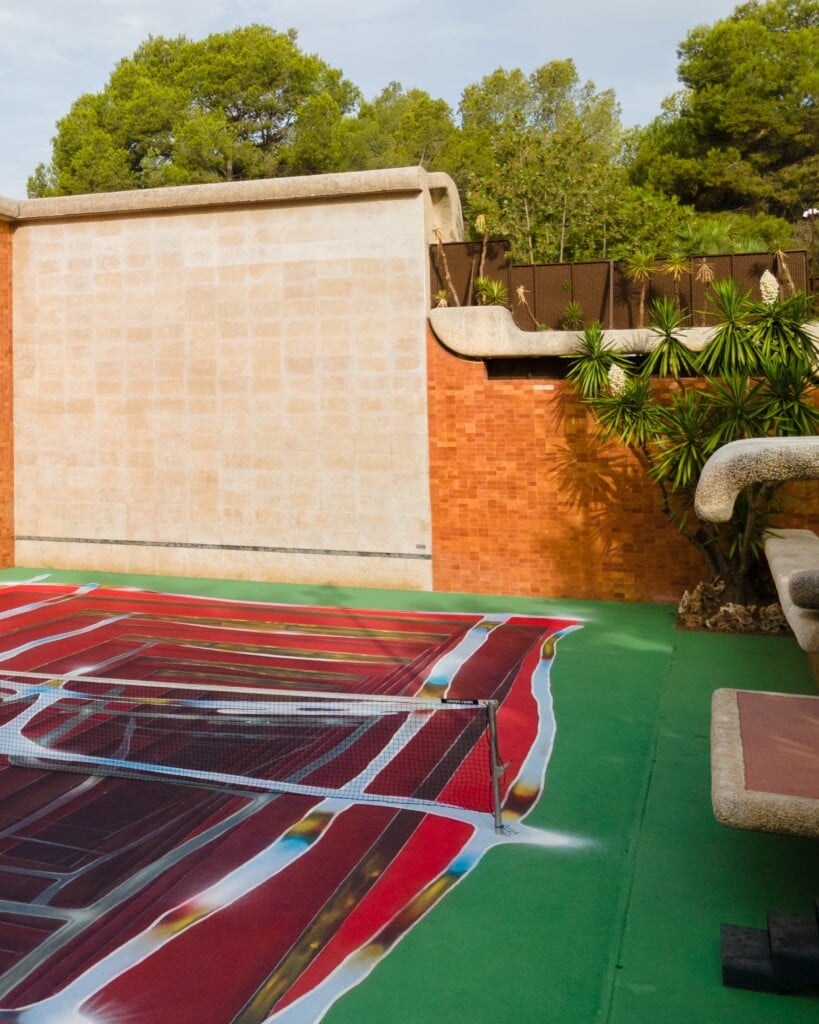
It’s an operation that transforms the way the court is perceived. The artist does not build an object within the space, but uses the space itself as raw material. Spok Brillor intervenes on the grammar of the court and pushes it to the point where it stops being immediately legible.
Hard Court 2 is the second chapter of a project that began in 2025, when Lucas Benarroch, known as MRKA, transformed the same Casa Axis court into Hard Court. The first version broke tennis’s geometric precision through irregular white lines, hand-drawn on the red surface.
In 2026 Casa Axis in fact organized the first edition of the Casa Axis International Open (C.A.I.O.), a peculiar tournament because its participants are not professional tennis players but artists. Thirty-two creatives were invited to compete on the court and the winner received the chance to intervene on the surface for the following edition.
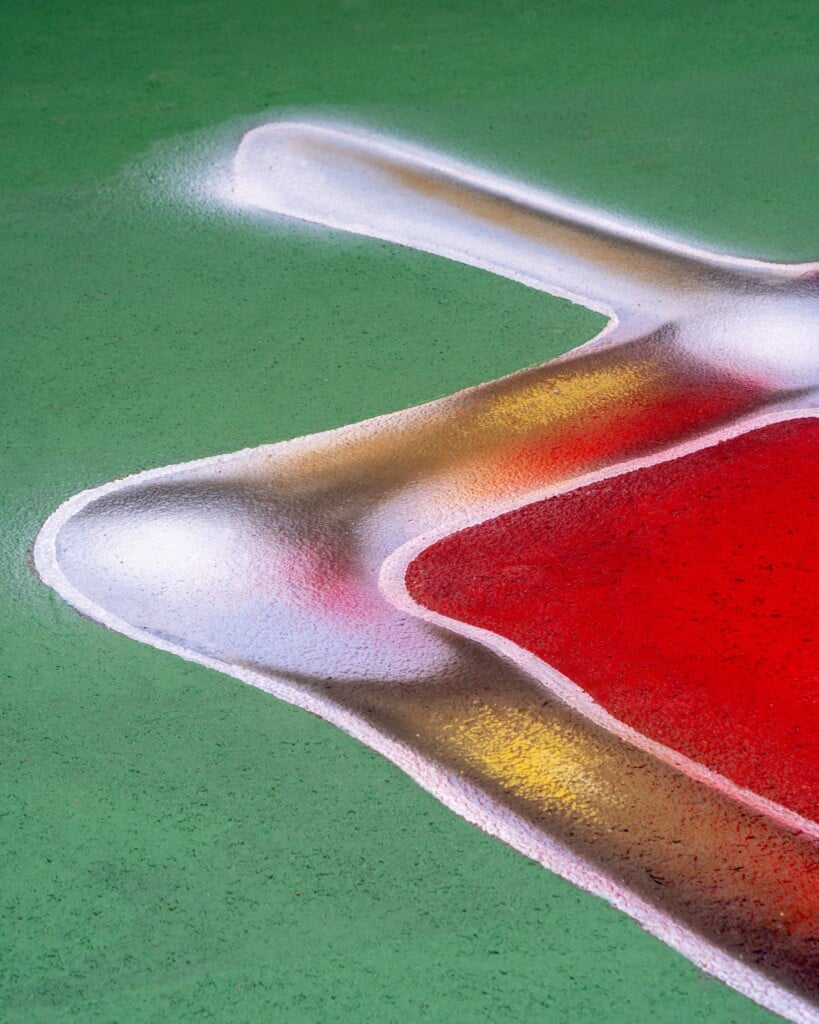
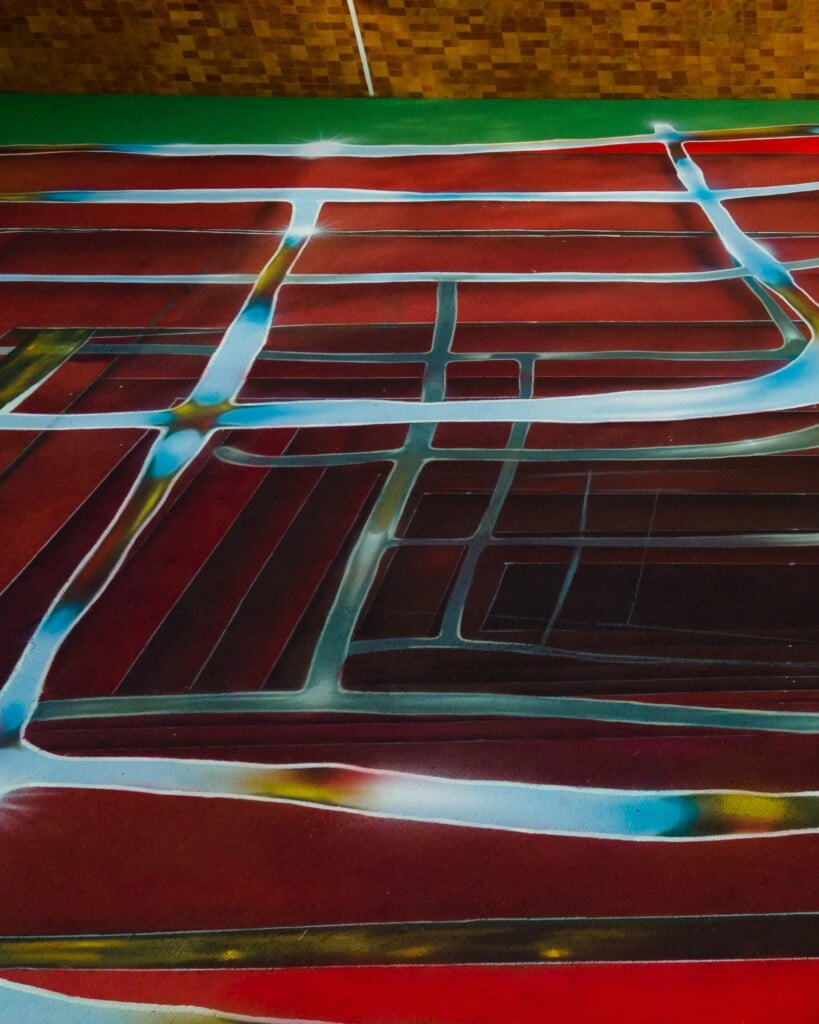
MRKA, winner of the inaugural competition, then chose to leave his court to Spok Brillor, one of the artists who had taken part in the tournament. This is how the sporting competition also becomes a system of artistic succession: whoever wins doesn’t just claim the court, but decides who will transform it next.
The court will continue to be used and, with the next edition of C.A.I.O., will once again pass into the hands of another artist. Casa Axis is thus building a kind of temporary archive painted directly on the ground: each artist modifies what the previous one left behind, without there necessarily being a definitive version. This makes the court something more than a simple large-scale canvas. It is a work destined to be rewritten. Spok Brillor worked on Hard Court 2 during a 12-day residency at Casa Axis. His solution does not consist of completely erasing the court’s sporting function, but of layering another possible reading on top of it.
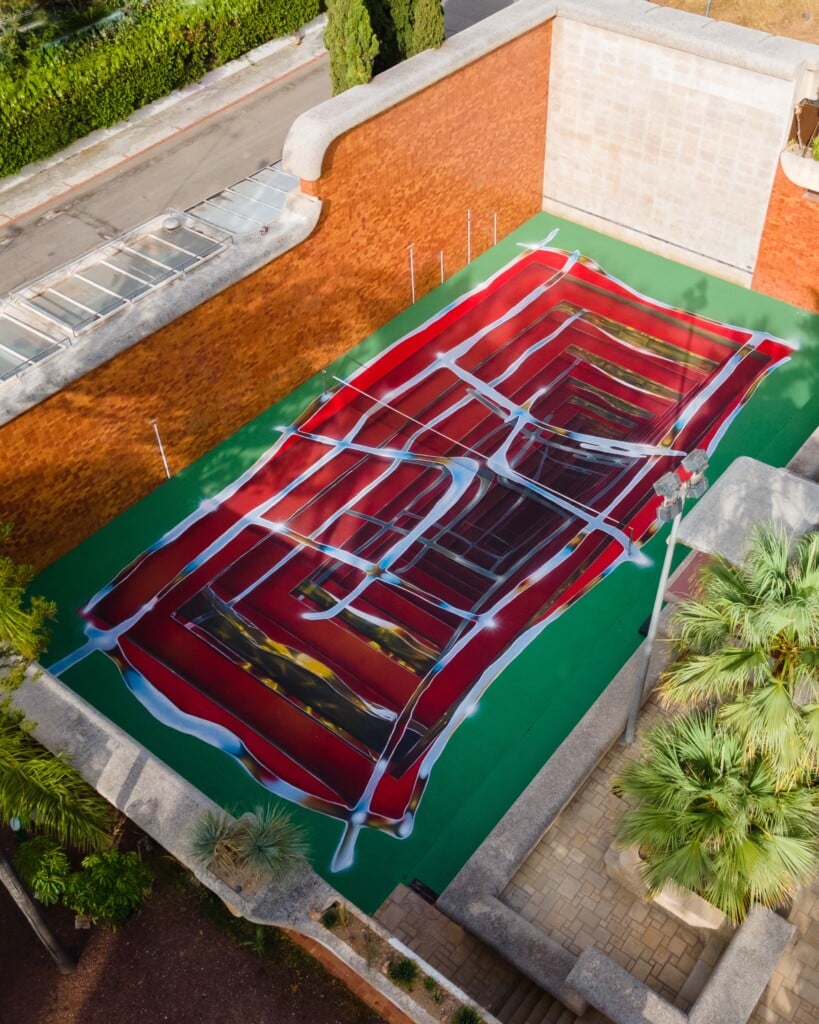
The player still sees the lines he needs in order to play, but at the same time his field of vision is destabilized. A line no longer seems to be simply a line: it can become the edge of an imaginary surface, a reflection, a threshold or the beginning of another court. It is a form of optical illusion that works precisely because it does not hide the original architecture, but on the contrary, exasperates it.
In this sense Hard Court 2 belongs to a broader inquiry by Spok, an artist tied to the Madrid graffiti scene, who over the course of his work has used architecture, perspective, reflections and science-fiction-inflected imagery to question the perception of spaces. Here, though, the device is particularly effective because the represented place and the real place coincide.