The bombshell came yesterday, VF Corporation, a U.S. listed apparel company and owner of brands such as The North Face, Timberland, Vans, Eastpack, etc., acquired Supreme for 2.1 billion dollars.
But how did it come to this? We decided to tell you about the birth of the most famous skate brand in the world to try to answer this question.

In April 1994, after working with Shawn Stüssy from 1991 to early 1994, James Jebbia opened his first Supreme store at 274 Lafayette Street between Prince and Houston, a relatively secluded location in southern Manhattan, investing less than $15,000.
U.S. skate culture in that period was if not ignored, seen almost with contempt, especially towards the boys who practiced it. The domination of the music and urban scene of New York City was Hip Hop, which in the early ’90s represented in its entirety (or almost) the New York subculture.
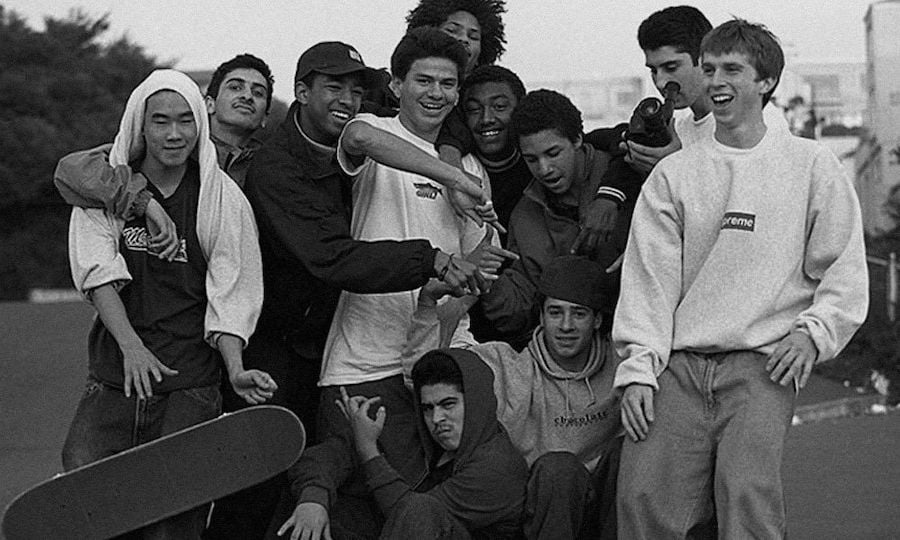
Jebbia, decided to give voice and above all a safe place to spend time to the skaters who in the meantime were getting complaints from the police and neighbors who resented the tricks and the often contemptuous attitudes of the guys.
Skateboarding is intrinsically linked to the roots of Supreme and that first store on Lafayette Street.
The guys who frequented it had made it their home, it was the last social club of Little Italy.
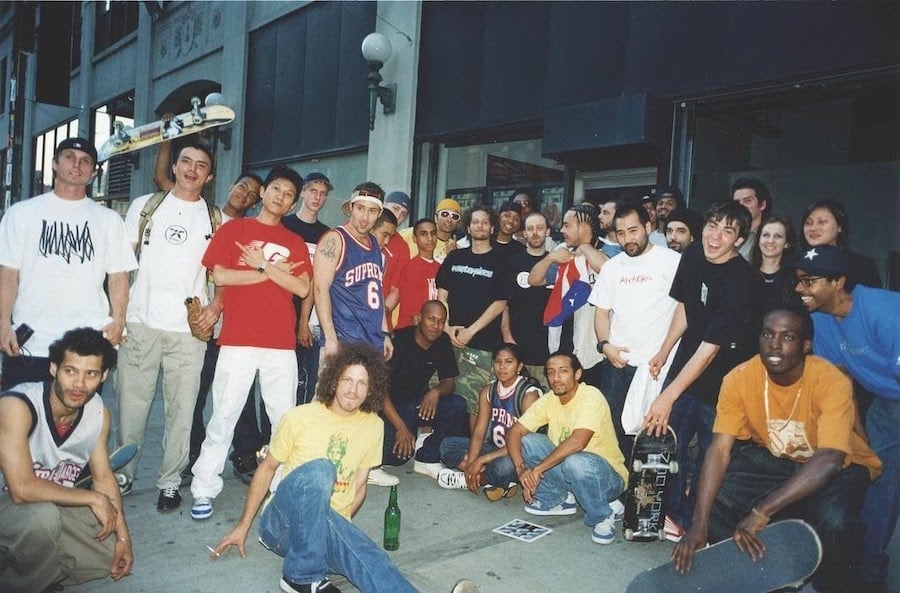
It was not for everyone, those who worked there had created a business model that despite the hard and almost rude attitudes worked. Those who entered the store could not for any reason touch the goods on display, if you did, they would throw you out and outside you would find others skate and treat you even worse; you were a foreigner in a territory not yours, which did not belong to you and where you were not welcome.

Many of those guys became members of the OG Supreme team including Ryan Hickey, Justin Pierce, Gio Estevez, Paul Leung, Loki, Chris & Jones Keeffe, Peter Bici, Mike Hernandez and many others, all protagonists of the famous brand skatedel videos shot by directors Thomas Campbell, Bill Strobeck etc., while many of those guys ended up being told by Larry Clark in the generation movie “Kids”.
From the logo inspired by Barbara Kruger’s work, to the enormous influence of the album “A Love Supreme” by one of the greatest saxophonists in jazz history, John Coltrane, James Jebbia managed to bridge a huge gap that divided streetculture, music, art and fashion.
The American counterculture linked to the streetwear world did not take long to arrive in Japan thanks to Hiroshi Fujiwara, but it was Ken Omura who managed to convince Jebbia to open 3 stores in the Rising Sun in quick succession in 1998, achieving a huge and immediate success.

In the following two decades success became global, thanks also to a precise commercial choice. Not wanting to accumulate excess merchandise, Jebbia chose to produce a few pieces from his collections in order to make sure that nothing remained unsold. This concept of rarity became a symbol of the brand over the years and the gap between supply and demand made Supreme items become much sought-after in the reselling market.

This huge surge of success, of scarce availability and price, has attracted especially in recent years a wealthy but at the same time very large audience, transforming a brand that represented a niche counterculture into one that dictates a huge mainstream influence. This, however, has never distorted the brand, Supreme has always maintained its identity and has always respected the roots from which everything was born.

About this and the news from which we started, James Jebbia said: “This the “operational expertise needed to keep us on the steady path we’ve been on since 1994”.
We, fans from day one, really hope it can be so.