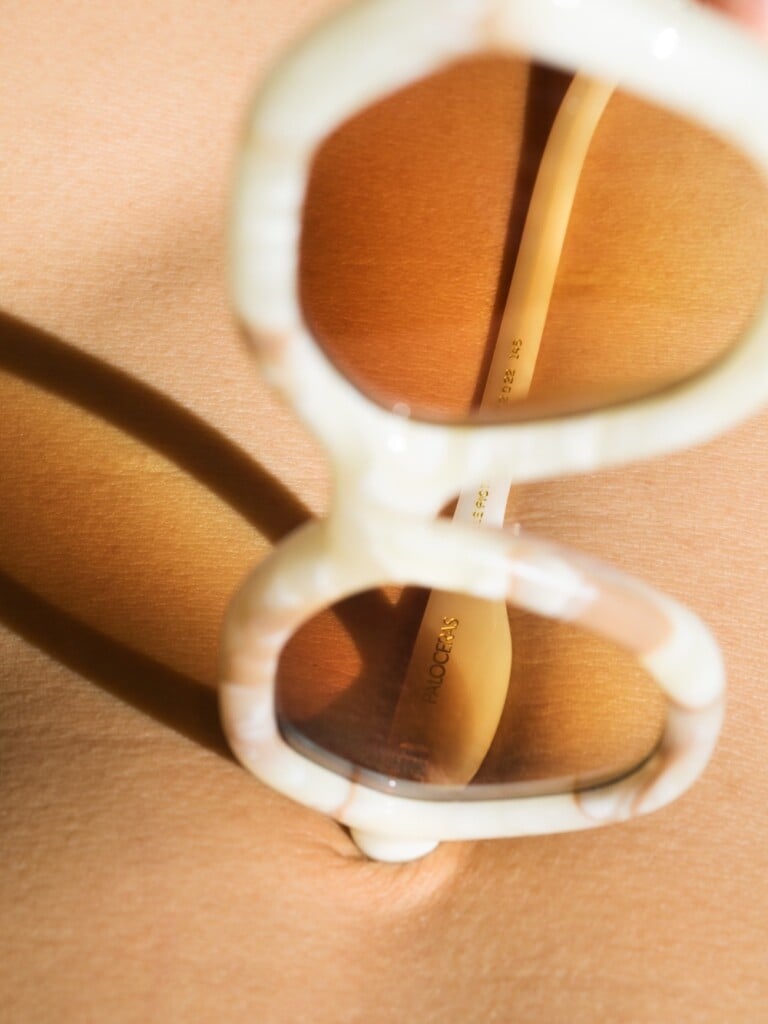
Every year, before summer kicks off, we try to give our upcoming summer looks a twist with the right pair of sunglasses. And every year, as always, we end the season scrolling back through photos where those carefully chosen sunglasses don’t look like much anymore, wishing we’d dared a little more.
This is where Paloceras comes to the rescue, a brand founded by Alexis Perron-Corriveau and Mika Matikainen and born between Lisbon and Helsinki. It’s probably exactly this unusual mix, made of Portuguese warmth and imagination on one side and Scandinavian rigor on the other, that’s the secret behind their designs.
Paloceras’ production method is the most interesting part. Every model starts out purely as a digital render, circulates online, gets virtually tried on through AR filters on Snapchat, Instagram and even Roblox, and only after collecting millions of virtual try-ons does it become a physical object.

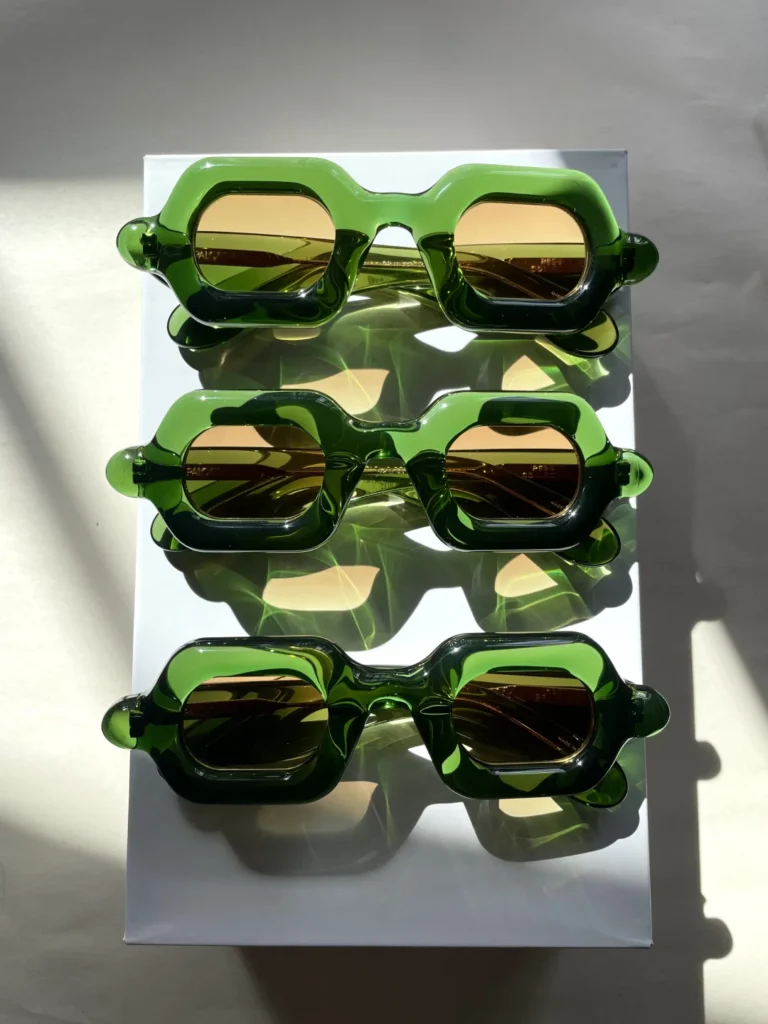
Once it’s made physical, the frame is hand-finished in Mazzucchelli acetate (the same material that supplies much of high-end Italian eyewear) and produced in deliberately small runs. Market saturation is impossible, because there are no seasonal collections or special drops; every release is conceived as a standalone episode, one that comes into being and runs its course, never to return.
Paloceras’ most recognizable trait, however, remains its shape. The Pebble line, the one that’s put the brand under the spotlight of magazines like Vogue and Grazia, and on the faces of names like Róisín Murphy and Djibril Cissé, features inflated, almost sculptural volumes inspired by the natural forms of smoothed stones and pebbles.


These are definitely sunglasses that get noticed, ones we could describe as baroque, in the sense that they don’t shy away from irregularity, which gives them an even more handcrafted feel, leading them to be described as wearable sculptures.
It’s clear that Paloceras isn’t just selling sunglasses, but a philosophy of life. In fact, one look at their website or their Instagram profile is enough to understand that their products aren’t for everyone, and that’s maybe the part we love most.