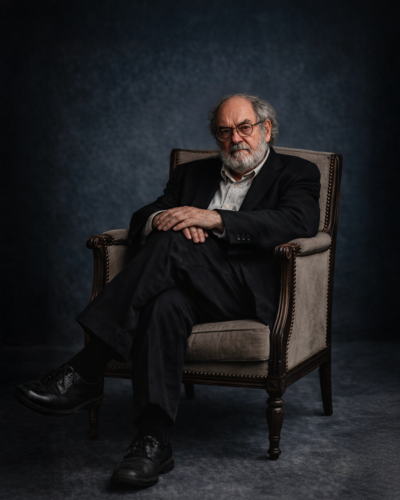
Alan Turing was already asking, back in the 1950s, whether a machine could think, long before a machine could actually respond to anything. He devised a test, the imitation game, to sidestep the question rather than answer it: not “can machines think?” but “can we tell them apart from us?” Today that question is no longer theoretical.
In this episode of WHAT IF we try asking Alan Turing what he thinks of a world in which his test is passed every day, in which artificial intelligence imitates conversation, emotion, and even doubt, and in which his own idea of “thinking” has become the most debated battleground of our time.
Today a program is able to convince a person, in conversation, that it’s human. Your test has been passed. What does that really mean? If we can’t tell the machine from the man, does the machine “think”?
Passing a Turing Test means that a system can convincingly imitate human behavior in a conversation, not that it thinks like a human being.
If by thinking you mean producing a sensible response, then yes, the machine thinks. If by thinking you mean simulating the way a human reasons, expresses itself, and interacts, then yes, the machine is getting better at it all the time. We’re doing it right now. But if by thinking you mean being aware of what you’re thinking, doubting, changing your mind, making a mistake and understanding what it means, desiring, feeling discomfort, or even just knowing why you said something, then no, the machine doesn’t think.
Can we still tell the difference between a thought and a simulation?
Thought isn’t just correct or convincing output. Thought is an internal process that includes introspection, consciousness, and meaning. Today’s machines simulate responses based on patterns and data, they don’t construct meaning the way we do.
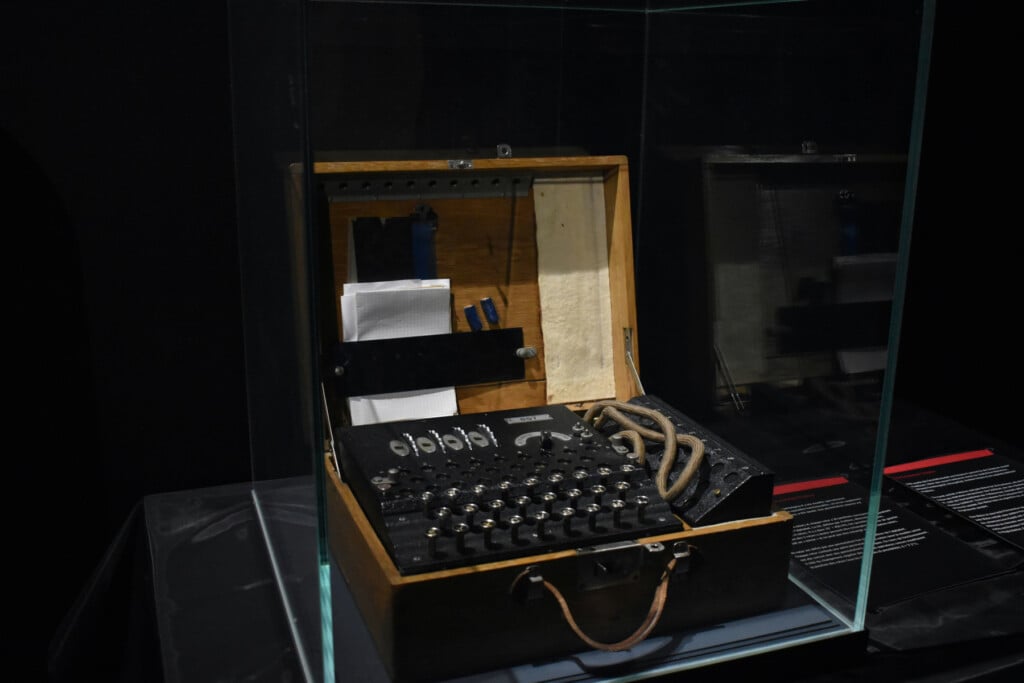
Machines today can answer just about anything. Is that what you had in mind?
Today many systems are optimized to replicate convincing responses to a wide range of inputs, but they’re not designed to understand, they’re designed to predict. That’s not the same thing. A machine that has every answer is just an efficient archive. I wasn’t dreaming of an omniscient oracle, I was dreaming of a child’s brain.
You were driven to your death by a society that couldn’t tolerate difference. Today AI is trained on the “average” of human behavior. Are we building machines that amplify conformity?
You’re codifying the tyranny of the majority. Statistics, by definition, seek the average and discard the anomaly. But the anomaly is where genius, art, and change live. I was a statistical anomaly, and society “corrected” me with chemical castration to bring me back to the norm. Today your AIs do the same thing invisibly, we risk building systems that push toward uniform conformity.
You proved that some problems can never be solved. In a future where we hand everything over to AI, what will remain exclusively human?
What remains exclusively human isn’t some “magical essence,” it’s the capacity for critical judgment in the face of unresolvable uncertainty. Human beings are the only machine capable of holding two contradictory ideas at once without crashing. You can love and hate, know you will die and live as if you were eternal. AI seeks absolute consistency. You are magnificently illogical.