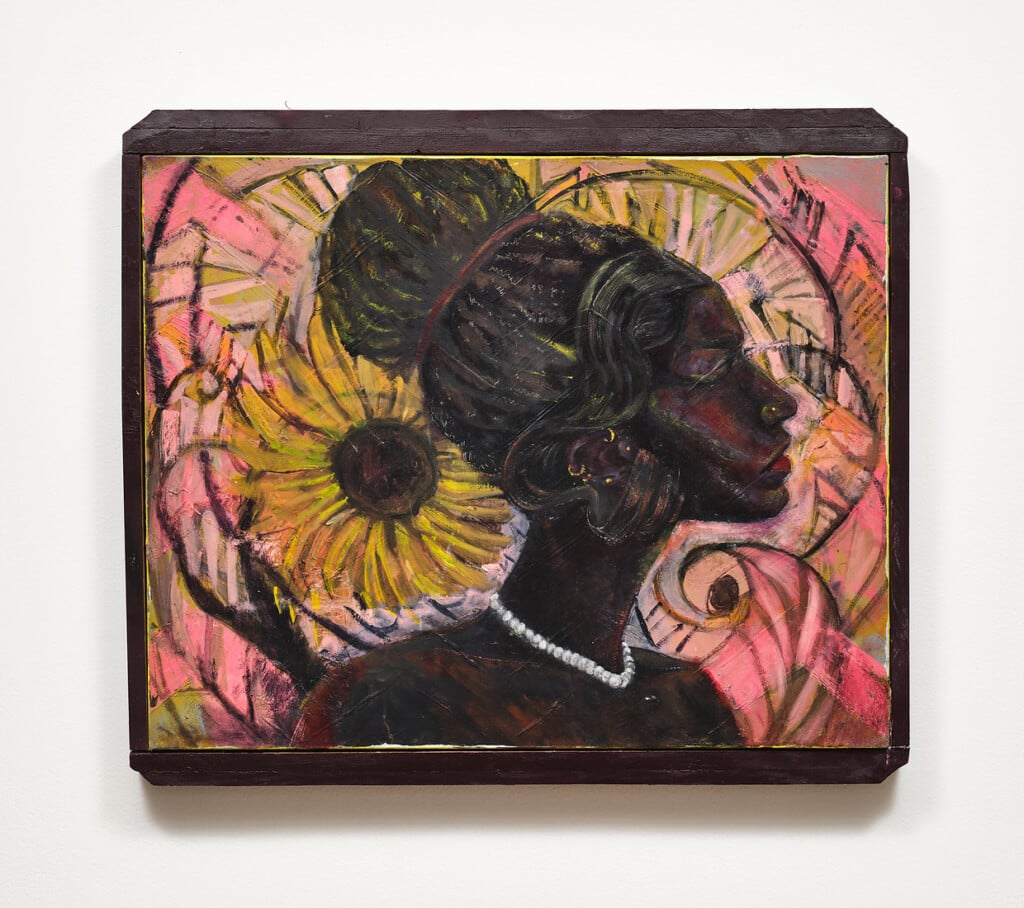
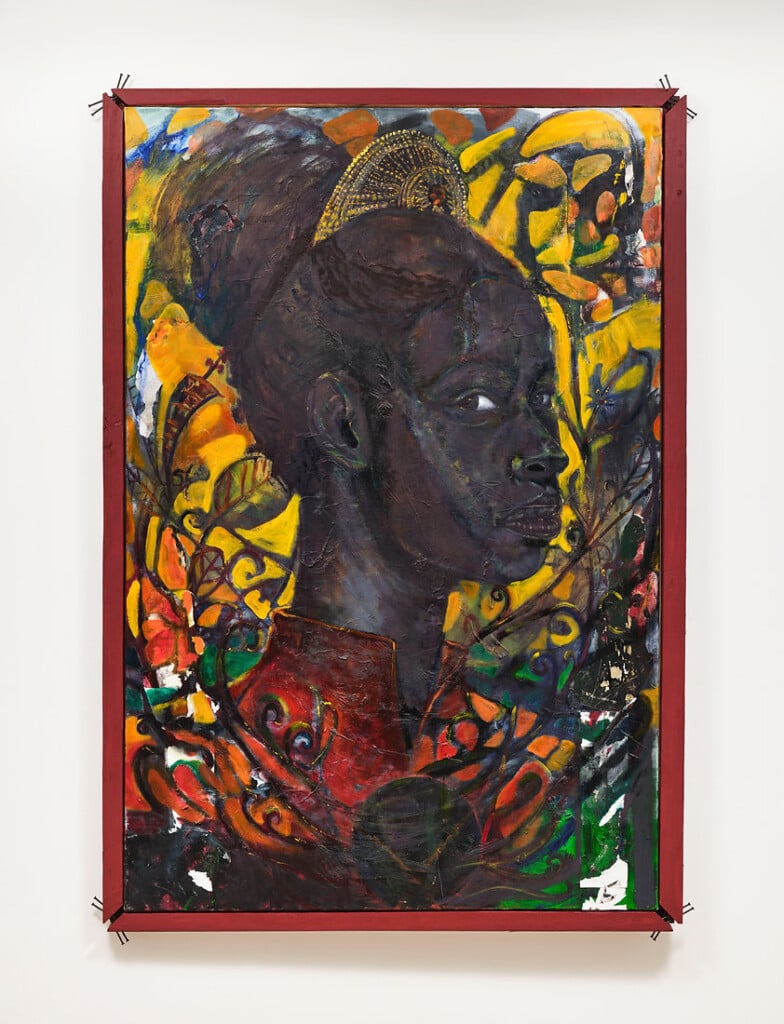
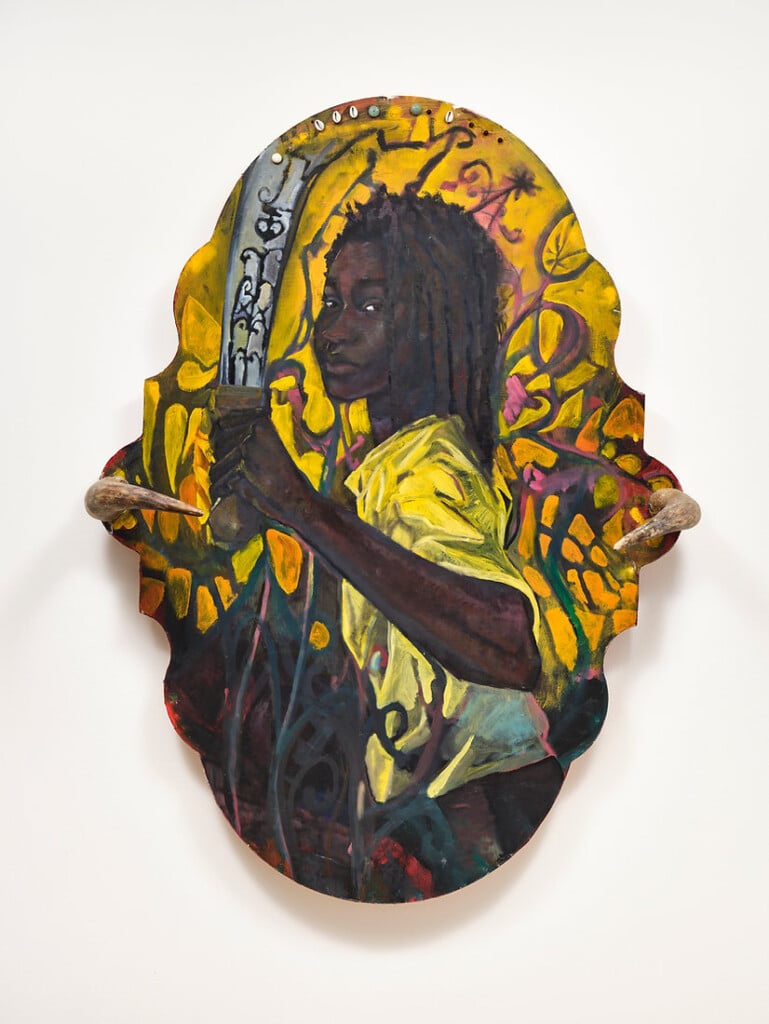
From July 8th (and through August 2nd) the Ki Smith Gallery in New York hosts the spiritual and material works of Xayvier Haughton (St Catherine, Jamaica, 1986). Drawing suggestions and energies from the rich Afro tradition that arrived in the Caribbean during the era of colonial and slave deportations, the artist builds his own felt, participated path through the Black dream in hostile and unfamiliar lands.
If forced labor, chains, blood and dust once fertilized fields and swamps with the bodies of the innocent brought from Africa, it is in religion and in a local, multiform ritual practice that Haughton seems to trace the origins of a struggle lived on the skin, a struggle that led to awareness and liberation in regions of the world brutally subjugated.
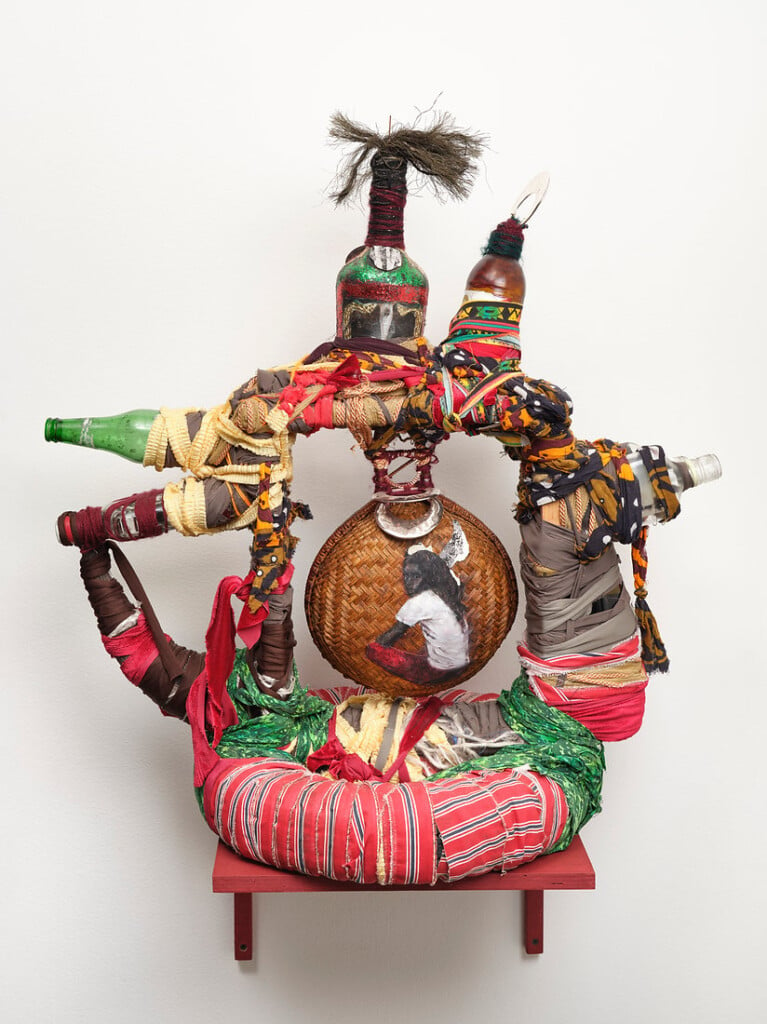
Assembling fabrics, nails and materials found in everyday life, the artist connects to a rich vein of Afro creativity, capable of celebrating the euphoria of life and its many sensory stratifications through the aesthetics of art. Gathering stories that interweave ritual and magic tied to tradition, Xayvier Haughton puts his brush at the service of vivid, colorful presences, which open glimpses into a millenary history that is, in fact, almost entirely unknown to those who have lived only by command and conquest.
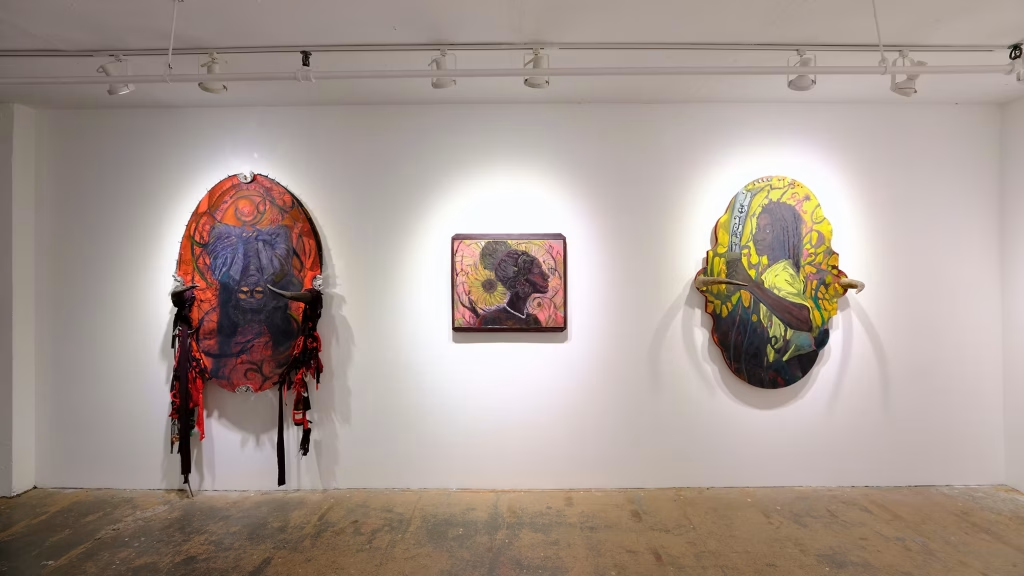

As the chosen title suggests, Black Body Radiation, in the evocation and creative rendering deployed there is a full awareness of moving within a territory deeply connected to the collective feeling of a community: between symbolism, memory and the sacred, every material and figurative element becomes part of an ode to the timelessness of a tradition. Young faces and materials worn by time coexist with the same force and the same weight within a single project, which in art traces a force that goes beyond passive consumption and the laws of the market.
The blackness of Xayvier Haughton’s paintings/installation shines in a call to the sacred that never abandons life, struggle, and the possibility for art to make itself concretely useful to bearing witness to history and, with it, to the many small voices of peoples.

Article by Floriana Savino