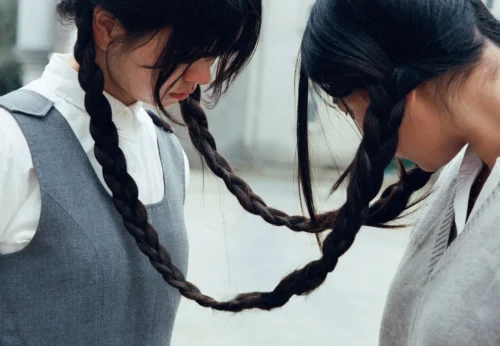
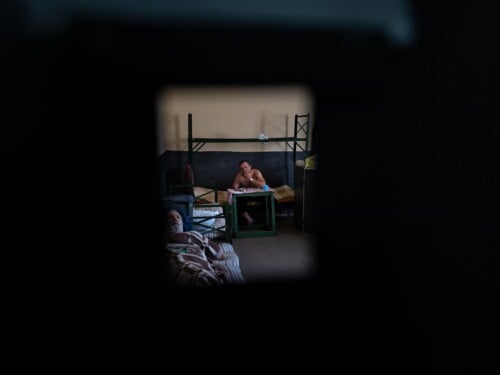
With Archipelago, photographer Yolanda del Amo delivers a measured and unsettling publishing debut with Kehrer Verlag. The book brings together images made between 2004 and 2014, building an emotional geography made of islands—presences that are close yet never overlapping, relationships that share space without ever truly merging. The archipelago evoked by the title becomes a metaphor for human dynamics: systems of connection crossed by invisible distances.

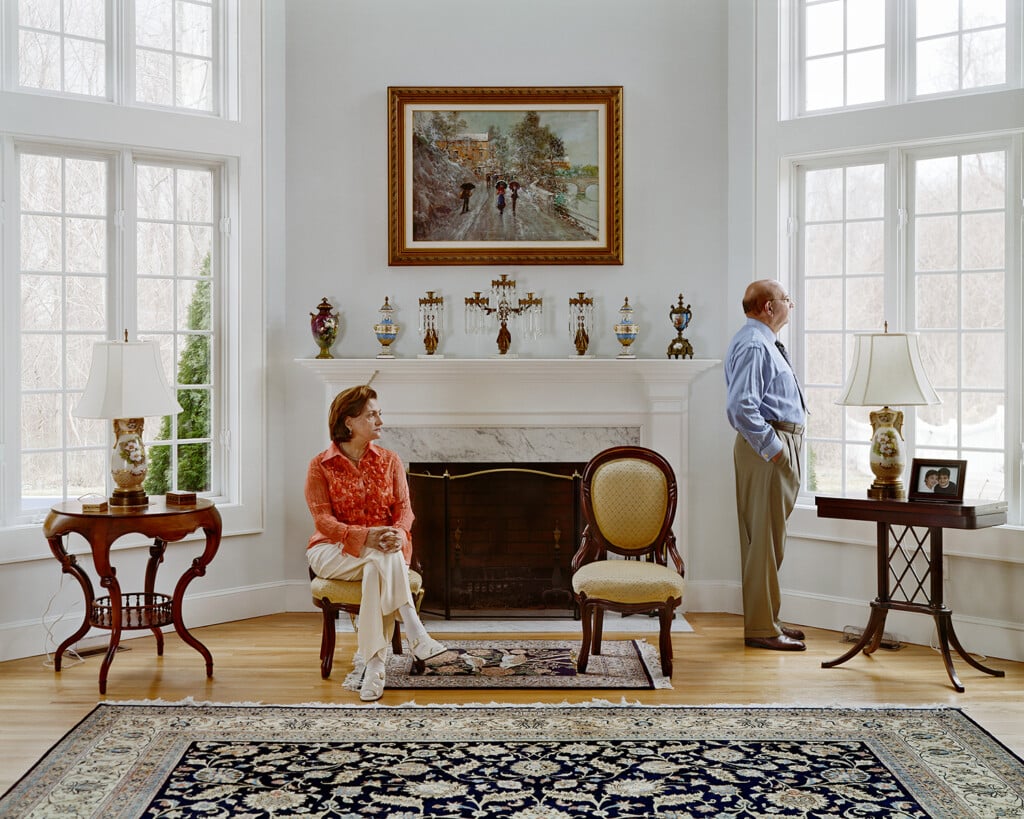
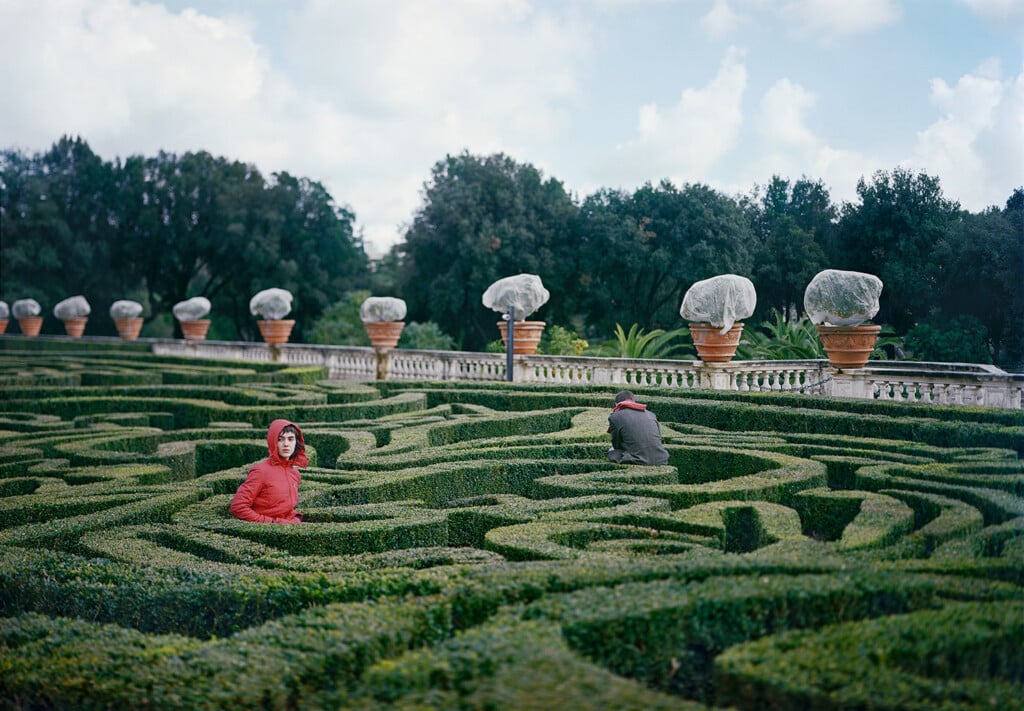
The photographs stem from carefully constructed tableaux, set in real interiors and everyday contexts between Spain and the United States. The subjects—friends and family of the artist—take part in staging imagined relationships, creating a constant shift between authenticity and performance. Every gesture is calibrated, every posture seems to follow an inner logic that makes the image composed, yet never static.

The influence of Pina Bausch’s dance theatre is evident in the way the body becomes a vessel for held-back emotions. As in her choreographies, formal control doesn’t smother expression—it concentrates it. The use of a large-format camera adds to this sense of suspension, where what matters is not the action, but the tension that comes before or after it.

Each photograph works like a self-contained scene—an open-ended narrative that invites the reader to observe and interpret the relationships between the characters. Long before it became a collective topic, Del Amo had already sensed how technology and social conventions could amplify isolation even in togetherness, turning loneliness into a widespread and almost imperceptible condition.

In the essay Islands in the Sea of Life, critic Vicki Goldberg writes that Del Amo has found “elegant and sometimes mysterious solutions” for holding together, within a single image, inner feelings and outward distances. She calls her the “playwright, director, and stage manager” of her own photographic theatre, committed to seeking “something slightly stranger than reality,” capable of unsettling it.

Jean Dykstra, in Alone Together, also emphasizes how the images “contain secrets simmering beneath the surface,” and how each figure seems to inhabit a separate world. Color—from the acidic yellow of a room to the blue of an empty pool—becomes an emotional amplifier of distance. “We’re always busy playing roles for one another,” Del Amo says; and it is precisely in this tension—between the desire for contact and the need for separation—that Archipelago finds its quietest and most incisive center.

© Yolanda del Amo / Kehrer Verlag