Yuji Watanabe isn’t a name you come across often in the major contemporary art circuits, yet his trajectory already tells you something about the double identity that runs through all his work. Born and trained in Japan, Watanabe studies photography in New York, later returns to Tokyo to complete his studies and launch his professional career, before moving to Paris in 2012. Since then he has lived and worked between the two cities, moving within the fashion and portrait circuit, while cultivating in parallel a more intimate, personal vein, distinct from his commissioned editorial work. It’s in this “personal” space that photography stops being simple glossy portraiture and becomes something else: a territory inhabited by unsettling presences, deformed bodies, faces that seem to belong to a bestiary older than fashion itself.
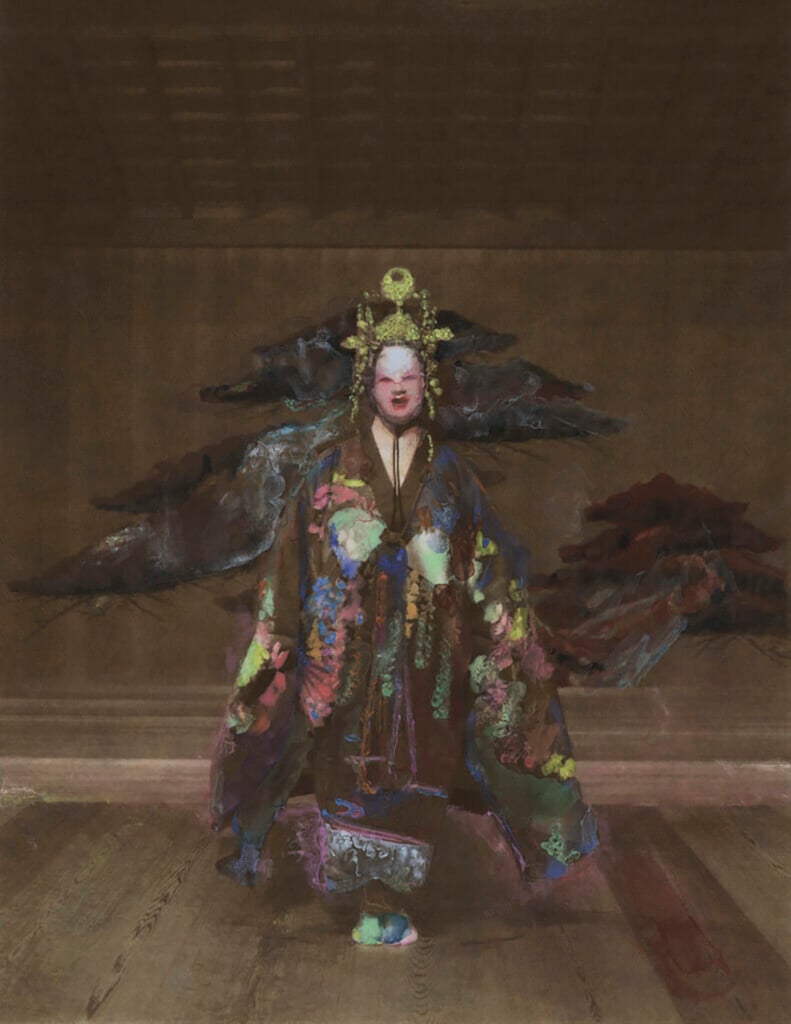
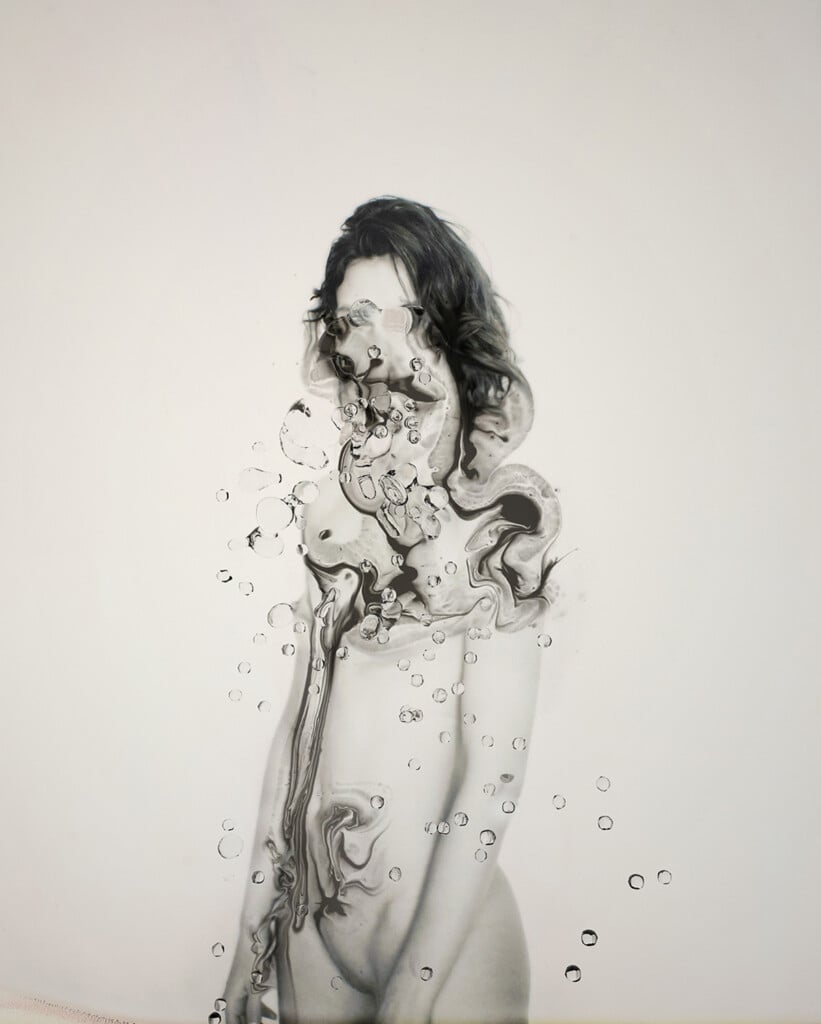
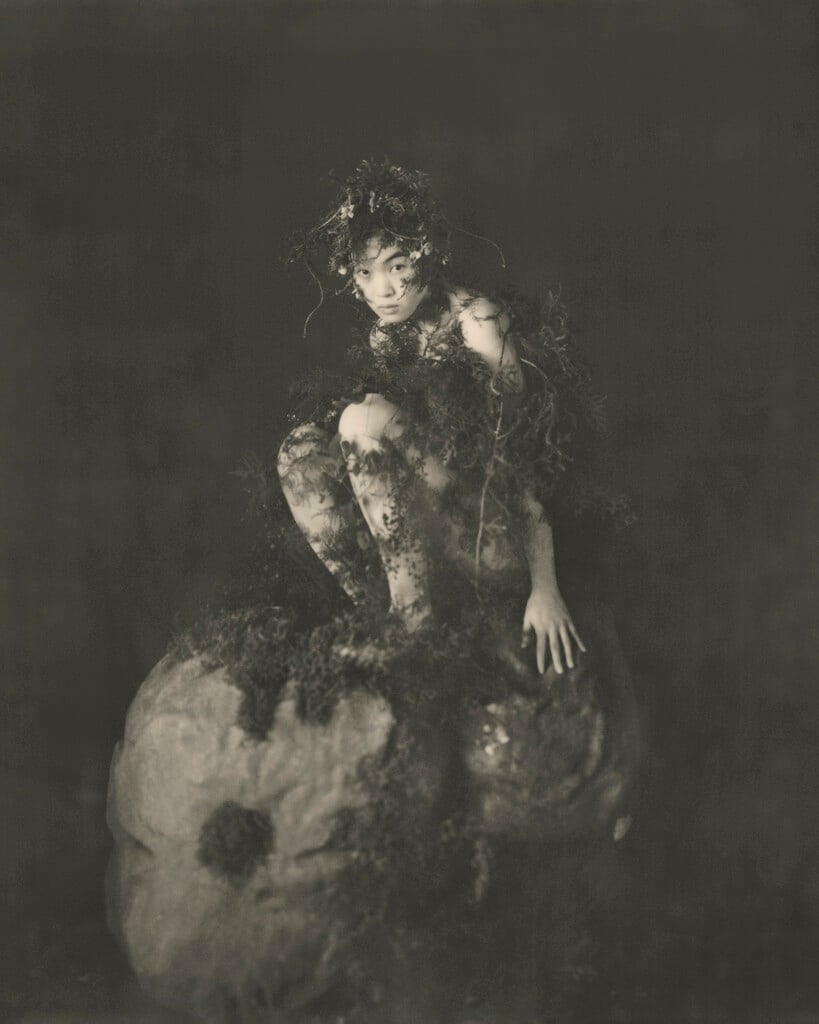
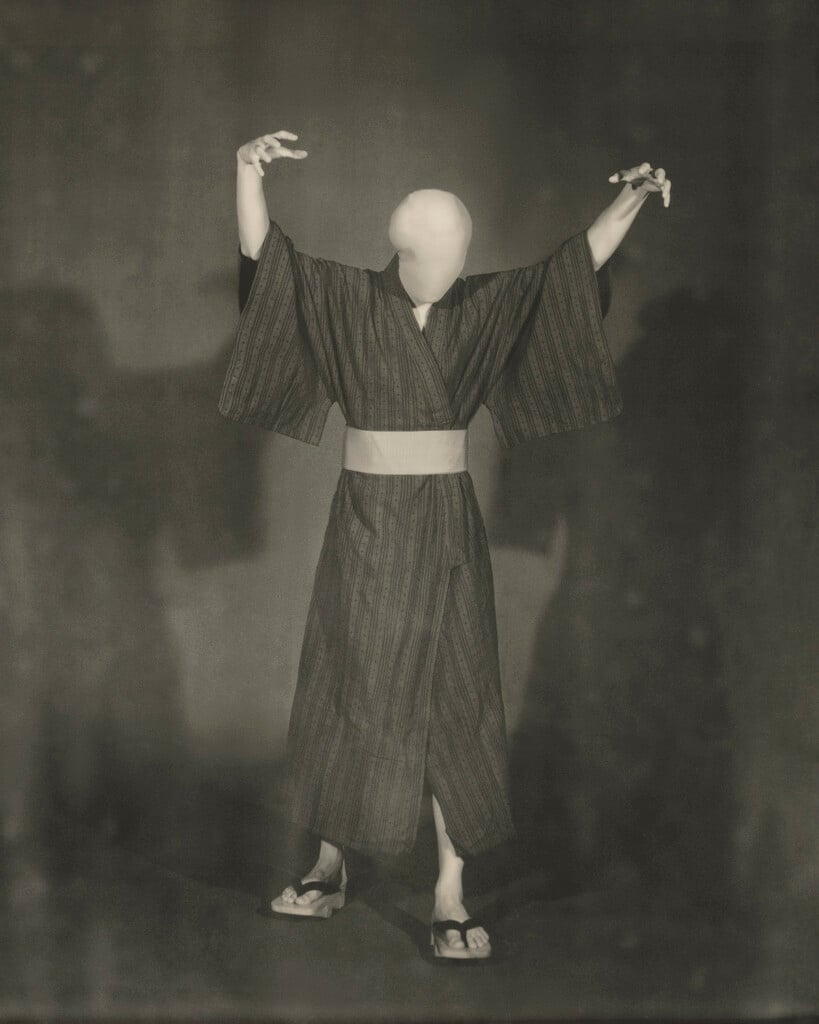
In September 2024 Yuji Watanabe presents at 229GALLERY in Tokyo a solo show simply titled Yōkai (妖怪), a Japanese term denoting the broad family of supernatural creatures from national folklore: spirits, monsters, shapeshifting animals, animated objects. The text accompanying the show is a quote from the father of modern Japanese ethnography, Yanagita Kunio: “a yōkai is the decayed form of a god.” It’s a key phrase, because it overturns the common idea of the monster as a purely external threat — the yōkai, in this reading, isn’t an alien entity breaking in from outside, but the residue of something that was once sacred and that, losing its divine status, degraded into an ambiguous, grotesque figure, halfway between the comic and the terrifying. Watanabe’s photographs staged on that occasion are transfigured human bodies, presences that seem to emerge from a domestic darkness rather than a legendary forest — perhaps the yōkai simply inhabits that space of anxiety, and faced with a discomfort he can’t name, man instinctively turns it into the shape of a monster. The monster no longer lives in the isolated mountains of rural Japan, but in the hallway at home, the bathroom mirror, the corner of the subway.
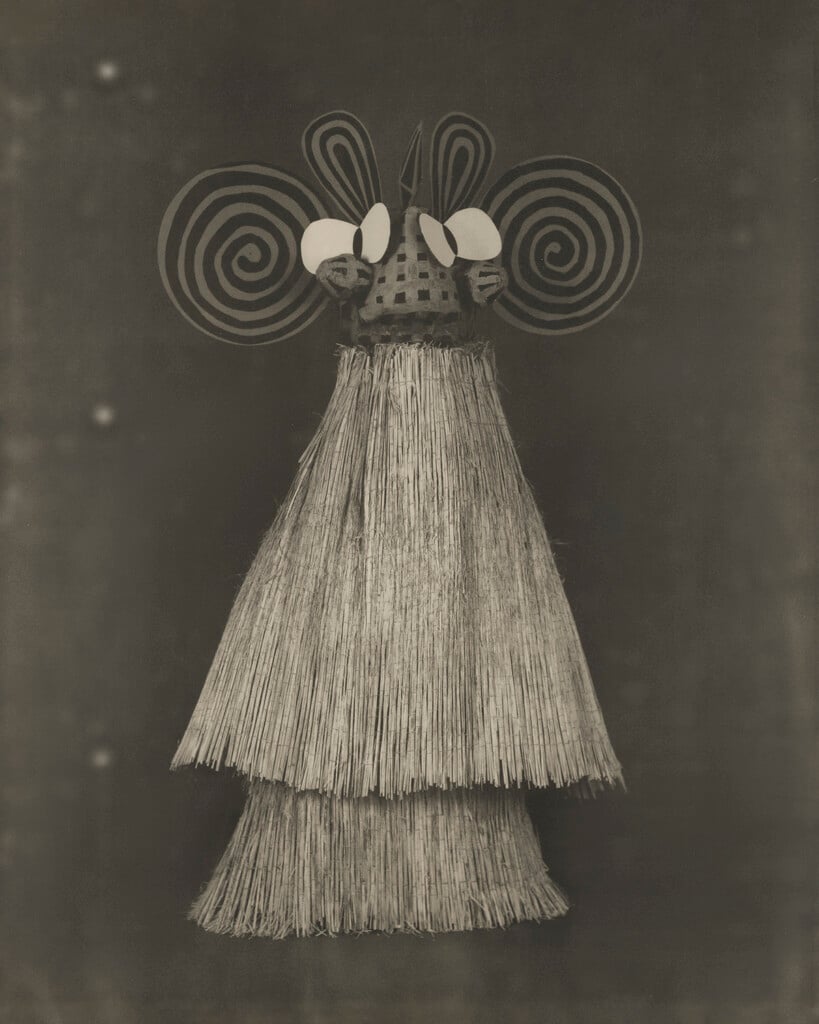
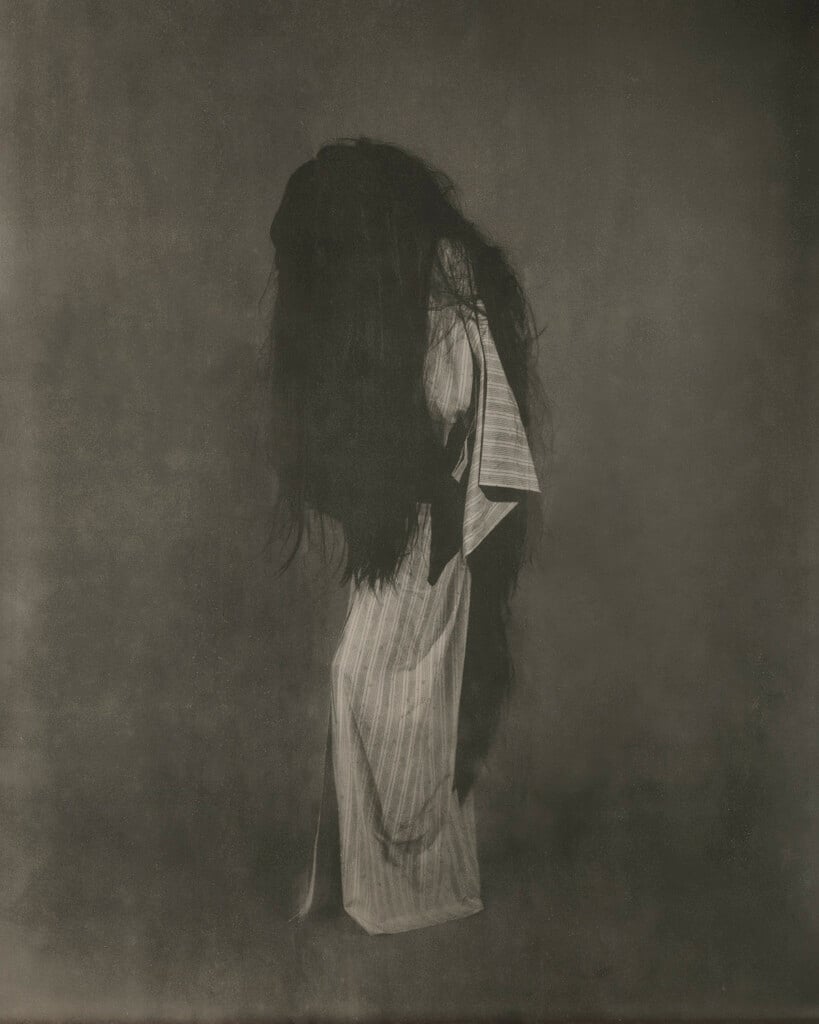
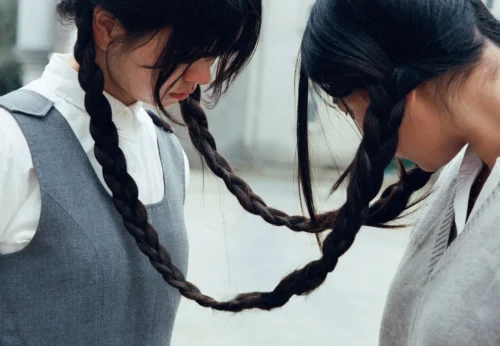
Reinforcing this staging is a visual debt owed less to illustrated folklore and more to traditional Japanese theatre — noh and kabuki — with costumes that carry the solemnity of a ritual garment, faces often concealed or only partially visible, a gesture that on stage doesn’t hide the performer’s identity but suspends it, leaving room for something else to take possession, duplicated bodies and sinuous, almost serpentine forms that evoke metamorphosis rather than fixed monstrosity. Each shot ends up functioning as a small tableau vivant, suspended between performance and real presence, a myth manifesting itself in the present tense, an archetype that inhabits today instead of merely recalling it.
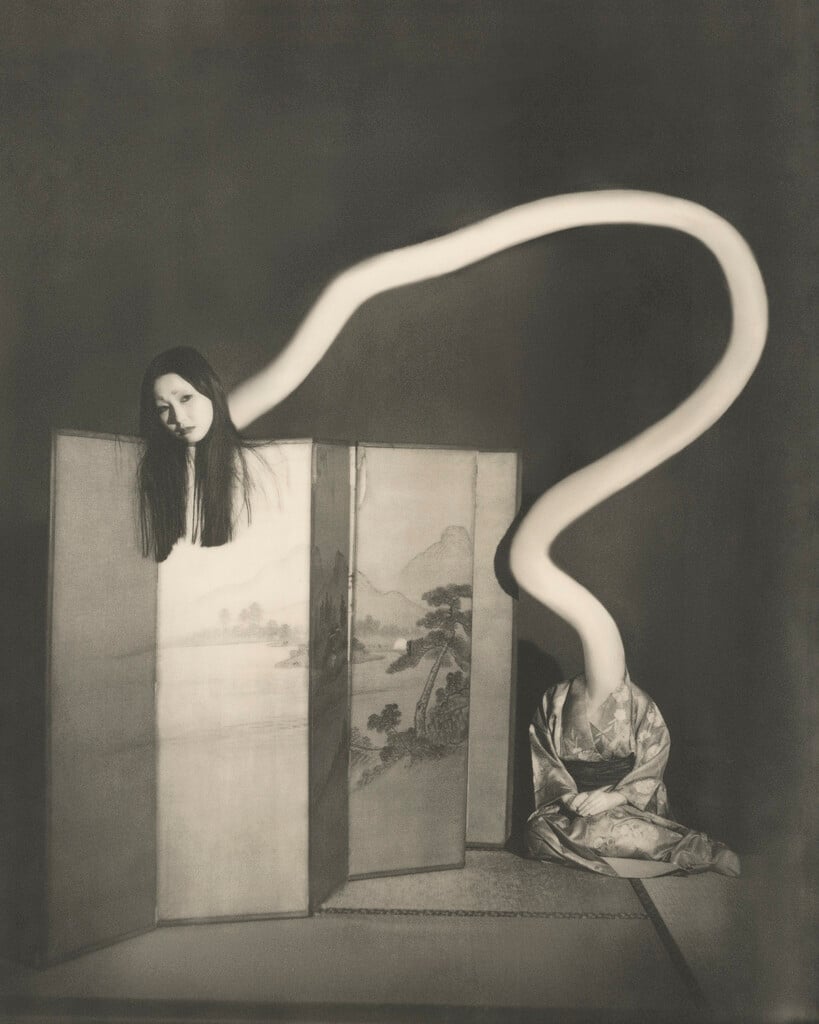
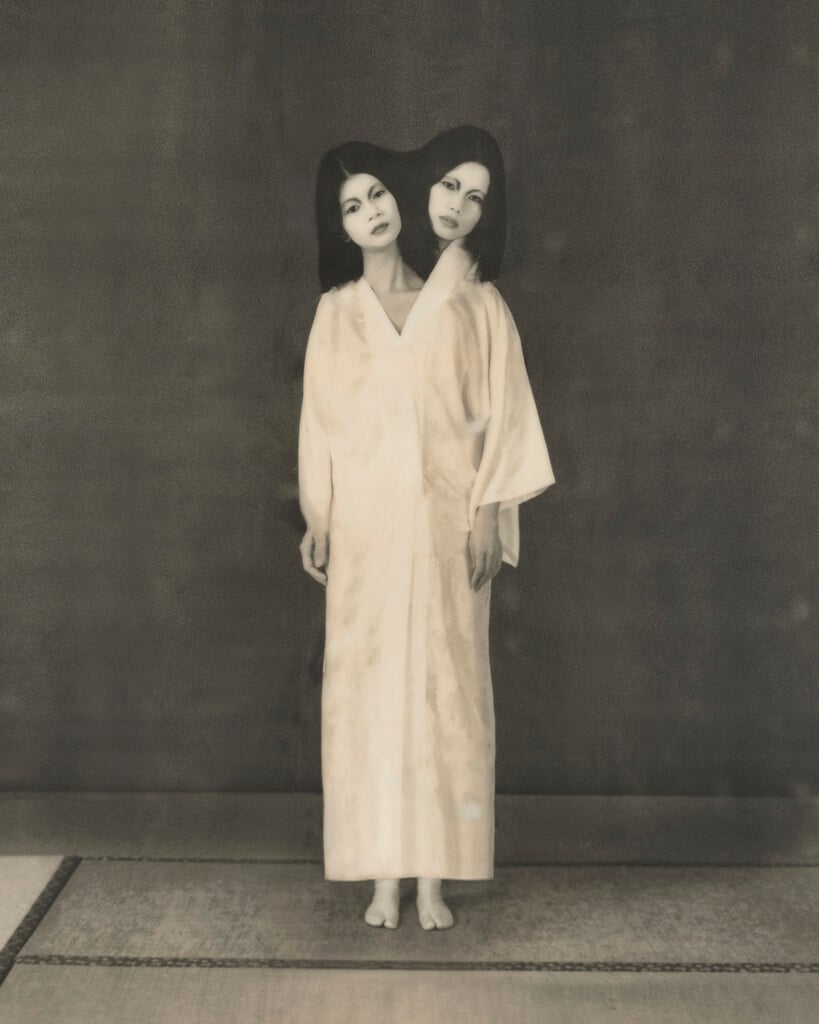
To fully appreciate Yuji Watanabe’s work, it’s worth taking a step back into the tradition he draws on. The term yōkai is a broad container that in the West tends to be translated simply as “monster” or “spirit,” but which in Japanese culture distinguishes several families of entities: there are nature-spirits like the kappa, an aquatic creature with a water-filled cavity on top of its skull, whose life force drains away if that water spills; there are shapeshifters like the tanuki and the kitsune (fox), masters of deception capable of taking human form; there are the tsukumogami, everyday objects — umbrellas, tools, mirrors — that after a hundred years of use acquire a soul of their own and come to life, often with mischievous rather than malevolent intent. Distinct from the yōkai, but often confused with them in popular imagination, is the figure of the yūrei, the ghost proper, defined as the spirit of a deceased person held back in the world of the living by unresolved grief, an unfinished vendetta, or a missing funeral rite, recognizable in classic iconography by the white kimono, loose black hair, and the absence of feet. The first to systematize this crowded bestiary were, in the Edo period, artists like Toriyama Sekien, who in the eighteenth century catalogued hundreds of yōkai in woodblock prints that later became canonical; but it was Yanagita Kunio, between the late nineteenth and early twentieth century, who founded the academic discipline of minzokugaku (folklore studies), gathering house by house, village by village, the oral tales of a Japanese countryside not yet reached by Western modernization — work that flowed into the celebrated Tōno Monogatari (1910), “The Legends of Tōno,” still considered today the founding text of Japanese folklore studies.
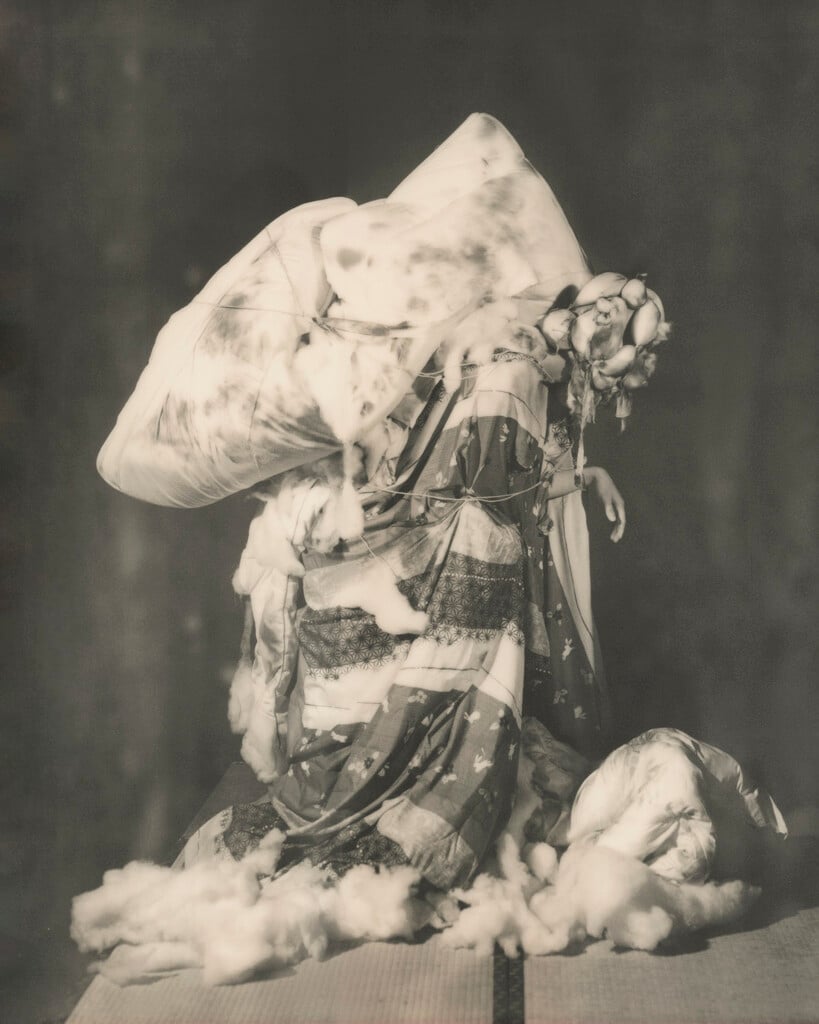
What makes Yuji Watanabe’s personal work more interesting than a simple aesthetic evocation of folklore is precisely the reading he gives it. If the monster is a fallen god, then photographing it today, in the body of a contemporary model, under the dim light of an urban interior, on the unstable grain of expired film, is to suggest that the sacred, stripped of its temples and rites, hasn’t disappeared — it has simply taken refuge in a poorer, more ambiguous form, closer to our everyday anxiety. His “monstrous” images don’t frighten in the Hollywood sense of the term — there are no fangs, no blood — they unsettle instead through proximity: they’re human bodies, recognizable, only slightly out of alignment with the norm, as if the creature had always been there, hidden beneath the skin of the ordinary person, waiting for the right light to reveal it.