After appearing on the cover of National Geographic Magazine in June 1985, Steve McCurry’s portrait “Afghan Girl” became a symbol of the war in Afghanistan and in particular of the condition of women after the Taliban regime took over. Women were forbidden any social contact outside the family unit, their presence was made invisible, as was any symbol of femininity.
After the reconquest of Afghan territory and the Taliban offensive last summer, many women and men were forced to flee and take refuge abroad, with the support of associations such as the OTB Foundation and projects such as the one launched by the artist Andrea Crespi. The artist from Varese has created a work of art, which was sold at auction in both physical format and NFT, entitled “Invisible Girl” and inspired by McCurry’s shot.
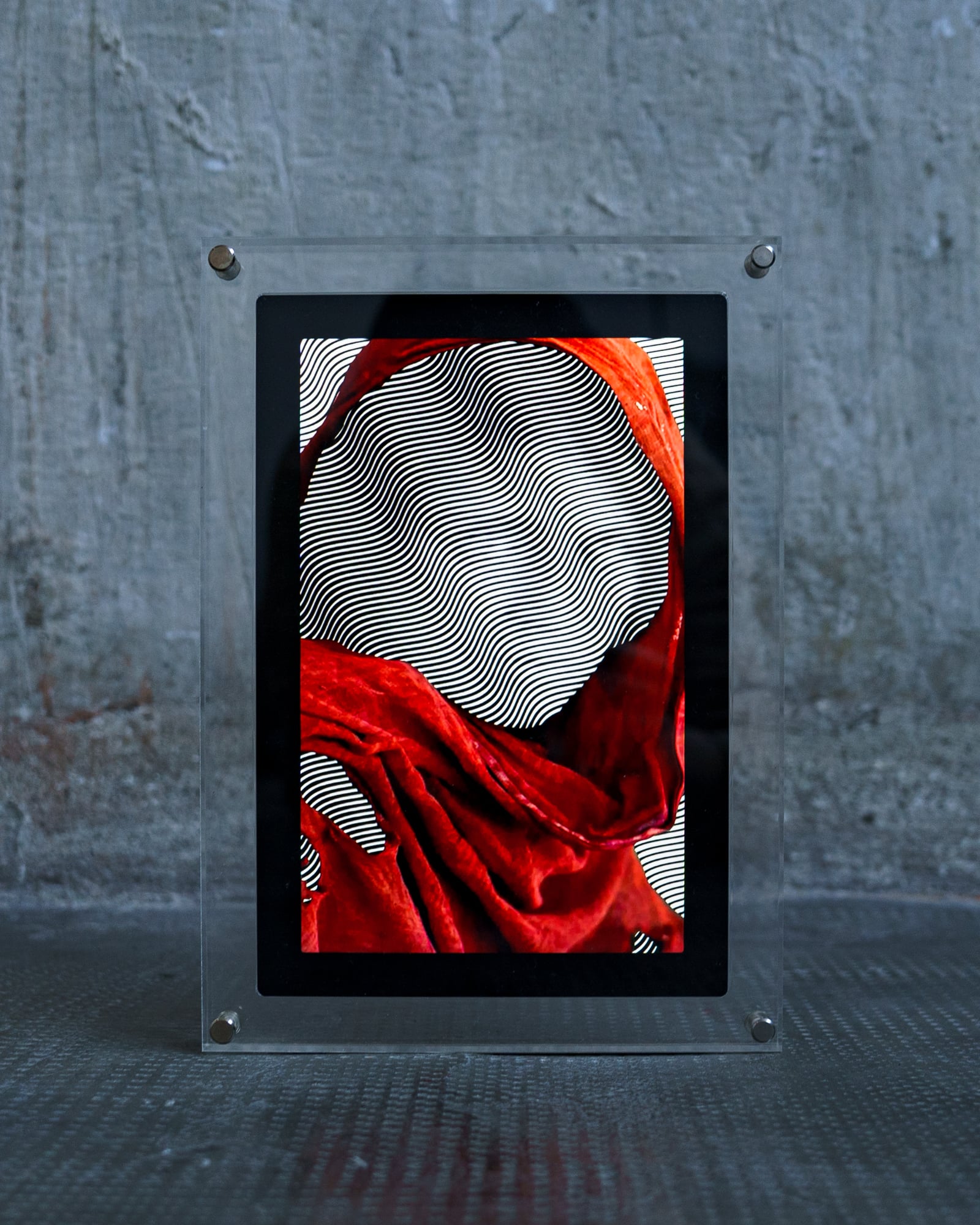

Crespi’s work creates a bridge between the media importance of the 1984 photo and the current context. The proceeds from the auction were donated to support the integration of Afghans who arrived in Italy in recent months, thanks to the OTB Foundation and the CharityStars.com charity fundraising platform.
There is much debate, in some cases in bad faith, about the legitimacy of money spent on digital drawings. With this work, Andrea Crespi wants to convey the message that there are also transparent projects, with a social purpose and real benefactors, with whom to carry out concrete charitable works.
There are many aspects of Crespi’s art in this project, including the continuous investigation of the media and different themes, reflecting a digital and cultural transformation. The work, for example, which here takes up a well-known image, but removes the features for which it is famous (the girl’s eyes and the colours) in favour of an optical illusion, is a way in which the artist removes an unambiguous meaning from the concept of art.