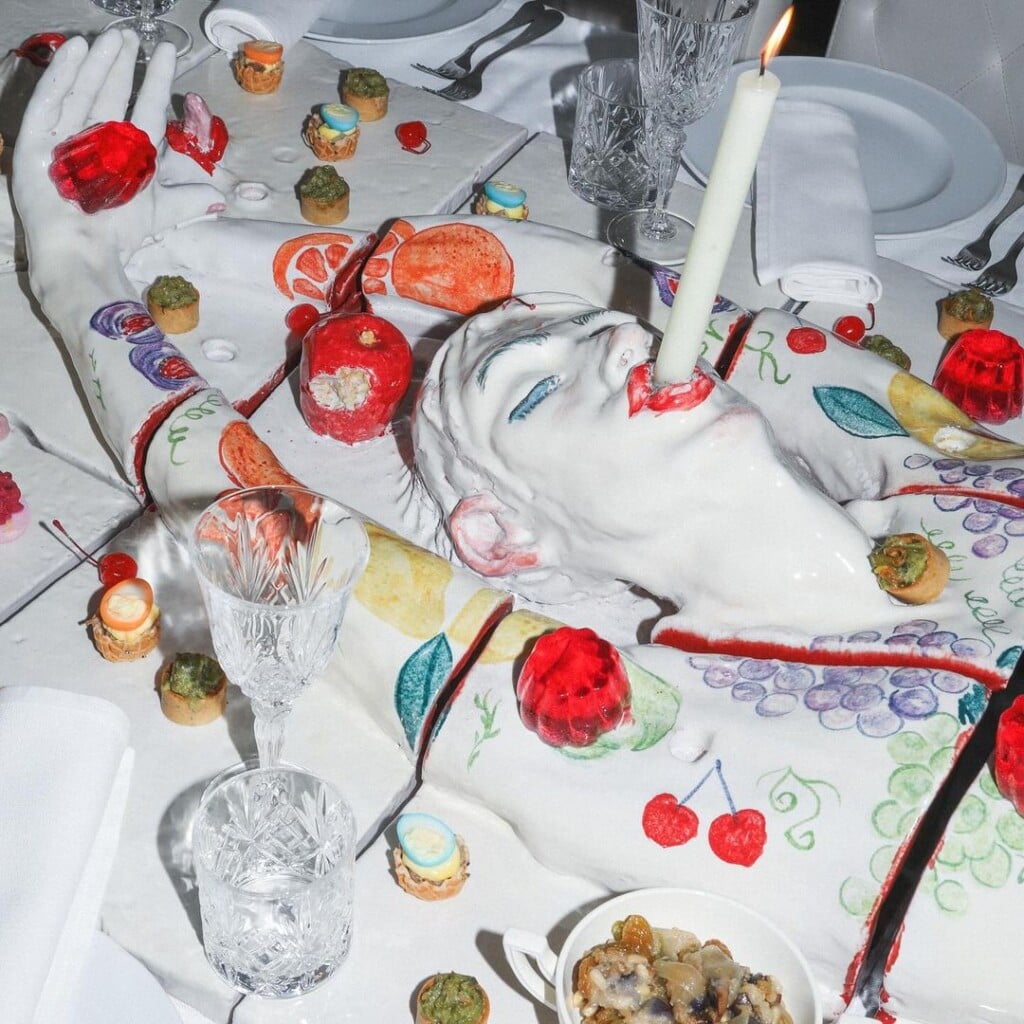
I learned only a few days ago that Giulia Messina‘s (1998) exhibition CADAVRE EXQUIS at L.U.P.O. Gallery has been extended until June 14th. I had already followed the opening performance on April 10, which consisted of a performance dinner inside the gallery’s spaces – with its delightful view of Porta Venezia – and was intrigued in no small measure. Mindful of my recent investigation of the collective gobyfish – which makes art by eating, understanding meals as real rituals in a sharing and collaborative perspective -, I wanted to delve into Messina’s intervention to understand instead her vision on food. If gobyfish focuses its research on food as an instrument of domination, the common thread that binds all of Messina’s works on display at L.U.P.O. is the exploration of the body and food understood as “living organisms subject to temporality.” The grotesque and the comical, as well as repulsion and attraction were the pivotal point around which the entire performance revolved but, equally, these are the same feelings that her paintings and sculptures evoke.

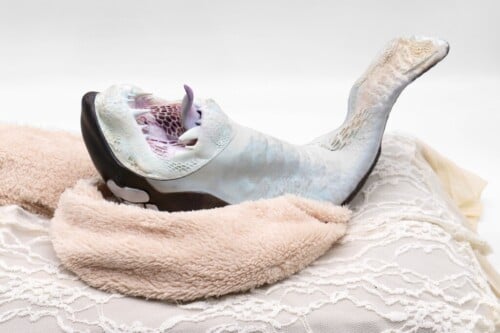
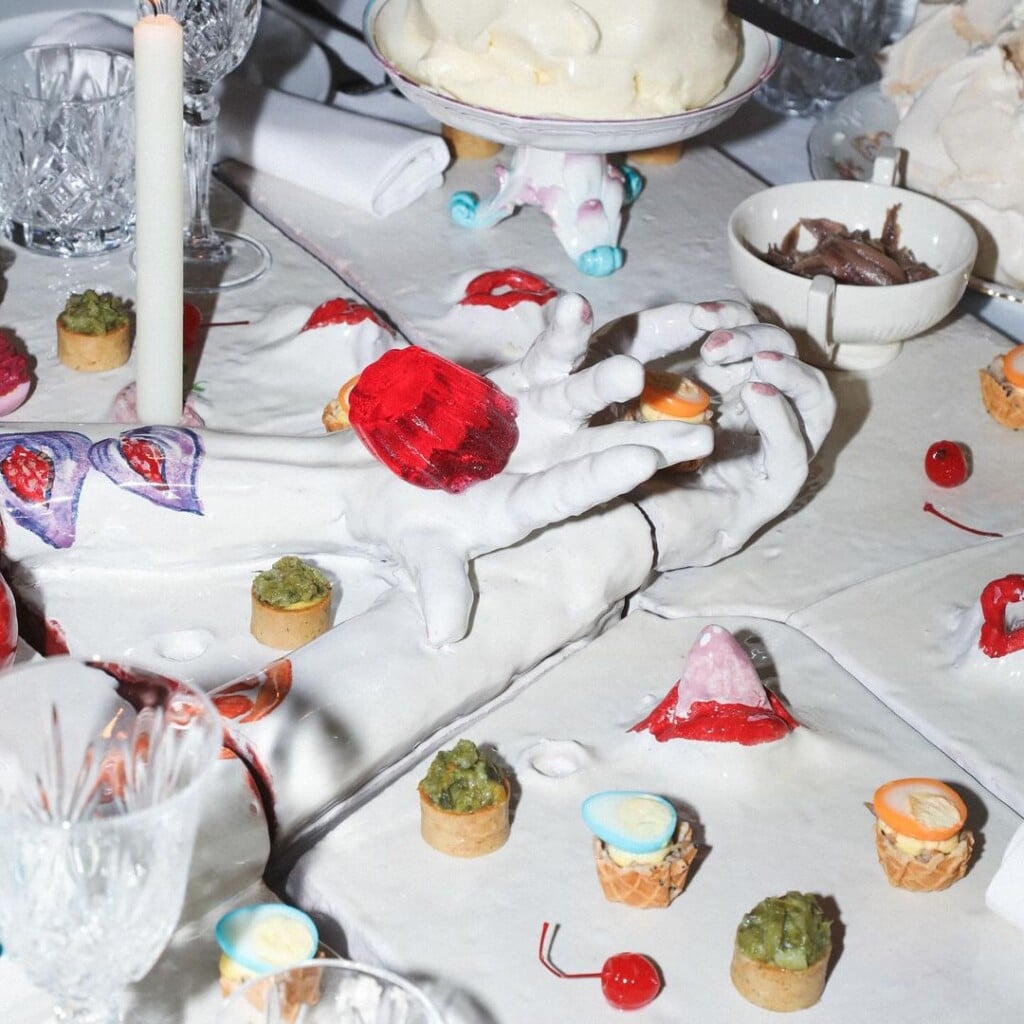
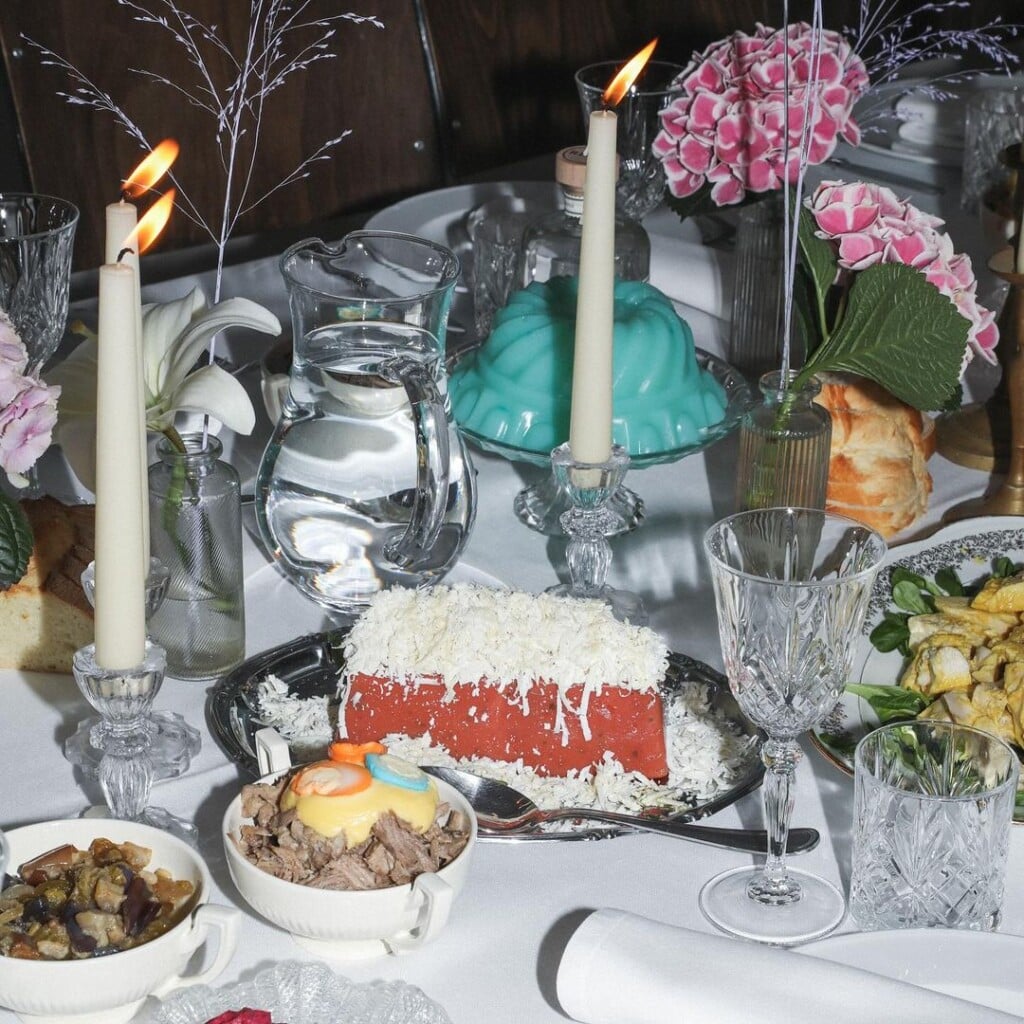
At the center of Giulia Messina’s table setting is the sculptural element that animates the exhibition. A dissected human body composed of different ceramic parts. Here the banquet becomes a pretext for exploring the theme of anthropophagy, that ancient practice, specific to some cultures, of eating human flesh. The ambiguous aspect is definitely dictated by the bright colors that decorate the snow-white body, as well as by the food, which is also joyful in shape and color, charged with a vitality that conceals from diners the drama of the theme, which is actually explicated amply. Here the guests, seated at the table after a warm welcome by the artist, set in motion the real work of art – necessarily participatory – activating it with their gestures, modifying it, emptying it, contributing to its first mutative moment. Time will then dictate the degradation of the food, which, like a corpse, then becomes a relic until it dissolves through a process that is utterly repulsive, to return to the attraction-repulsion contrast mentioned above.
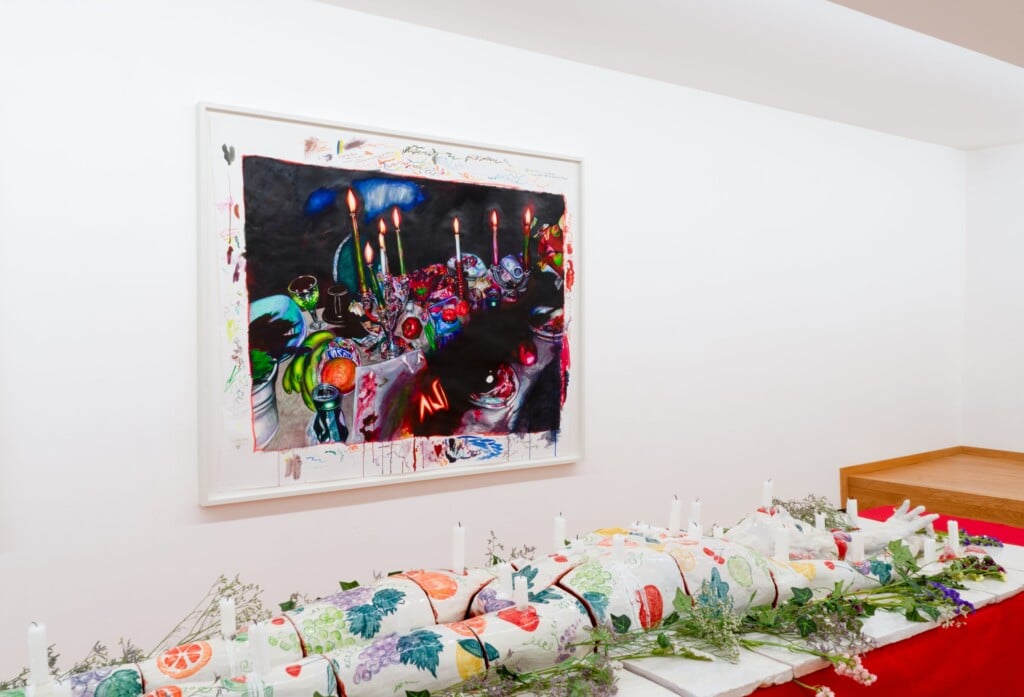
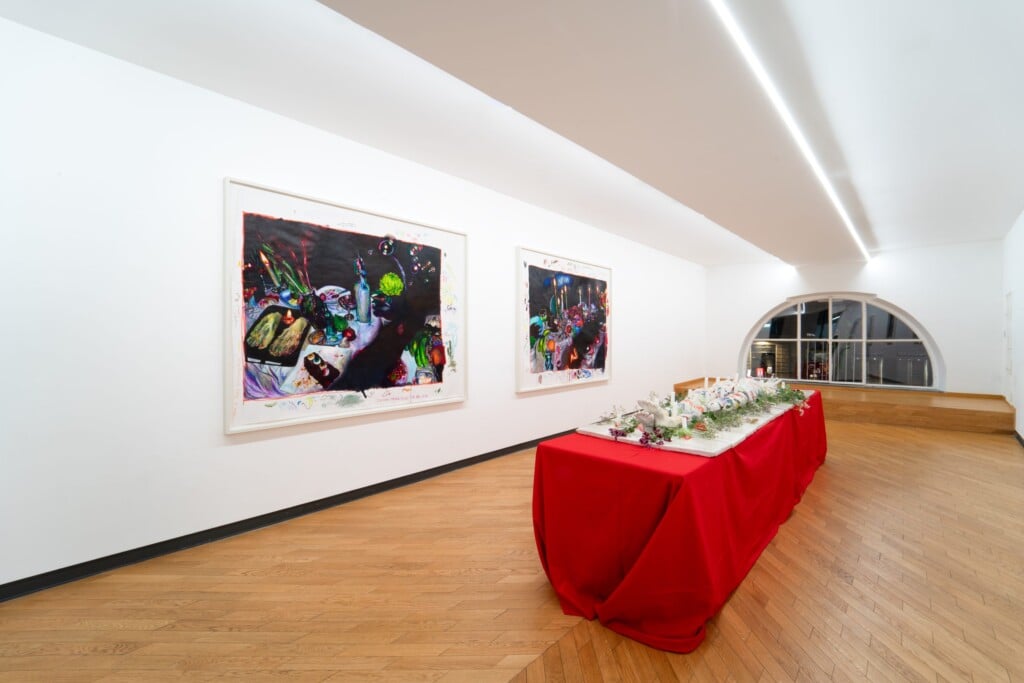
The works that Messina exhibits on the wall at L.U.P.O., in what for a limited period becomes for all intents and purposes his dining room, seem to accompany, suggest, but also somehow document, the act that took place during the opening performance dinner. As if to foresee a scenario that has been experienced before by the artist who in the contemporary scene is configured as “the number one artist dealing with post-event table sets, known as ‘performance parties.’” A curious aspect of what appear in photos as acrylic canvases is precisely the technique Giulia Messina uses. Water-based markers on paper, which she voluntarily chooses not to finish, but rather, to leave traces of color evidence at the edges. This detail undoubtedly confirms the honesty of works that could easily be mistaken for digital artworks, given the precision and holographic effect that some details retain. Such saturated colors, as if everything were exposed to the light of a strong flash, reveal and unveil the attractive and repulsive aspect that food – here understood as flesh, living and then dead matter – implies in its different forms. From firm, juicy, smooth, vital to shriveled, creased, rotten, macerated.



Read Also: Rachel Hobkirk’s Dolls at L.U.P.O.
Courtesy Giulia Messina, L.U.P.O. Lorenzelli Project