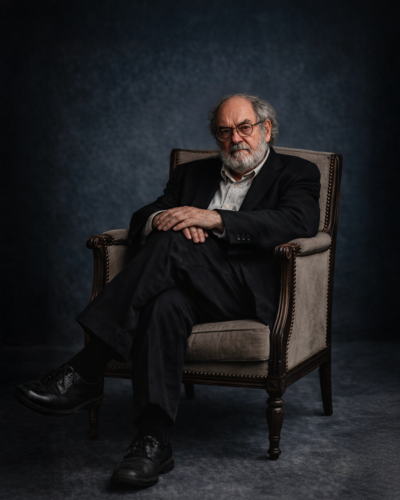
Almost a week has passed since the news of the death of Bill Viola (1951-2024) and we wonder how much he has left us. His death, a theme that has been extensively explored by the Italian-American artist, now opens up endless dialogues and studies around his research. One warm reflection is undoubtedly his precocious multidisciplinary nature. His propensity for video art and installation, as well as music, configures him as one of the first experimenters of new technologies understood as an artistic medium. Bill Viola himself explained how “holding the video camera and microphone” means “holding a philosophical system, not just a tool for collecting images and sounds”. Here, the invention of video as art was definitively codified and delineated by him, so much so that he is now considered the pioneer of video art. Laura Cumming, an art critic, described him as “the Rembrandt of the video era“. In short, what is certain is that Bill Viola marks a turning point in art history and paves the way for all artists experimenting with moving images today.
If Bill Viola had realised before anyone else the power of technology and media, even more so had he realised that the work of art lives and evolves ‘in the mind of the observing viewer’, to use his words. His move to Florence – immediately after graduating – saw him working at art/tapes/22 and in contact with the likes of Jannis Kounellis, Mario Merz, Vito Acconci and Joan Jonas. This is why Palazzo Strozzi, in 2017, was the perfect venue for a retrospective on the American artist. Bill Viola. Electronic Renaissance was in fact one of the solo shows that went deeper into Viola’s history and avant-garde work. While in Milan, last year, fifteen works were on show at Bill Viola’s last solo exhibition in Italy, specifically at the Palazzo Reale.

Water in the works of Bill Viola
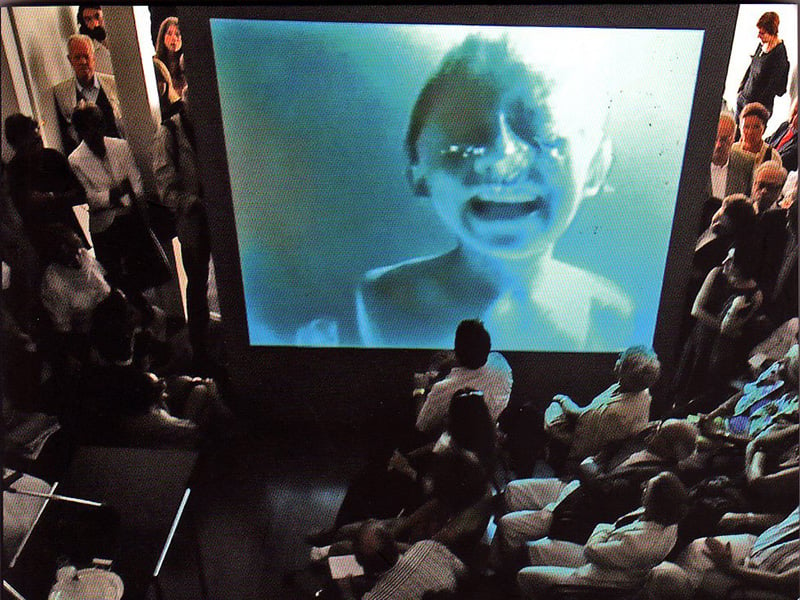
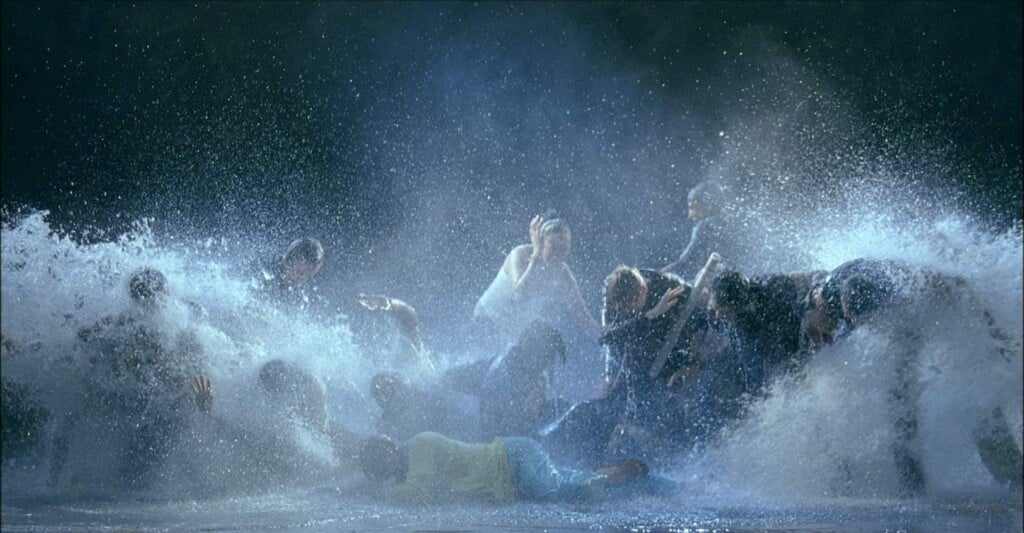
Water is certainly one of the focal points of Bill Viola’s body of work, which over the years has reflected on the capacity of matter to act as a screen but also as a revealing medium. Water as life but also as destruction and death. A theme that will return often throughout his career, intersected with that of technology – capable, in his opinion, of setting up aesthetic criteria and new horizons never seen before. Significant in this sense is certainly He Weeps for You (1976), an installation with cameras that followed the internal point of view of a drop of water.
Of significant works – over the years – there have been many. Theater of Memory (1985) for the Whitney, juxtaposed with paintings and sculptures and the first ever time-based. In 1995 came Buried Secret for the Venice Biennale (exhibited in the US pavilion) and in 2001 Catherine’s Room, which once again shows the artist’s skill with medieval and classical references. The latter work in fact takes up Andrea di Bartolo’s Saint Catherine of Siena, dating back to 1393.
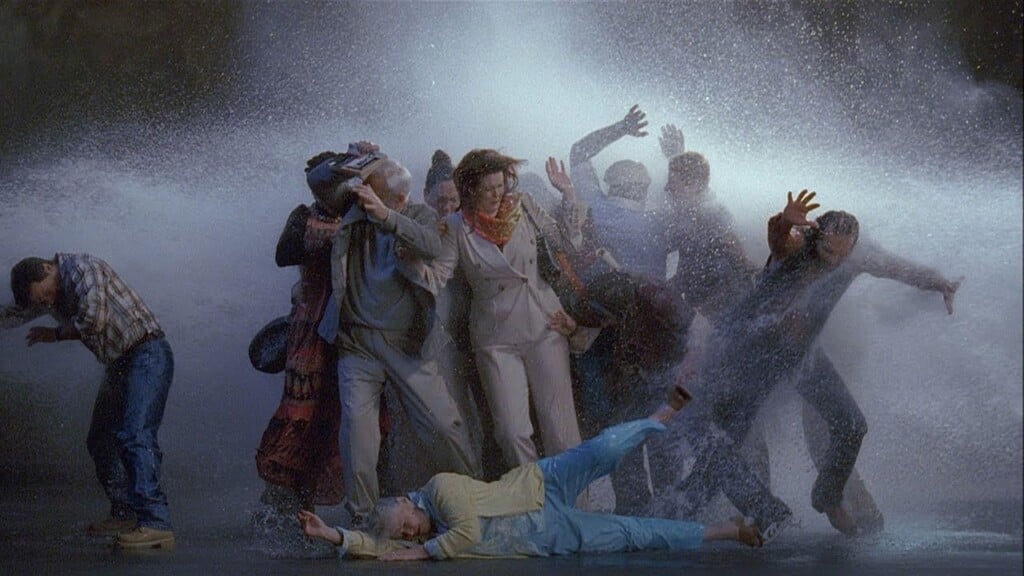
Nature and technology have been able to coexist in Bill Viola’s world without forcing or constraining, speaking through an emotional language that to this day has made him an empathetic visionary capable of changing the rules of the art world, sometimes reluctant to change.