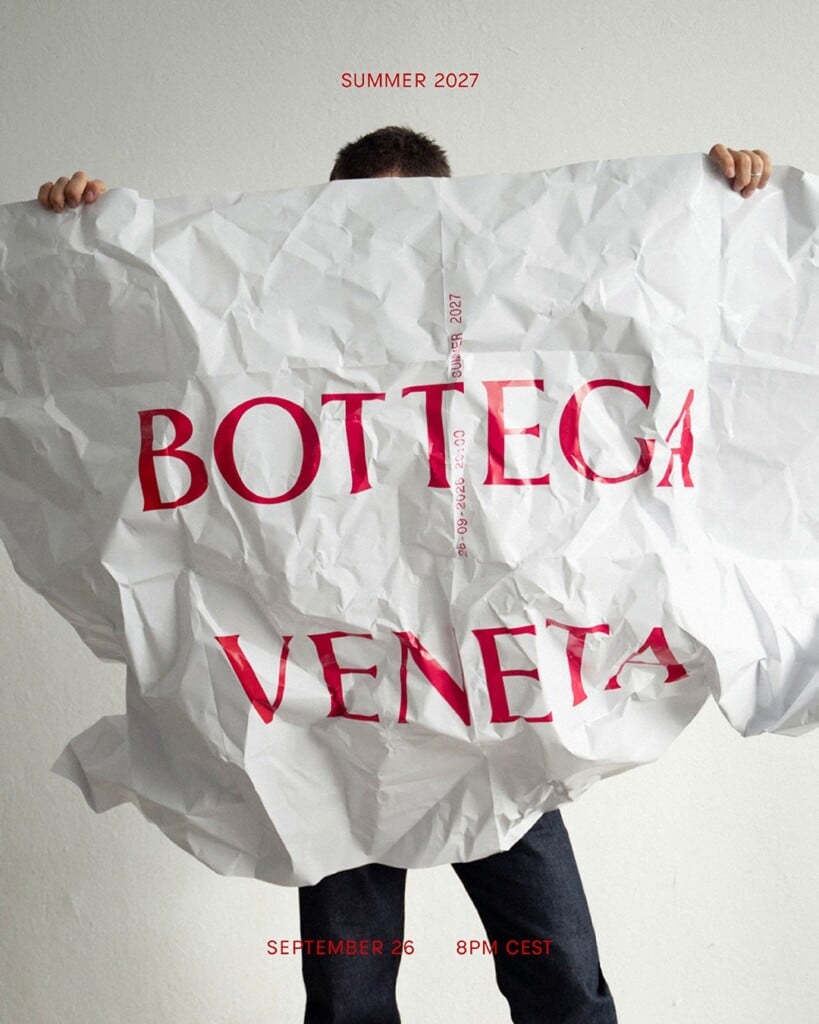
For its Spring/Summer 2027 show, Bottega Veneta starts from a simple, everyday material, seemingly far from the idea of luxury: cardboard. A material that, through folds, deformations and manual intervention, loses its original function to become something new. Not only seating, but also a large invitation that carries the same gesture and the same attention to materials.
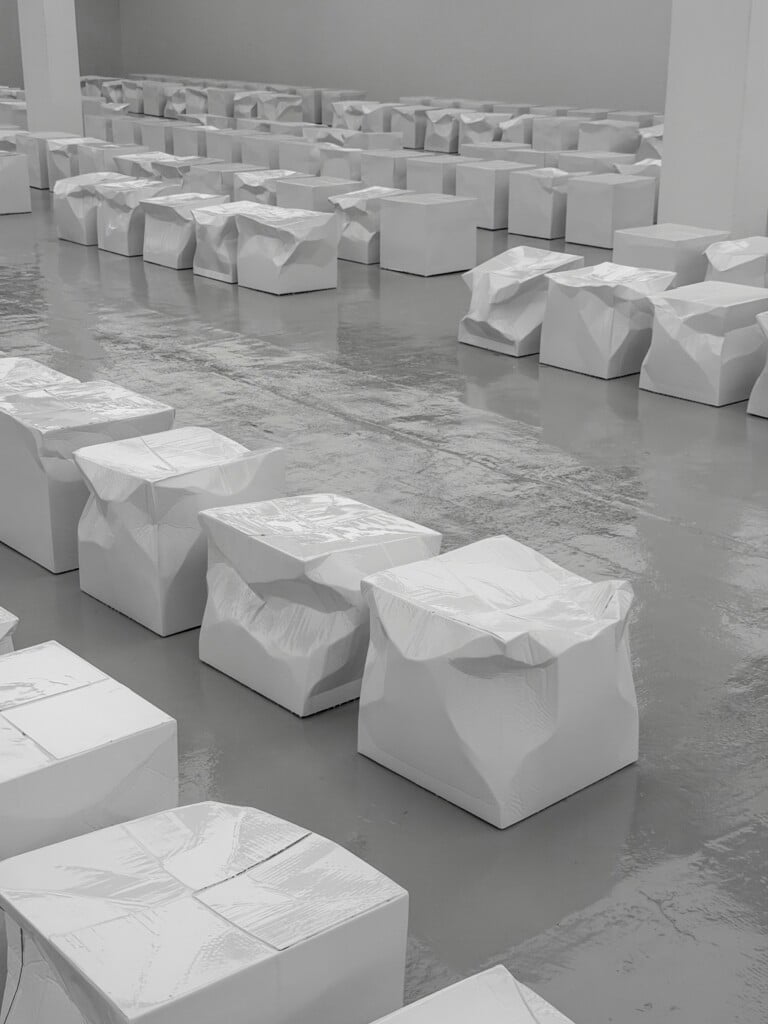
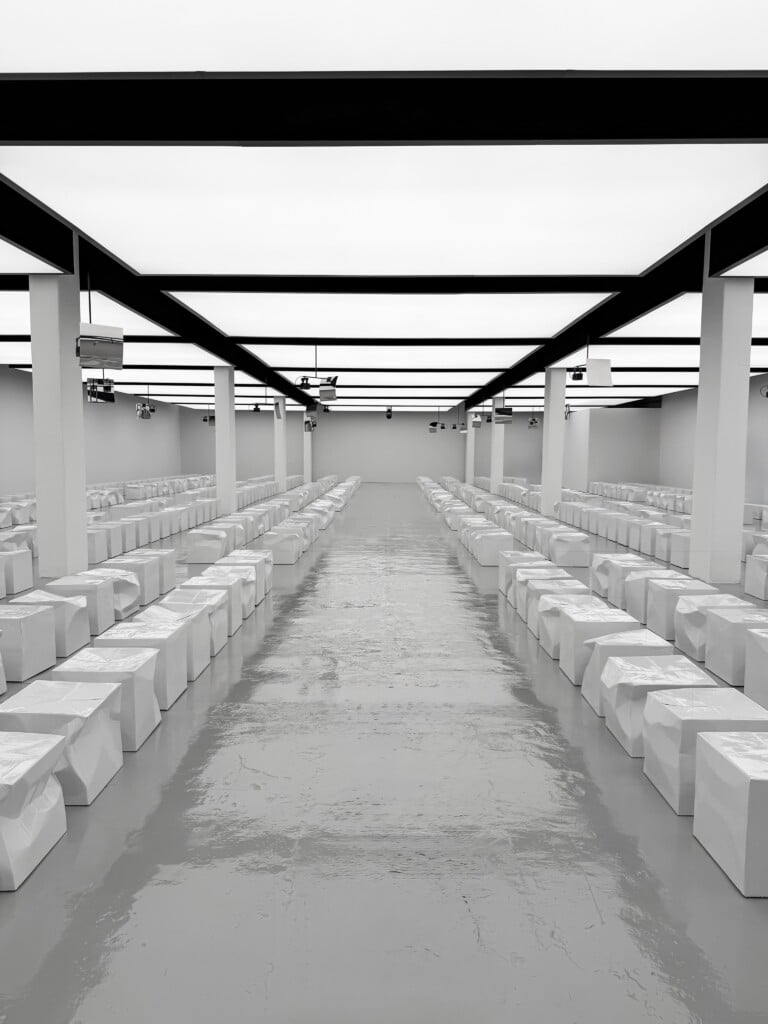
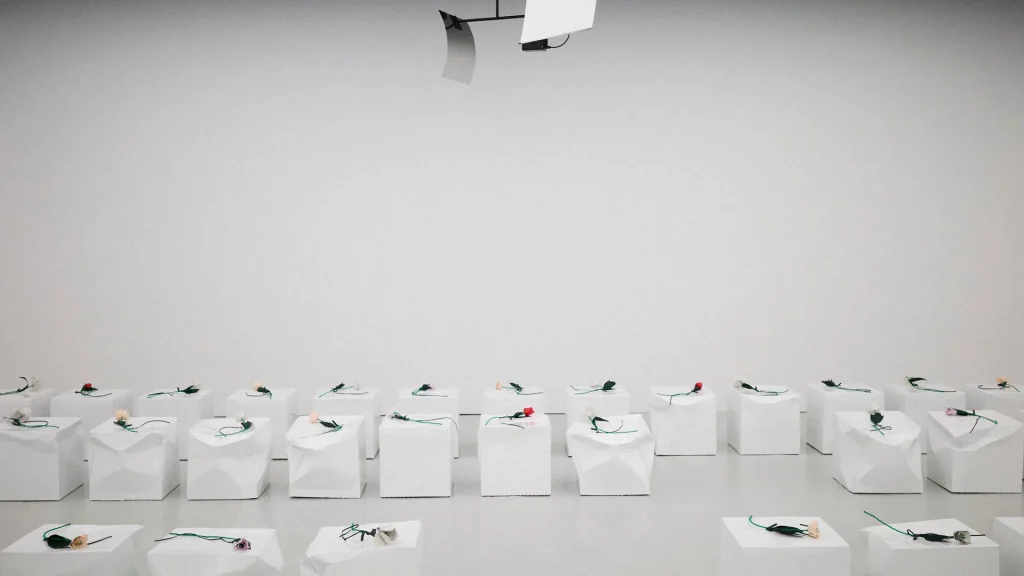
The idea comes from Illya Goldman Gubin, a Ukrainian artist born in 1992 and based in Berlin, who works across sculpture, installation and design. For the show’s set, the artist brought his Karton Hocker series, which literally translates as “cardboard stool,” into Bottega Veneta’s space, turning ordinary packing boxes into unique seats.
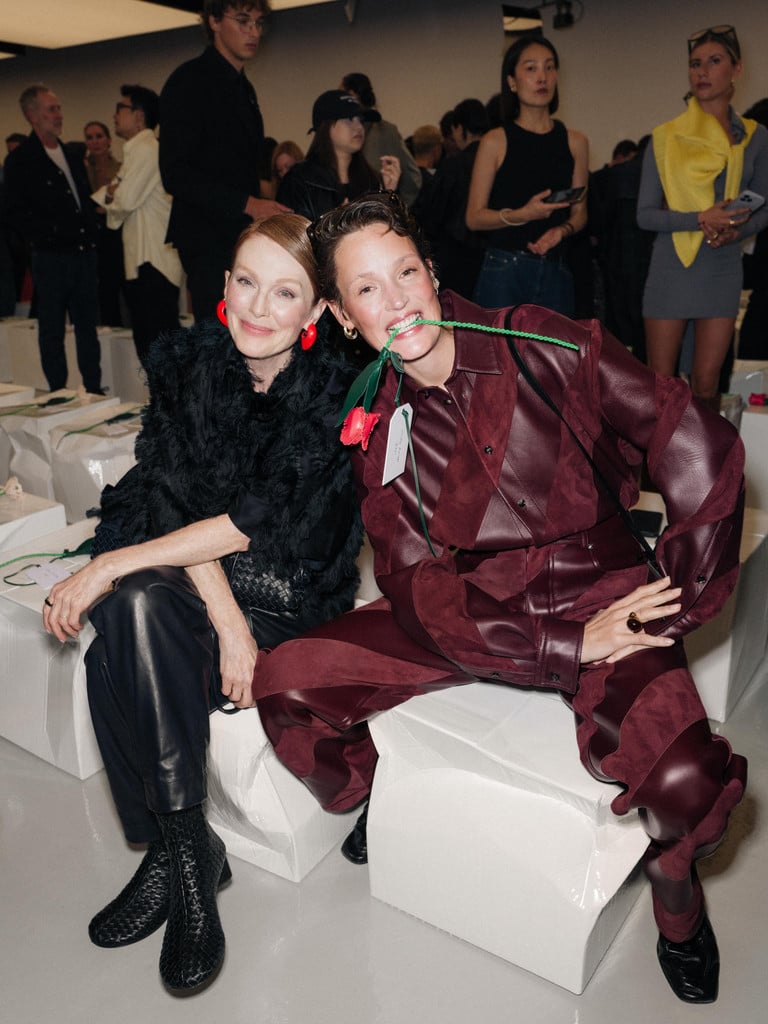
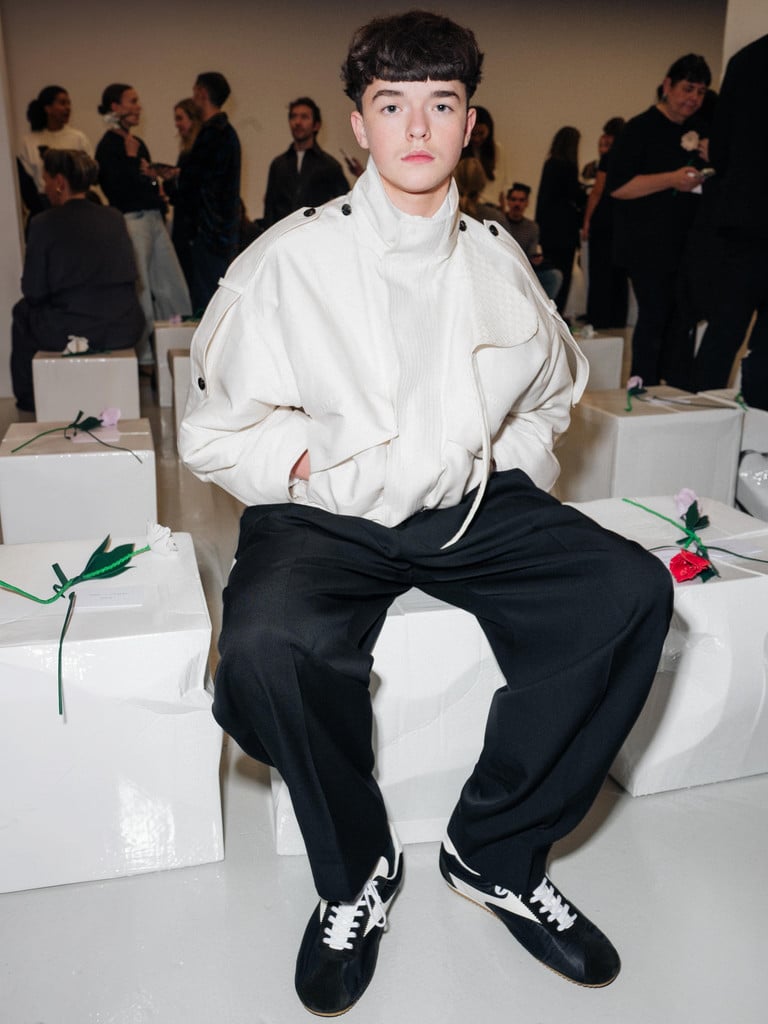
The process starts precisely from gesture: the boxes are grabbed, crushed and physically deformed, letting the folds and the resistance of the material determine the final form. Once shaped, the cardboard is reinforced with fibreglass and epoxy resin, becoming solid enough to support a person’s weight. The result, however, preserves the imperfections, the dents and the traces of the handling. Every stool is therefore different from the next.
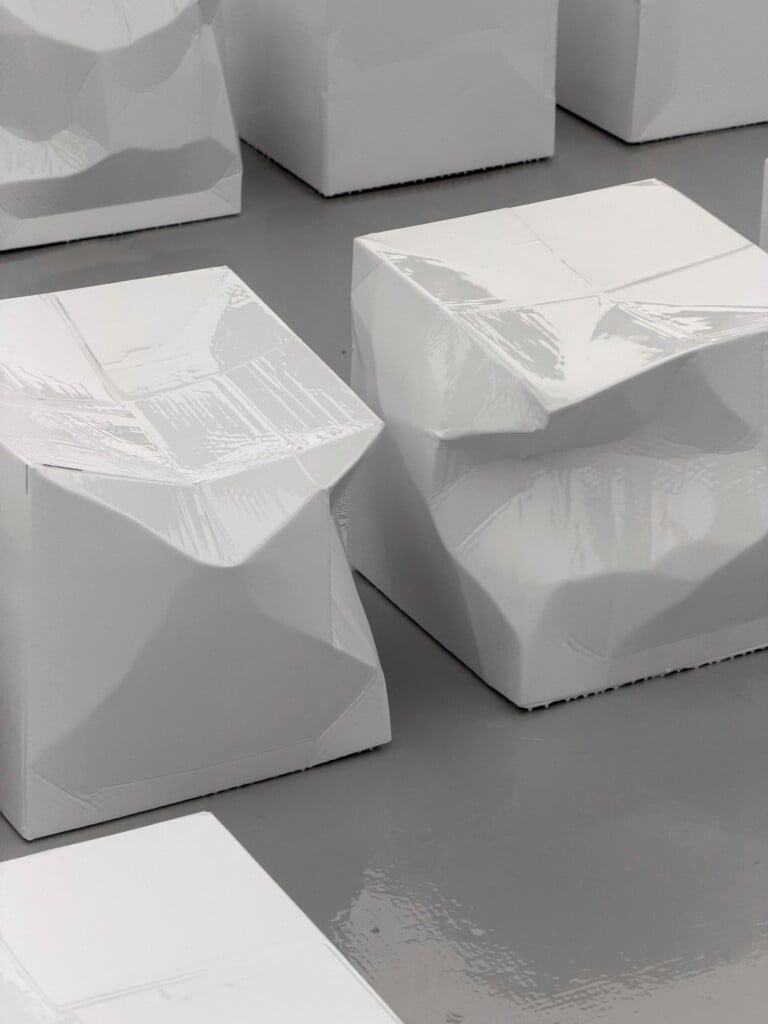
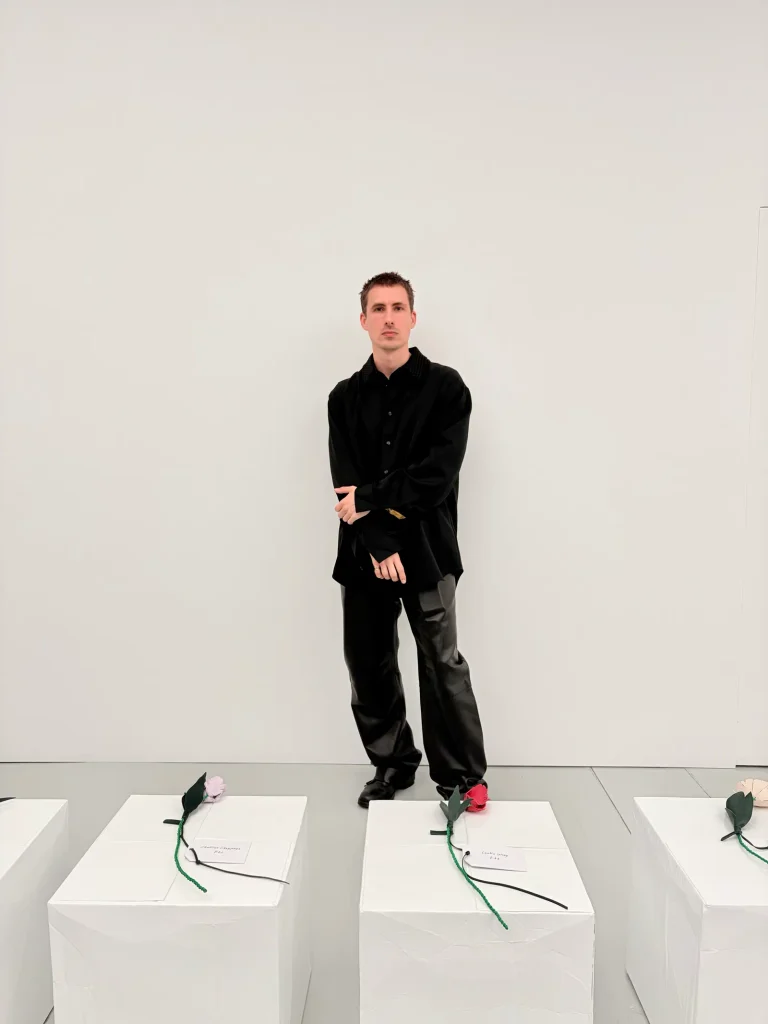
It’s precisely this shift from the fragile to the resistant that makes Goldman Gubin’s research interesting. The artist began working with paper and cardboard during the pandemic, having previously focused mainly on materials such as resin and fibreglass. The Karton Hocker series began taking shape in 2020 and was first presented in 2021. In his work, the material is not something to be completely mastered: on the contrary, it becomes part of the decision-making process.
For Bottega Veneta, this approach also takes on a specific meaning. The flaps of the boxes, folded and interlocked with one another, recall the structure of the Intrecciato, the weave that has always identified the maison. In this way cardboard, a material associated with transport and packaging, takes on a new function and points back to one of the house’s most recognisable elements.
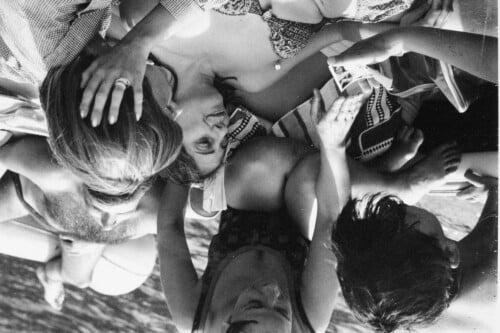
But the project doesn’t stop at the seating. The same gesture that alters the cardboard is also applied to the invitation to the Bottega Veneta show. The poster presenting the show’s communication is crumpled by hand before being delivered to guests. Goldman Gubin and a few members of the maison folded and manipulated the invitations one by one, turning an object that is normally serial into a series of entirely different pieces.
In the case of the invitation, the scale changes from the classic: a simple sheet becomes a large crumpled paper poster, almost a sculptural surface. The creases are therefore not an accident to be corrected, but become part of the image itself. It’s a logic that runs through the whole collaboration: not hiding the mark of the hand, but making it visible.
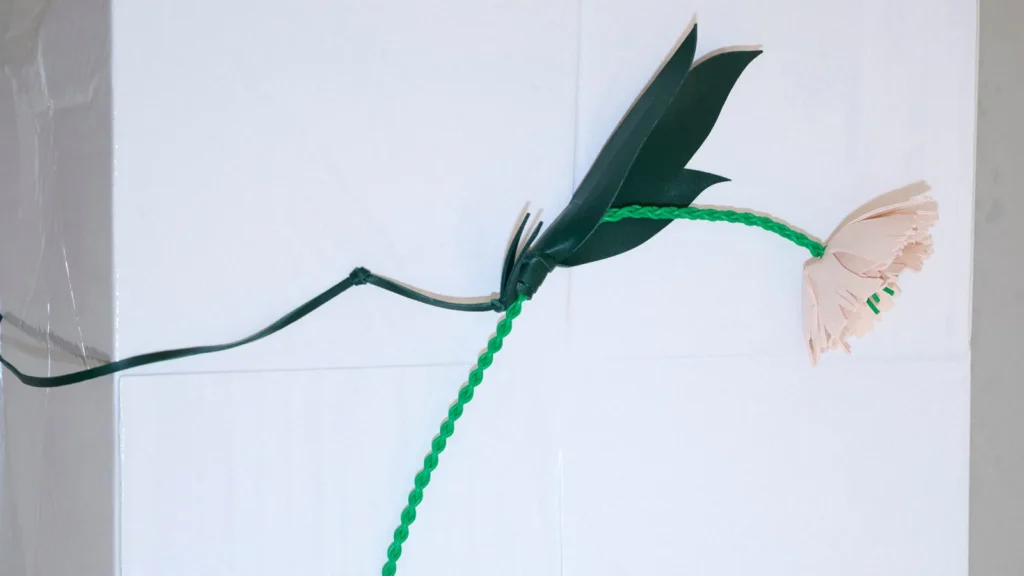
The flowers resting on the seats also follow this idea of transformation. On each Karton Hocker a flower was placed, handmade by Bottega Veneta’s leather goods atelier, including tulips, lilies and peonies, introducing an organic, colourful element into the show’s white, minimal space.
Goldman Gubin’s project fits well with Louise Trotter‘s vision for Summer 2027: everything seems to speak of lightness, movement and possibility, but without giving up on materiality. Cardboard is folded, leather is woven, flowers take shape from the atelier’s hands. Even the invitation, before the collection has even begun, already carries the trace of a gesture. For Goldman Gubin, the distinction in his work lies in function: the objects can be used, but they are born first and foremost from an idea and a narrative. It’s precisely this ambiguity that makes the Karton Hocker interesting: they look like boxes that have lost their function, until you sit on them and they become something else.
For Bottega Veneta, then, cardboard is not simply a humble material chosen for the set. It becomes a way to bring gesture, imperfection and transformation into every element of the show. From the large sheet of the invitation to the seats scattered throughout the space, what would normally be identical for everyone becomes unrepeatable.