We’ve already had the chance to explore the imaginary world of Claudia Fuggetti when, some time ago, we talked about her technicolor garden — a digital universe where the natural melted into the artificial. Today we return to the Apulian photographer and visual artist to explore another chapter of her research: Metamorphosis.

With this new project, Claudia Fuggetti engages with the present moment—an era marked by deep transitions and widespread fragility. Metamorphosis is a visual reflection on our relationship with nature, but also a poetic statement about the urgency of rediscovering a sensitive connection to what surrounds us. Taking inspiration from the words of ecological philosopher David Abram — who argues that the ecological crisis is, above all, a crisis of perception — Fuggetti constructs an imaginary in which nature is no longer just a backdrop, but a living, pulsating subject.


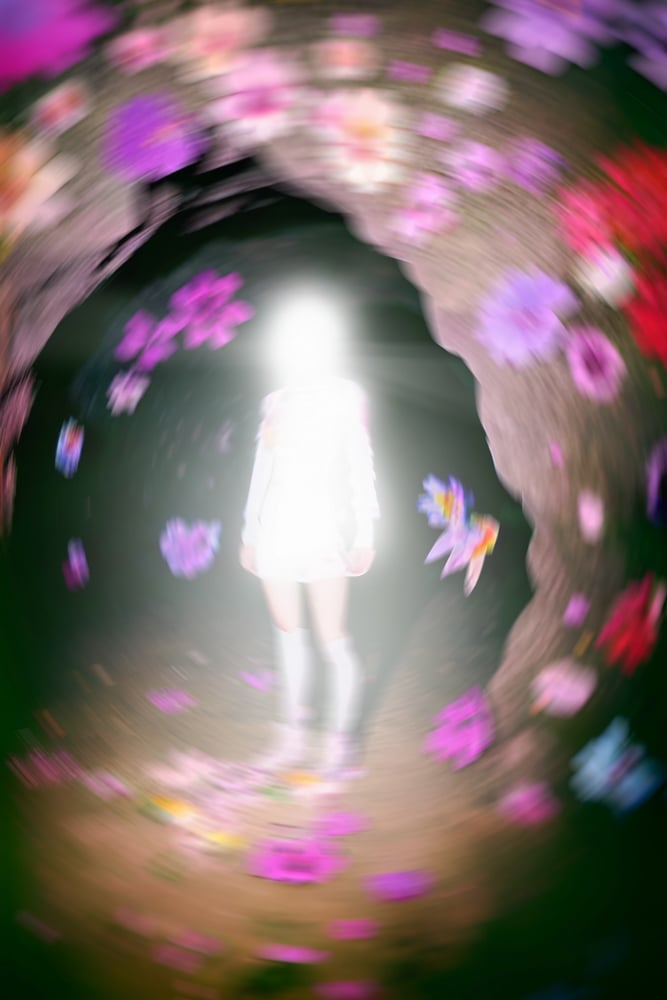
Her photographs are crossed by chromatic interventions that seem to animate every natural element, as if within each leaf, stone, or stream there was a spark of resistance. The colors—unnatural but never invasive—symbolize a vitality that persists even when everything around appears to be degrading. At the same time, they reveal a fragile, fragmented reality in constant transformation.


In this suspended space, the human presence is rarefied, almost silent, immersed in a contemplative state. Metamorphosis is not a cry of alarm, but a visual meditation — an invitation to slow down our gaze and let ourselves be permeated by a new perception of the world. Nature, Fuggetti seems to suggest, has never stopped evolving: its heart continues to beat, to transform, to generate visions.


Also read: The stylistic evolution in Jungho Lee’s illustrations