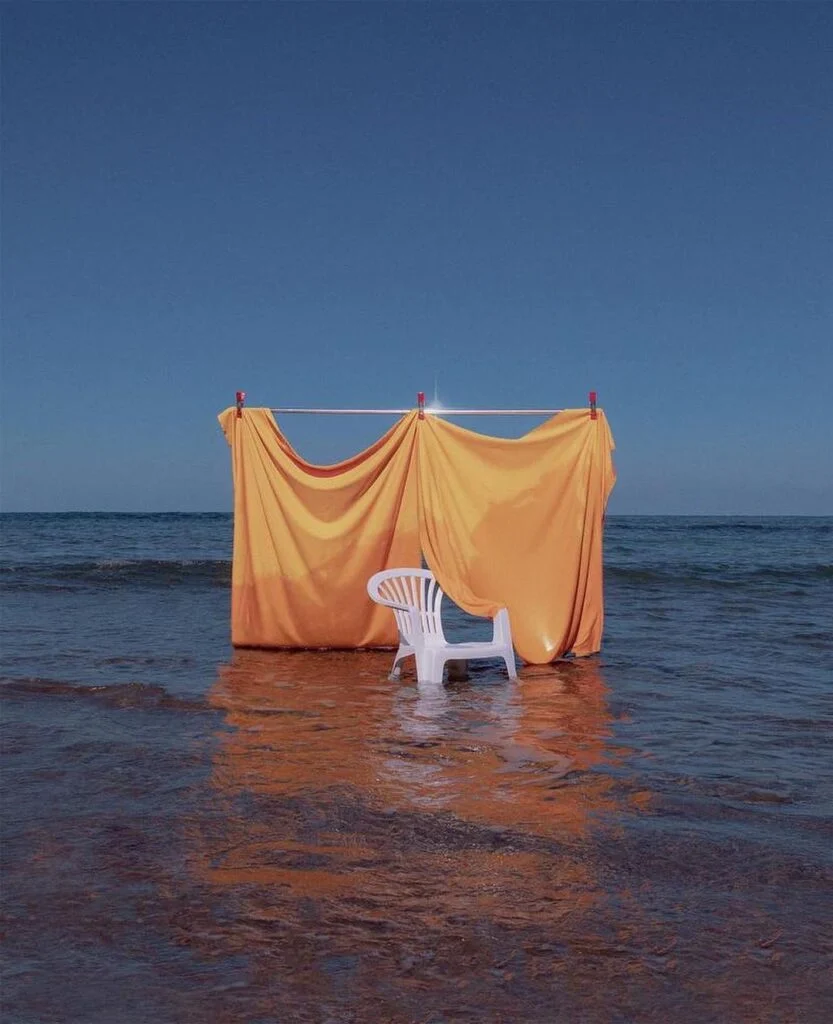
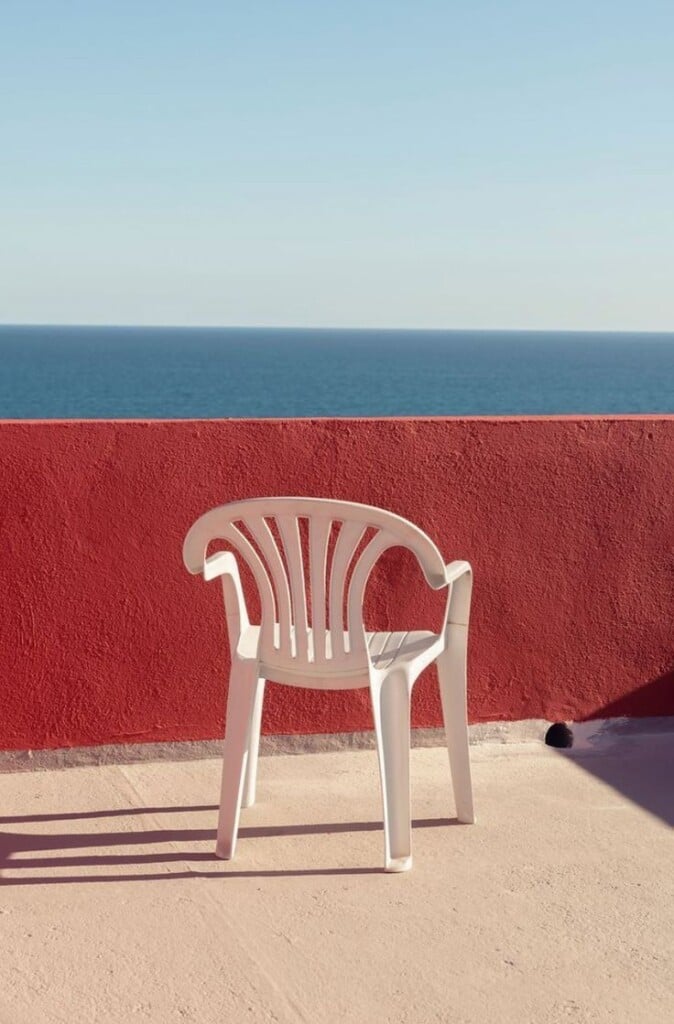
White, lightweight, anonymous—yet it’s an icon of the design world and much more. The Monobloc is all around us: on home balconies, at beach bars, in shops, at fairs and festivals, in fashion editorials, and on music album covers. A simple yet powerful object that often reflects our relationship with design, mass culture, and everyday life.
The term Monobloc comes from the French “moule monobloc,” meaning single-block mold. So, it’s not a brand or product name, but a true technical definition.
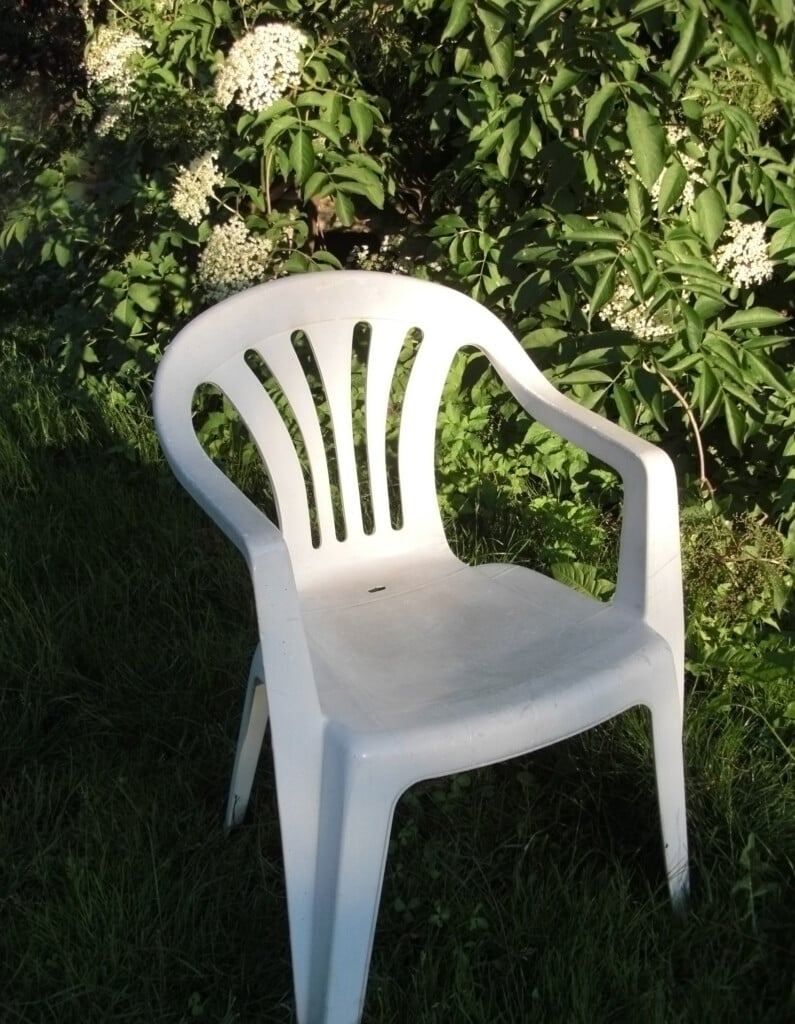
Its history began between the 1940s and 1950s, and one of the earliest examples is credited to Canadian designer Douglas Simpson in 1946. Its evolution traveled the world, passing through France in the hands of engineer Henry Massonnet, eventually reaching mass production with the market launch of the Resin Garden Chair by Grosfillex.
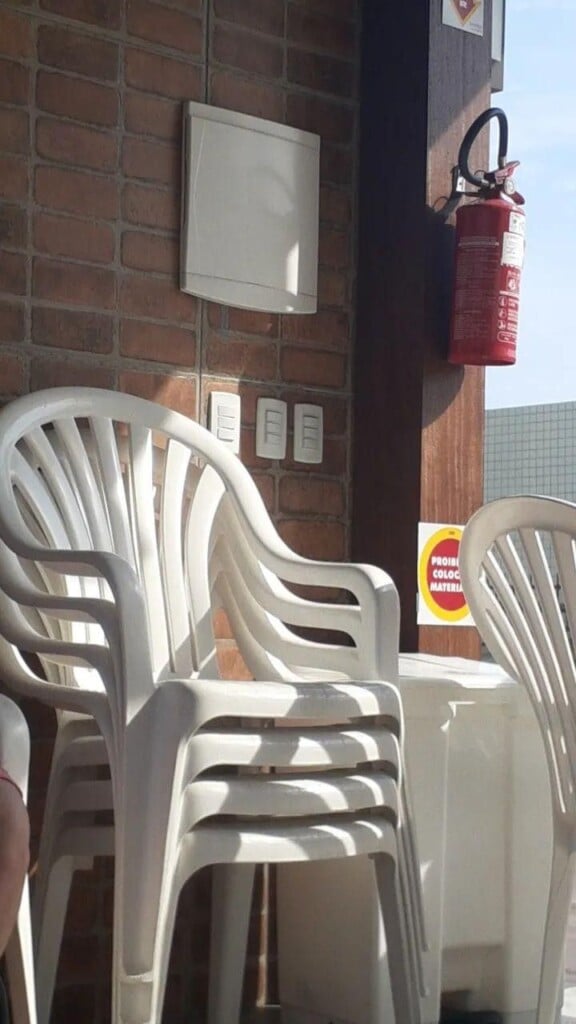
Its design is based on precise functional analyses: holes in the backrest to drain water, thin yet strong structure, and a curve designed to fit the human body. The legs are engineered to withstand heavy loads, and their placement allows many chairs to be stacked without deforming. In short, every visual element—holes, armrests, backrest—has an ergonomic, thermal, or structural function.
The industrialization of plastic and the development of injection molding technology made it possible to manufacture a chair in under two minutes, drastically reducing costs. This extreme affordability broke down barriers: democratic, accessible design without compromising functionality.
Surely, the Monobloc was not born to be a design icon, yet it became one.
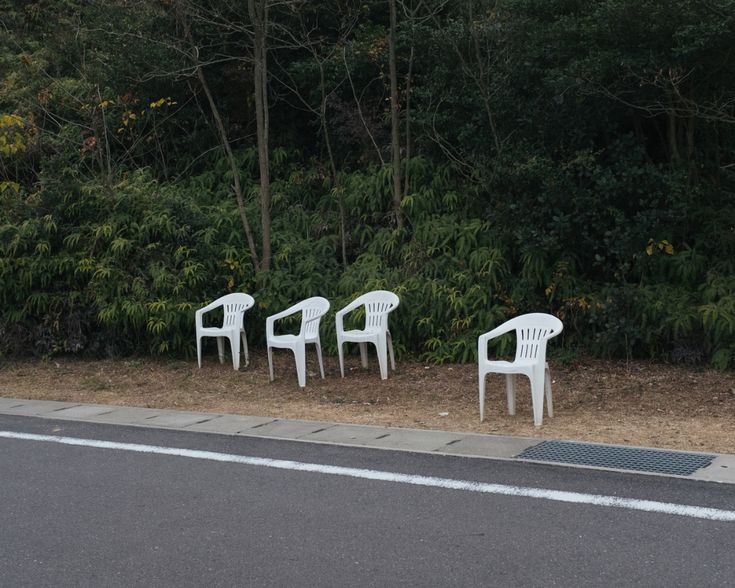
In Italy, the Monobloc—better known as “the white plastic chair”—has become such a part of the summer landscape that it’s considered a true icon of the Italian summer. Just imagine a beach lunch, an aperitivo on a terrace, or a village bar, and that white plastic chair comes to mind.
Not surprisingly, starting in the 1980s, many Italian factories began producing their own versions, adapting molds to local standards, using colors closer to Italian culture, and adjusting dimensions to fit local spaces. As a result, the national market saw the emergence of sturdier or more colorful versions—sometimes lighter, sometimes smaller.
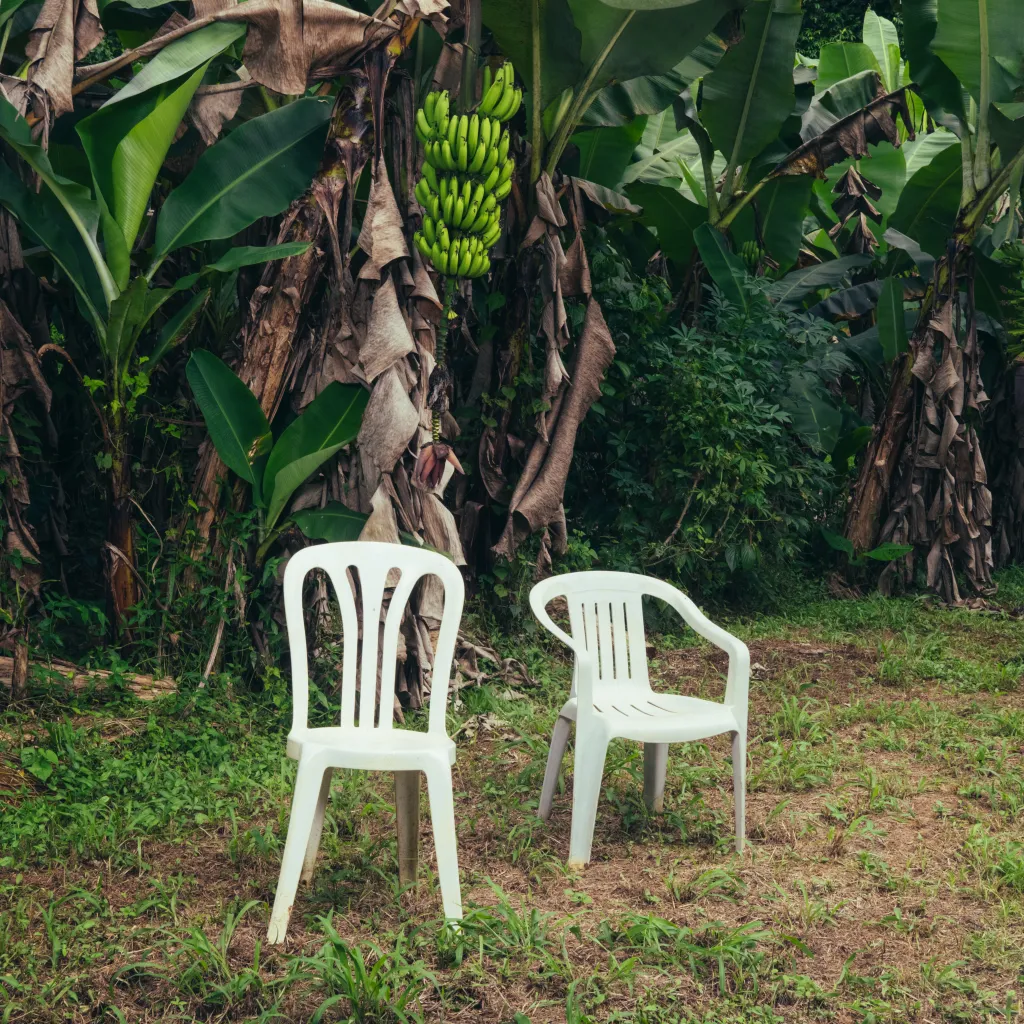
But the white plastic chair isn’t only part of Italian tradition. This was highlighted recently by Bad Bunny and his latest album DeBÍ TiRAR MáS FOToS. The cover features a photo by Robinson Florian showing two white Monobloc chairs on a lawn—not just an aesthetic element, but a cultural and emotional symbol. In Puerto Rico—and elsewhere—this chair is typical of family gatherings in backyards or quiet streets. In this context, Bad Bunny’s choice to depict them empty symbolizes nostalgia and longing for loved ones who are no longer present or who have had to emigrate.
Within days, many people saw their own hometowns reflected in that image, and the white chairs were used throughout the album’s tour promotion, mysteriously appearing in front of arenas and stadiums where the Puerto Rican singer would perform.
In short, the Monobloc, through its simplicity, has managed to transform from a design piece into a social phenomenon.
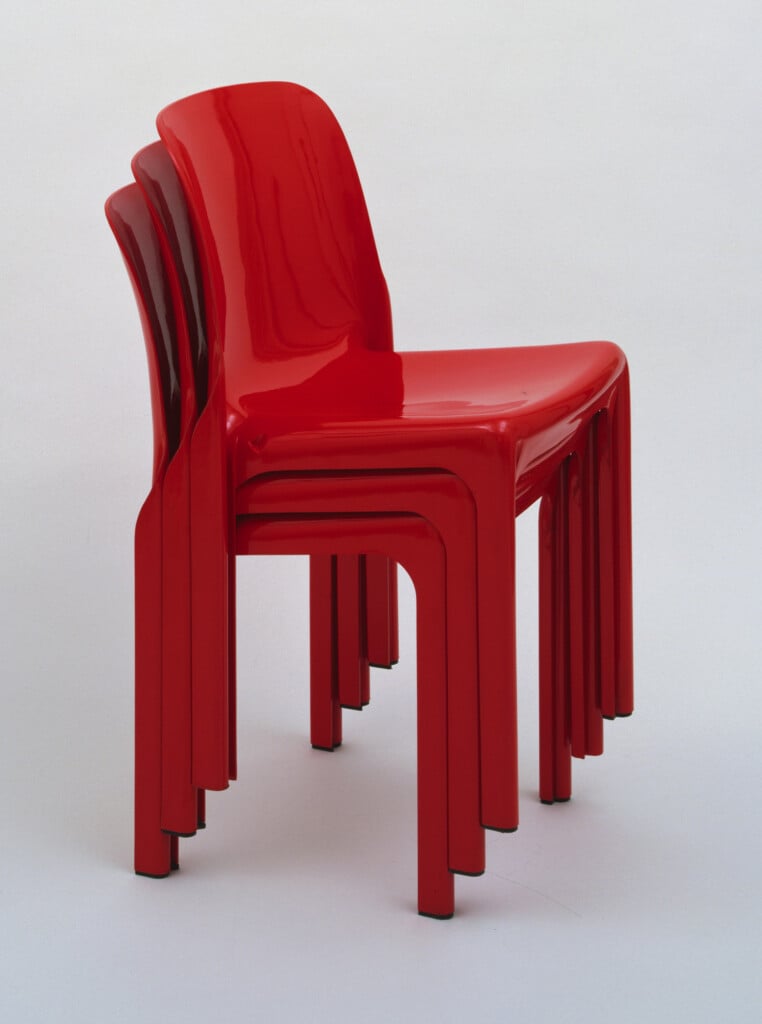
Its widespread presence has also been boosted by numerous reinterpretations presented by design brands, such as the timeless Panton Chair by Vitra, the Selene chair by Artemide designed by Vico Magistretti in 1969, and the more recent Bell Chair designed by Konstantin Grcic for Magis.


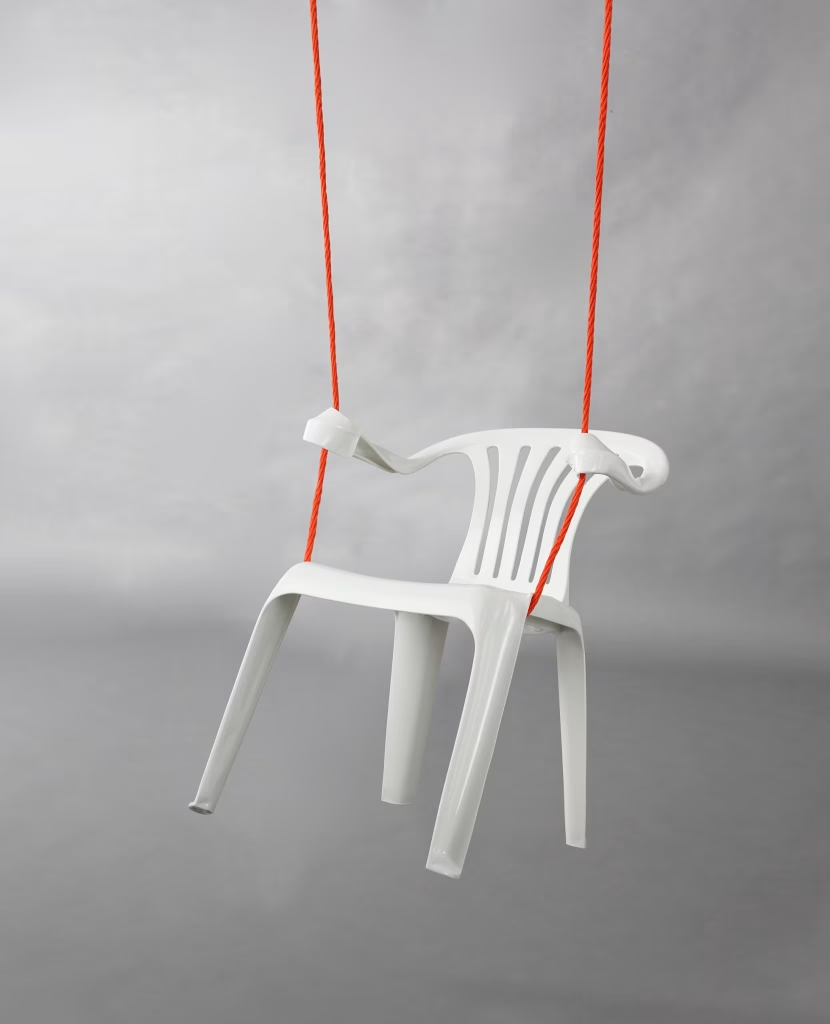
The Monobloc has become a challenge, something to engage with. We see it in the fully glittered, mirrored version by HFA-Studio, which went viral on social media and made us want it in our living room. Or in the wild reinterpretations by Bert Loeschner, who turns the white chair into a swing, makes it hug another chair, or even transforms it into a chess piece. Some artists have made it the protagonist of paintings and artwork, while others, like designer Martí Guixé, have used it as a canvas to denounce plastic overuse and pollution.

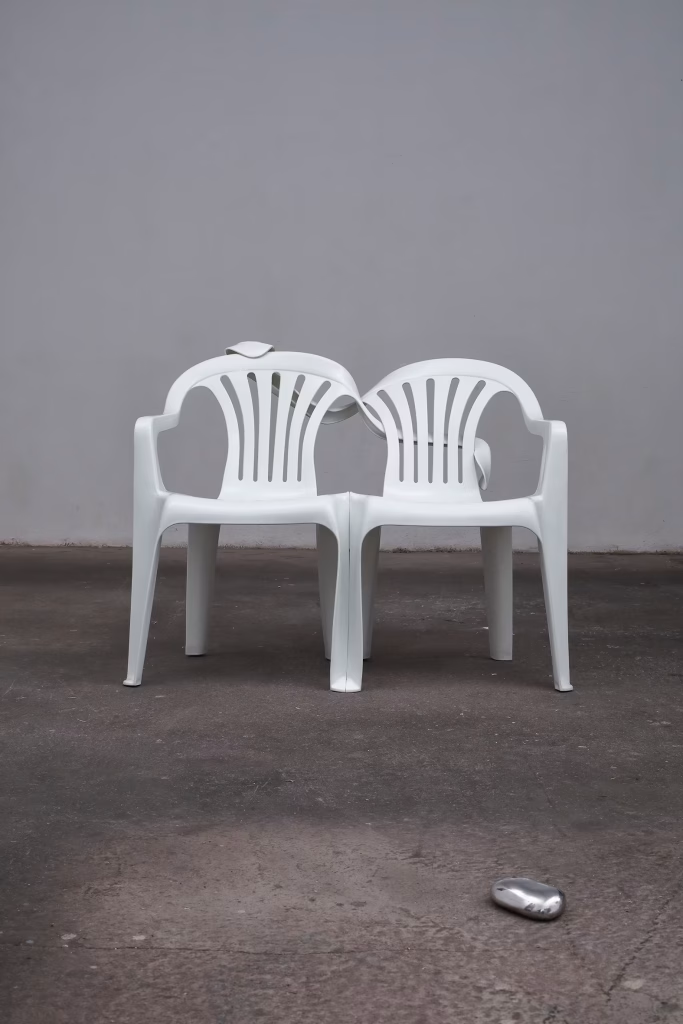
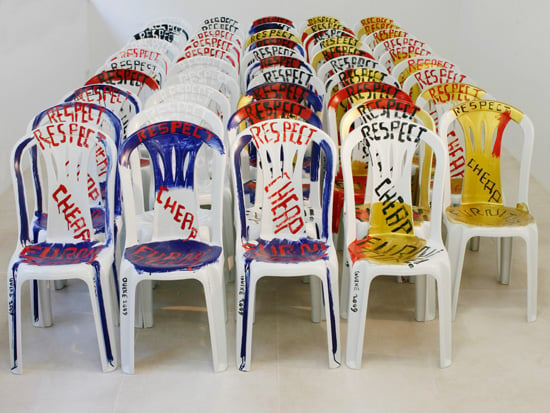
Indeed, the Monobloc is not only a symbol of democratic, affordable design, but also synonymous with a culture of disposable consumption: when a white plastic chair breaks, it’s not repaired—it’s thrown away and replaced, endlessly.
And so, slowly but surely, the white plastic chair has become an integral part of our lives, a memory of something long gone, of a distant childhood, of a summer past. Perhaps that’s why, while the world urges us to change and reconsider our habits in ethical and ecological terms, every time we sit on a Monobloc—whether at a bar in our hometown or thousands of kilometers away—we’ll always feel a little bit at home.
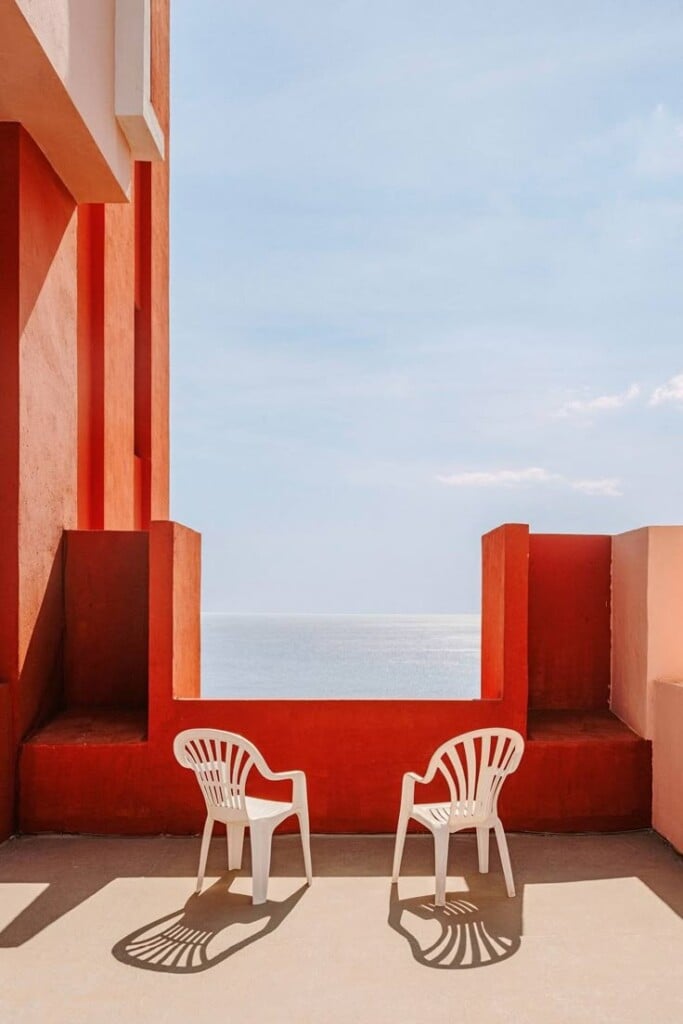
Photo cover: Andoni Beristain
Read also: Ode to the director’s chair