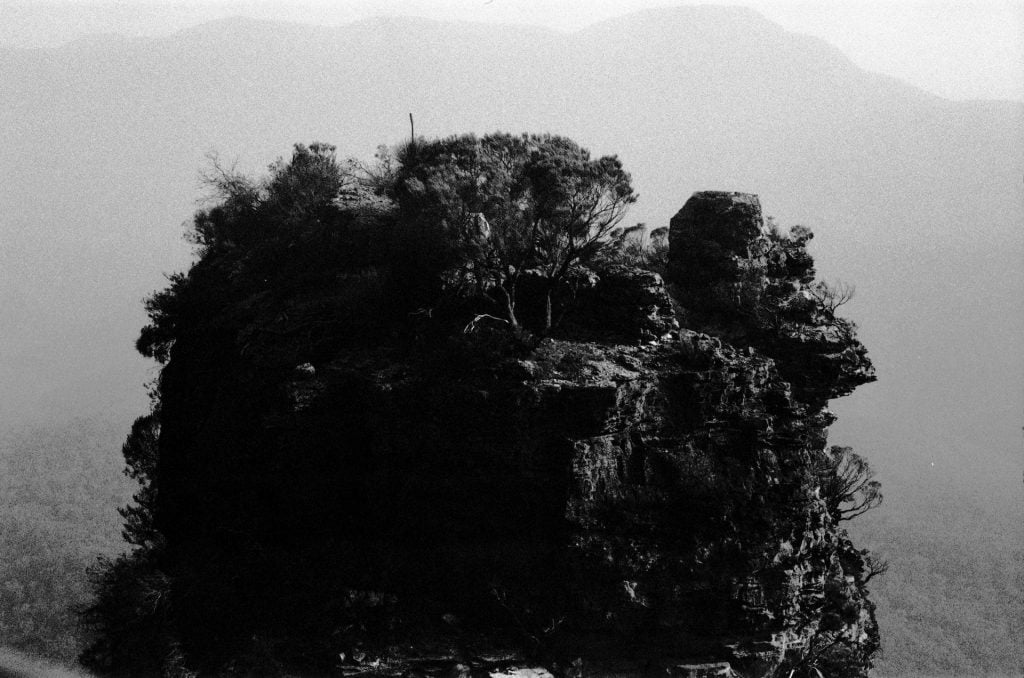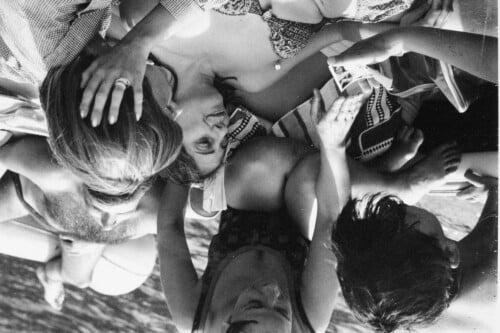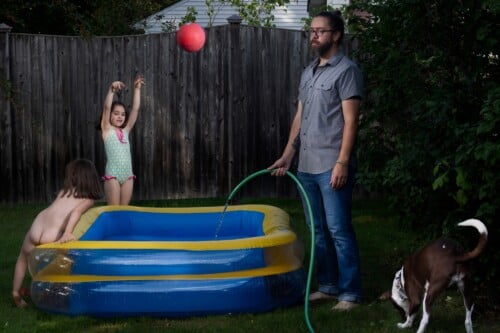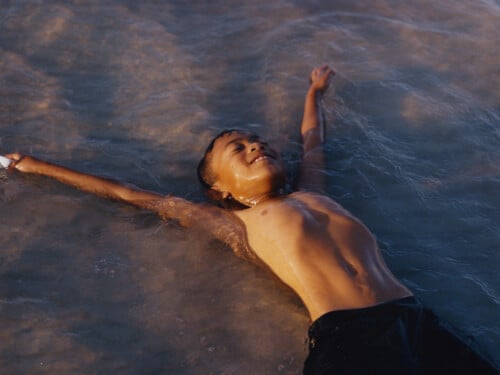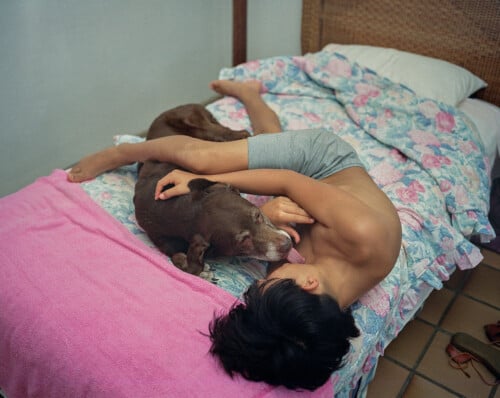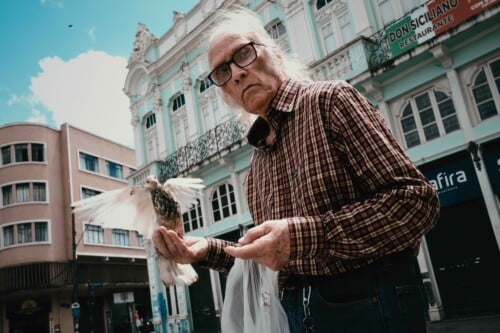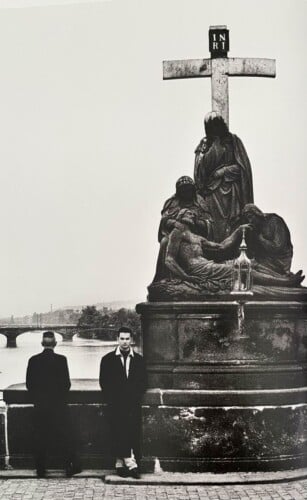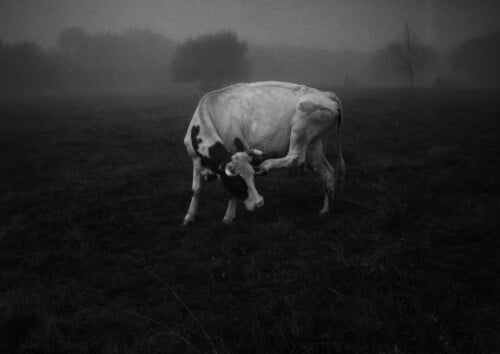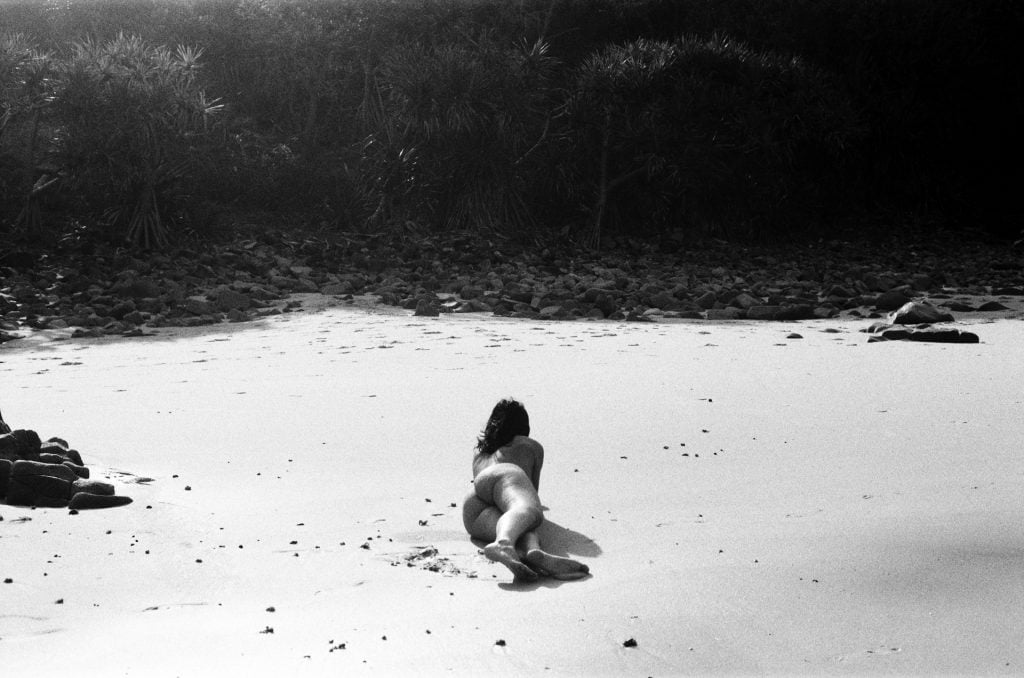
In wild places, the body of a female figure merges with the white sand, surrenders to the rocking of the sea waves, lets herself be caressed by the sun’s rays. This is what we see in the shots of Claudio Capanna, an Italian photographer born in 1980 who now lives and works in Brussels.
Claudio is a film director who devotes his free time to photography, an art that soon became more than just a passion: “Mater“, his first book of photographs, is currently being published.
“Mater” encapsulates all the essence of Claudio Capanna’s photography. It is a selection of shots taken over several years and during different trips, exclusively in analogue and black and white. This stylistic choice allows the photographer to play with the grain of the image and to create strong contrasts between light and dark areas.

Claudio told us how he got started in photography and revealed more about his book. Read on to make sure you don’t miss the interview and follow Claudio Capanna on Instagram!
Tell us a little bit about yourself. What is your background?
I was born in Rome in 1980 and I have always been passionate about cinema. I studied directing in Rome and then in Paris, where I specialised in documentaries. For the last ten years I have been based in Brussels, Belgium, working as a freelance director.
You are both a director and a photographer. Which aspect of these two art forms attracts you the most?
I was born as a filmmaker and have been developing this language for decades, making it my profession. Photography, on the other hand, was born as a “private” and intimate need. In the past, while attending film school in Paris, I also thought about working as a photographer, but this idea was soon abandoned. I am very happy to have continued to develop photographic work without the stress that comes with having something that is also a ‘job’.
In both languages (with different techniques) I work on the body and organic matter. I am attracted by the sensory potential of the artistic reproduction of reality.


Your photography is exclusively analogue. Why this choice? What do you love about analogue?
I have never used digital. From the very beginning (i.e. during the first decade of the 2000s), I naturally turned to analogue photography. At the time, I was still living in Rome and I became friends with two printers, in particular with Andrea Cecchettini, who had worked for many years in a very famous workshop in the capital and then set up on his own, creating the Massagrigia black and white craft photography collective (of which I was also a member).
For me, analogue photography is essential for working with the organic and material aspects of images. I love graining my films and work closely with my printers. I use digital retouching very little.
You have just published your first photography book entitled “Mater”. Tell us about it. What is the central theme of this work?
“Mater is a project that started several years ago. First it was translated into an exhibition in a gallery in Brussels, then I met Steve Bisson, curator and founder of the Urbanautica Institute. He really liked my images and found similarities with a certain Japanese minimalist photography (like Yamamoto Masao).
Together we made the book, which is coming out these days.

I work on photography the way Chris Marker worked on his films; I accumulate images of my life and the trips I normally take with my wife. My wife is my model and my muse, with her I explore sinuous and unknown territories (physical but also mental spaces).
The magmatic material is then edited later and only then do I realise that there are elements that come back.
“Mater” is like a suggestion, and it is not structured with a classical narrative path. We see the story of a woman and a pristine landscape with which this living being interacts. At a certain point we see vestiges of a human civilisation (ancient and aged), which seem to break an existing balance.
Complete the sentence: “For me, photography is…”…
…a way to fill an emptiness, to relieve loneliness, to wonder at the world, to discover the mystical zones of our dreams.