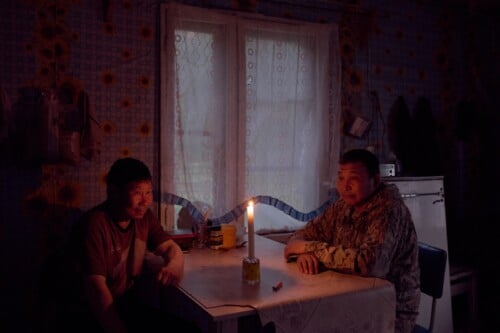
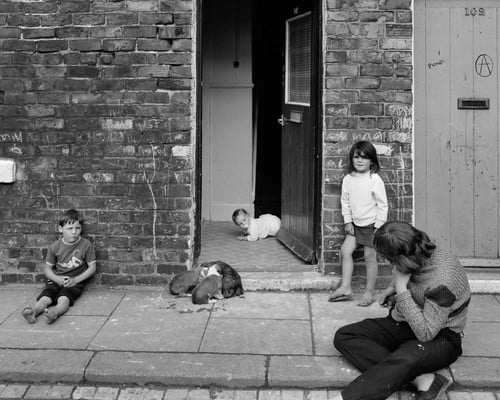
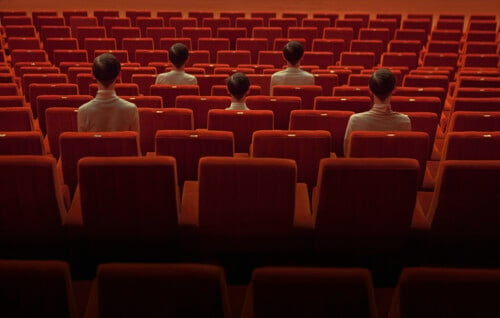
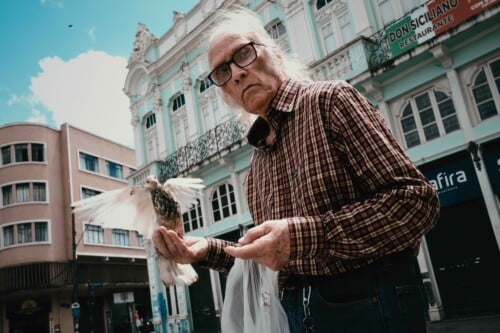
The traditional family album tells stories of love, celebration, and rituals. Colin Pantall, with his photographic series The Mental Load of Motherhood, chooses instead to explore a different terrain: the distance and separation between a mother (Katherine) and her daughter (Isabel) during the early years of their bond. Pantall describes this phase as «a universal experience that every mother and every child goes through». A time when “the bond between mother and child is temporarily strained, when shadows of the mother’s former self reappear, and the child experiences the anguish of isolation, the feeling of being alone in the world.”

Since 2001, Pantall has focused his photographic practice on the environments around him, asserting that photographing what is known, accessible, and loved is not only a practical act but also a deeply personal one. This approach became even more meaningful after his daughter was born, intertwining his photography with domestic routines. «For economic and emotional reasons,» he explains, «the photography I could make had to be close to home».


Documenting the domestic environment became Pantall’s way of keeping his creative self alive, even within the confines of family care, which often limits opportunities for personal expression.
Pantall also reflects on his privilege as a co-parent. «I used the camera to extend my creative self beyond the frustrations of daily childcare,» he says. This privilege, however, was not equally shared by his wife, who bore the primary role of emotional caregiver. «If comfort was needed, she was the one who gave it,» he recounts. «The care, reassurance, and support—all of it fell on her constantly, unrelentingly, and intensely physically. It was exhausting».


With The Mental Load of Motherhood, Pantall has created a visual narrative that not only documents the complexities of the maternal role but also highlights the disparity between the emotional and psychological weight of caregiving and the privilege of observing and capturing these dynamics through a lens. The result is a raw and intimate portrayal that invites reflection on the deeper meanings of motherhood.