When all this exploded, few of us understood the enormous impact that the COVID-19 pandemic caused by the SARS-CoV-2 coronavirus would have on all areas of our daily life and society. We are facing the most devastating health and economic emergency the world has faced since the end of World War II.
All non-essential production activities have stopped by decree, at least in Italy, as a result, the whole world linked to fashion and fashion has stopped its production chains.
The most important companies in the world have given, and continue to give, their contribution in the fight against the coronavirus, and they are doing so in many different ways.
The global fashion system has reacted not to succumb, but also and above all, to give a signal of hope and strength in a very difficult moment.
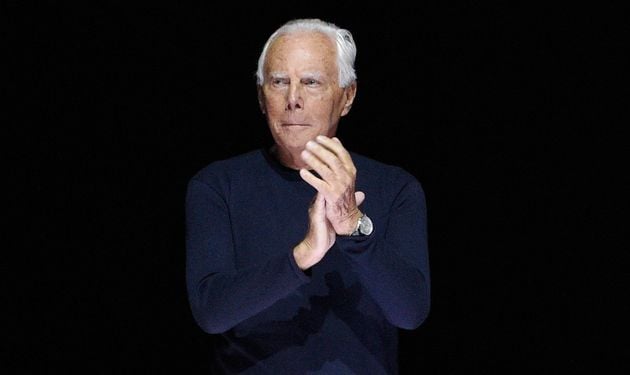
The first to take the field in concrete terms was a true symbol of Milan, Giorgio Armani, and he did so, first and foremost, by helping the health system in Lombardy, the one most under pressure from the emergency, but also the emblem of the fight against the coronavirus, the National Institute for Infectious Diseases Lazzaro Spallanzani in Rome, donating 1.250 million euros to the Sacco, San Raffaele and Istituto dei Tumori hospitals in Milan. But he did not stop there, King George also extended his donation to the hospitals of Bergamo, Piacenza, and Versilia, and to the Civil Defence, donating up to 2 million euros.
The Armani Group has also converted all its Italian plants into the production of disposable gowns for all those healthcare workers who, on the front line, are fighting this difficult battle.
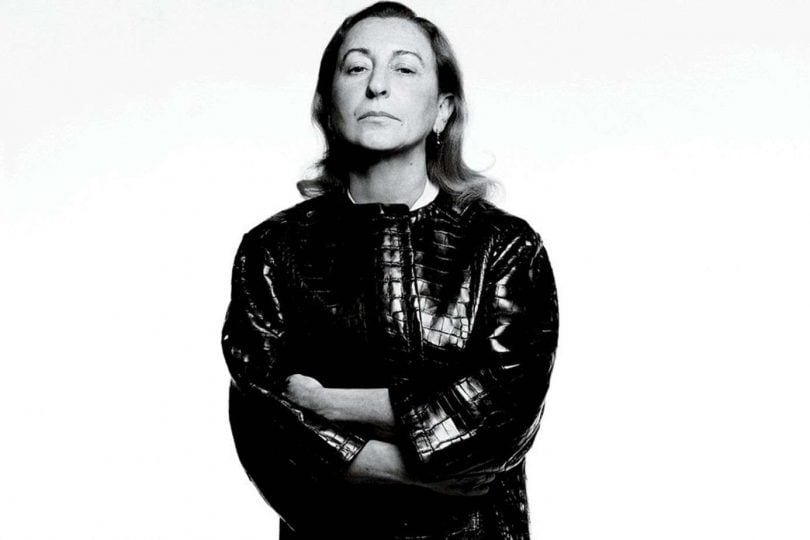
Prada has chosen to reconvert its production line to support the region of Tuscany, making 80,000 gowns and 110,000 masks available to healthcare personnel in the only factory still in operation in Italy at this time, that of Montone in the province of Perugia. Solidarity, however, did not stop at the production aspect alone. The Miuccia company has also donated two intensive care and resuscitation stations to each of the Buzzi, Sacco and San Raffaele hospitals in Milan.
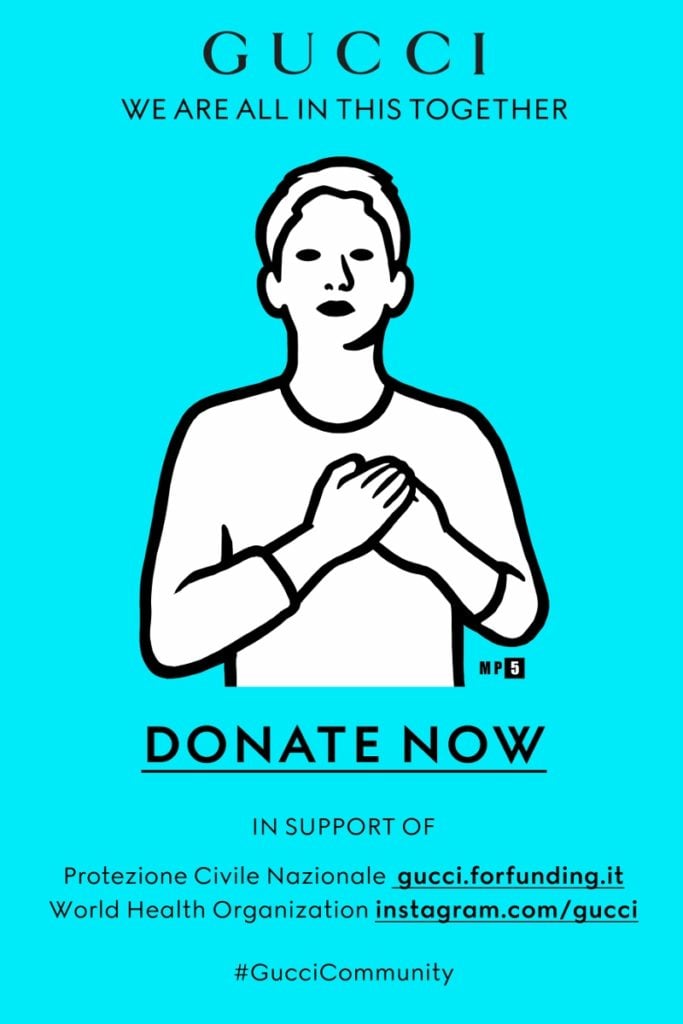
Gucci has also decided to support Tuscany by producing 1 million masks and 55,000 suits for doctors and healthcare workers. It also announced a donation of 2 million euros to support two crowdfunding campaigns, one in Italy and in collaboration with Intesa Sanpaolo, in favor of the Italian Civil Protection; the other to support the World Health Organization through the COVID-19 Solidarity Response Fund of the United Nations Foundation. All this by calling on the #GucciCommunity spread throughout the world, through the campaign We Are All In This Together.

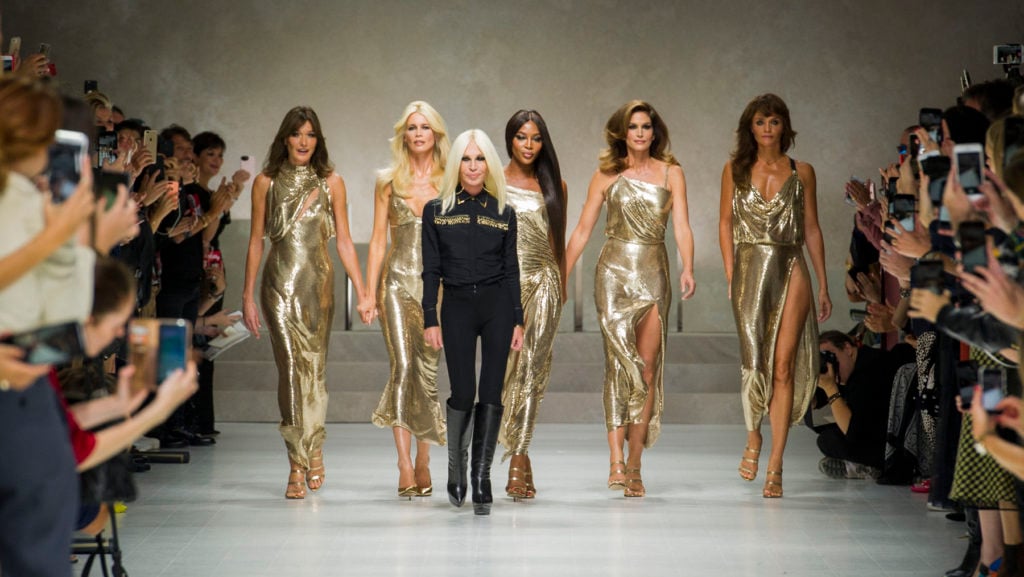
Donatella Versace and her daughter Allegra donated 200,000 euros to the intensive care department of San Raffaele Hospital in Milan, while Dolce&Gabbana allocated funds to Humanitas University to support a study on the immune system’s responses to coronavirus, coordinated by immunologist Alberto Mantovani.

Bulgari, on the other hand, decided to support the Italian Centre of Excellence in Research and Medicine which, thanks to the work of Maria Rosaria Capobianchi, Francesca Colavita and Concetta Castilletti, isolated the structure of the virus, anticipating a large donation to the research department of Spallanzani in Rome, which contributed to the purchase of the latest generation 3D microscope delivered on March 6. The Maison has also decided to produce hand disinfectant gel, thanks to the help of ICR (Industrie Cosmetiche Riunite di Lodi), to be donated to hospitals through the Italian Government, in all will be produced about 200,000 bottles in two months.

The Benetton family, through Edizione Srl, has donated 3 million euros to support the projects and urgent needs of four hospitals that are actively contributing to the fight against the coronavirus: the Ca’ Foncello in Treviso, the Sacco in Milan, the Spallanzani in Rome and the Gemelli polyclinic in Rome.
The LVMH group (Louis Vuitton, Givenchy, Kenzo, etc.), has undertaken to donate 40 million masks to French hospitals, as well as Balenciaga and Yves Saint Laurent, are producing masks in their French factories.
Moncler, on the other hand, has donated 10 million euros for the construction of the hospital inside the former Fiera di Milano, which saw the light a few days ago.

The Japanese company Uniqlo has donated 1 million masks to the municipality of Milan, one of the most affected and most worrying. The masks will then be distributed to hospitals, municipal workers and volunteers who are active every day in the Milanese territory.
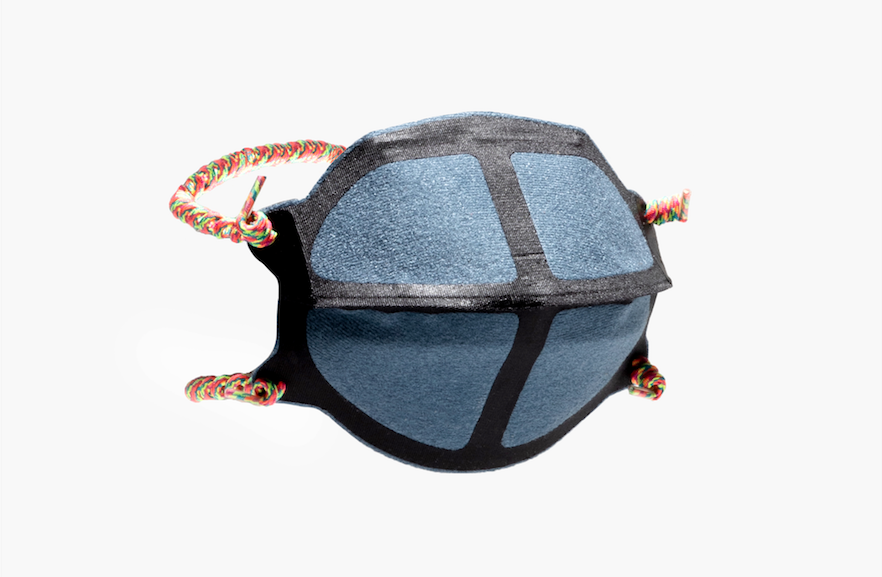
New Balance, given the continuous and urgent need for personal protective equipment throughout the United States, where the situation has plummeted especially in the city of New York, has downsized its production and is currently developing masks for general use. By mid-April, the Boston-based company’s goal is to produce up to 100,000 masks per week at its Lawrence and Norridgewock factories, changing the specifications of the materials used to meet FDA requirements and producing a product that can be used according to standard health criteria and suitable for frontline medical personnel. The masks will then be distributed to medical facilities in the states of Massachusetts and Maine, where the factories that are working are located, and, in parallel, NB is also considering starting production of protective equipment such as clothing and shoe liners.
The Qatari investment fund Mayhoola, which controls the Maisons Valentino, Balmain and Pal Zileri, donated 2 million euros: 1 million went to the intensive care unit of the Sacco Hospital in Milan, the other million was donated to the Italian Civil Defence.
Surely I have failed to mention many of the many fashion companies (and not only) that are supporting and helping those on the front line who are facing, with enormous difficulty and often at the cost of their lives, an invisible and difficult to defeat the enemy that has changed everyone’s life.