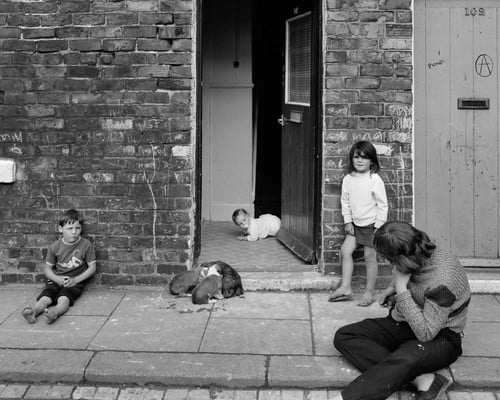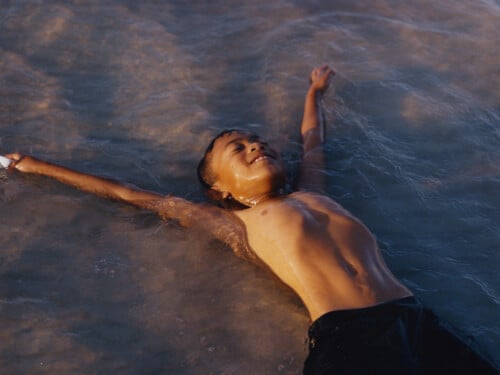
Toy Stories by Gabriele Galimberti begins with a simple, almost naive gesture: asking a child to be photographed with their favorite toys. Yet a request this straightforward becomes a powerful tool for reading the world. The toys play a key role, never appearing merely as objects, but as projections, desires, and clear signals of the world a child lives in.
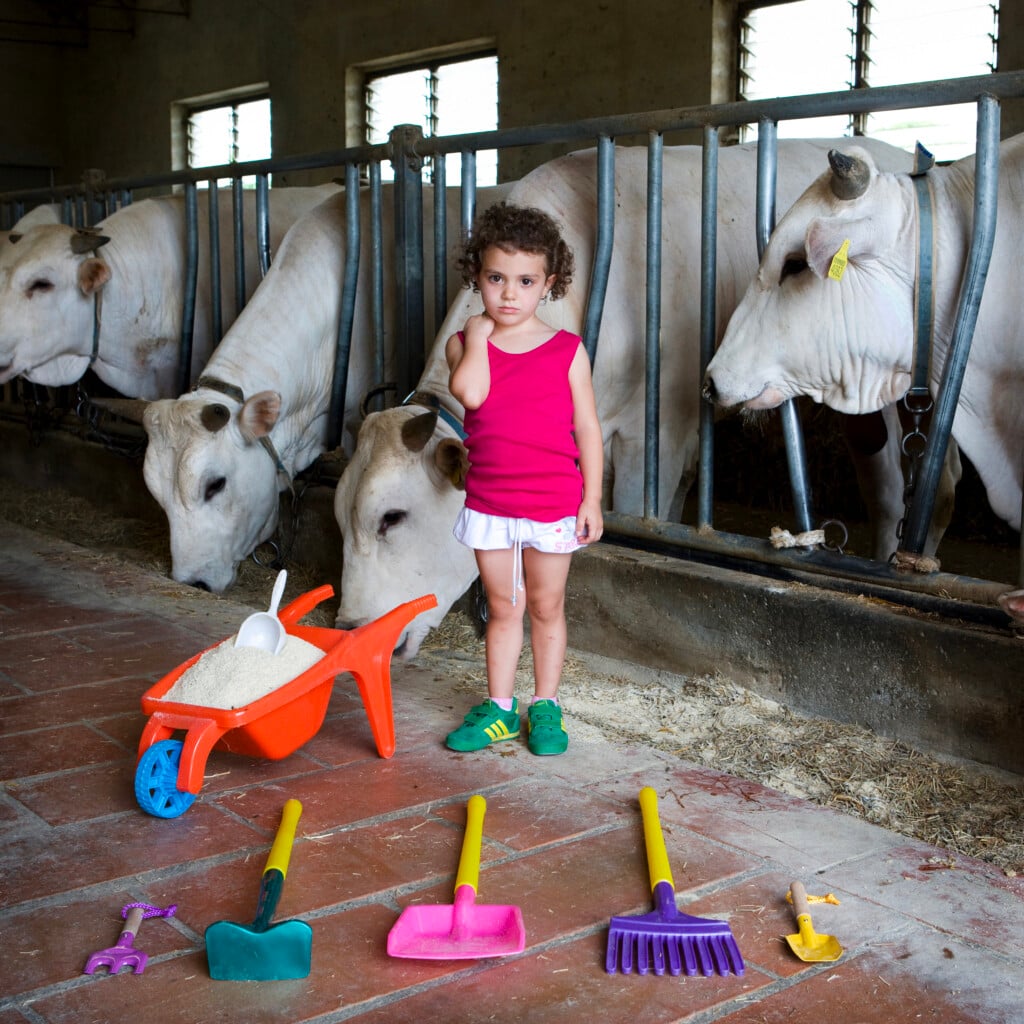
Alessia was born and raised in the countryside, where her family owns one of the largest farms in the area. She loves playing with animals and helping her grandfather with farm work. With her small tools, she brings food to the many Chianina cows.
The project began almost by chance in Tuscany, when the photographer portrayed a friend’s daughter surrounded by her toys. From there, the idea turned into a method: wherever he traveled, Galimberti sought out families willing to open their homes so he could photograph children with what they loved most. In the meantime, he has traveled through more than 75 countries, building a visual archive that is both intimate and global.
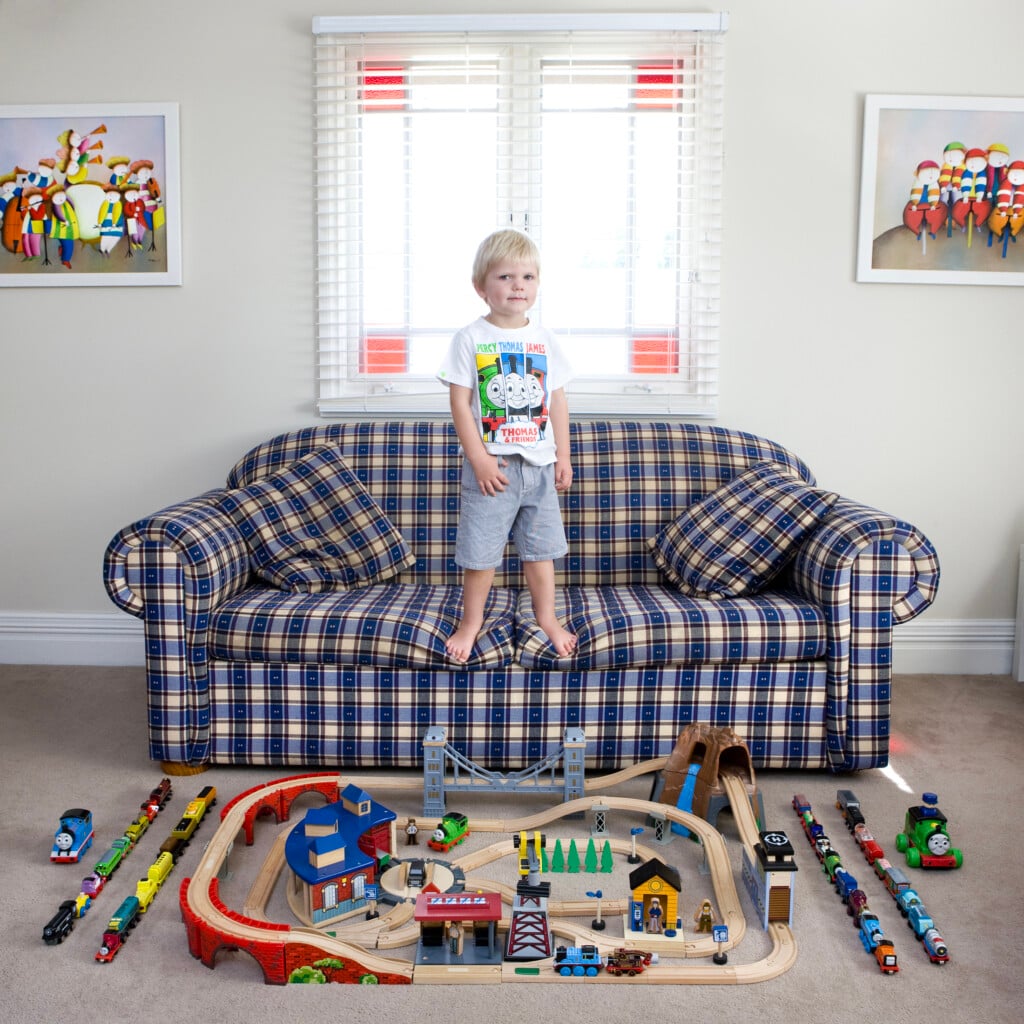
The structure of the images is always the same: a frontal framing, the child at the center, toys carefully arranged around them. But within this apparent repetition, an entire universe of differences opens up. There are tidy bedrooms and bare rooms, dusty courtyards and living rooms filled with objects, colorful walls and improvised backdrops. And then there are the children themselves, looking into the lens with a mix of pride and shyness, aware that they are the protagonists of their own small world.
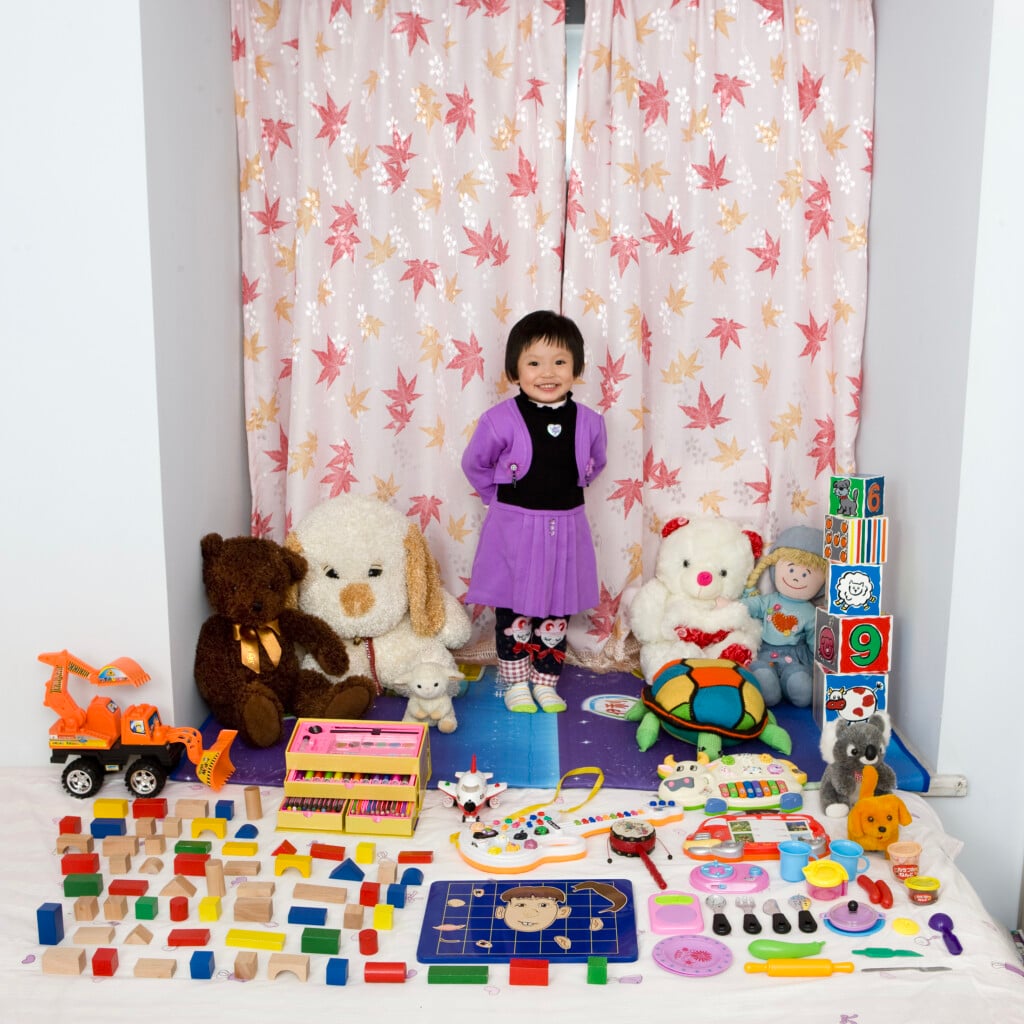
Cun Zi Yi turned 3 a month ago and received many gifts for her birthday. She plays with everything and doesn’t have a favorite toy. Her parents say she is very good at drawing and that she will be an artist when she grows up.
In some photographs, abundance is almost overwhelming: rows of toy cars, dolls, action figures, building sets, superheroes, video games. In others, a single object dominates the scene — a worn stuffed animal, a ball, a broken toy that is still precious. It’s precisely here that Toy Stories stops being just a tender project and becomes something more complex. Without the need for moralizing captions, the images speak of economic inequality and cultural differences. But they do so with respect, without sensationalizing scarcity or glorifying excess.
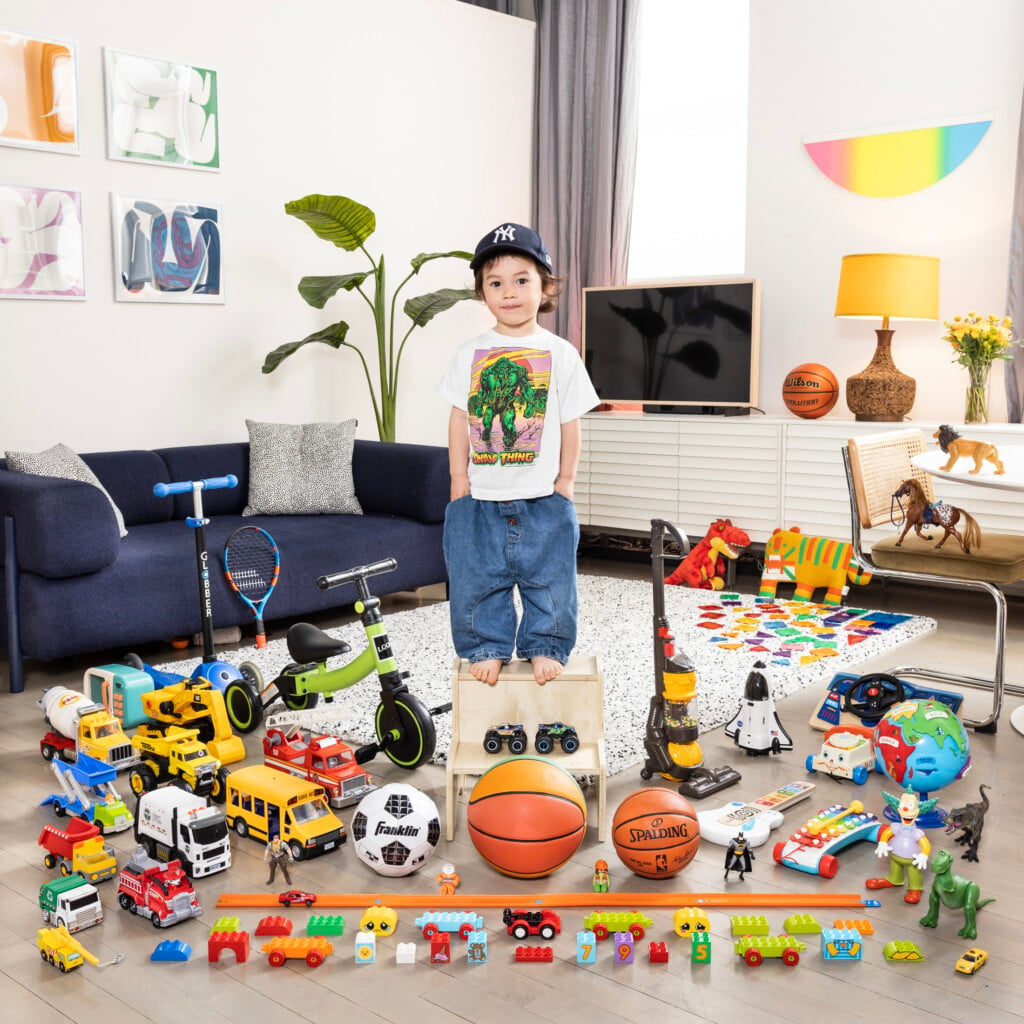
What remains constant is pride. Whether it’s a vast collection or a single object, every child shows what they own with the same intensity. The joy is spontaneous. And it is precisely this tension between difference and similarity that makes the project so powerful: circumstances change radically, but the emotional bond with one’s toy is the same everywhere.
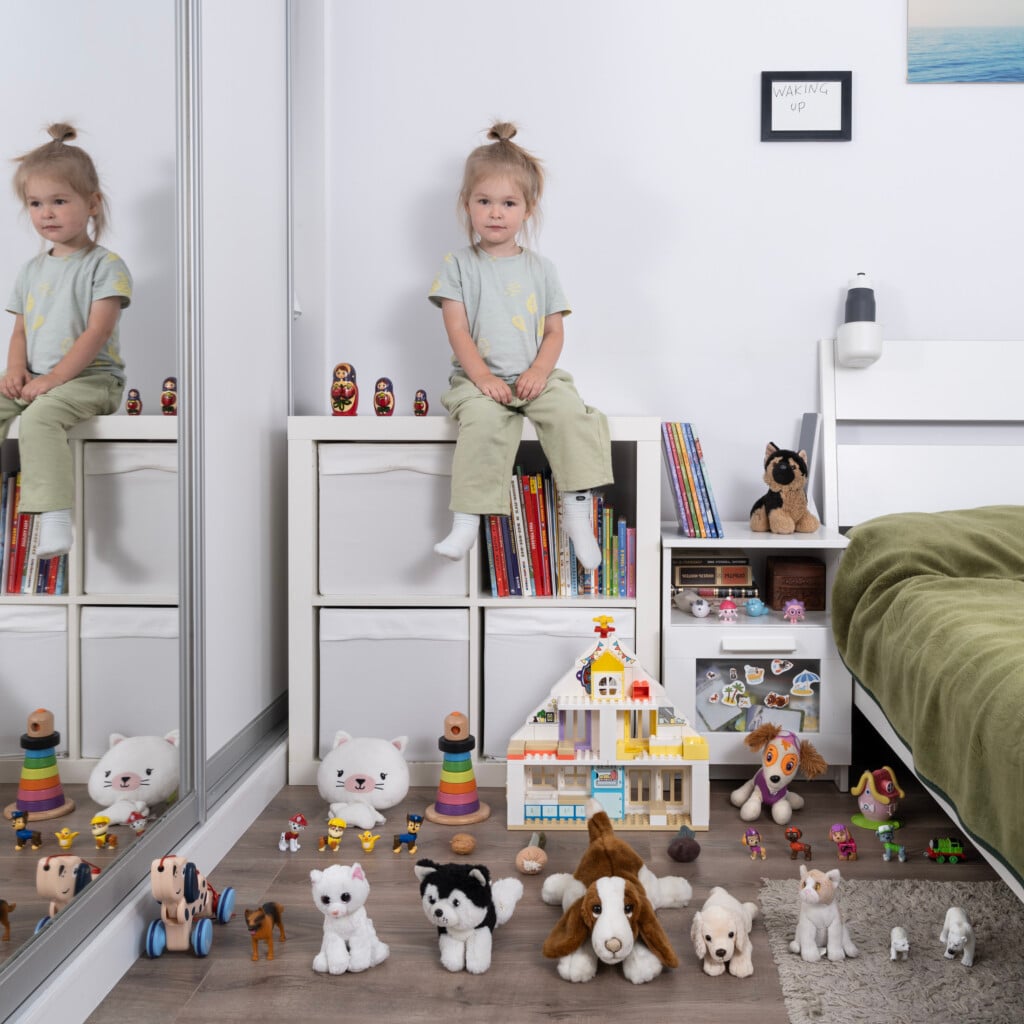
Toy Stories also works as a map of the contemporary imagination. Some toys repeat from one continent to another, a sign of a global market that standardizes desires and aspirations. Others are tied to specific contexts, local traditions, material availability. In every case, the set of objects becomes a declaration of identity. The children are not simply showing what they have: they are saying who they are.
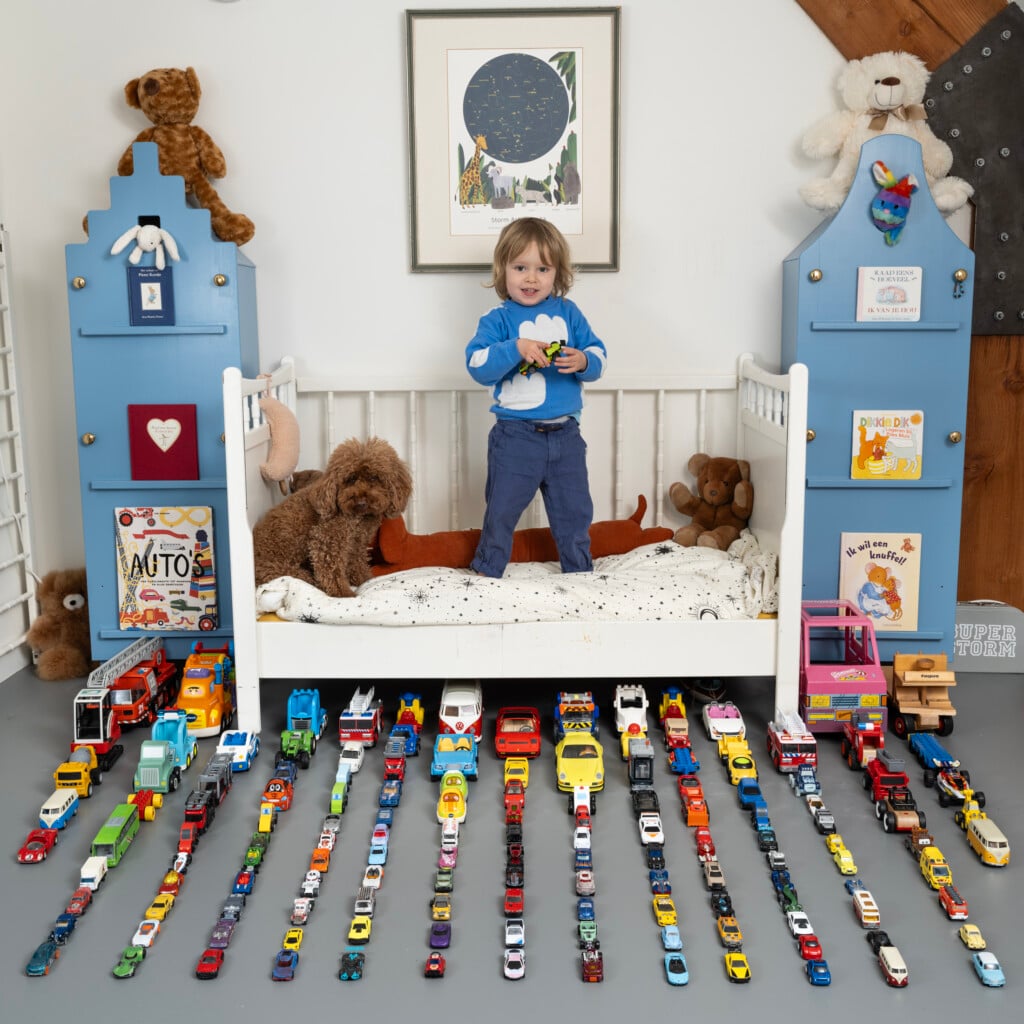
The project’s strength lies in the balance between staging and authenticity. The compositions are constructed, ordered, almost cataloged. And yet they don’t lose freshness. There is no forced gaze, no pity, no rhetoric. There is an encounter — a brief moment, but enough for the photographer to enter a private space and return it with delicacy.
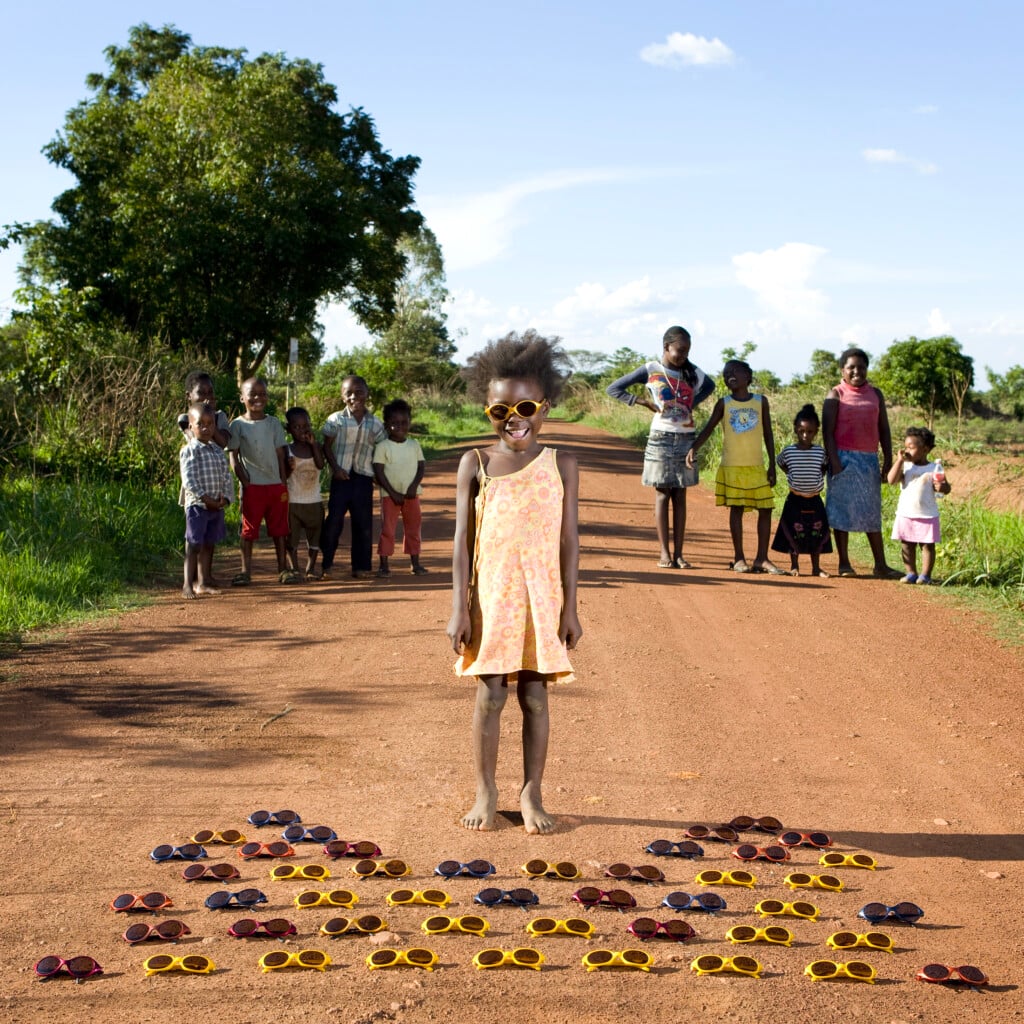
Maudy was born in a hut in a small village near Kalulushi, Zambia. She grew up playing in the street with all the other children in the village. There is only one simple school, where children aged 3 to 10 are in the same classroom.
In the village there are no shops, restaurants, or hotels, and only a few children are lucky enough to have a toy or two. A few weeks ago, Maudy and her friends found a box full of sunglasses on the street and, from that moment on, those sunglasses became their favorite toys.
Looking back at Toy Stories today also means asking what it means to grow up in a world increasingly defined by objects. How much of who we are is shaped by what we own? How much is desire molded by our social environment, advertising, and economic possibilities?
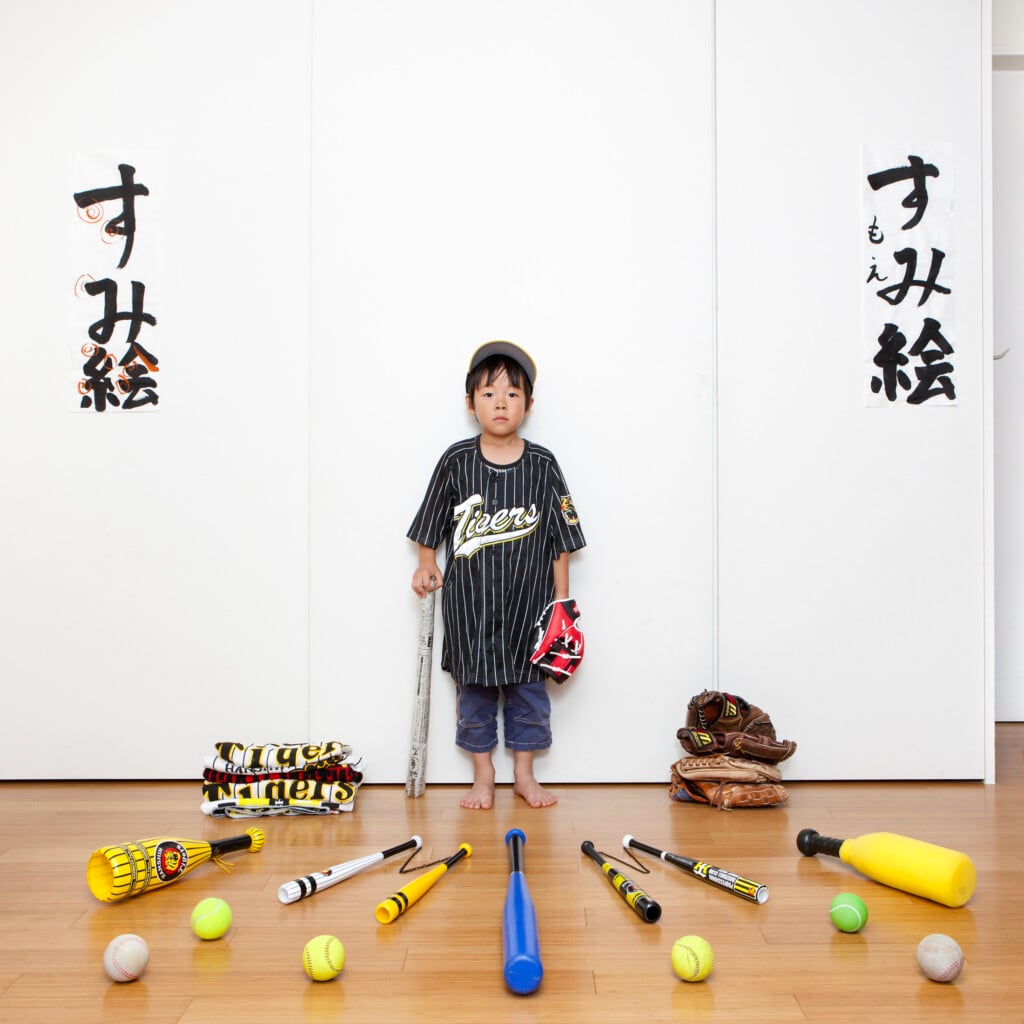
In the end, every photograph is a small story: a child, their toys, a domestic space. But taken together, these images become a collective narrative about global childhood — fragile, proud, profoundly human.
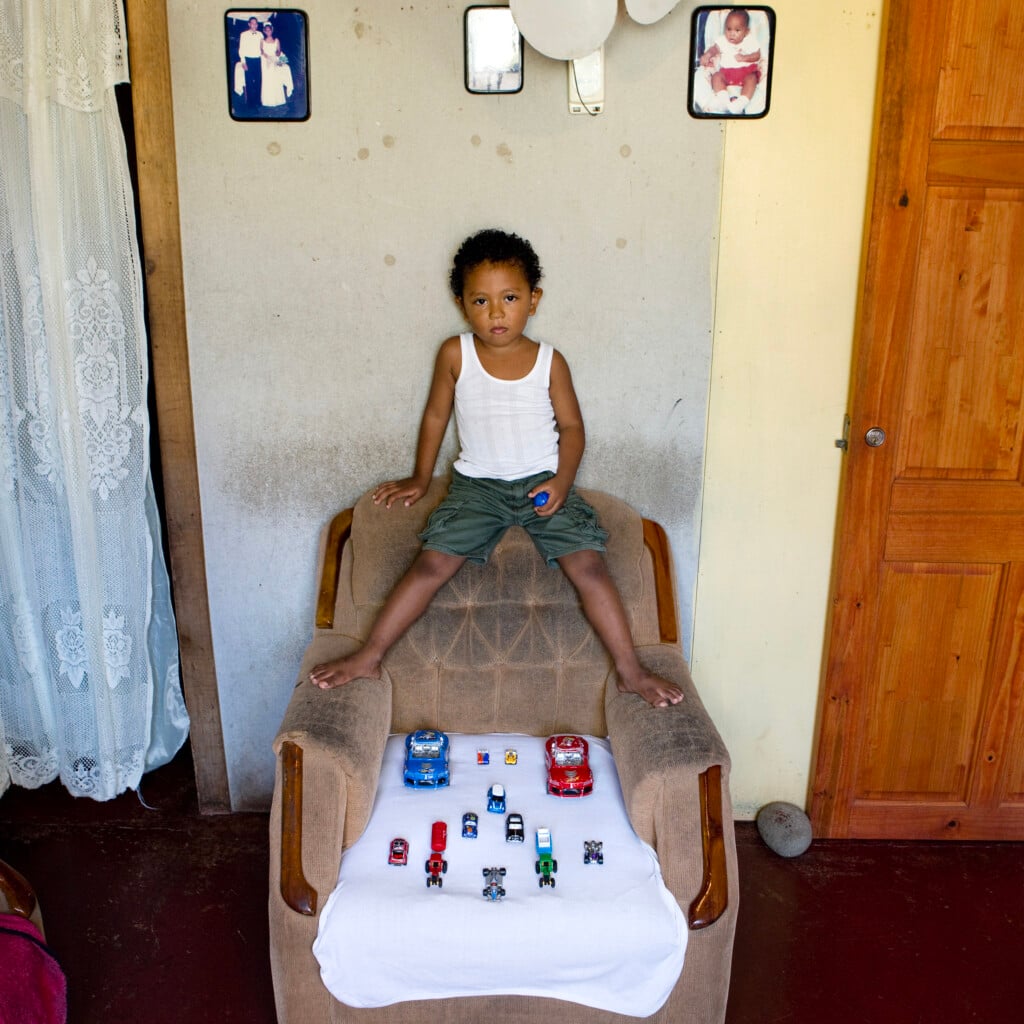
Keynor was born in Cahuita, on Costa Rica’s Caribbean coast, and has never moved farther than 10 km from home. He lives 300 meters from the beach and sometimes his mother lets him go swimming accompanied by his older brother Deynor, 8 years old.
His father has a huge passion for sports cars, which he will probably never own, but he has a collection of about 100 model cars. Every now and then, his father gives Keynor one of his models, and Keynor loves playing with them by staging races around the house.
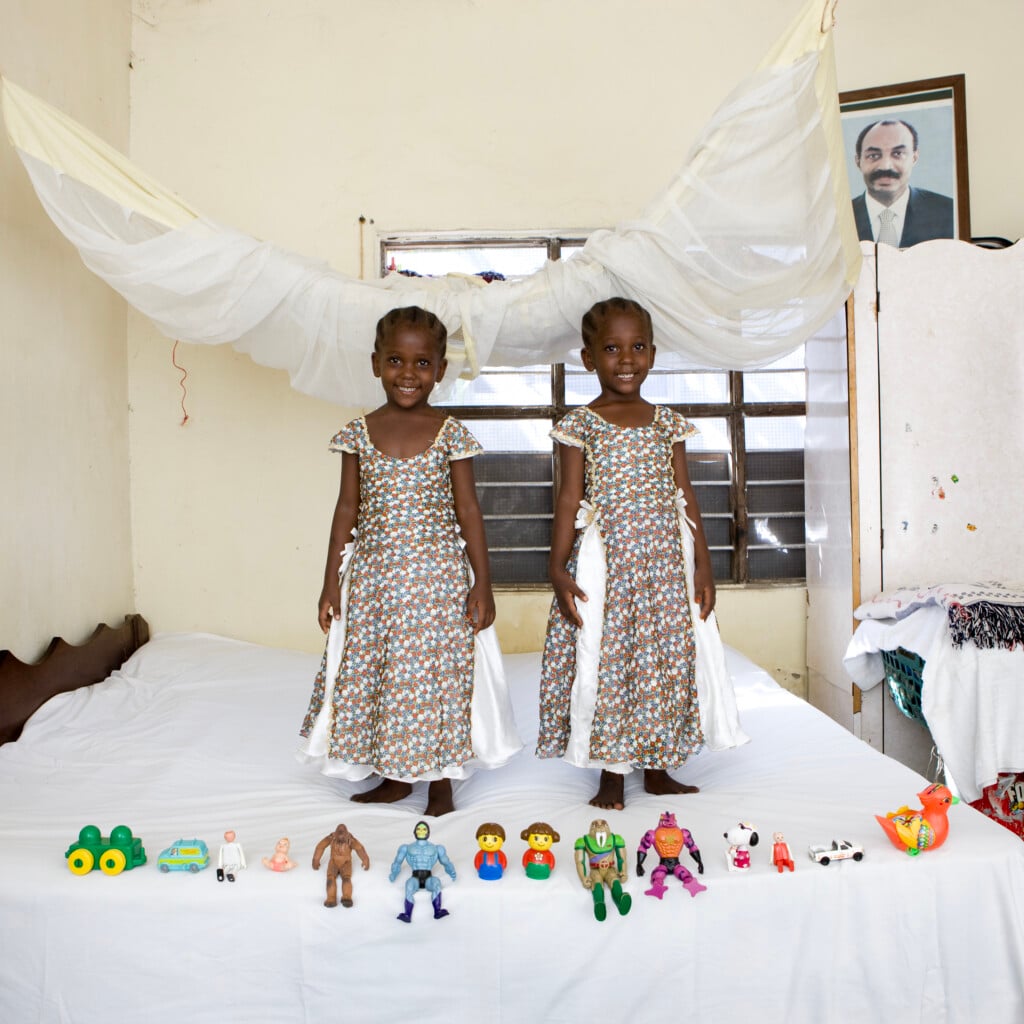
in cover: Arafa and Aisha Saleh Aman, 4 years old – Bububu, Zanzibar
Arafa and Aisha are twins. They sleep in the same bed, have the same clothes, go to school together, and share the same few toys. They live in a two-room house, both used as bedrooms, while the kitchen and bathroom are outdoors in the courtyard. The portrait above their wardrobe depicts the President of Zanzibar.