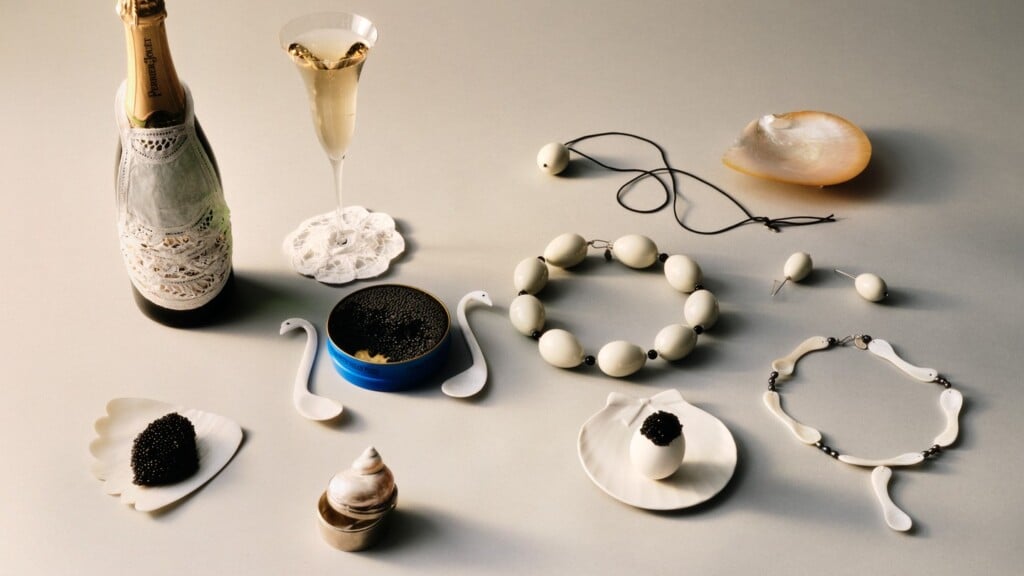
Looking at Gohar World, it’s natural to think of a sort of Alice in Wonderland of the table. Everything seems to obey rules slightly different from those of the real world, they don’t just sell objects, they sell an imaginary world.
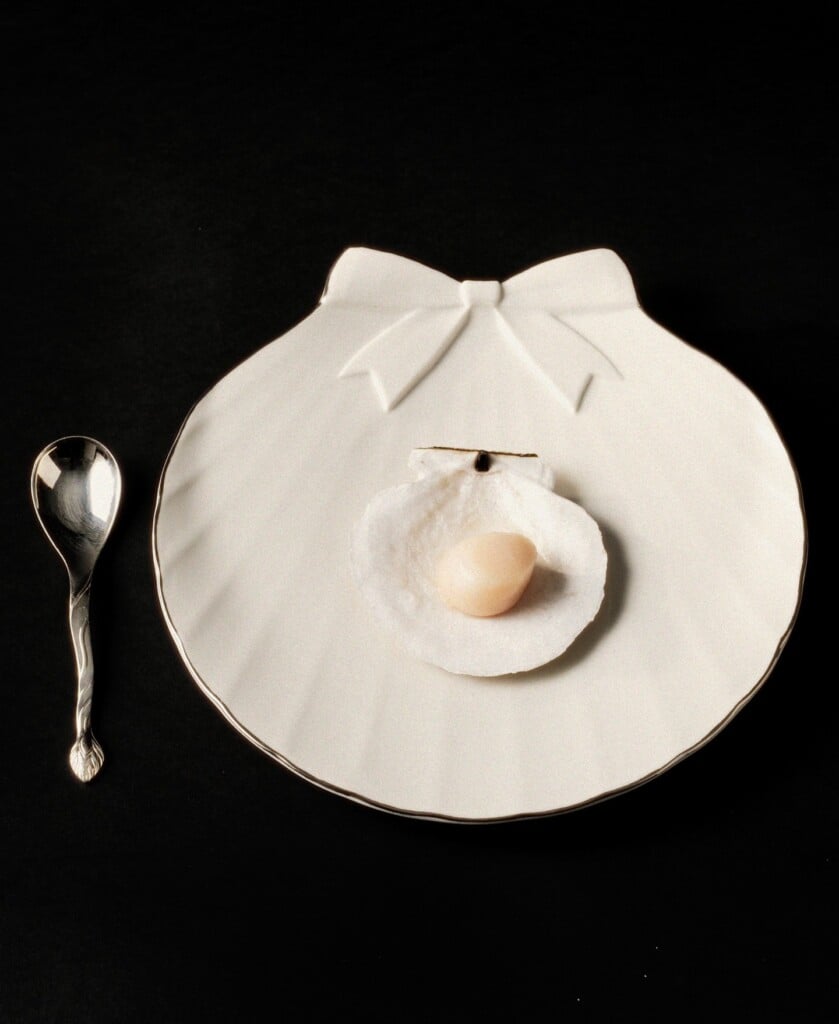
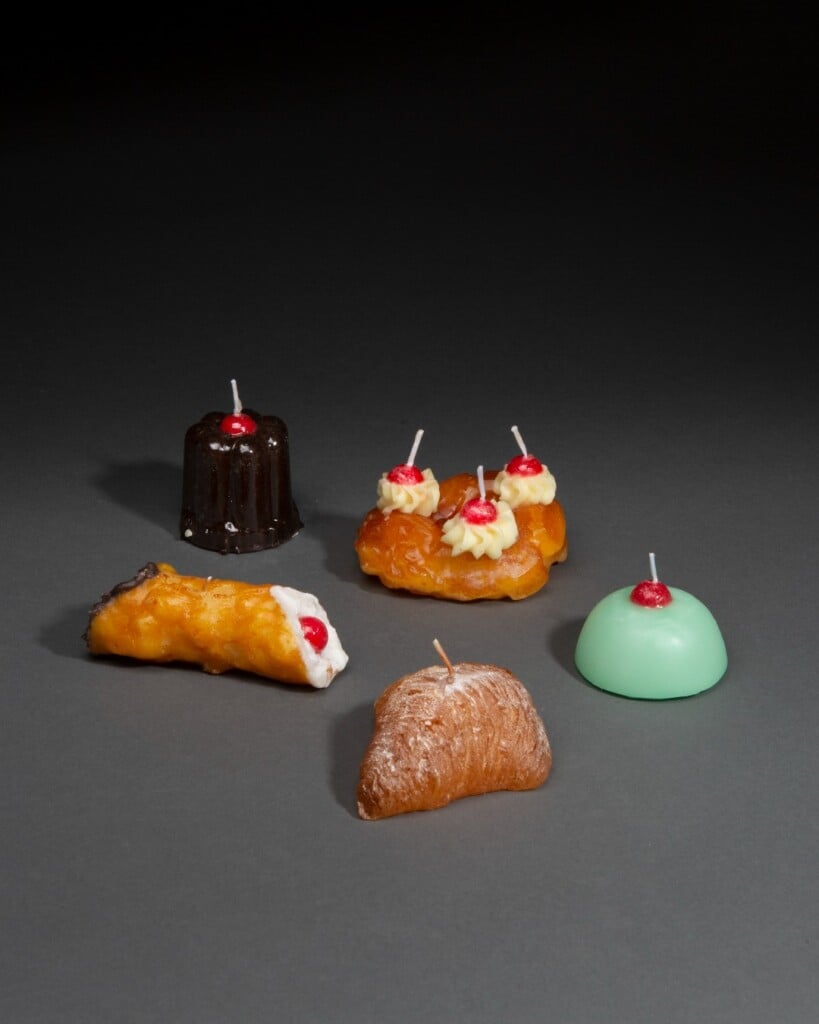
There are objects born to solve a problem, and others that, even before that, ask themselves whether that problem could become something much more interesting. Gohar World comes from a project founded in 2020 by sisters Laila and Nadia Gohar: a universe of tableware, textiles, jewelry and accessories that takes everyday gestures and turns them into small theatrical rituals. At first glance, Gohar World might look like a collection of eccentric objects: candles shaped like fried chicken, baguette bags, lace-trimmed oven mitts and strange egg holders. But stopping at the curious aesthetic would be reductive, because they do something more. They decide to treat normality as design material.
Laila Gohar, an artist and designer born in Cairo, had already built her practice around food and its transformation into visual experience. Before Gohar World she had worked through edible installations and projects for brands such as Gucci, Hermès and Prada. Nadia, on the other hand, came mainly from painting. The two sisters developed Gohar World through conversations between New York and Toronto, eventually imagining not so much a brand as, literally, a world. And it is precisely this idea of a world that makes the project different from an ordinary tableware studio.
The objects are not conceived as isolated elements, but as parts of the same grammar. The table becomes a space to inhabit, almost to stage. Gohar World openly states that the project is built around tradition, time and craftsmanship, with the idea that setting a table, cooking, choosing flowers and preparing something for others are gestures that take time, and that precisely for this reason carry value.
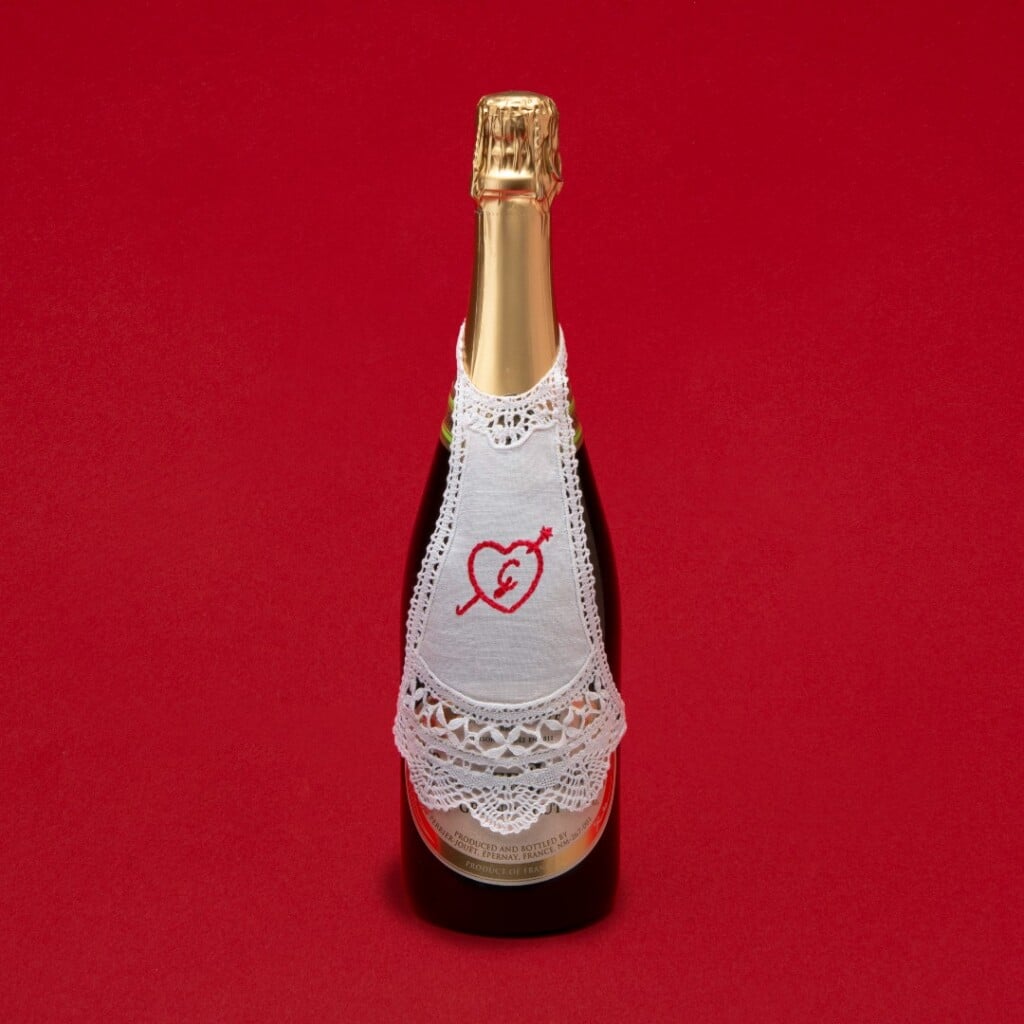
One of the most interesting things about the Gohar world is the way it retrieves objects and techniques we normally associate with an almost timeless domesticity, lace, embroidery, doilies, tablecloths, trims, and shifts them completely out of context.
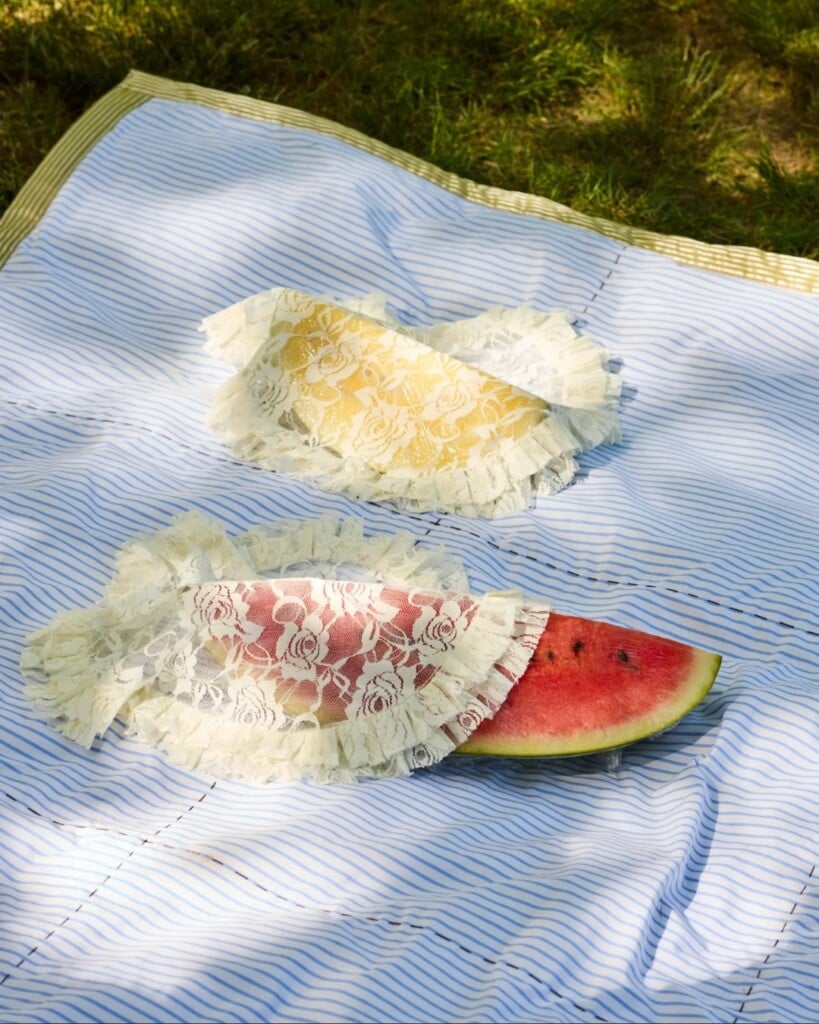
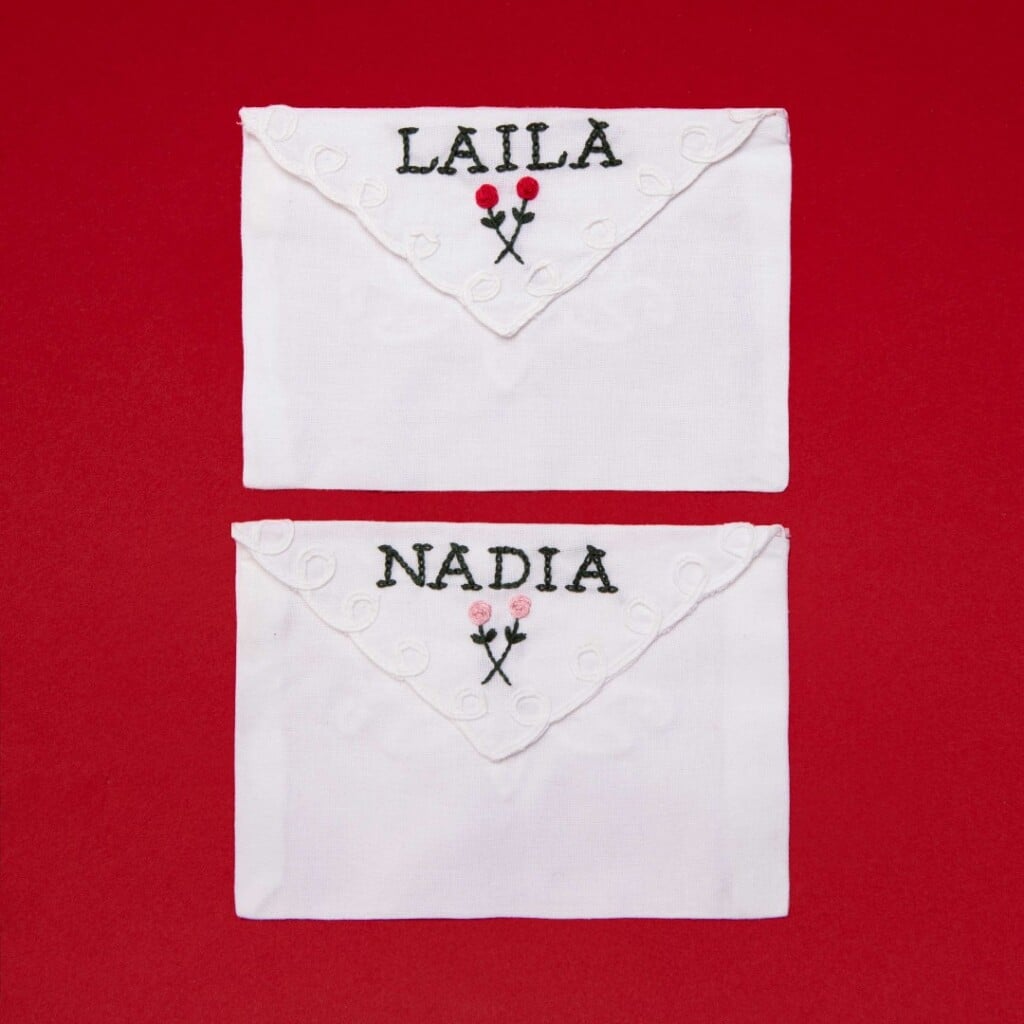
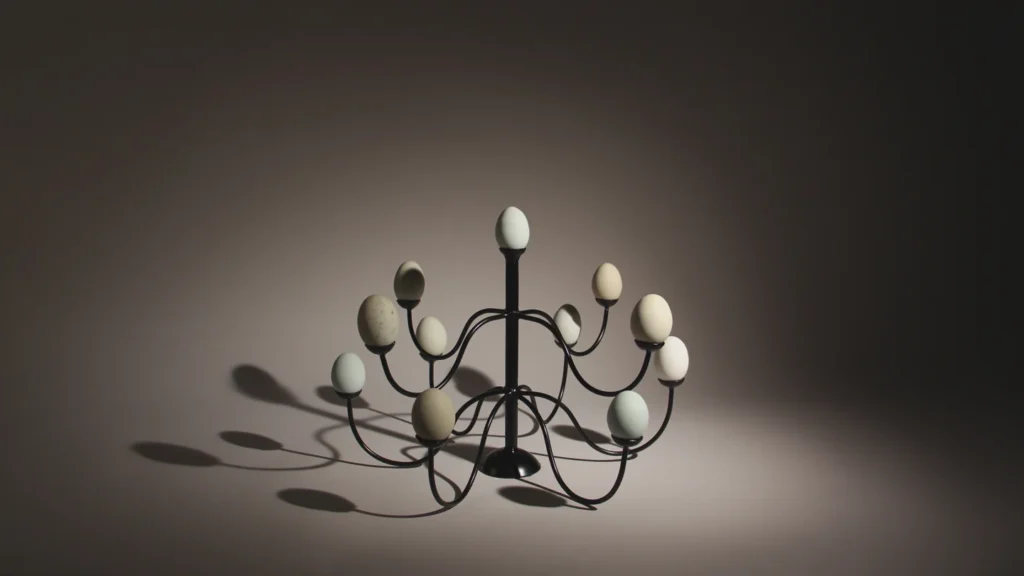
There are, for example, Battenburg lace doilies decorated with pearls, designed as coasters but theatrical enough to also be draped over glasses when stepping away from the table. Other doilies can be personalized with initials or motifs. Gohar World does not necessarily invent a new function, but makes an almost insignificant function memorable. This is where that very strange feeling comes from, in which an object seems familiar and absurd at the same time. An oven mitt becomes almost an evening accessory; a napkin looks like a piece of clothing; a chandelier holds eggs; a baguette gets a case as if it were a precious object.
The Egg Chandelier, for example, is hand-forged in Cairo and is inspired by the ironwork found in the sisters’ neighborhood. The egg is therefore not just a funny shape: in Gohar World’s more recent language it has also become a symbol of home, of beginnings and of continuity.

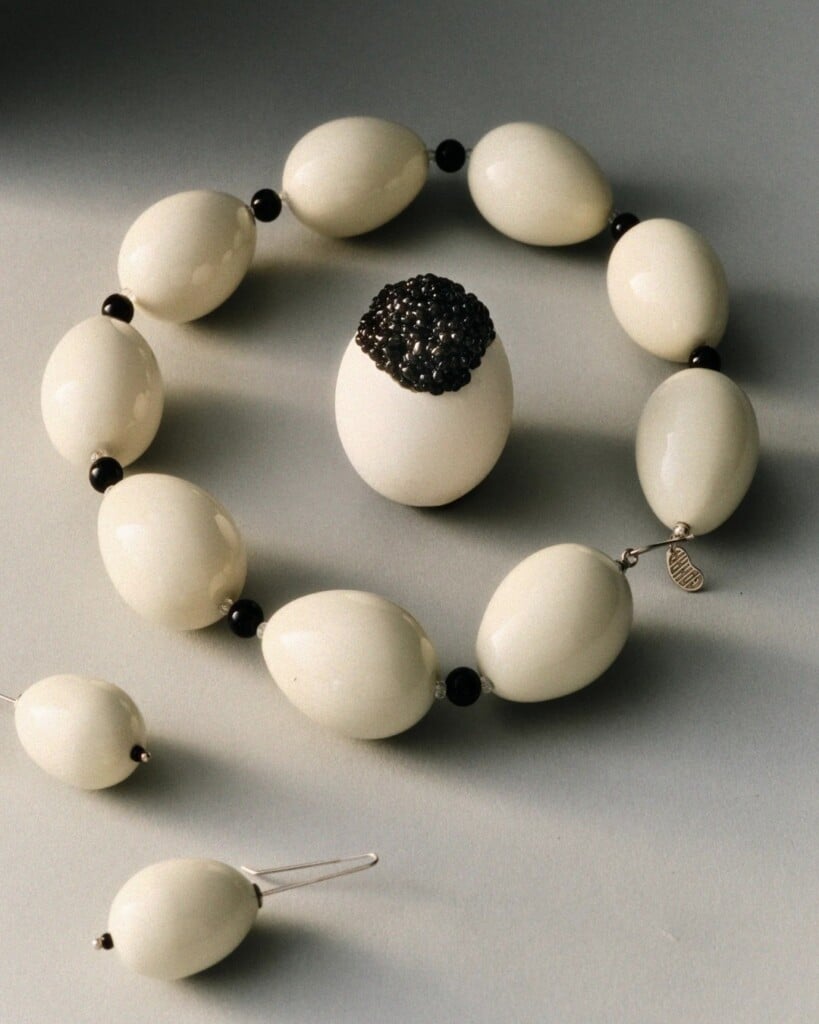
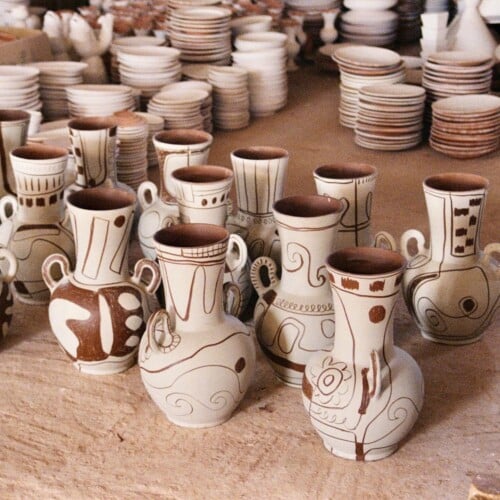
A doily is no longer just a doily if it suddenly becomes a precious object, embroidered and decorated with pearls. An egg is no longer just something to be served at breakfast if it can become a chandelier, a piece of jewelry or the centerpiece of an arrangement. Design intervenes right there, in the minimal space between what we know and what we didn’t expect to see. It is a form of luxury very different from one built on industrial perfection. Gohar World in fact works with family-run ateliers in different countries, from Cairo to Bologna, through Vietnam, Austria and other artisanal centers, and champions techniques such as hand-blown glass, embroidery and hand-dipped candles.
There is then another area in which Gohar World shows remarkable awareness: communication. The objects are strange, but so are the images that tell their story. On the website, in the lookbooks and above all on social media, Gohar World builds a coherent visual universe in which set tables, food, people, fabrics and objects all seem to belong to the same story. The image becomes part of the object itself. A baguette wrapped in a satin bow, a candle that looks like food, or a lace-trimmed oven mitt work because they are placed within a scene able to amplify their character. It’s not just the product that gets photographed: it’s the world in which that product is meant to exist.
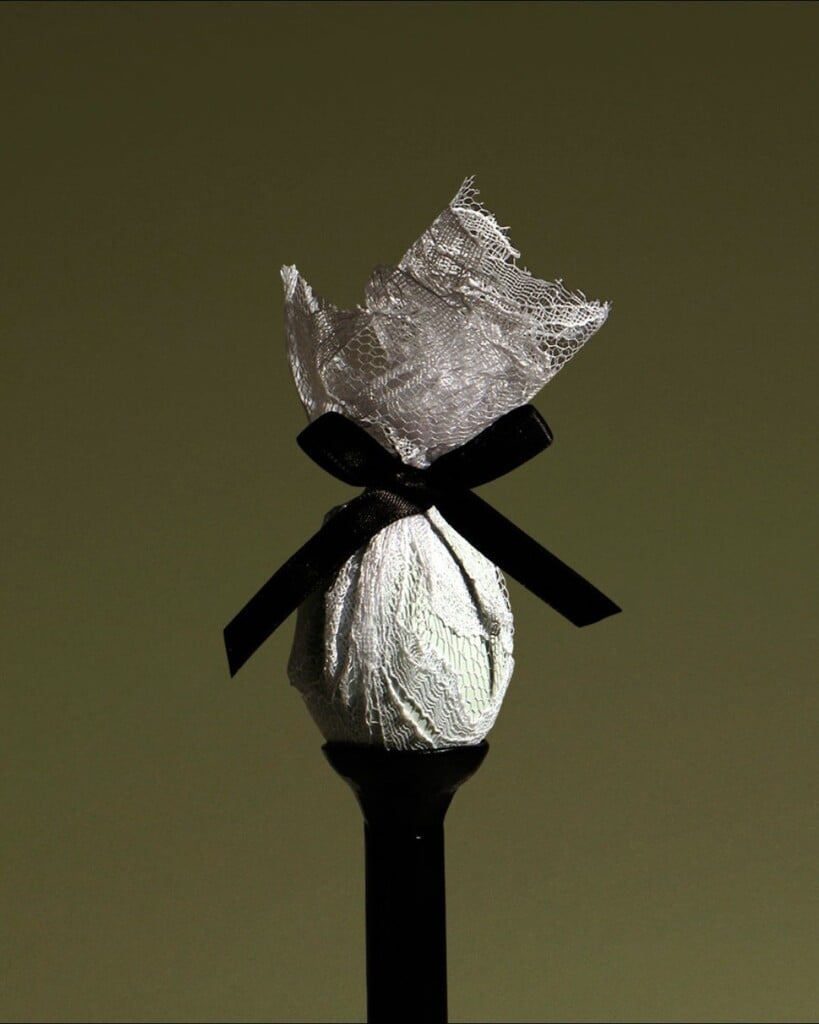
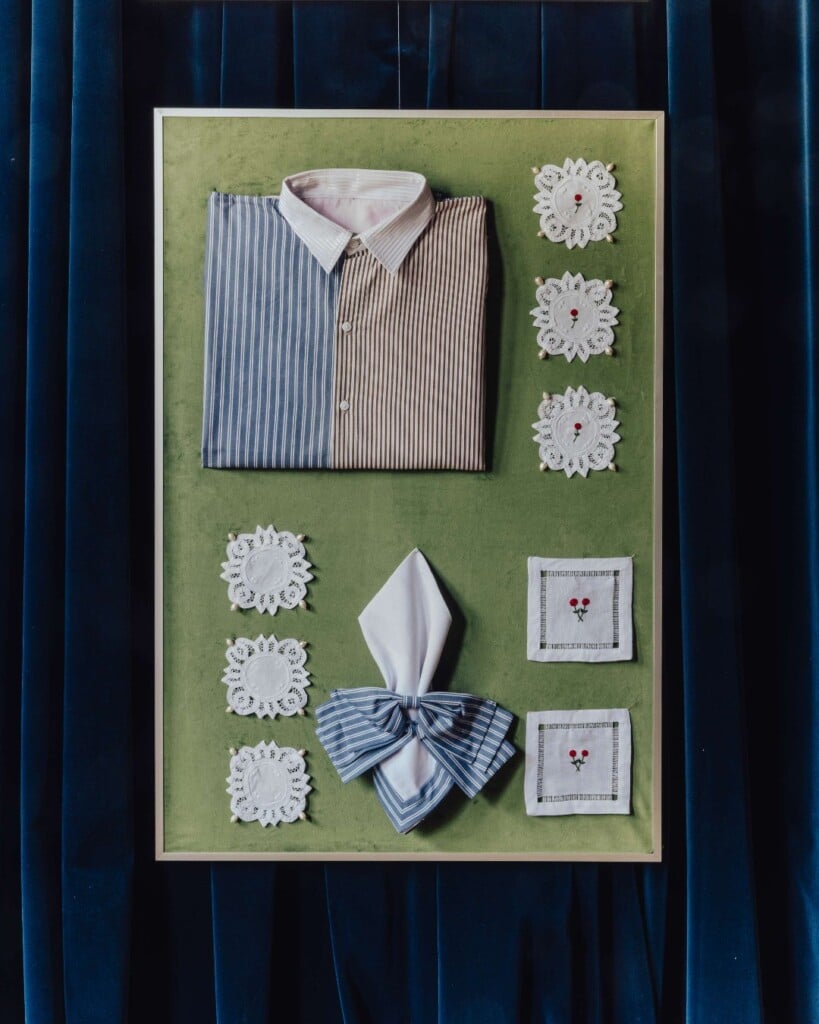
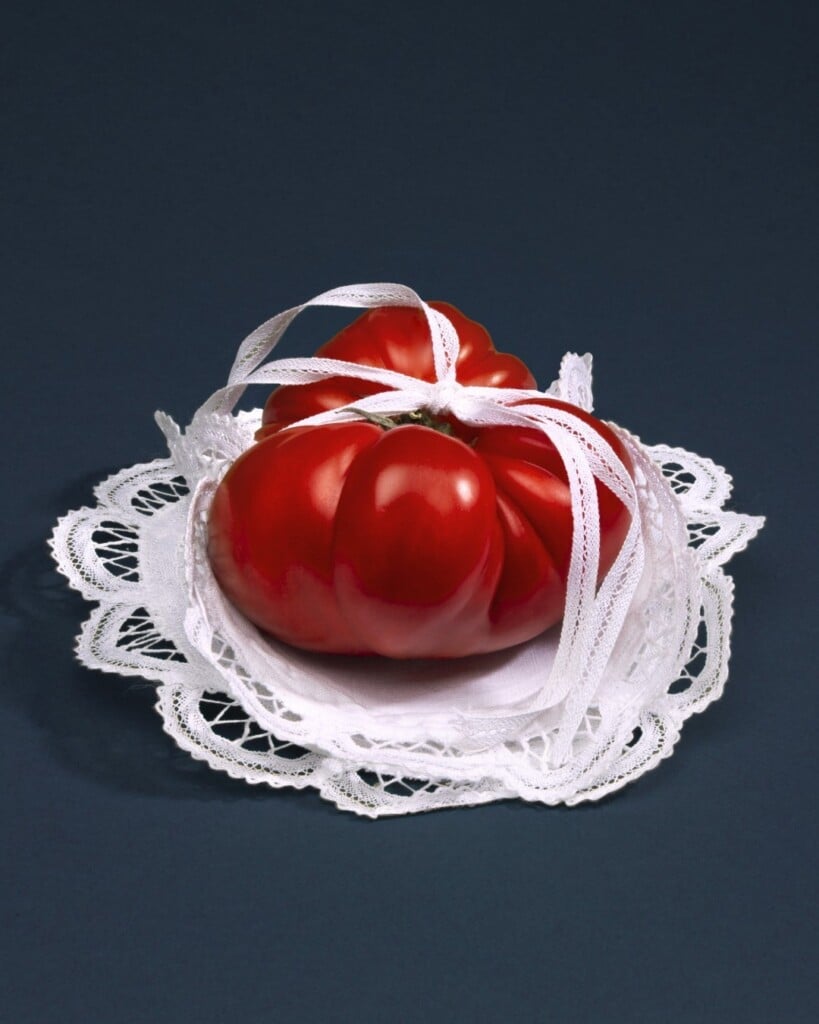
Their Instagram follows exactly this logic. More than a catalogue, it feels like an extension of the project: editorial photography, table settings, close-up details, studio moments and images that mix fashion, food and design. The official website also moves in the same direction, with sections like Lookbook, Studio Lunch and City Guides, which broaden the narrative well beyond selling objects. The collaborations confirm this attitude too. From the work with Gucci, Hermès and Prada to projects with Byredo and HAY, Gohar’s language is not simply applied to a product: it often becomes the starting point for building a campaign, an experience or an entire atmosphere.
Gohar World shows it has grasped something fundamental about contemporary design, namely that an object no longer lives only in physical space. It lives in the images that tell its story, in the way it is photographed, shared and desired. And Gohar World seems to have designed both with equal care.