In 1796, the French critic Quatremère de Quincy published a pamphlet against the theft of works of art carried out by Napoleon’s army, justified by the right of conquest over the lands invaded by the emperor. Referring in particular to the requisition of works of art from Rome moved to Paris, Letters to Miranda became one of the most enlightened texts on the protection of heritage. Quatremère de Quincy focuses his critique on the Theory of Context, arguing that only in the place where they are intended to be exhibited do works have value. Only then do they identify both the themes of the work and the cultural context in which they are placed.
Since the French Revolution, this thought has increasingly entered the dialogue on art, with particular reference to Street Art, increasingly eradicated from the walls of cities in favor of exhibitions in museums for a fee. The subject came up again this week when Spanish artist Gonzalo Borondo covered one of his works, exhibited in Turin on the occasion of the “Street Art in Blu 3” exhibition, with white spray paint. The work had originally been created around 2005-2007 on the wall of an abandoned barracks in Bologna, only to be removed without Borondo’s permission. We don’t know if it was the artist himself who carried out the protest, who has however claimed the act through some Instagram stories published Wednesday on his profile.


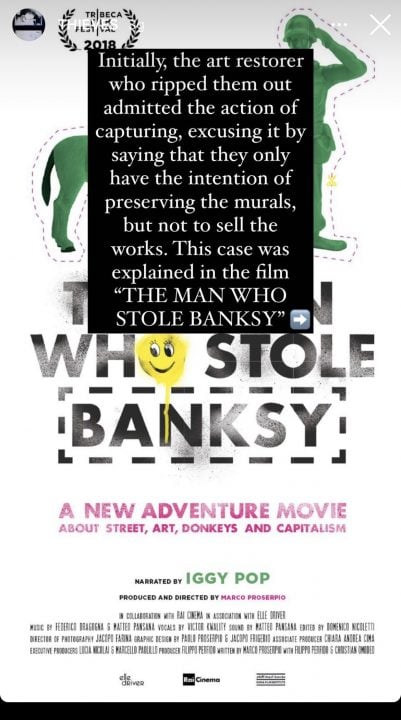

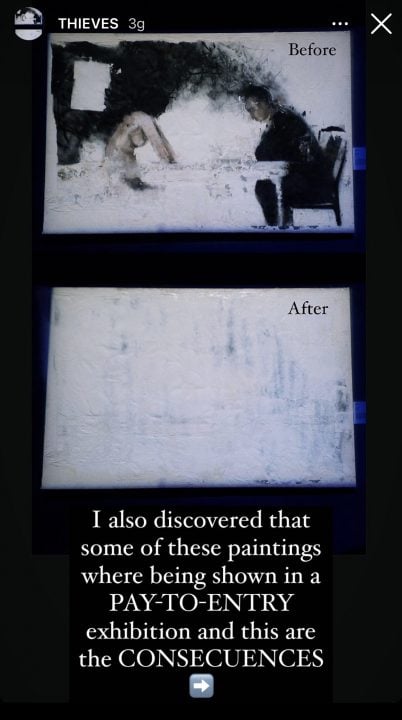
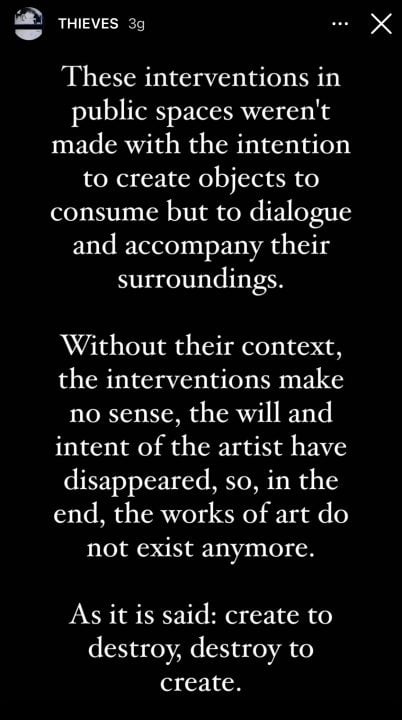
Gonzalo Borondo’s is certainly not an act of vandalism, nor is it a counter-performance to complicate the meanings of the work while promoting the exhibition in Turin’s Teatro Colosseo. The spray cans covering the painting – which depicted a man and a woman sitting at a table with their heads bowed – do not have the same meaning as the machine that shredded Banksy’s “Girl with a Balloon”. The aim in this case is to deprive everyone of the artwork if it cannot be, really, within everyone’s reach. In the past, the Spanish artist gave his consent to the realization of exhibitions that would include some of his works, as long as they were free and available to everyone. By now the debate between artisticity and vandalism is over, defending one’s own work as Borondo did is a way to claim its value.
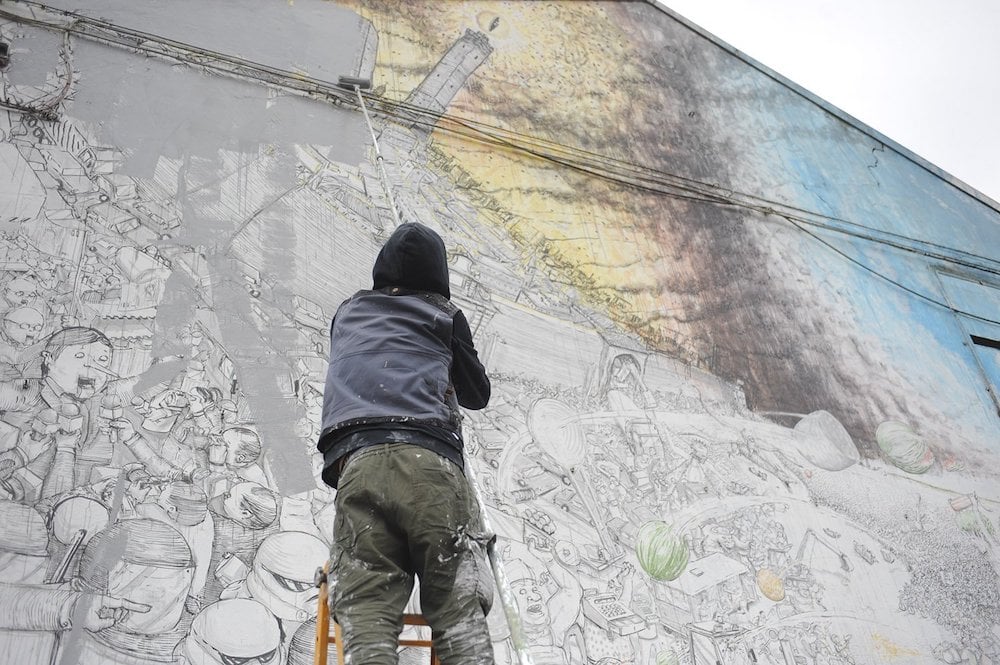
Museums have in many cases taken advantage of the commercial success of street art, setting up exhibitions that are “easy” for the general public to understand. In the past, Milan has hosted Keith Haring, Jean-Michel Basquiat and Banksy himself, the latter (coincidentally) without the artist’s consent. Another precedent cited by Borondo himself on Instagram is that of the artist Blu, who in Bologna deleted all his works in 2016, as a protest against the exhibition “Street Art. Banksy & Co. – L’arte allo stato urbano”, which exhibited murales originally insert in the city.
Thus, the great theme of the deprivation and privatization of Street Art continues, creating a contrast of meaning with the assumptions with which this artistic current was born. Not involving the artists, locking the works inside institutional buildings and putting a price on the product shared by a community is not democratization of art. It is playing at being Napoleon.