From March 29 to September 14, 2025, Museion in Bolzano presents a landmark exhibition dedicated to the relationship between graffiti and contemporary art. Graffiti is the first institutional exhibition in Italy to explore the evolution of spray paint in art, examining how the visual language of the city and the street has influenced studio practices, and proposing graffiti as a unique perspective for observing and experiencing the urban landscape.

Curated by Leonie Radine and New York–based artist and archivist Ned Vena — whose practice has been deeply shaped by his own experience as a graffiti writer — the exhibition brings together transdisciplinary works created over seventy years, going beyond the historicization of graffiti writing as an “outsider” practice. It begins with spray paint experiments from the 1950s and ’60s by artists such as Hedda Sterne, David Smith, Martin Barré, Dan Christensen, Carol Rama, and Charlotte Posenenske, and moves through the iconic canvases of Rammellzee, Futura 2000, Blade, and Lee Quiñones, up to more recent works that integrate graffiti into heterogeneous contemporary practices.

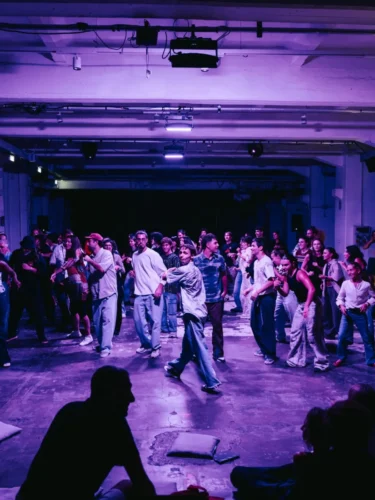
Klara Lidén, Disco, 2020. Stedelijk Museum Amsterdam, gift of Sadie Coles HQ, London. © Klara Lidén. Photo: Robert Glowacki. Courtesy the Artist and Sadie Coles HQ, London

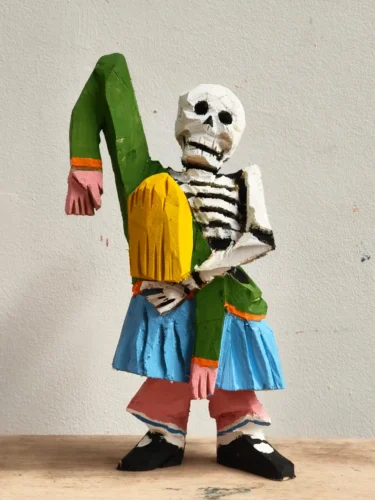
David Smith, Untitled, 1959. © The Estate of David Smith. Courtesy The Estate of David Smith and Hauser & Wirth
The exhibition unfolds across decades, from the spray paintings of the 1980s and ’90s by Lady Pink & Jenny Holzer, Martin Wong & LA2, and Keith Haring — where graffiti and contemporary art converge — to the experimental works of Heike-Karin Föll, Michael Krebber, and Christopher Wool. The digital graffiti of Georgie Nettell engage in dialogue with Karin Sander’s Patina Paintings and R.I.P. Germain’s urban sculpture, while new site-specific works, such as N.O.Madski’s, broaden the view toward the present.

The installation takes shape as an urban landscape occupied by works that incorporate elements typical of the city: from installations by Klara Lidén and Josephine Pryde to films by Charles Atlas and Manuel DeLanda, and large-scale sculptures and readymades evoking the everyday dimension of public space. The result is a journey that brings together historical archives, canvases, photographs, and contemporary experiments, while maintaining a strong educational component and the aim of passing on to new generations the revolutionary essence of graffiti.
Graffiti is not just an exhibition, but an act of cultural justice that restores graffiti to its rightful place in art history. A reflection that begins in Bolzano and extends into an international dialogue, in collaboration with the Centraal Museum in Utrecht.