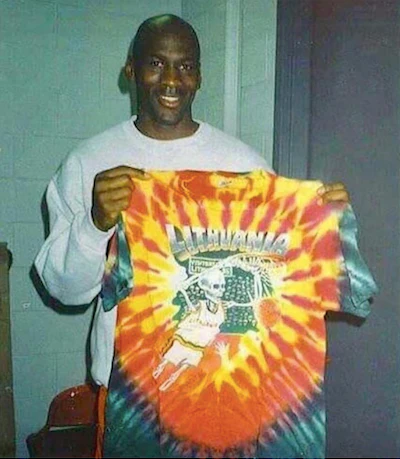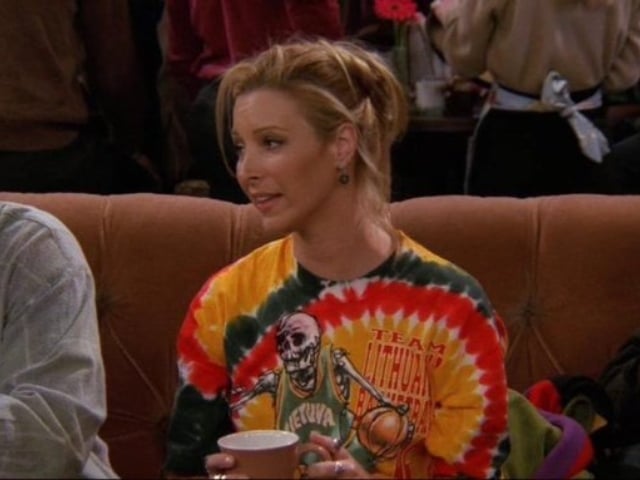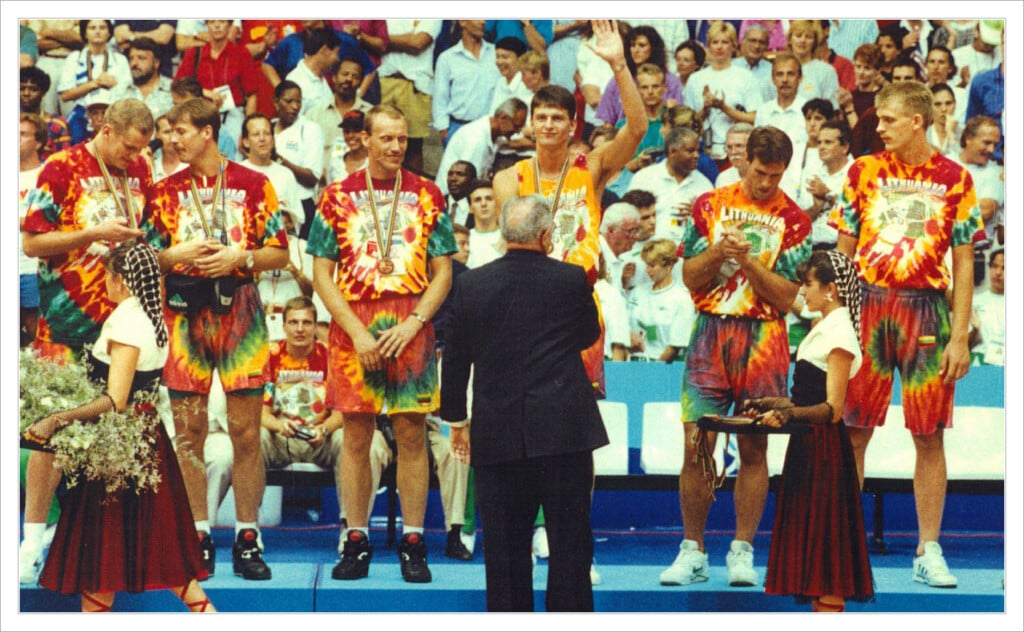
Barcelona, August 1992. On the third step of the podium for the men’s basketball medal ceremony, the Lithuanian players, bronze medals around their necks, wear something that will go down in history: a yellow, green, and red tie-dye T-shirt featuring a skeleton dunking a basketball. It is neither the Lithuanian delegation’s official uniform (designed that year by Issey Miyake) nor a marketing stunt. It is something far stranger, and far more beautiful.
To understand what that T-shirt meant, you first have to understand what basketball meant to Lithuania at the time. More than a sport, it was a form of national identity, and during the Soviet period, almost the only form of nonviolent resistance available. Journalist Arūnas Pakula put it this way: “we felt like an occupied nation. We had no weapons. The only chance we had to prove our worth against the Soviets was basketball.”
It’s a long story. The Lithuanian national team won the last two European Championships before World War II, in 1937 and 1939. Then came Soviet annexation, and with it the end of any autonomous national team. Lithuanian players kept playing, but under a different flag: the clearest example was the Soviet national team that won Olympic gold in 1988, with four Lithuanians in the starting five.
The matches between Žalgiris Kaunas and CSKA Moscow, the military-backed team built from the best Soviet players, were effectively matches between Lithuania and the Soviet Union. Basketball was the one arena where you could beat the enemy and say so out loud.
On March 11, 1990, Lithuania declared independence from the Soviet Union, and two years later, with the Barcelona Olympics approaching, the country’s economic situation was so dire that the Lithuanian federation found itself without the funds to take part. The strongest players — Sabonis, Marčiulionis, Chomičius, Kurtinaitis — were finally ready to represent their country, but there was no money to make it happen.
But it’s well known that the best ideas are born out of moments of crisis. So, in early 1992, Šarūnas Marčiulionis and Donnie Nelson — at the time starting guard for the Golden State Warriors and a scout, respectively — knocked on the door of a garage in San Francisco. The ones who opened it were the Grateful Dead.
The band had read about Marčiulionis’s efforts to raise funds for the Olympics and wanted to support the cause. Jerry Garcia himself said something along the lines of: “you’re all about freedom and you’re all about rock, and so are we, we like what you’re doing.” The Grateful Dead were the band of the Summer of Love, of psychedelic, countercultural America, and the story of a country freshly out of Soviet oppression wanting to show up at the Olympics won them over, enough that they wrote a check for 5,000 dollars.
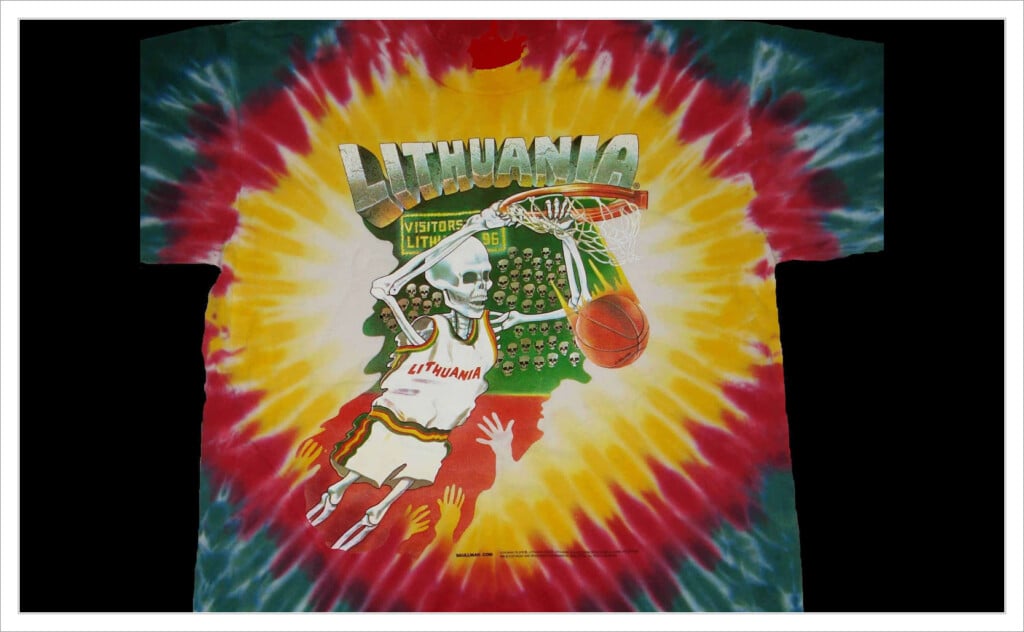
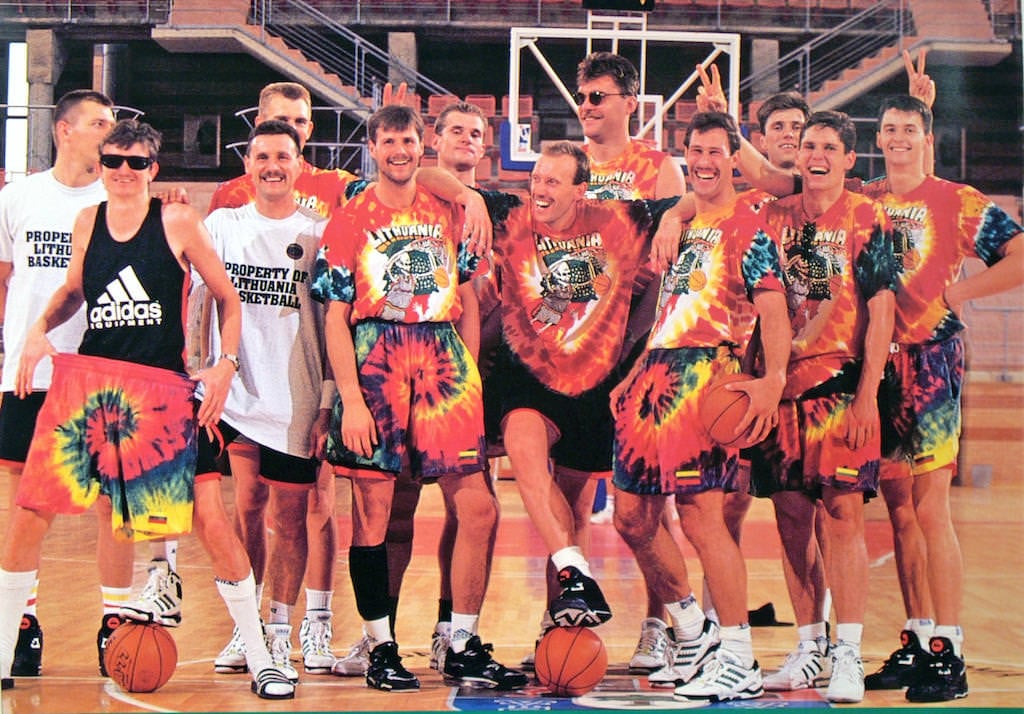
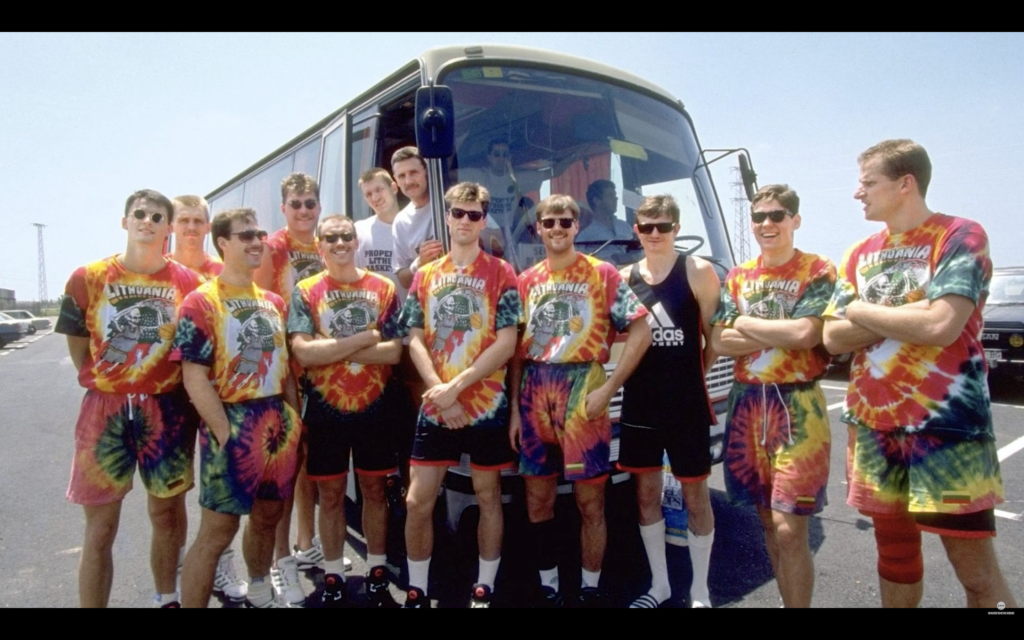
But the money wasn’t the most important part: the license was. The Grateful Dead granted the Lithuanian team the right to use their imagery to produce merchandise. Alongside the products sold, a T-shirt was also made, the very one the team wore at the medal ceremony.
The T-shirt was designed by New York-based designer Greg Speirs, who — like the Grateful Dead — embraced the Lithuanian cause. Speirs’s design featured a skeleton dunking a basketball, with matching shorts, all rendered in tie-dye in the colors of the Lithuanian flag: yellow, green, and red. The tie-dye was an explicit nod to hippie culture and stood as a symbol of freedom.
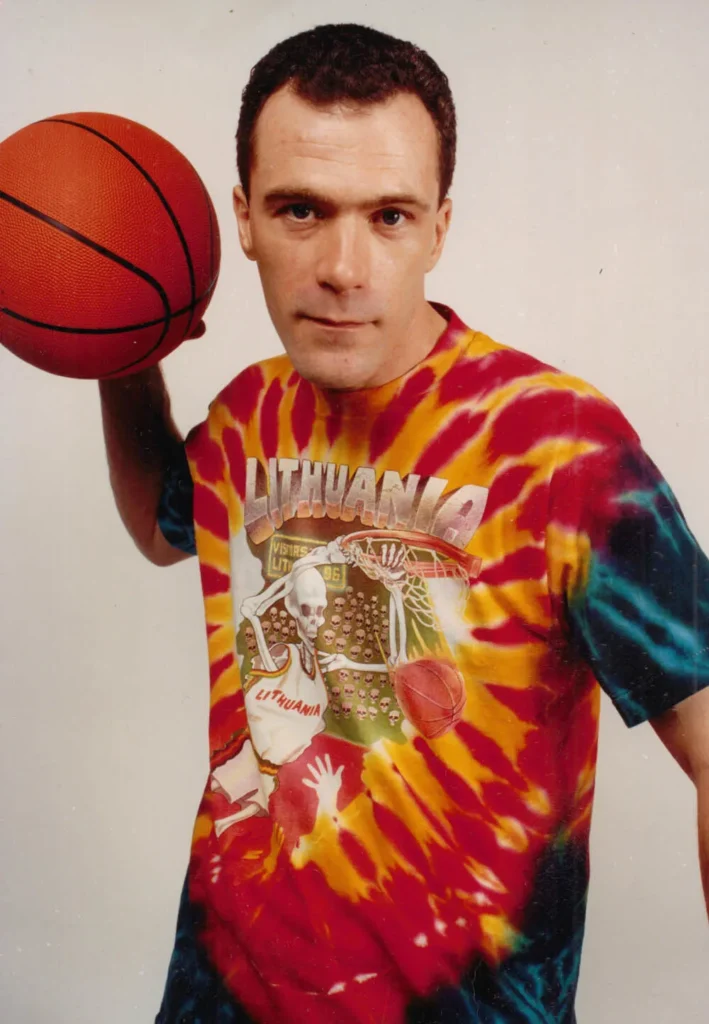
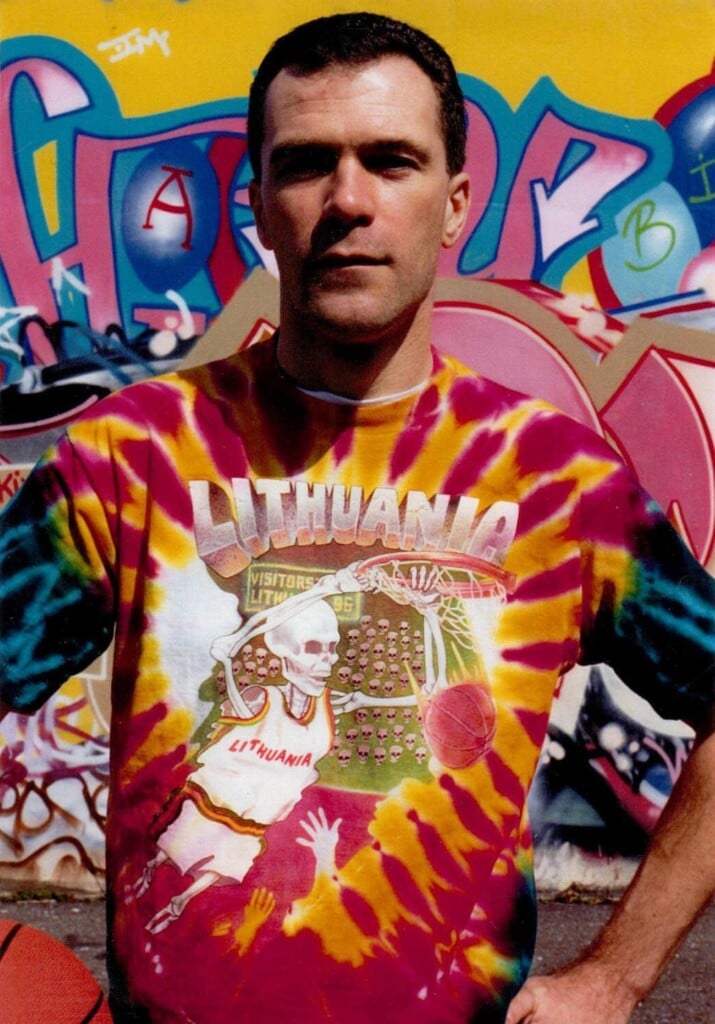
On the podium, in those improbable, beautiful uniforms, there was something no ordinary sports narrative could contain. The T-shirts became the most popular souvenirs of the entire Olympics — more so than the Dream Team’s — because they went beyond sport; they carried with them the end of the Cold War, America’s countercultural utopia, and a nation coming back into existence through basketball.