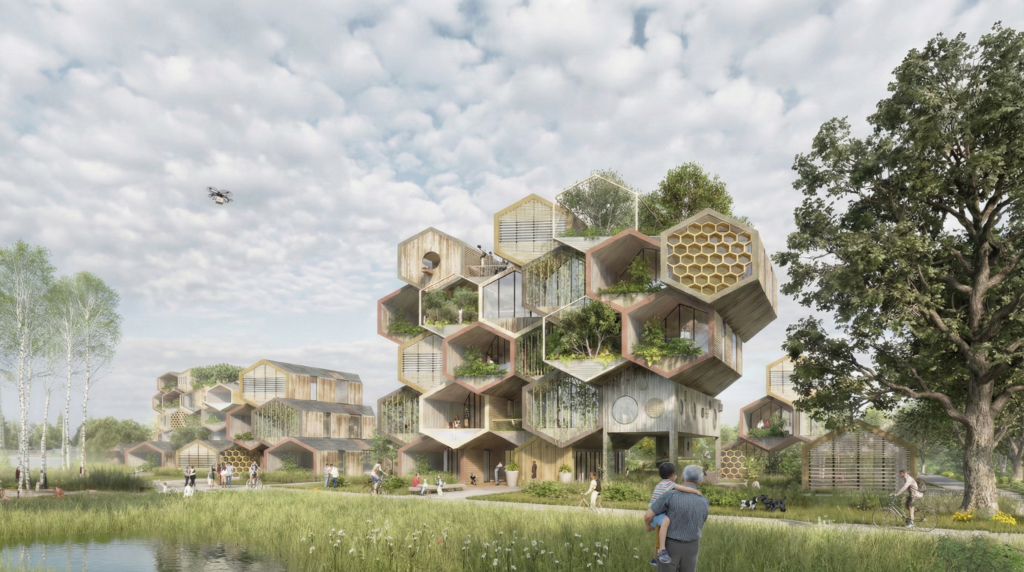
For HIVE!, a project by uau studio, the team started with bees. Not as a metaphor, but as a working method. The hexagonal honeycomb module — mathematically proven to be the most efficient shape for dividing space with minimal structural support — becomes the generative cell of a new way of living. Not a decorative reference, but an actual construction principle: a prefabricated timber structure assembled off-site using robotic technologies and IoT systems, then shipped and installed on location to reduce time and environmental impact.
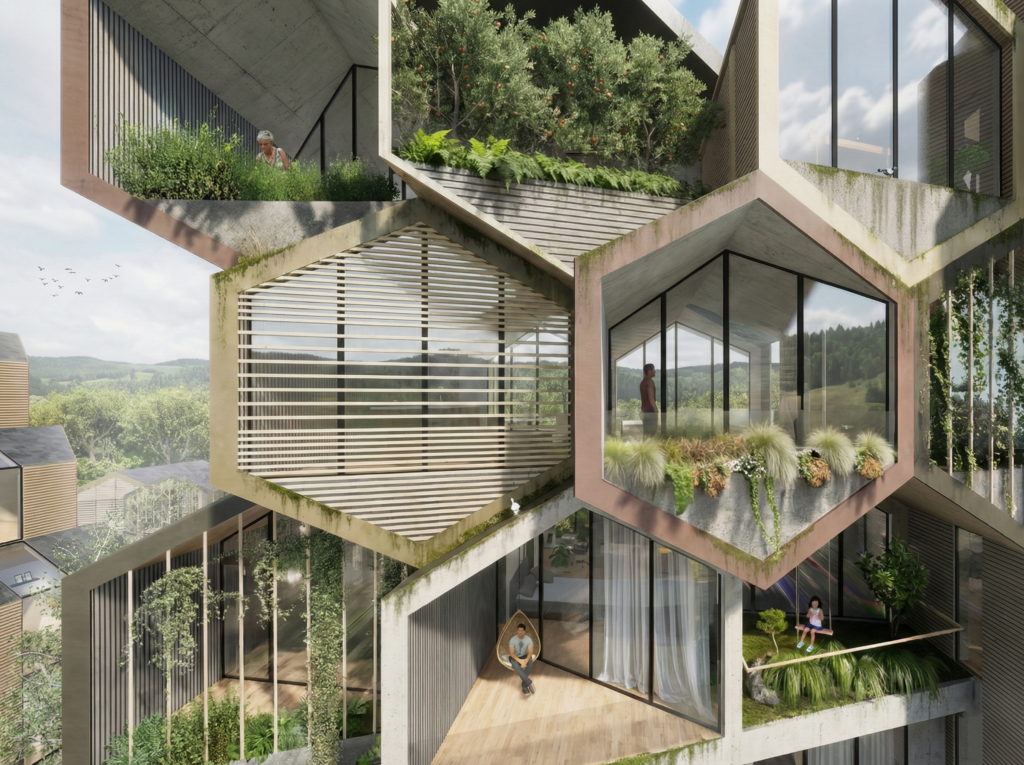
The result is a hybrid system that the studio calls a Socio-Eco-System: a modular residential organism where flexibility is not an option but the starting point. Each home can be configured and reconfigured over time — changing finishes, adding modules, adapting spaces for accessibility or the evolving needs of its inhabitants. The “hive” windows can be customized with different materials, colors, and add-ons; upper floors host shared gardens and orchards; terraces become spaces for interaction between neighbors. Here, architecture does not impose a final aesthetic but enables a polyphony of choices.
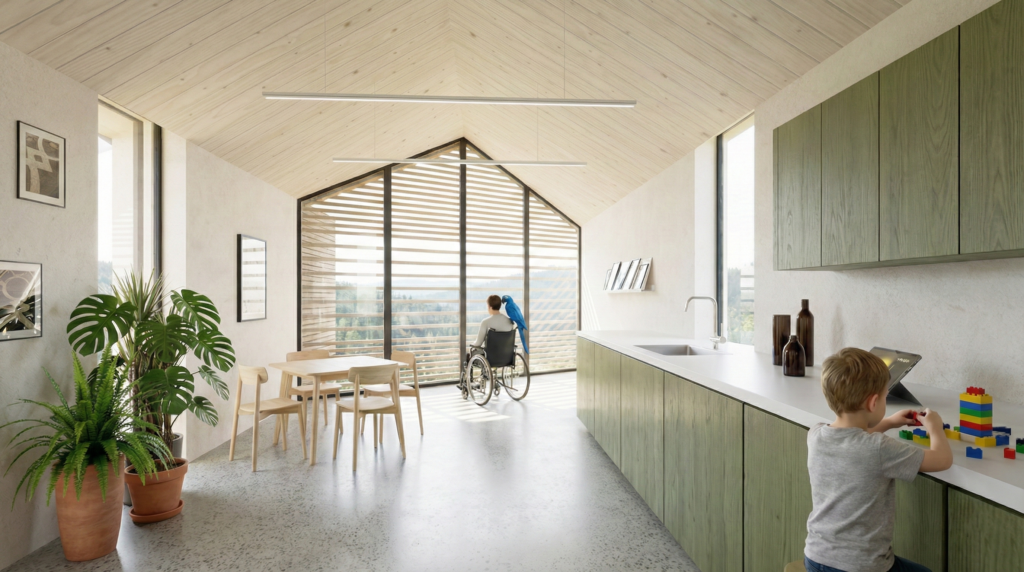
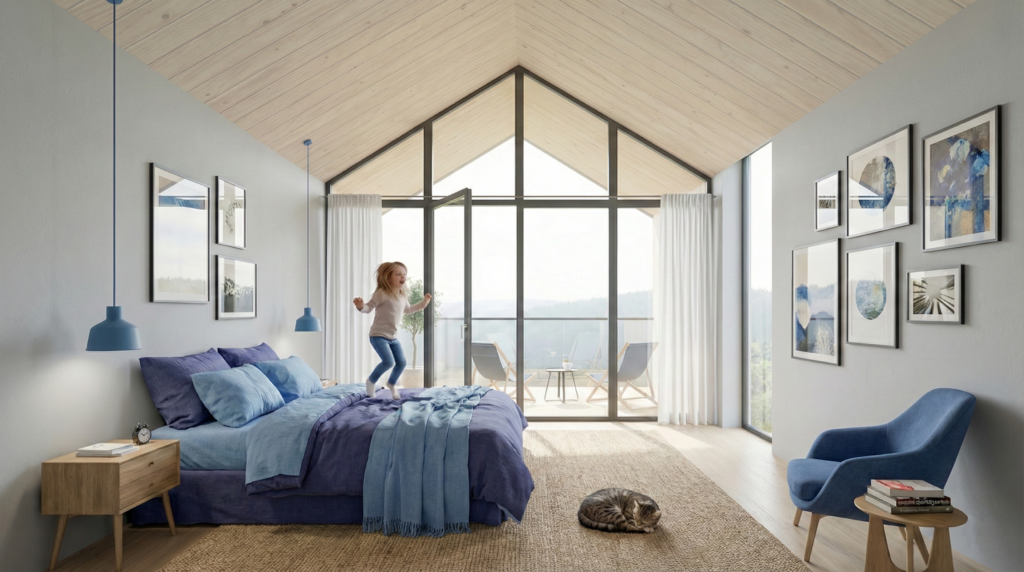
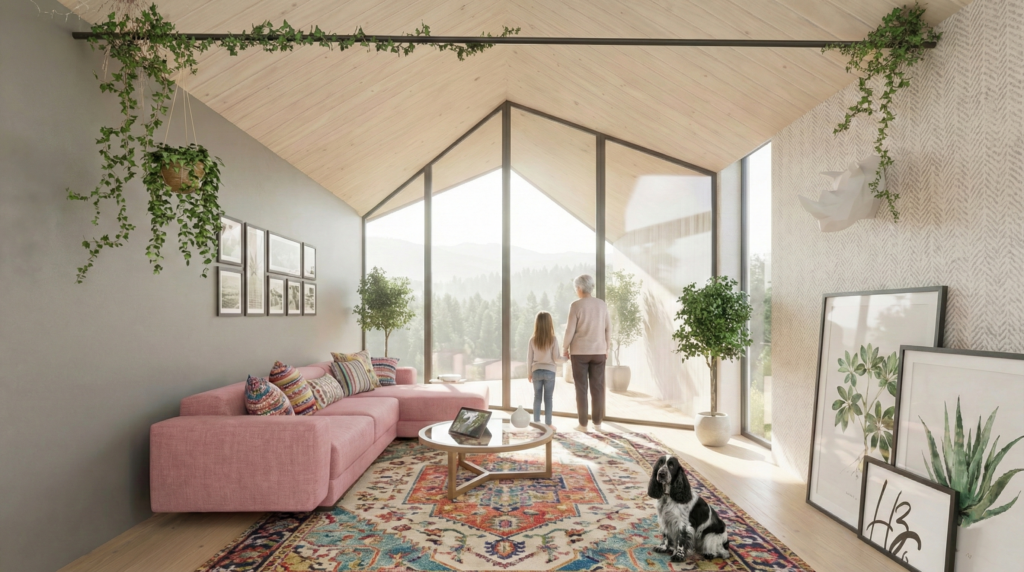
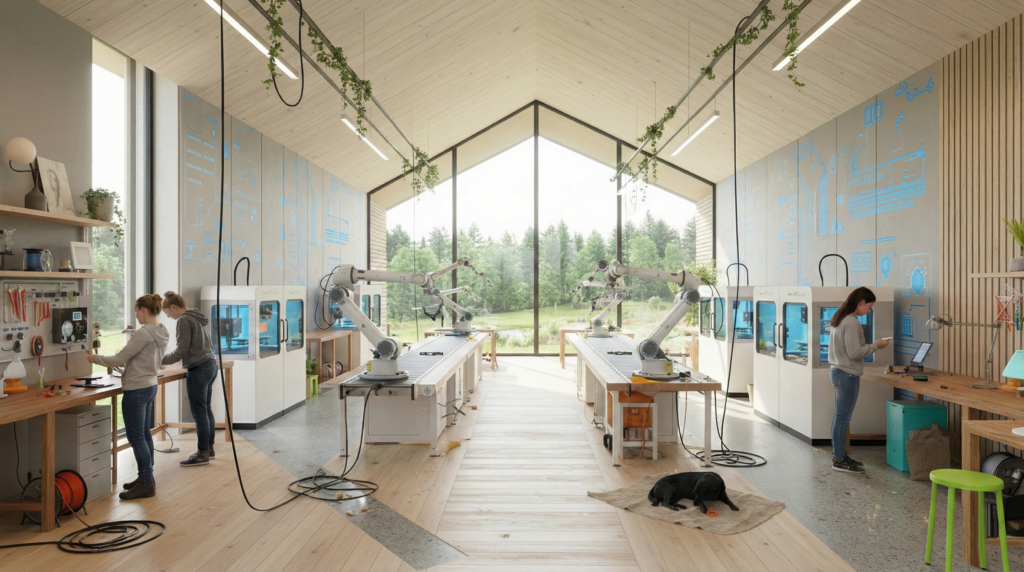
What sets the project by uau studio apart from many other residential concepts is its refusal to compromise between the human scale and a systemic vision. The Hive does not design houses; it designs a kit of parts, components that each community can assemble differently, collectively deciding which functions to include from the earliest planning stages. Shared spaces, energy infrastructures, areas for natural regeneration: everything is part of a system designed to be extended rather than completed.
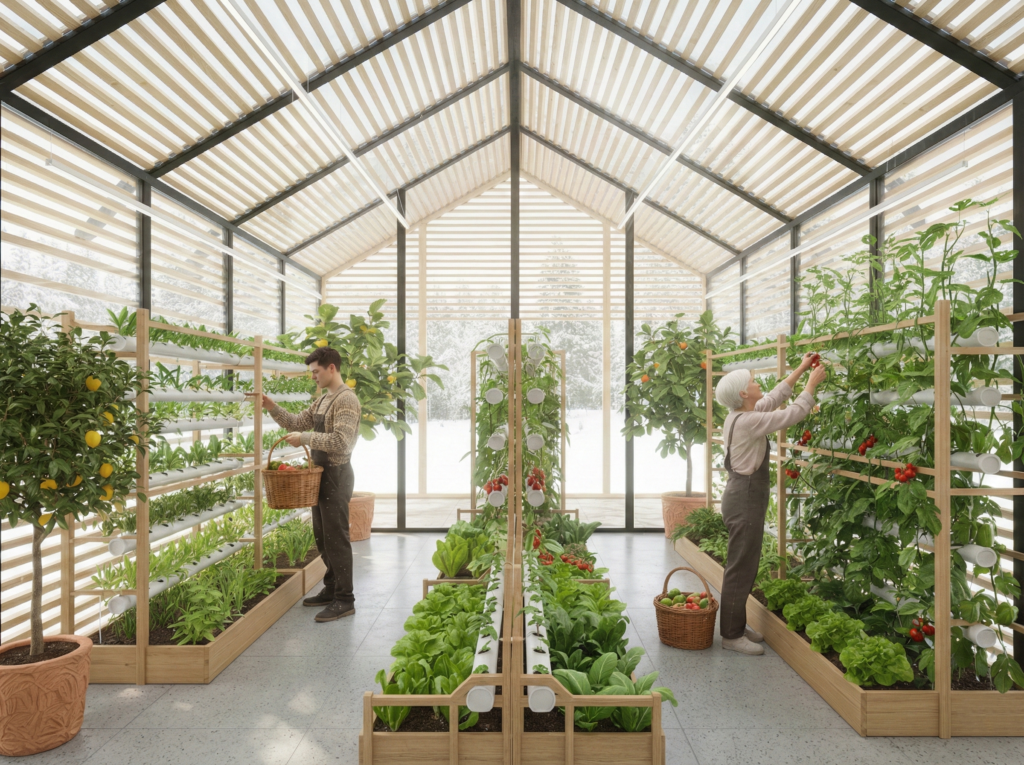
Conceptually, the reference to the hive is not merely formal. Bees build environments suited for multiple generations, based on role specialization and a strong sense of collective belonging. The Hive Project attempts to translate that logic into residential architecture: a habitat where the diversity of its inhabitants is not a problem to manage, but the necessary condition for the whole system to function. The project is currently still in development, with plans for construction in the United Kingdom.
Read also: The Chaise Longue for Slowing Down in the Middle of Our Frenetic Time