What happens when a brand with over 160 years of history decides not to limit itself to renewing its image, but to turn its visual universe into a place to walk through? In the case of Pastiglie Leone, the shift from packaging to space is part of a single project: reclaiming the company’s history without turning it into a mere exercise in nostalgia.
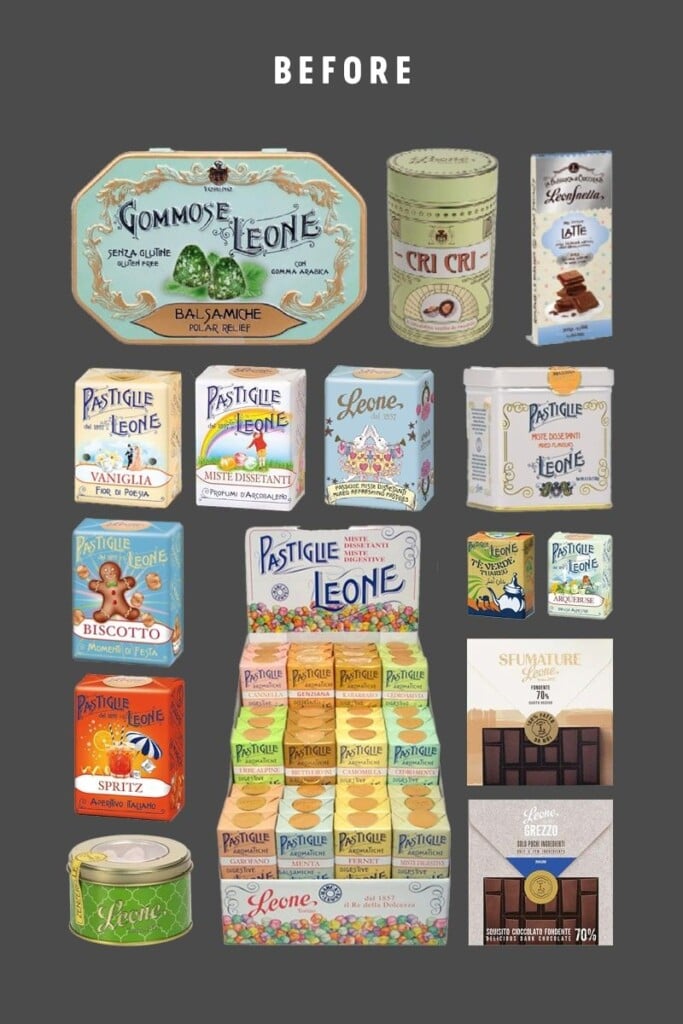
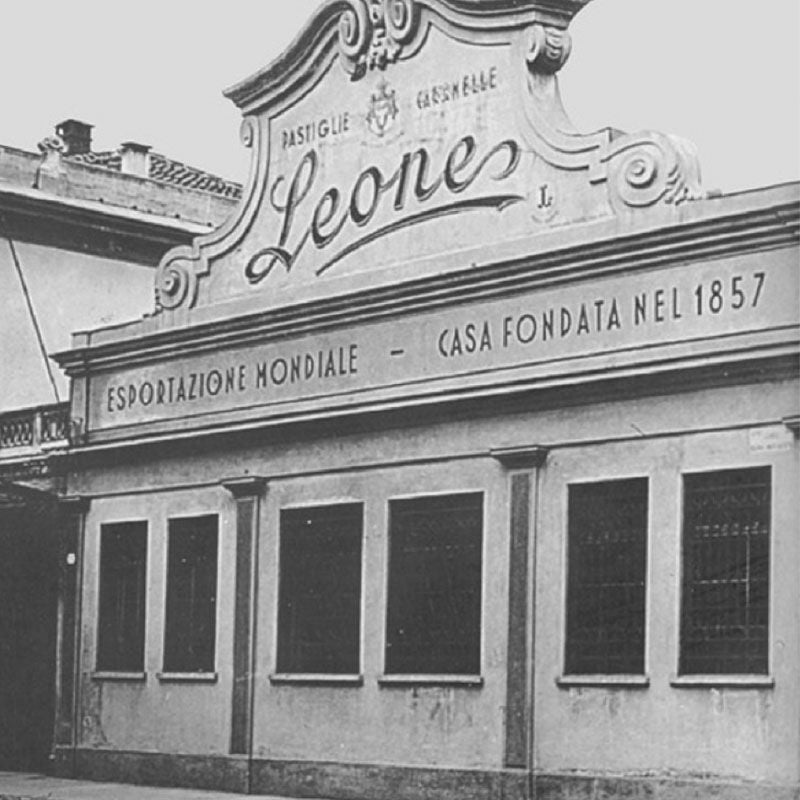
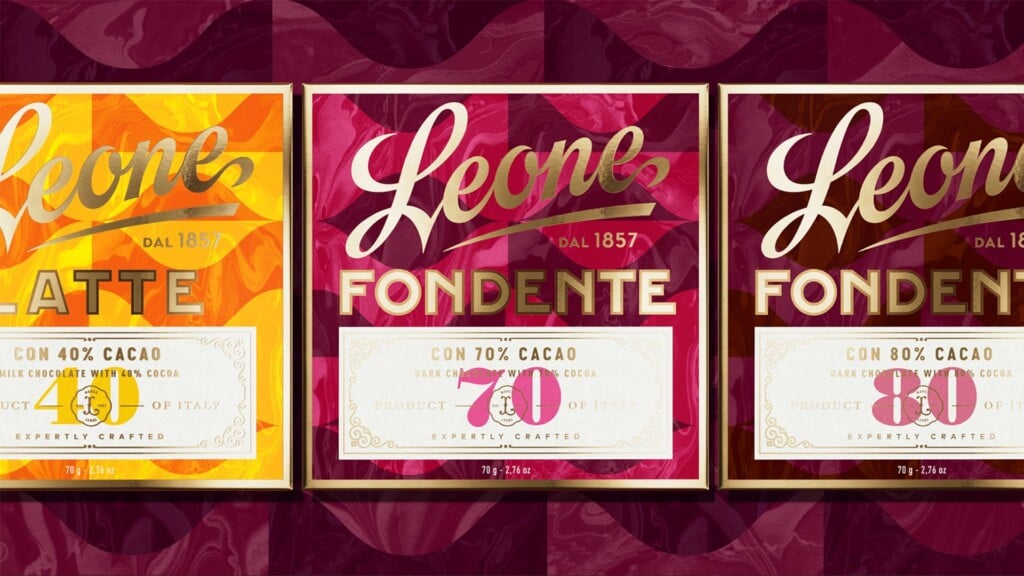
Founded in Turin in 1857, Leone built its identity around an imagery made of pastilles, chocolate, colours and a distinct idea of Italian craftsmanship. In the work developed by Design Bridge & Partners, which began in 2022, the starting point was precisely this heritage. The goal was to make the identity of a brand with a very broad portfolio more coherent, while preserving its artisanal and recognisable character.
An identity built on memory
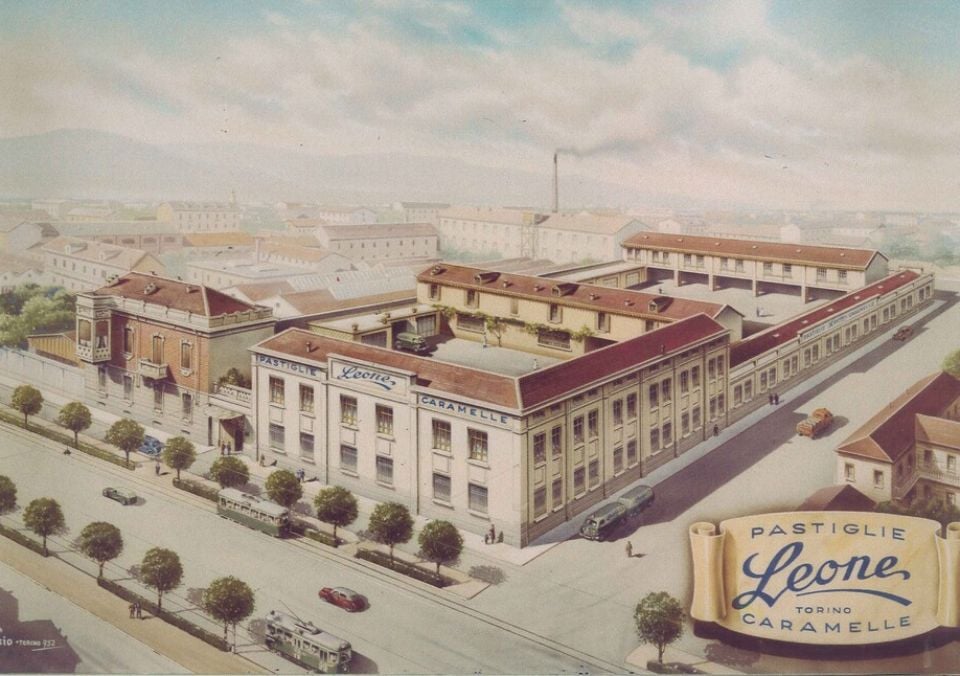
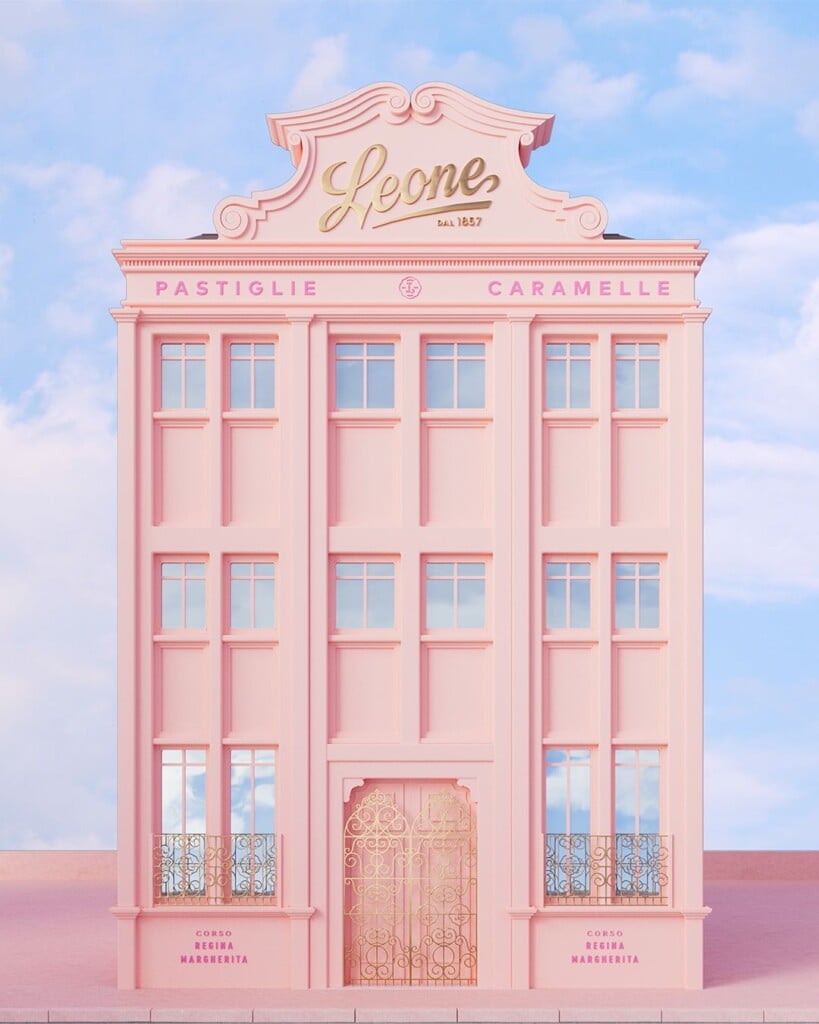
For the rebrand, Design Bridge looked directly at Leone’s archives and history. The old factory became one of the main sources of inspiration: its architecture, colours and decorated ironwork details were translated into a contemporary visual language.
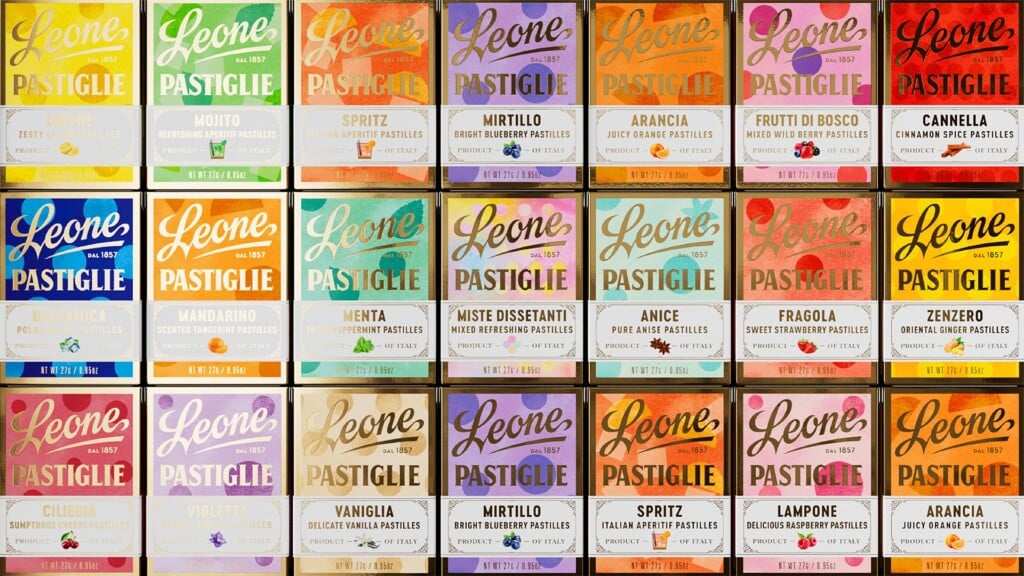
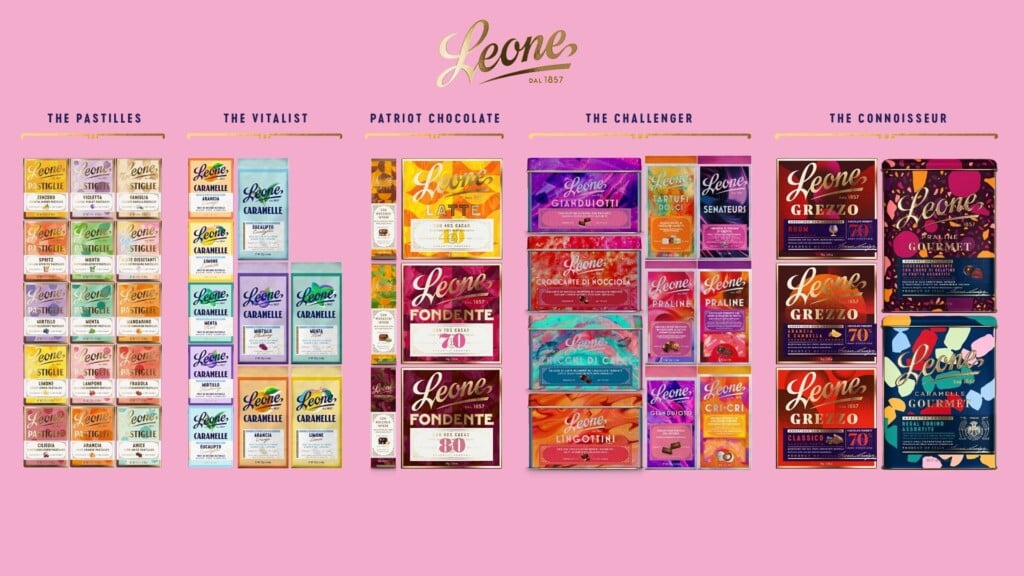
The new typography also stems from a specific reference: the lettering of Turin’s street signs is reinterpreted in the new wordmark, while on the packaging the patterns echo the shapes of the pastilles. Sealing the boxes is also a golden “L”, an element inspired by materials kept in the family’s archives.
Rather than erasing the past, then, the project uses it as material to build something new. Design Bridge describes this direction through the concept of “Sensory Escapism”, the idea that Leone’s products can offer a momentary escape from everyday life through taste, imagination and discovery. It’s precisely this idea that takes the next step.
From packaging to space
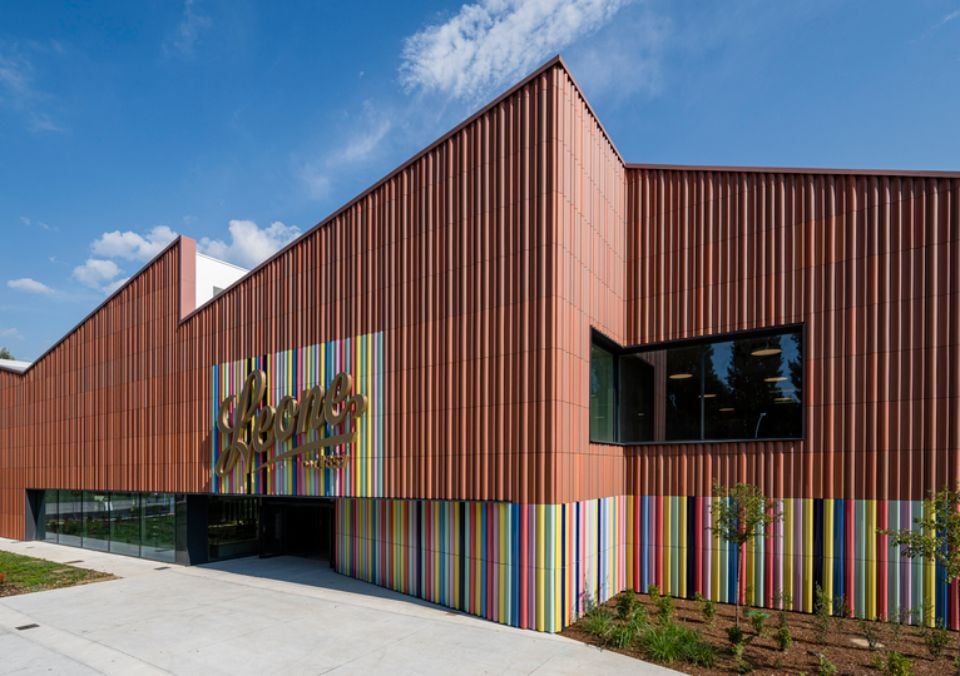
Opened on 22 September 2026 in Collegno, on the outskirts of Turin, the new building stands next to the current plant and covers 7,000 square metres. It is not, therefore, a new factory replacing the existing one, but a space built to make Leone’s world accessible to the public, while maintaining a direct relationship with production. The building designed by Piuarch is in fact conceived to connect production, visitors and landscape, with an open architecture that leaves visible what normally stays behind the scenes of a product. The façade itself picks up Leone’s identity in its colours, while inside the route alternates architectural elements, installations and references to the company’s history.
Welcoming visitors is a large atrium dominated by a monumental reproduction of the historic yellow Leone tin, suspended at the centre of the space. Here you’ll also find a café and the flagship store, set up inside a large greenhouse. The shop carries the entire Leone range and also lets you create a personalised selection through loose sales. These areas are accessible without a ticket.
A factory that lets itself be seen
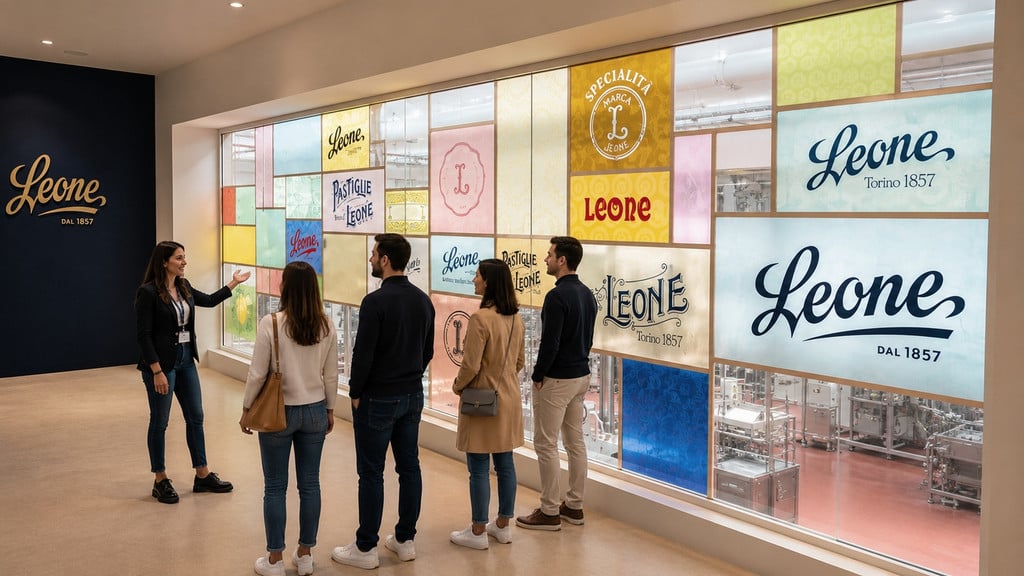
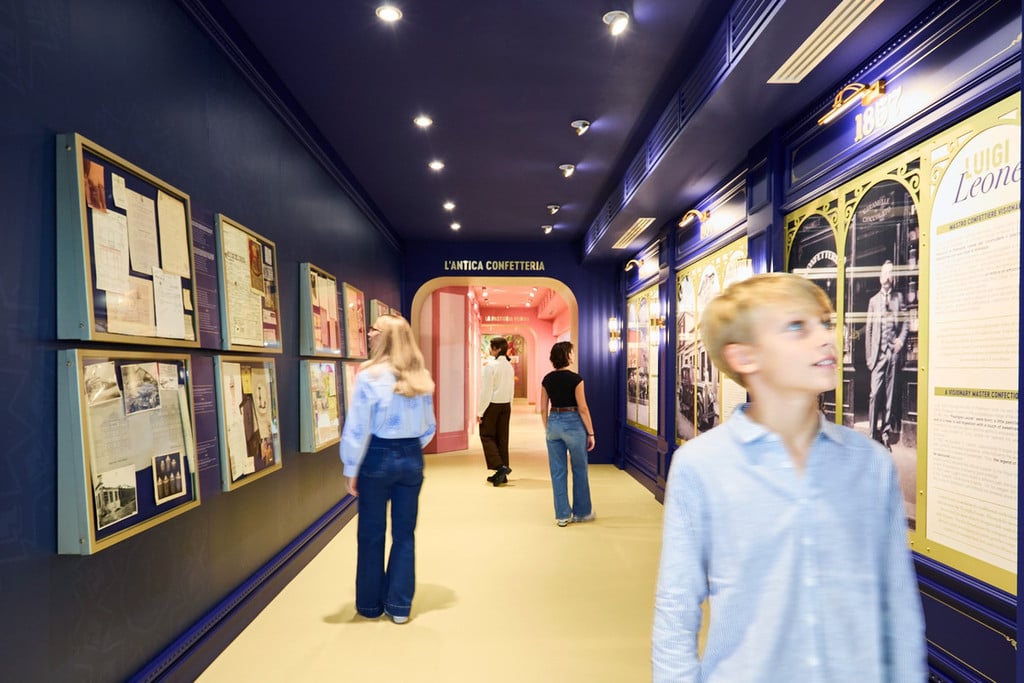
The heart of the project, however, is the museum route. Spread over two floors and organised in a ring-shaped structure, it alternates immersive environments, interactive installations and views onto the production lines. Visitors therefore don’t just learn about the company’s history through objects and images, but can directly observe some of the processes through which the products are made.
The highlight is the Theatre, from which you can see the pastille and chocolate production lines. Here vintage machinery and contemporary technology coexist in the same space, making visible the continuity between tradition and innovation that Leone wants to convey. The visit ends with a tasting of the products, while the Factory’s programme also includes guided and self-guided tours, workshops and activities dedicated to Leone’s specialities.
This transparency is precisely one of the project’s most interesting aspects: the factory isn’t turned into a mere scenic backdrop. Production remains part of the experience, and visitors can see the place where the product is actually made.
170 years turned into experience
La Fabbrica della Felicità (The Factory of Happiness) was born from the owners’ desire to tell a story that began in 1857. As Michela Petronio and Luca Barilla explain in the opening press release, the project aims to turn almost 170 years of the company’s history into an experience open to the public and tied to the local area. For this reason the museum project was entrusted to Luca Molinari Studio, while Piuarch designed the building. Design Bridge developed the creative concept, Studio Paolo Monzeglio oversaw the scenographic design and Fo.LL.iA the interactive, multimedia and graphic component. The collaboration between these teams builds a route in which the brand’s identity isn’t confined to communication, but becomes environment.
Sustainability is also part of the architectural project. The new building was designed to achieve LEED Gold certification and integrates photovoltaic systems, rainwater harvesting systems and natural, recyclable materials. The design also makes the most of natural light and the relationship with greenery, both in the interior and exterior spaces.

When branding becomes a place
Viewed together with the brand’s redesign, the Fabbrica della Felicità thus tells of a precise shift: Leone takes its identity from product to space. The packaging had already turned the company’s history into a visual system made of colours, shapes and references to the archive. Now the same principles are translated into architecture, scenography and exhibition route. The tin becomes a monumental element, the colours enter the building, production becomes part of the story, and the company’s history stops being something to look at only through photographs or archive objects.
The most significant choice, however, remains that of keeping museum and production together. The Fabbrica della Felicità doesn’t only tell what Leone has been, but also shows where and how it continues to exist today. In this sense, rather than building a museum around a historic brand, Leone chose to open its own factory and turn it into a meeting place between past, present and public.