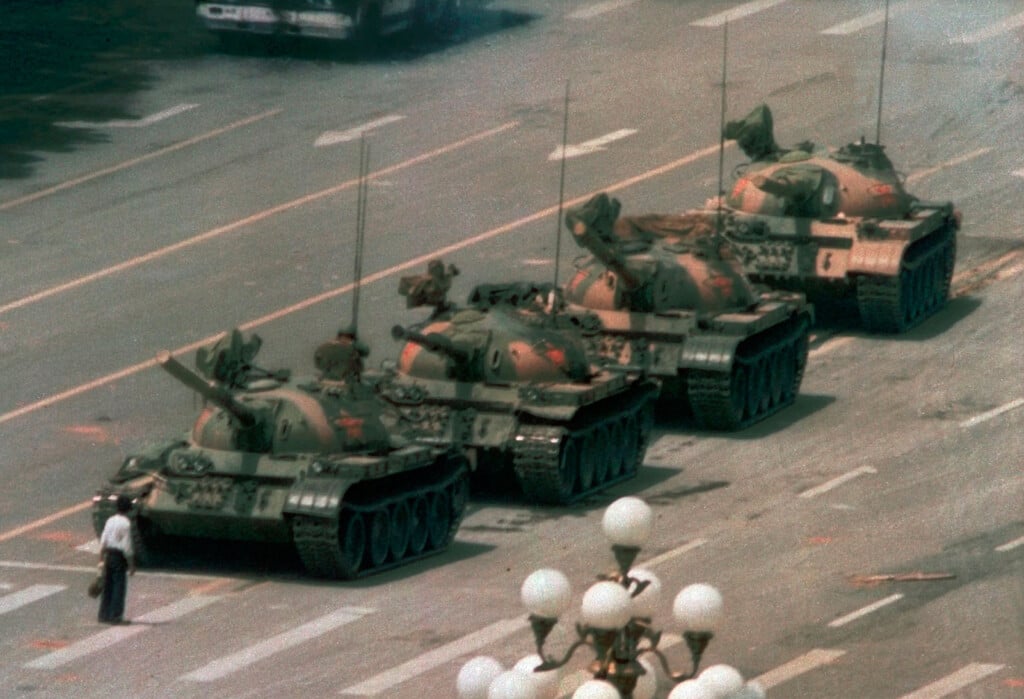
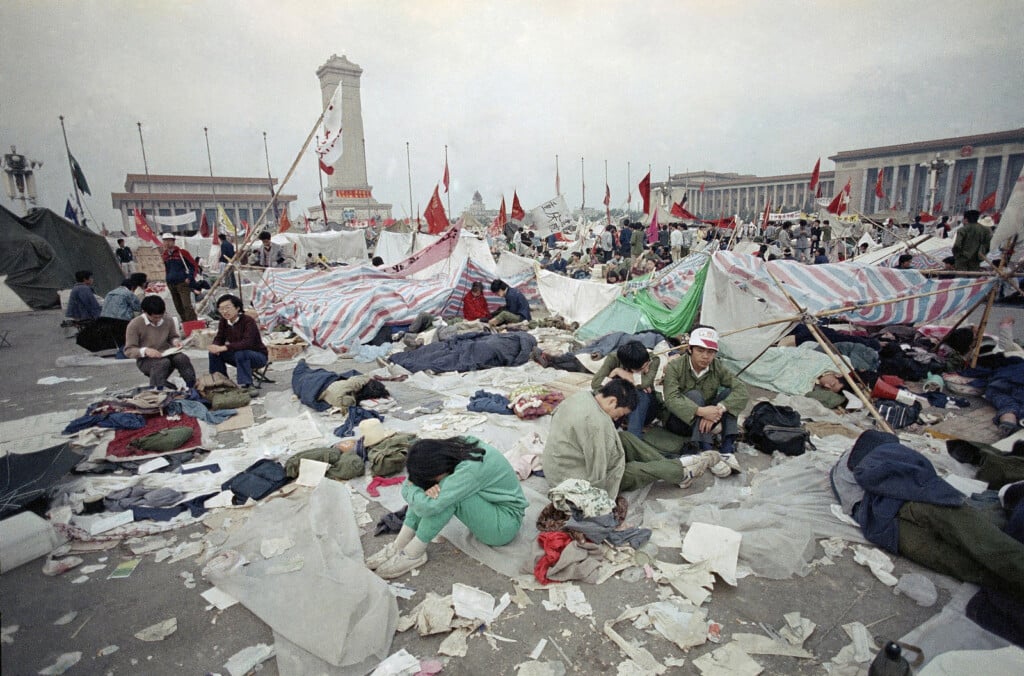
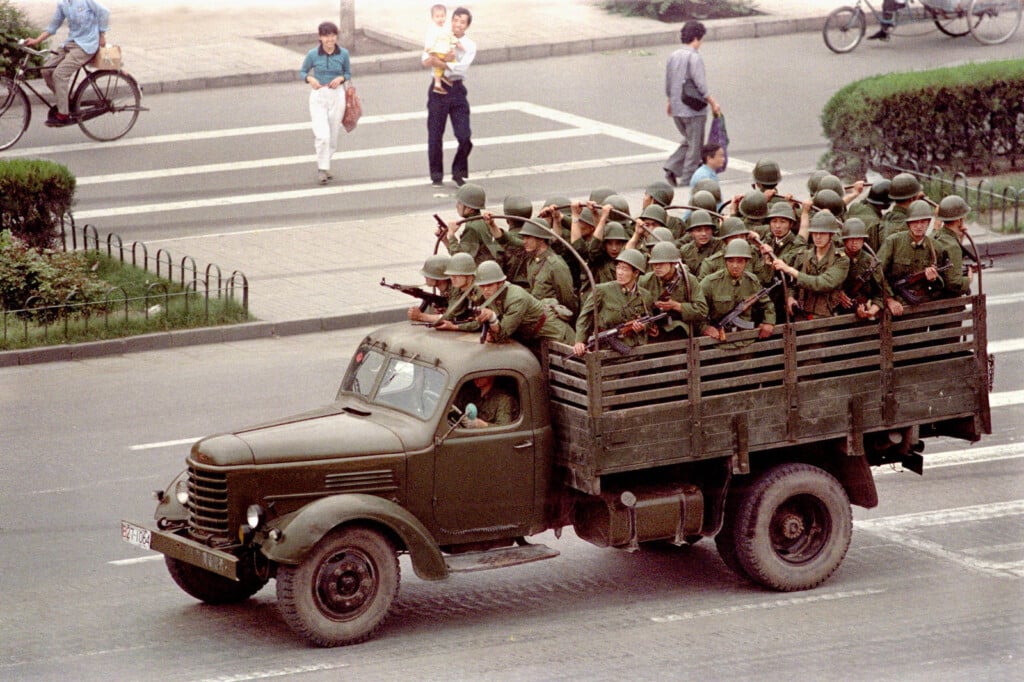
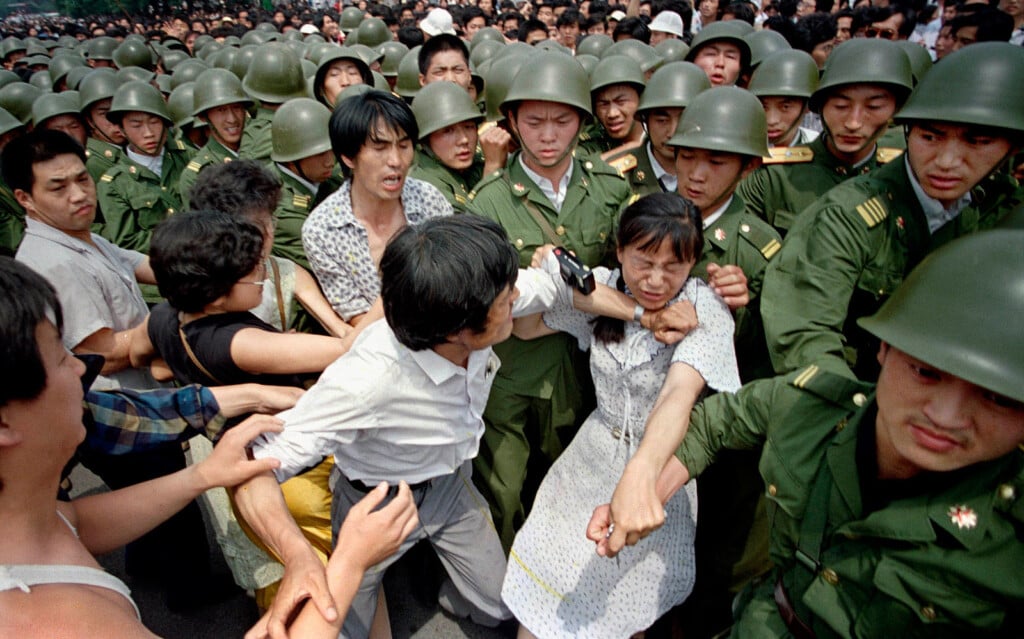
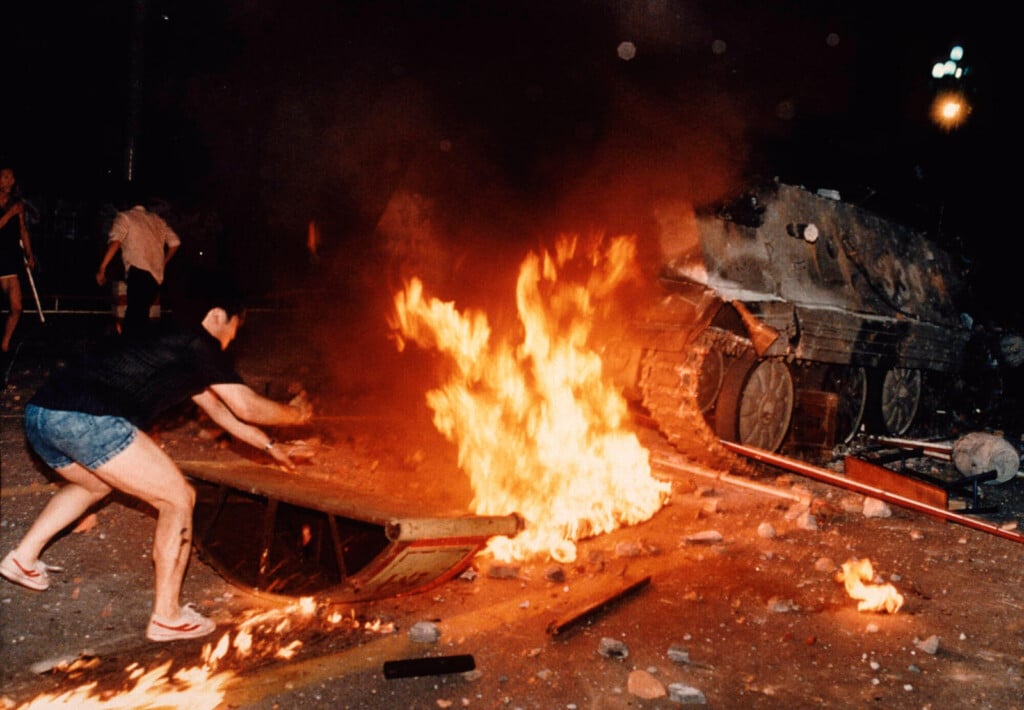
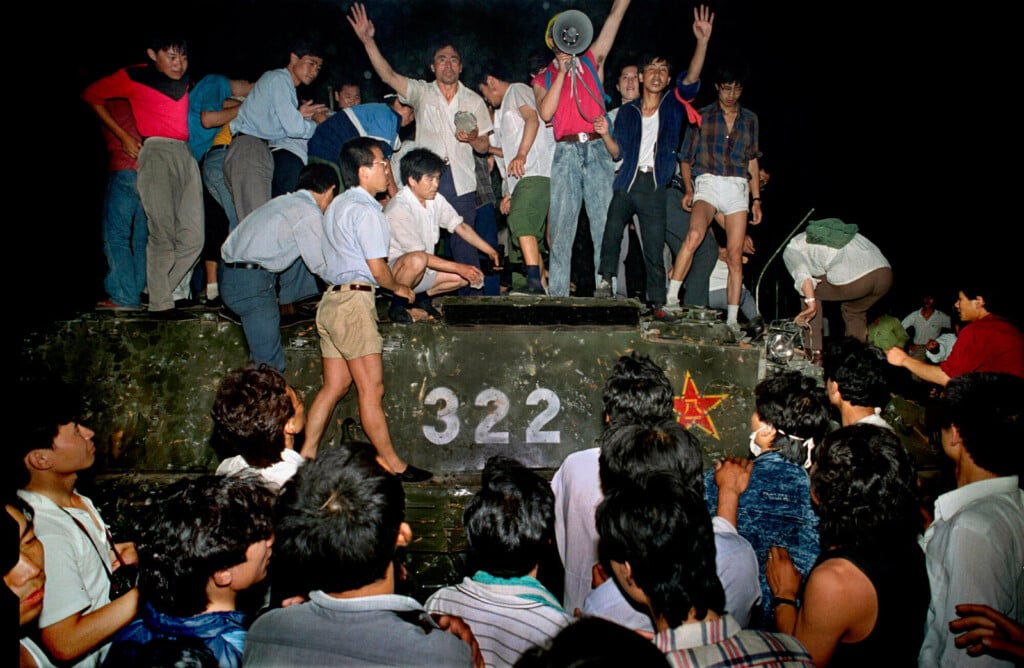
Beijing, June 5, 1989. For weeks, Tiananmen Square has been occupied by students, workers and ordinary citizens. The protests, which began in April after the death of the reformist Hu Yaobang, quickly spread, with demands for political reform, less corruption, and greater freedom of expression and of the press. As the weeks go by, the mobilization grows, draws in ever wider sections of the population and leads the government to declare martial law on May 20. On the night between June 3 and 4, the army enters central Beijing with armored vehicles and live ammunition. Hundreds, perhaps thousands of people are killed. The exact number of victims has never been established.
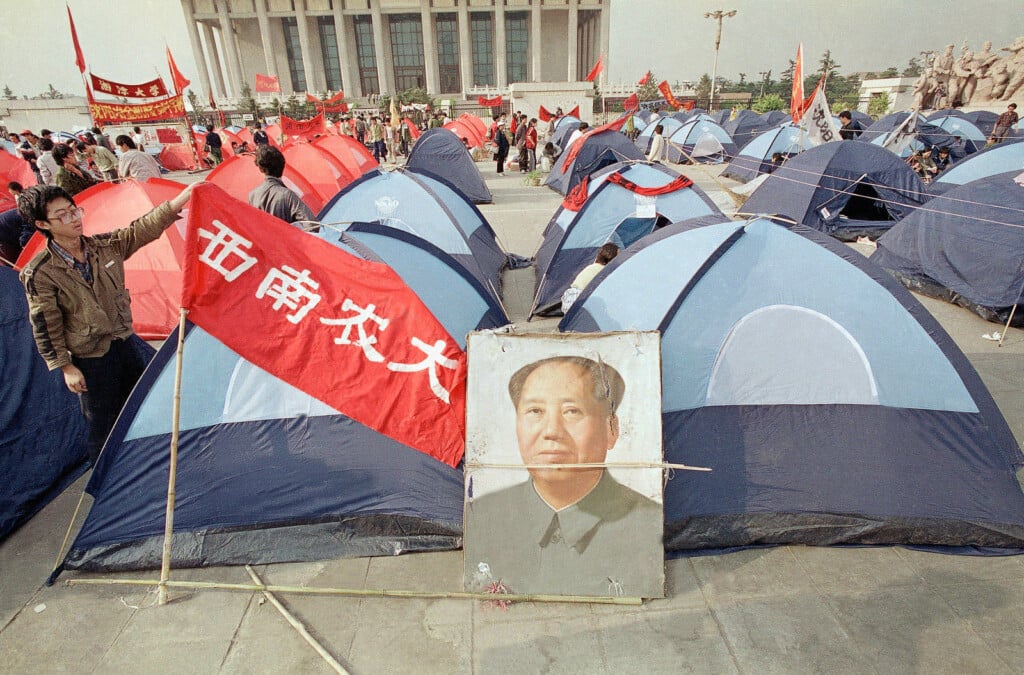
The next day, on Chang’an Avenue, something happens that lasts only a few minutes. A man in a white shirt, a bag in each hand, steps into the road and stops in front of a column of tanks. Jeff Widener, an Associated Press photographer, watches the scene from high up in the Beijing Hotel and takes the photograph that will become known as Tank Man. Other photographers capture the same moment too, but Widener’s becomes one of the most widely circulated and recognizable versions.
The image is built on an almost absurd imbalance. The tanks advance diagonally, enormous, identical, one behind the other. Their repetition creates rhythm, order, weight. In front of them stands a single, tiny body. Yet that man completely breaks the geometry of the image, and without him we would see only a military column.
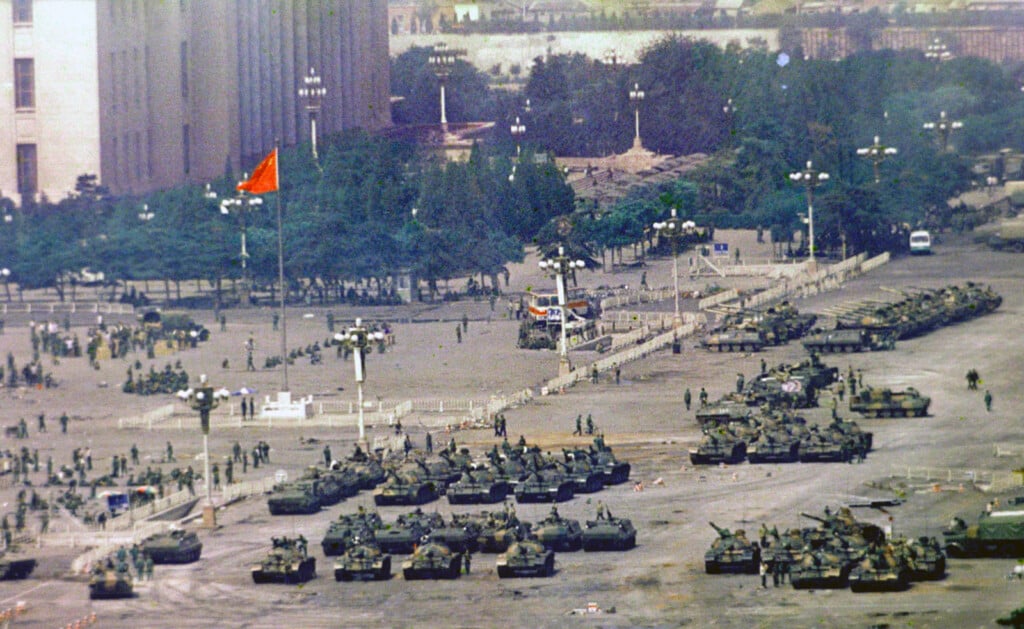
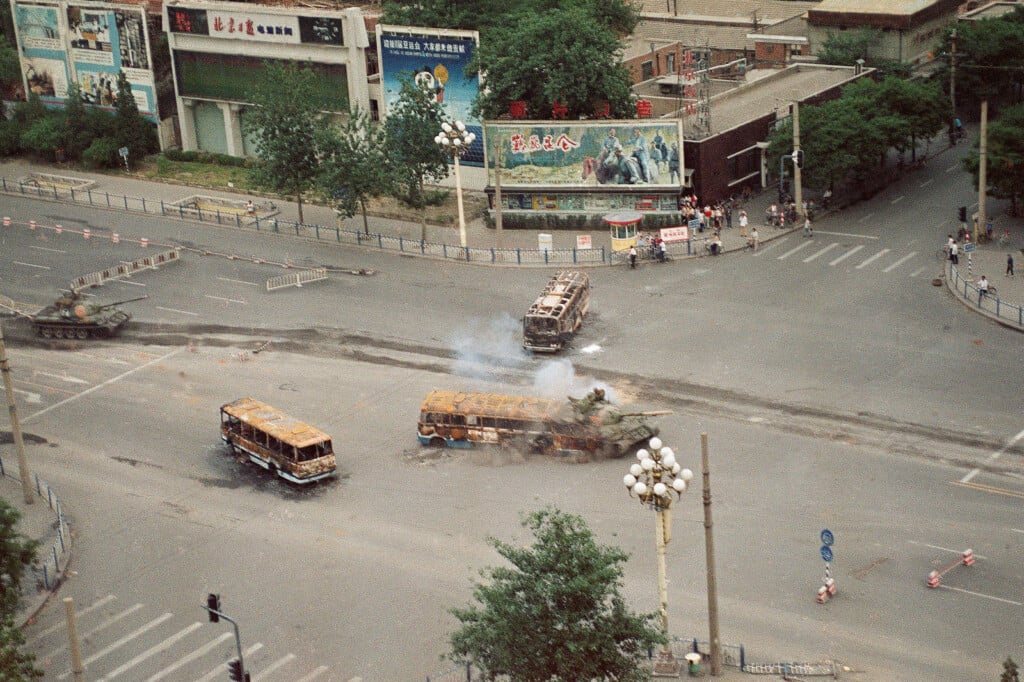
The point of view matters too. Widener shoots from above, compressing the distance between the man and the vehicles. The street becomes almost an empty surface with only two elements left on it, a mechanical mass and a human body. The white shirt sets him apart from the asphalt, while the two bags make the scene even more strange. He doesn’t look like someone who came there to become a symbol. He looks like a person who, until a few moments earlier, was simply going about his day.
We can’t see his face. There is no heroic pose, nothing that sets him apart from anyone else. That is exactly why the photograph works. It puts in the same frame the force of a military machine and the fragility of an individual who simply decides not to move.
One person against four tanks. Everything else in the photograph stems from that disproportion.
This article was created in collaboration with Luigi Falanga aka @superottomag
Read more