There is something poetic about the name chosen by IKEA for its boldest collection. PS, as in post scriptum, that note added at the end of a letter when you think you have already said everything you needed to say, only to realize that there is still something essential left to add. More often than not, it is precisely in that PS that the truest thing is hidden, and IKEA knows this well.
It was 1995 when IKEA arrived at the Salone del Mobile in Milan with the first PS collection. More than a simple debut, it was a statement of intent: for the first time in the history of the world’s most important design fair, a company displayed prices next to its products. A gesture that may seem ordinary today, but at the time was nothing short of revolutionary. And, if you think about it, it still is. Walk through the halls of the Salone or the presentations during Fuorisalone today and try to find a price tag—you will search forever, and in vain.
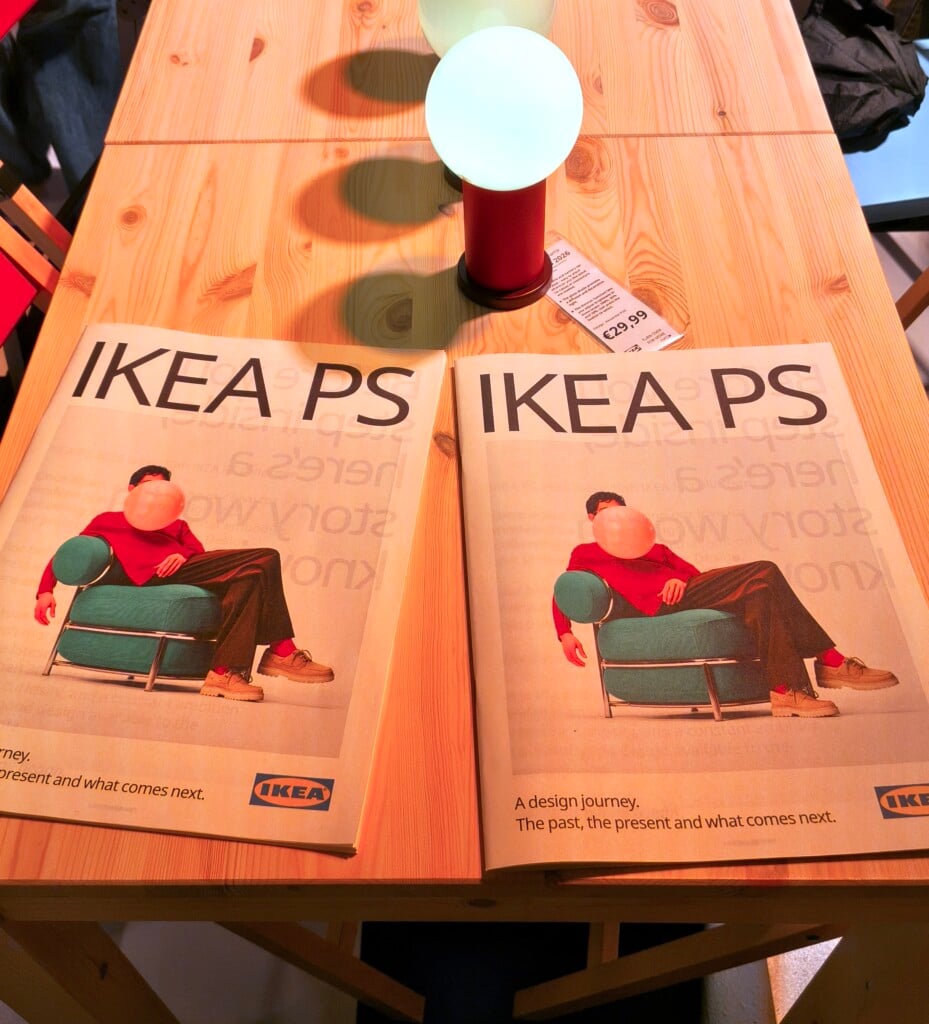
But that first PS collection was far more than a catalog of products. It was the embodiment of an idea that IKEA was refining during those very years: Democratic Design, based on five principles—form, function, quality, sustainability, and low price. In other words, the belief that good design should not be a luxury or a privilege reserved for a few.
Last April, thirty years after that first appearance in Milan, IKEA returned to Design Week with a preview of the new PS 2026 collection. Three pieces were unveiled in advance. The lamp that folds, designed by Lex Pott, is made from a metal cylinder cut at a 45° angle, transforming into an almost sculptural object. The chair that inflates, by Mikael Axelsson, is a highly successful and already viral attempt to rehabilitate inflatable furniture. And the bench that rocks, by Marta Krupińska, takes inspiration from the rows of people seated at Oktoberfest, moving so perfectly in sync while toasting and celebrating that they seem to be sitting on oscillating benches.
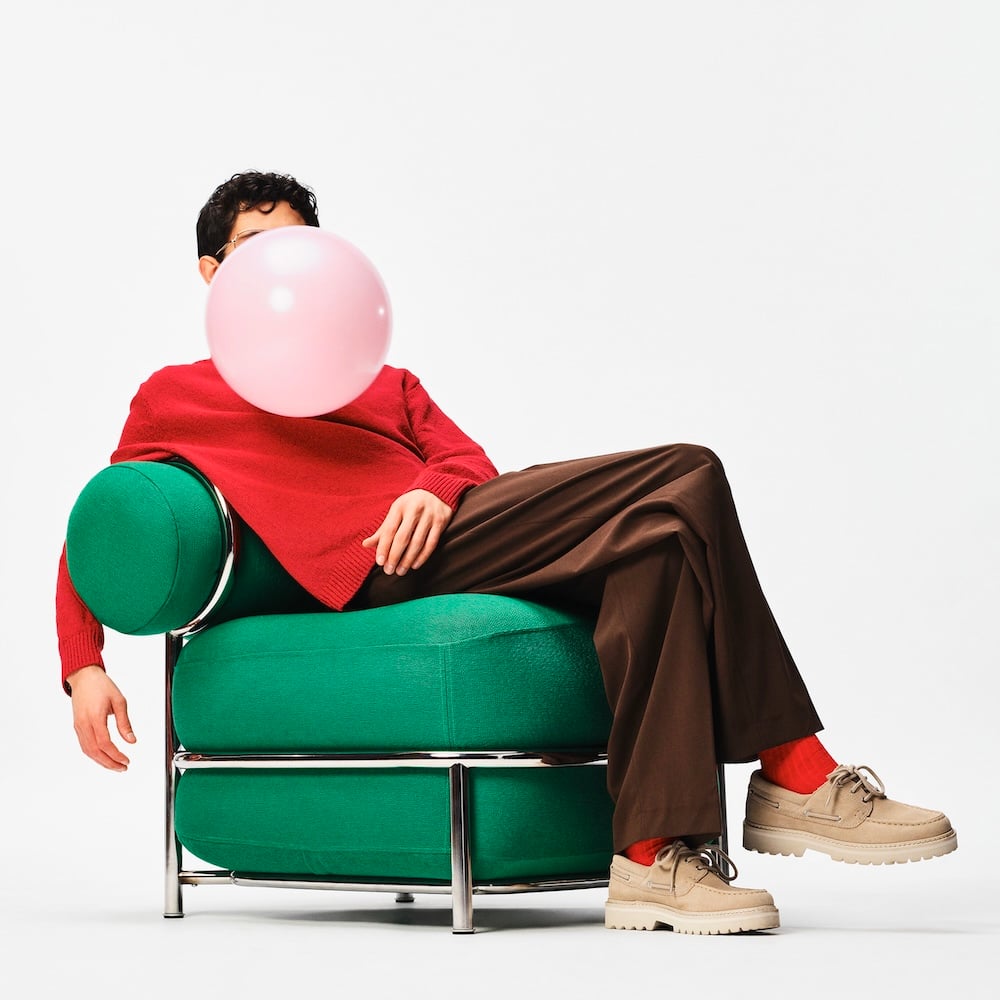


These three pieces already revealed a great deal, but to discover the rest of the IKEA PS 2026 collection, we went back to where it all began.
Älmhult is a small town in southern Sweden, in the region of Småland, where Ingvar Kamprad founded IKEA. This is where the testing labs, historical archives, and prototypes are located, and where the products that eventually make their way into our homes continue to be developed. Visiting these spaces means understanding how much invisible work lies behind every object: how many iterations, mistakes, and technical and material experiments precede the moment a product reaches the shelf.
It was here that we discovered the PS 2026 collection in its entirety—available worldwide starting May 14—and understood that the motto chosen by Maria O’Brien, the creative leader who guided the 12 designers involved in the project, was far from an empty slogan: reduce to amplify, simplify without boring.
PS 2026 is a collection in motion, one that makes movement its core design principle. The collection includes pieces that click, fold, climb, and move.
IKEA PS 2026: The Pieces in the Collection
In addition to the lamp that folds, Lex Pott designed three more pieces for the collection: a charming round trolley on wheels with four shelves, a portable lamp with rechargeable battery and adjustable brightness ready to illuminate summer evenings, and a series of playful decorations made from recycled paper that fill the home with color and character.
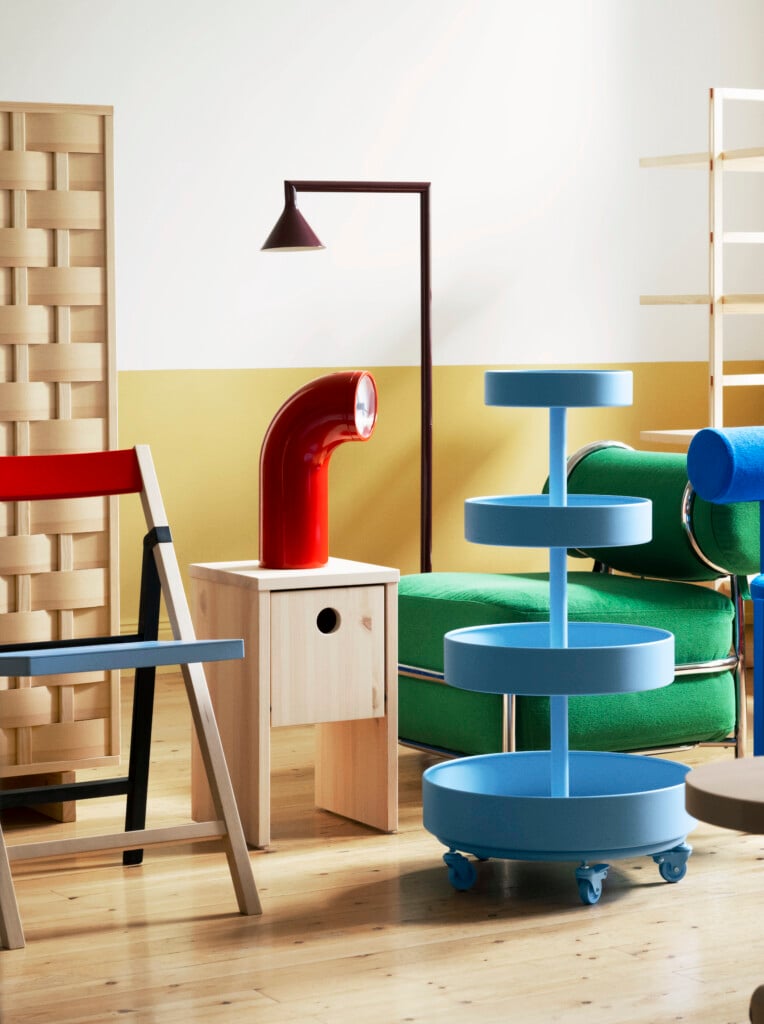
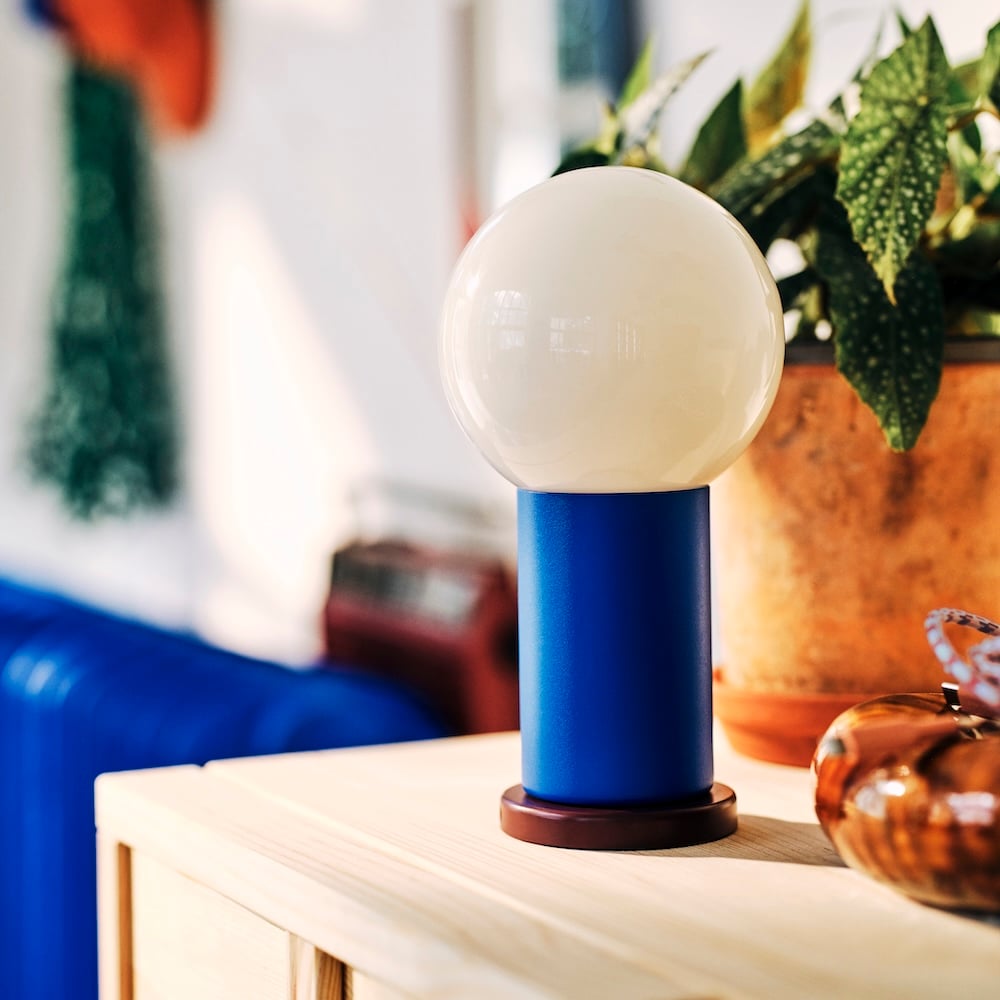
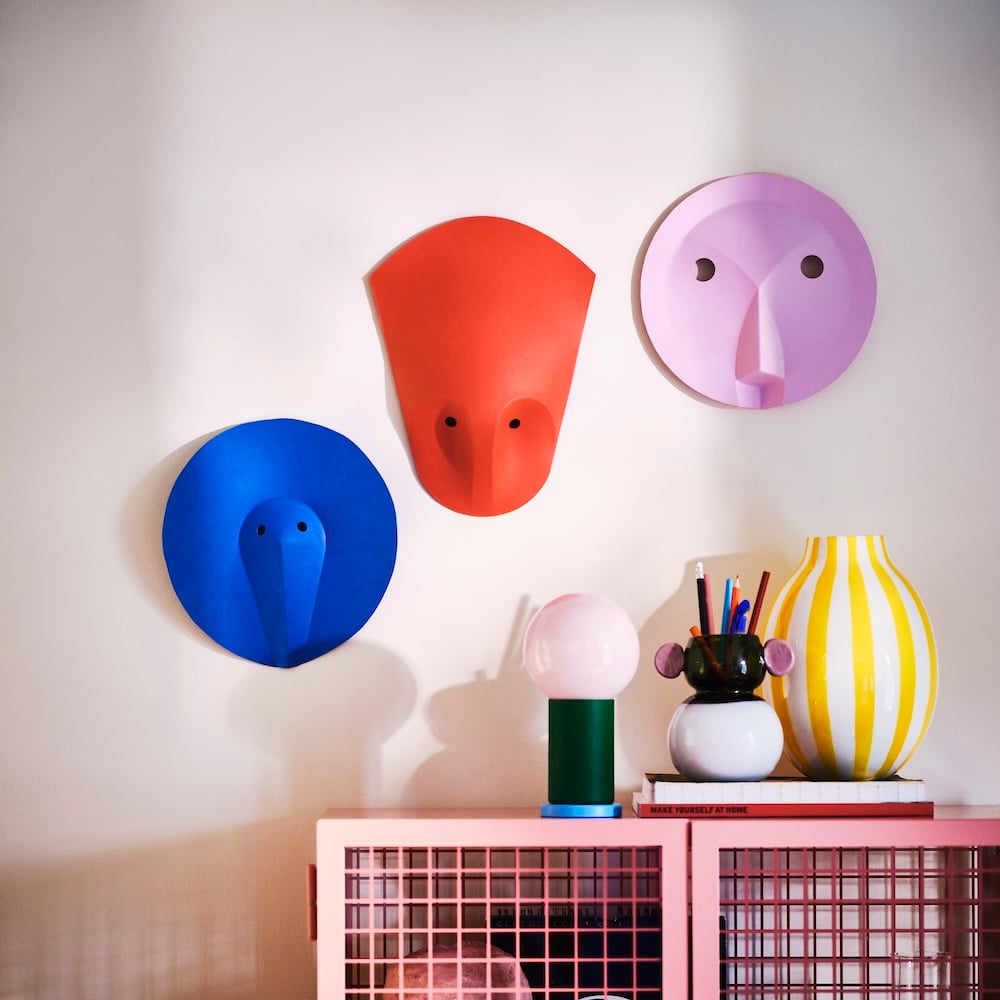
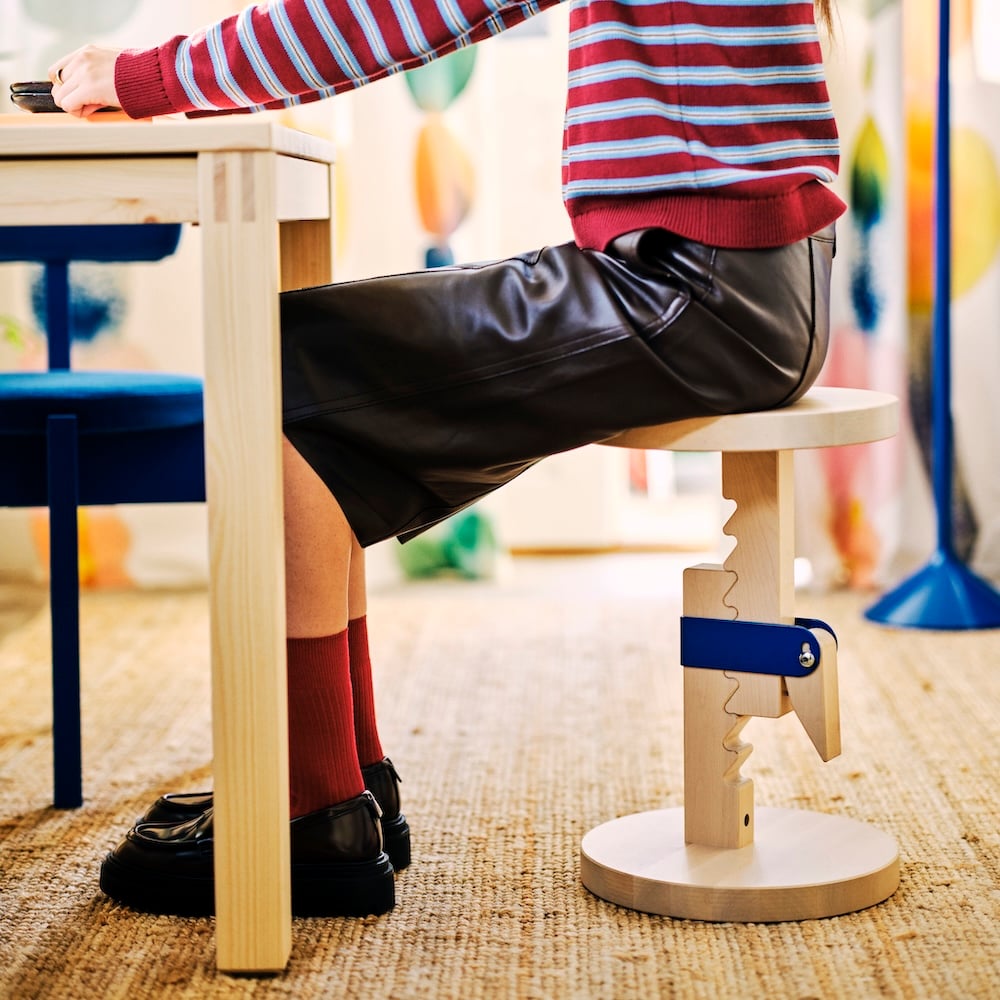
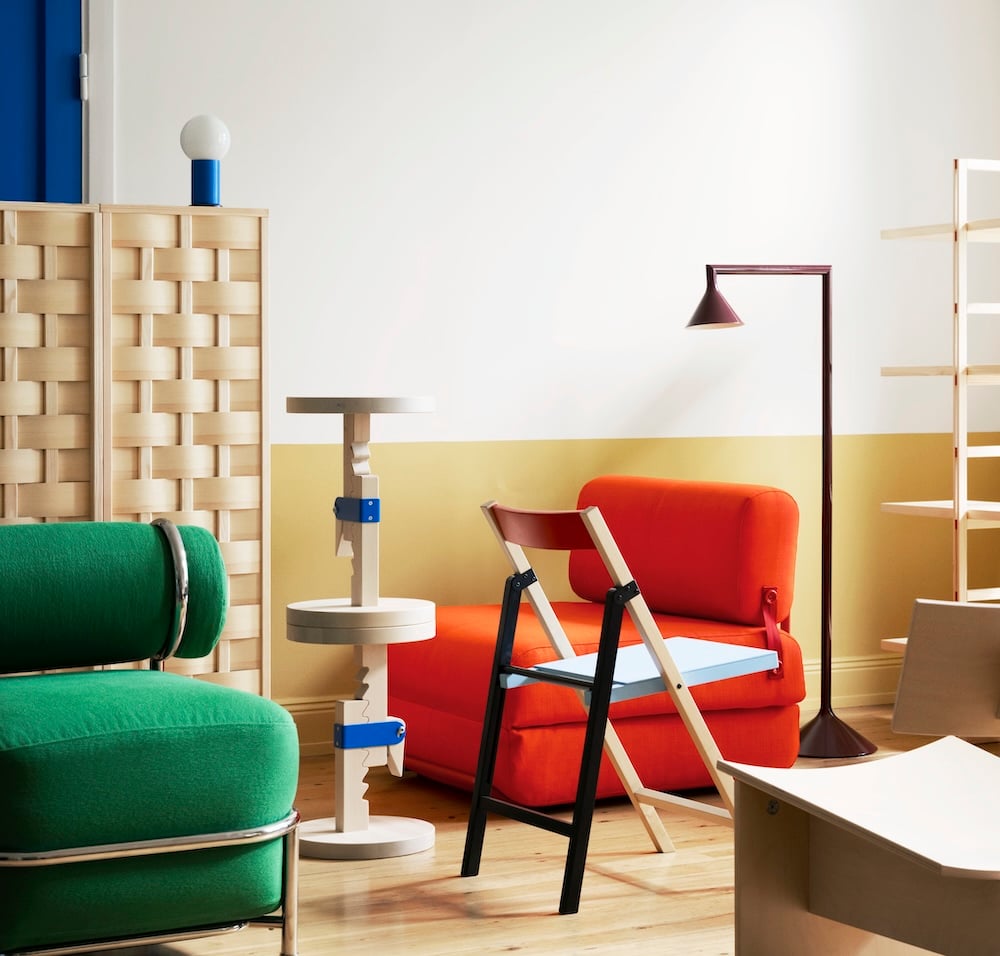
Mikael Axelsson not only created the chair that inflates, but also designed a clever stool that climbs. Its height-adjustment mechanism is inspired by carpentry tools, featuring a ratcheted structure that works in a deliberately analog way.
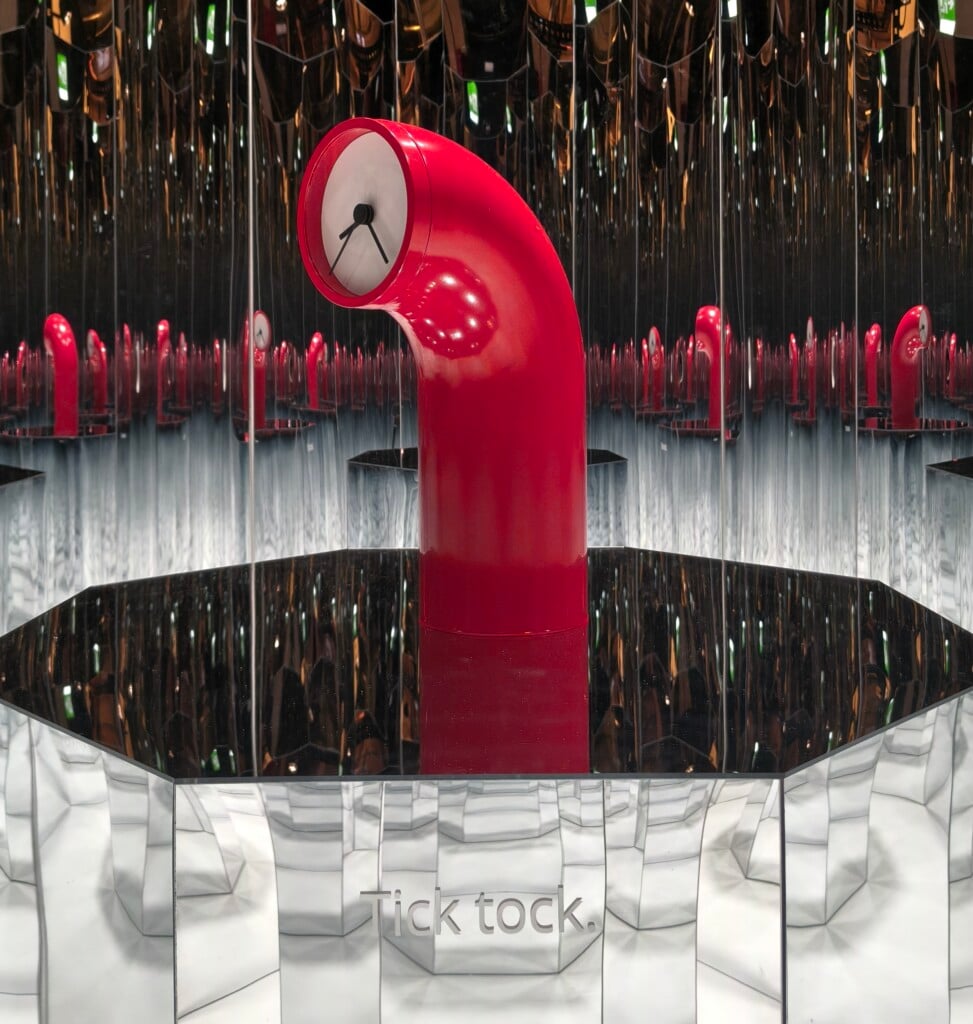
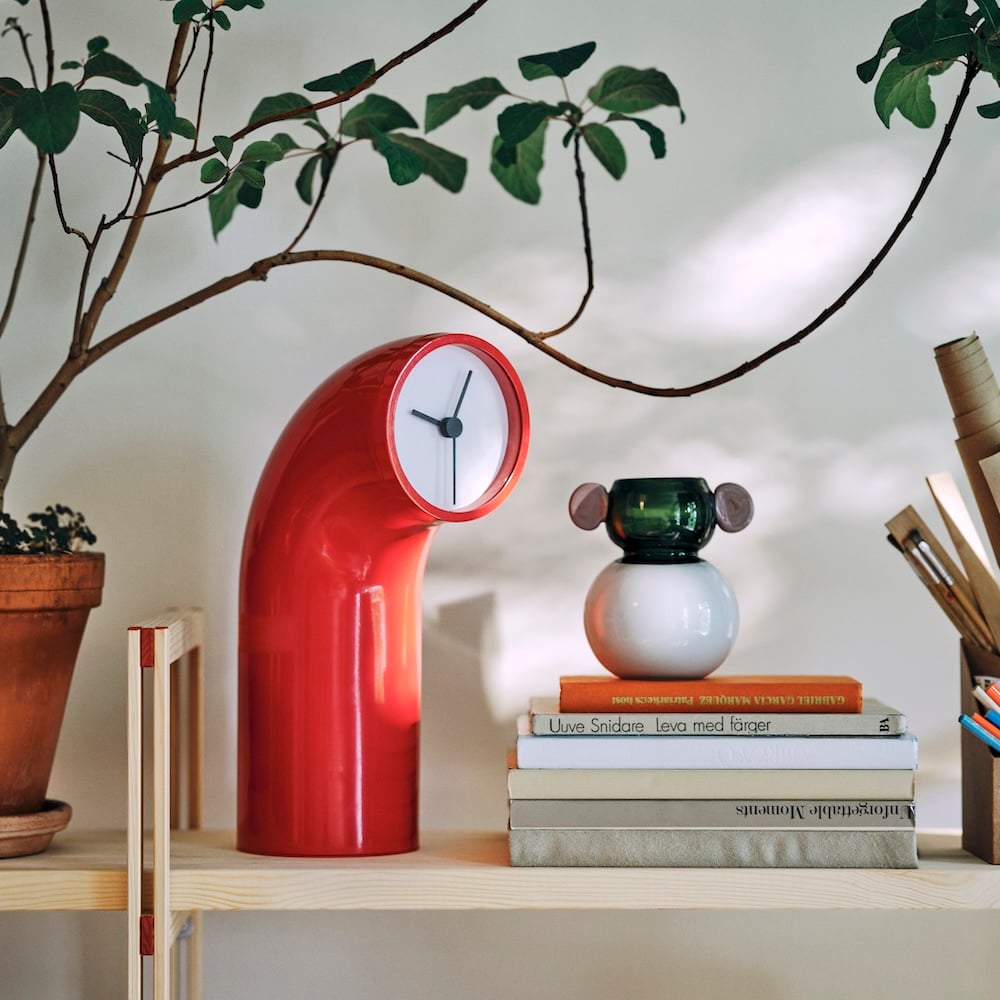
Marta Krupińska also went beyond the bench that rocks, designing a handwoven rattan footstool that can also serve as seating and storage, as well as the clock that peeks, inspired both by a periscope and by the street art found in her hometown in Poland.

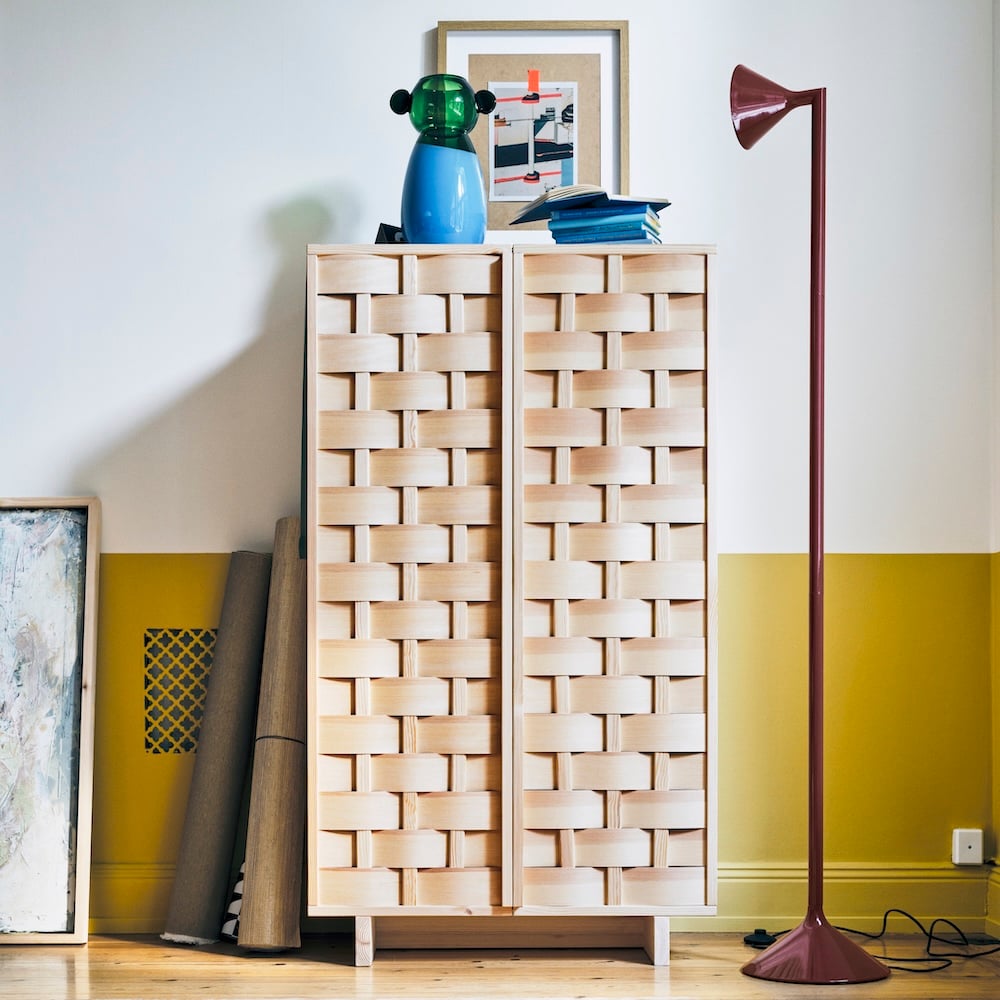
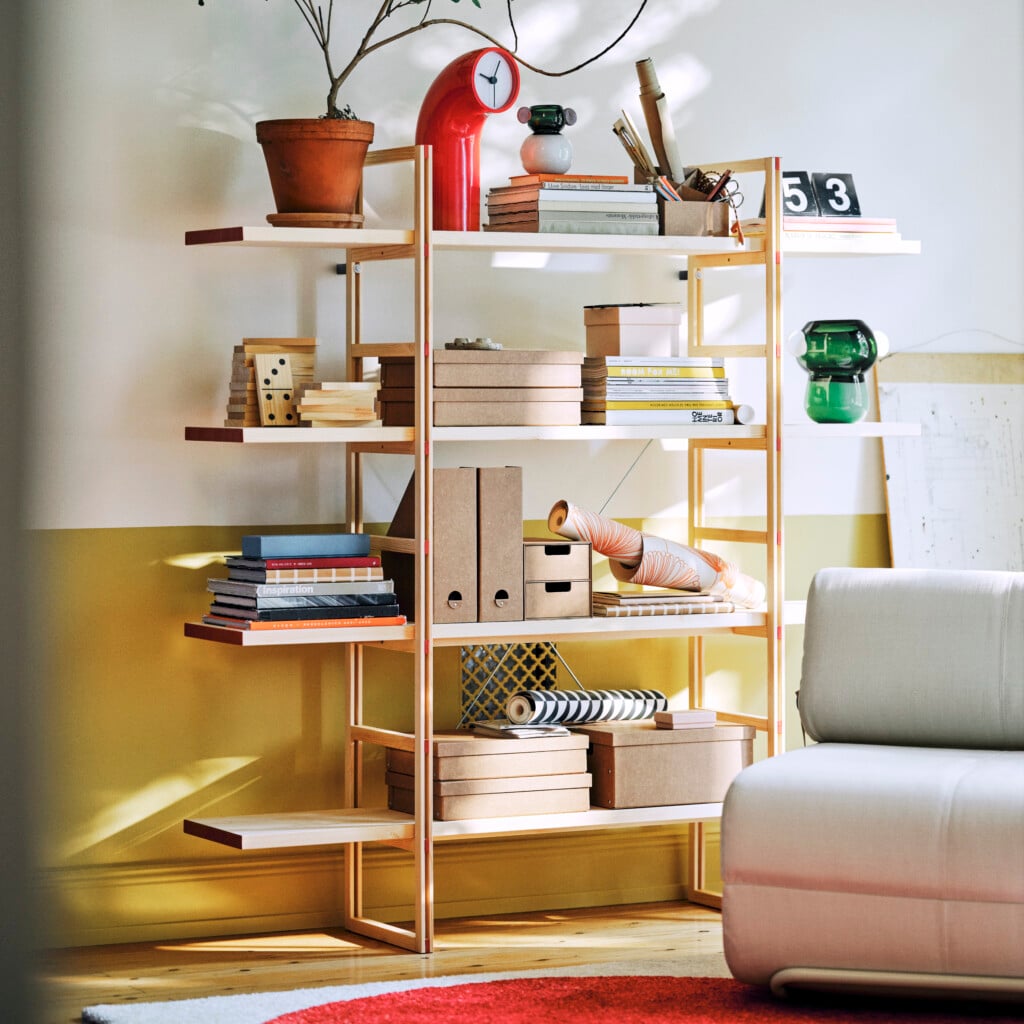
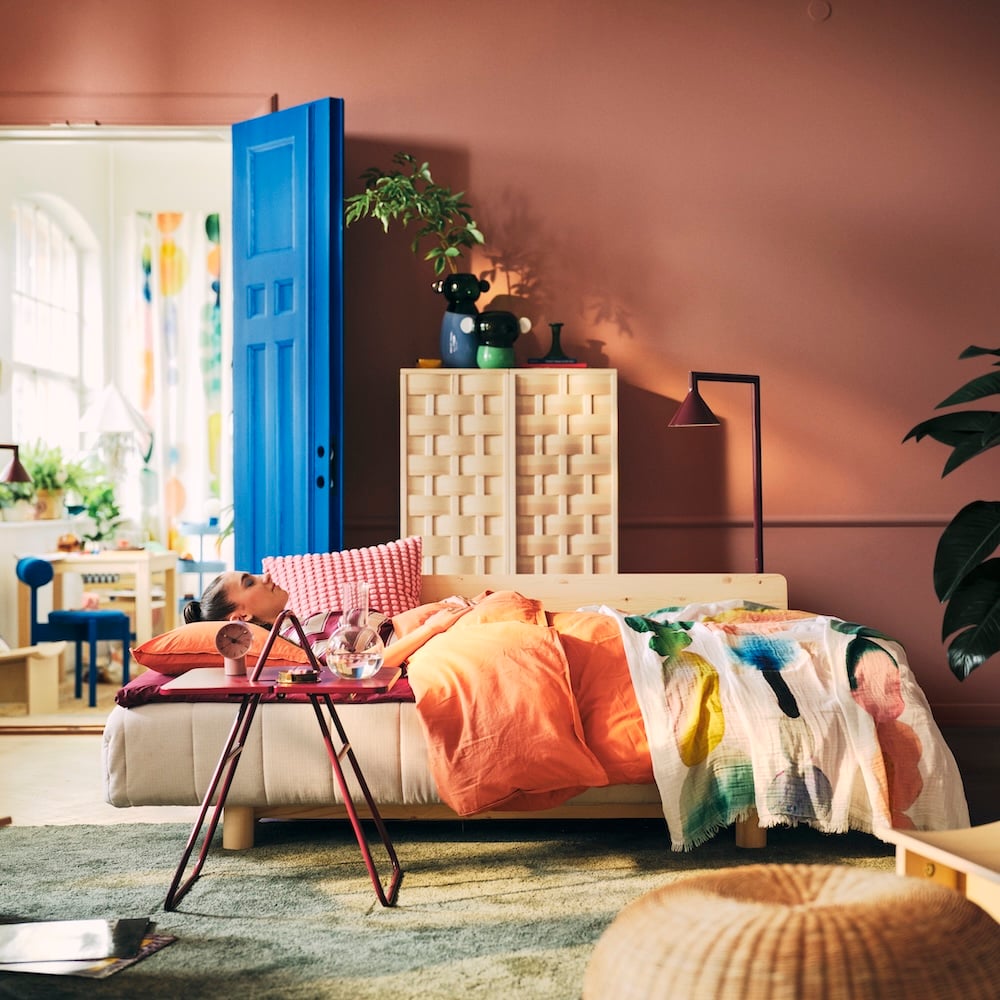
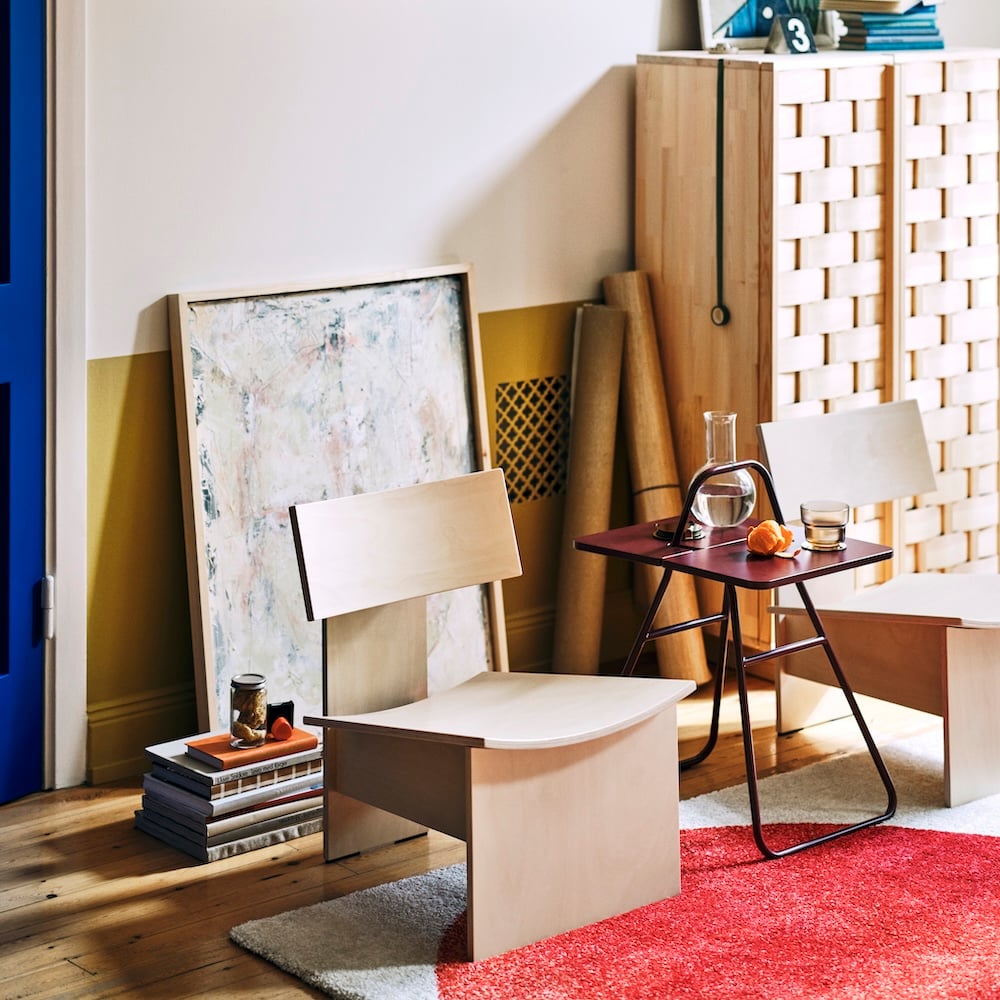
The cabinet that moves sinuously, designed by Friso Wiersma, is perhaps the most handcrafted piece in the collection, featuring handwoven pine doors made using a technique borrowed from boat building. Wiersma also created a wooden reinterpretation of the iconic shelving unit originally designed by Niels Gammelgaard in 1985.
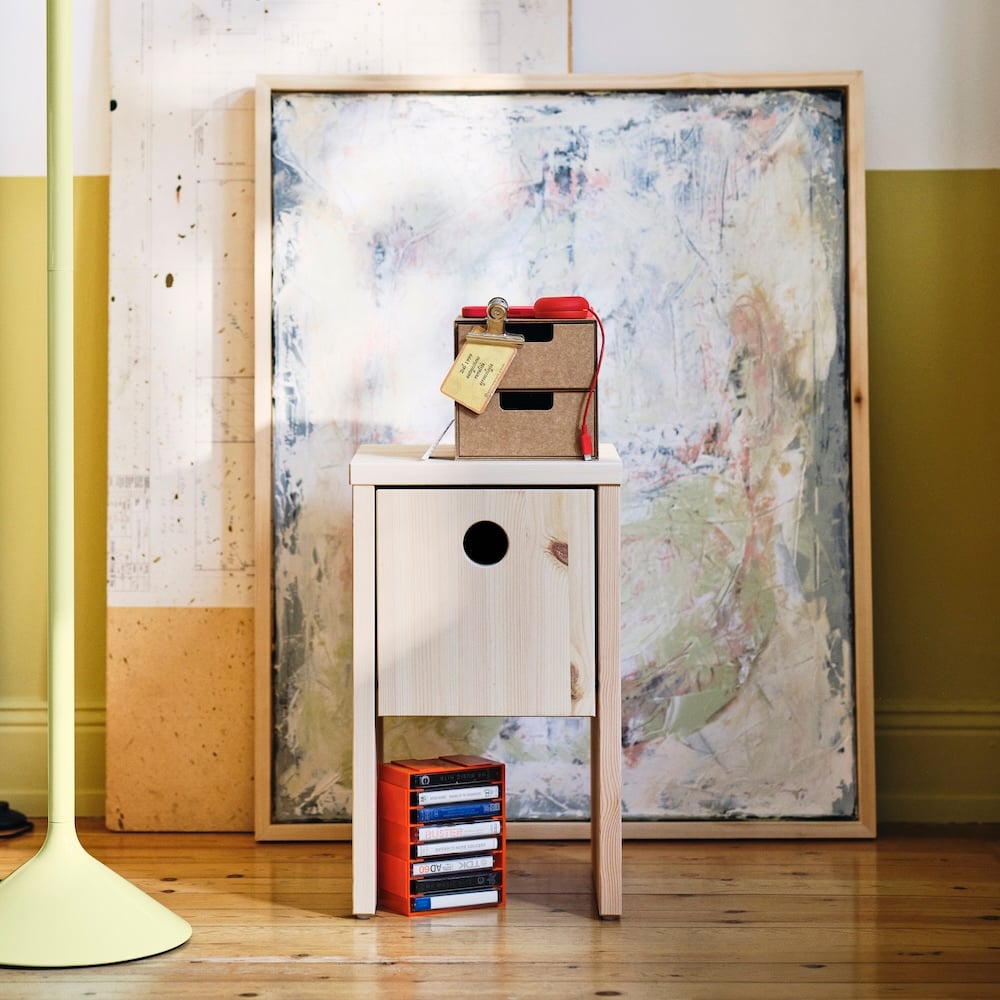
Ola Wihlborg designed six pieces for the collection, including three tables that vary in color, size, and function, as well as a sofa that doubles as a bed, a bedside table that resembles a birdhouse, and a pink metal display cabinet aptly described as “the piece that puts things on display.”
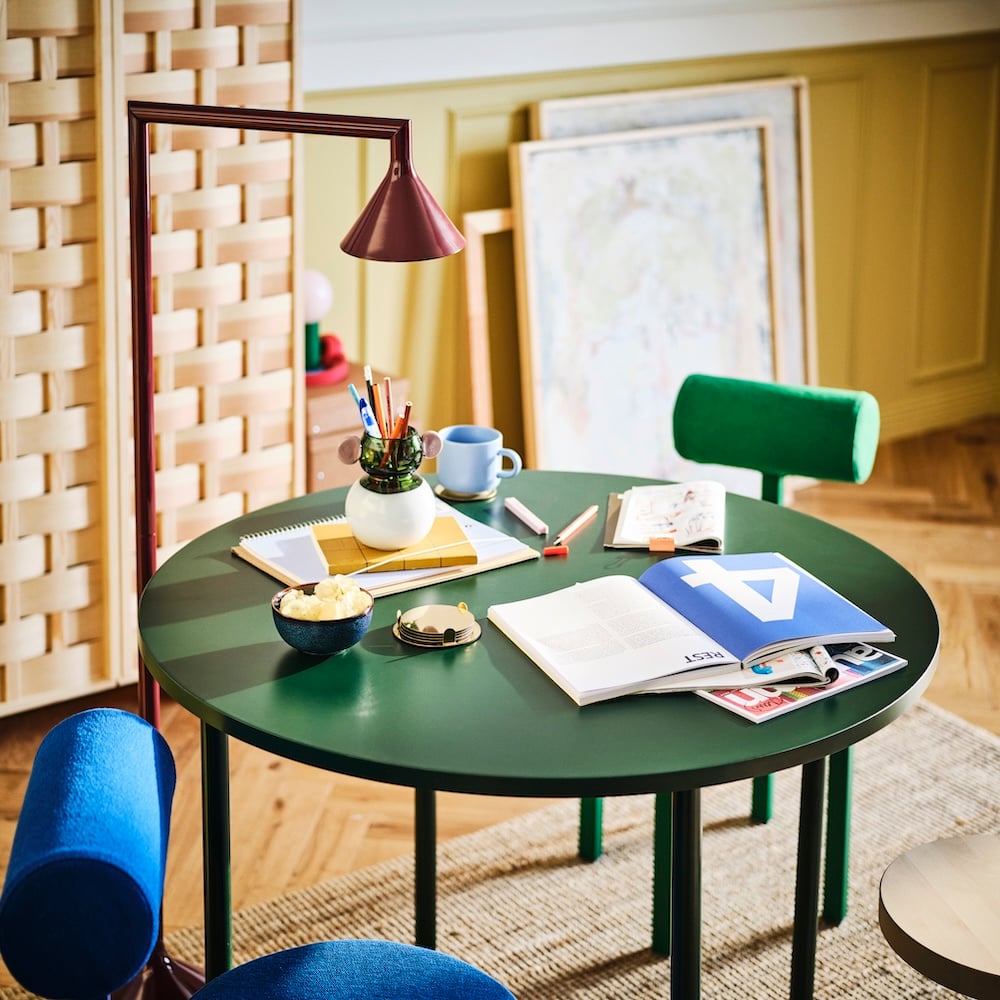
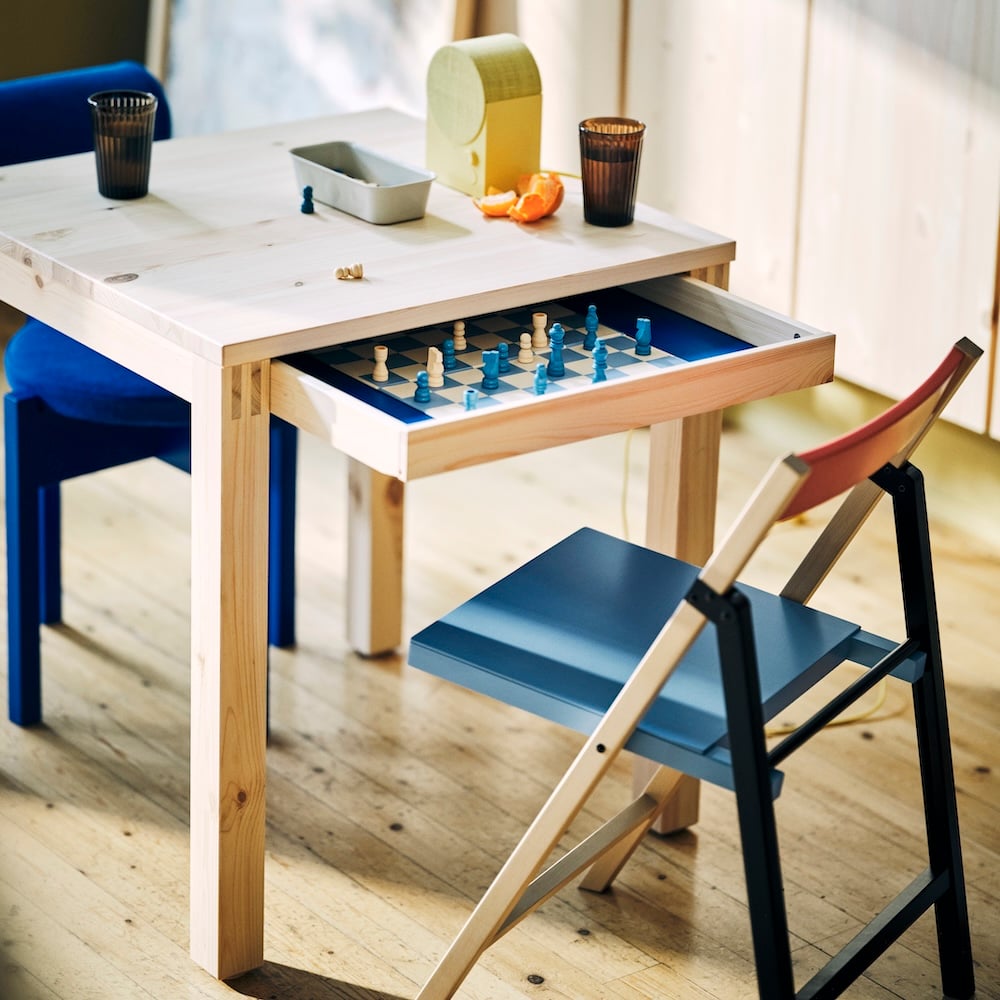
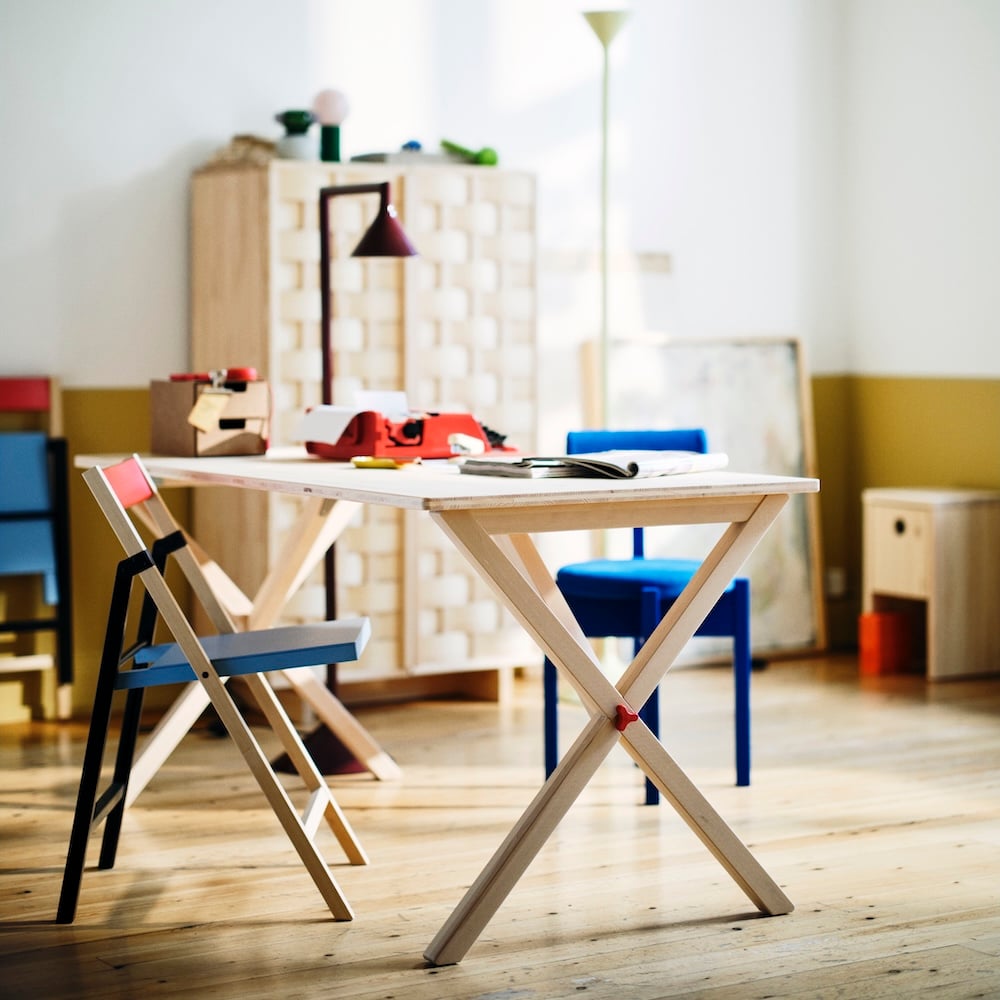

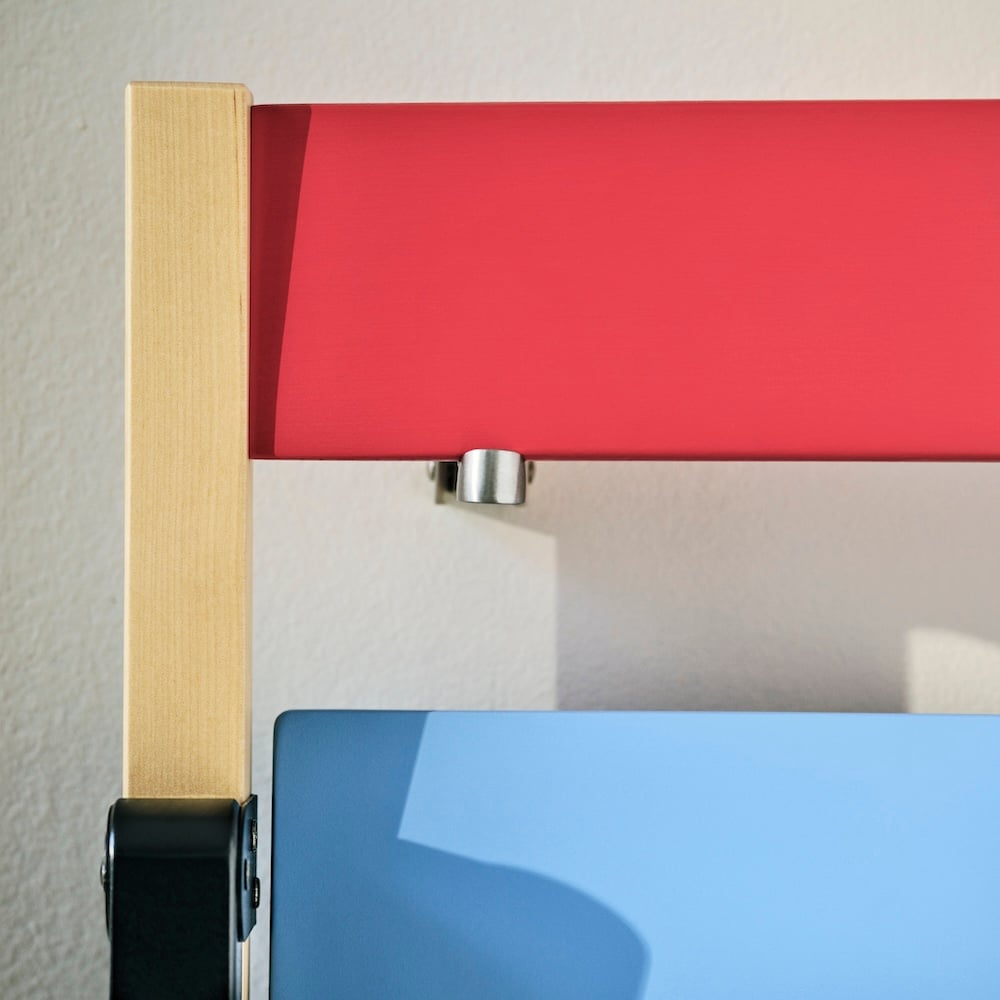
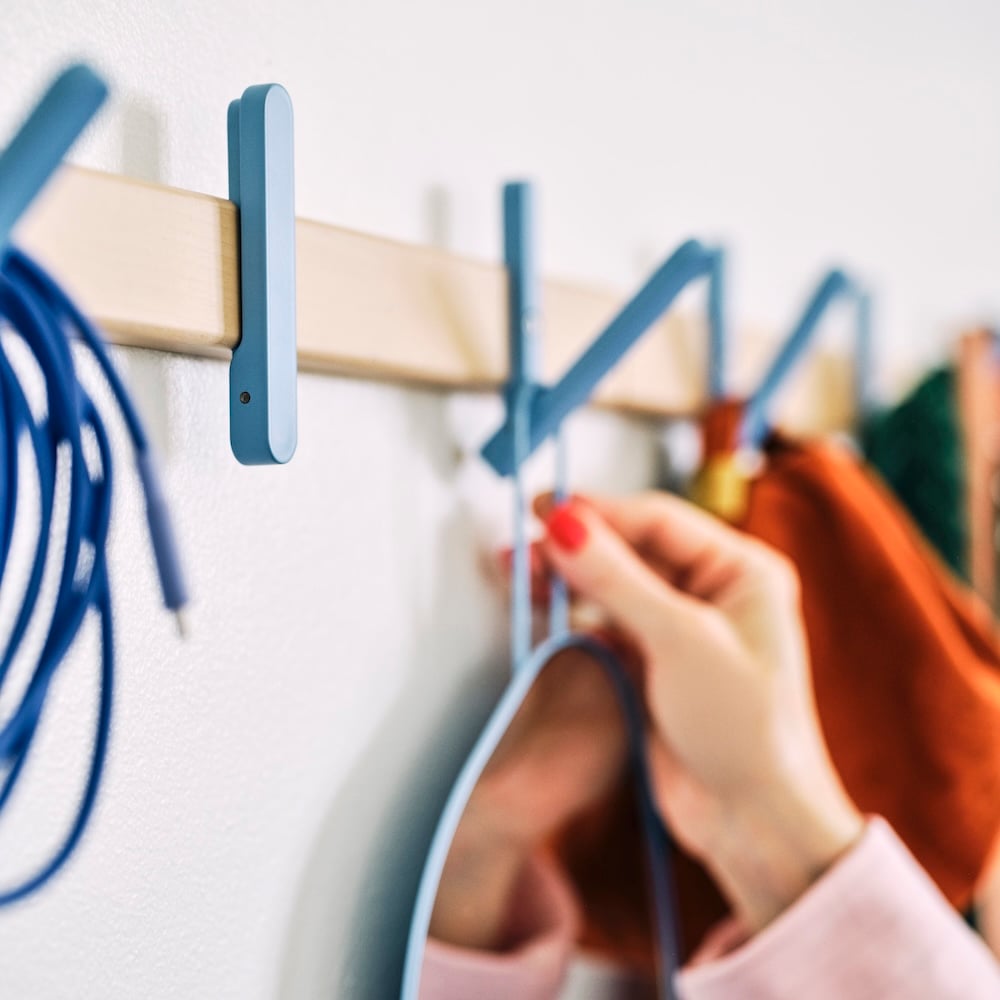
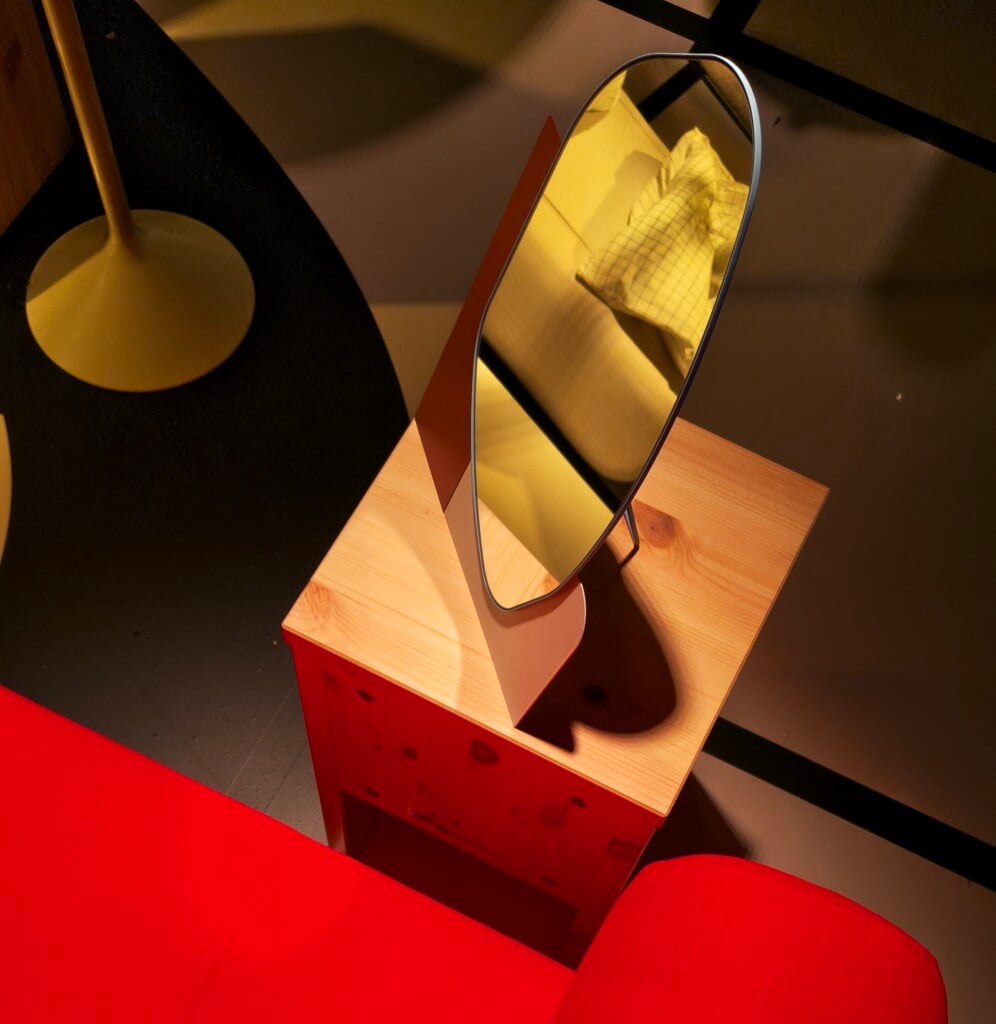
Ellen Hallström designed the seating pieces, including a lacquered birch folding chair in pop colors and the joyful chair, distinguished by its soft lines. She also created the coat rack that clicks into place, whose hooks open when in use and snap shut when not needed, and a mirror that can rest on a table or be hung on the wall.
But that is not all.
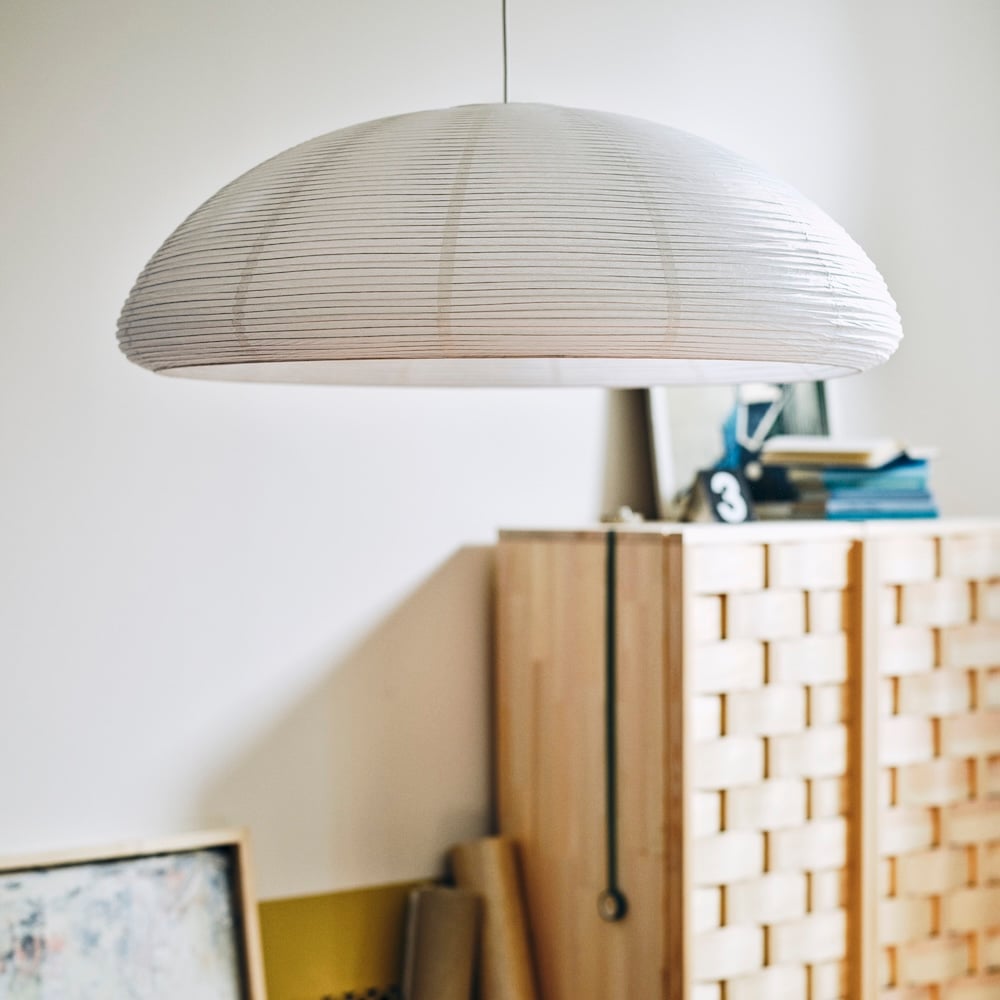
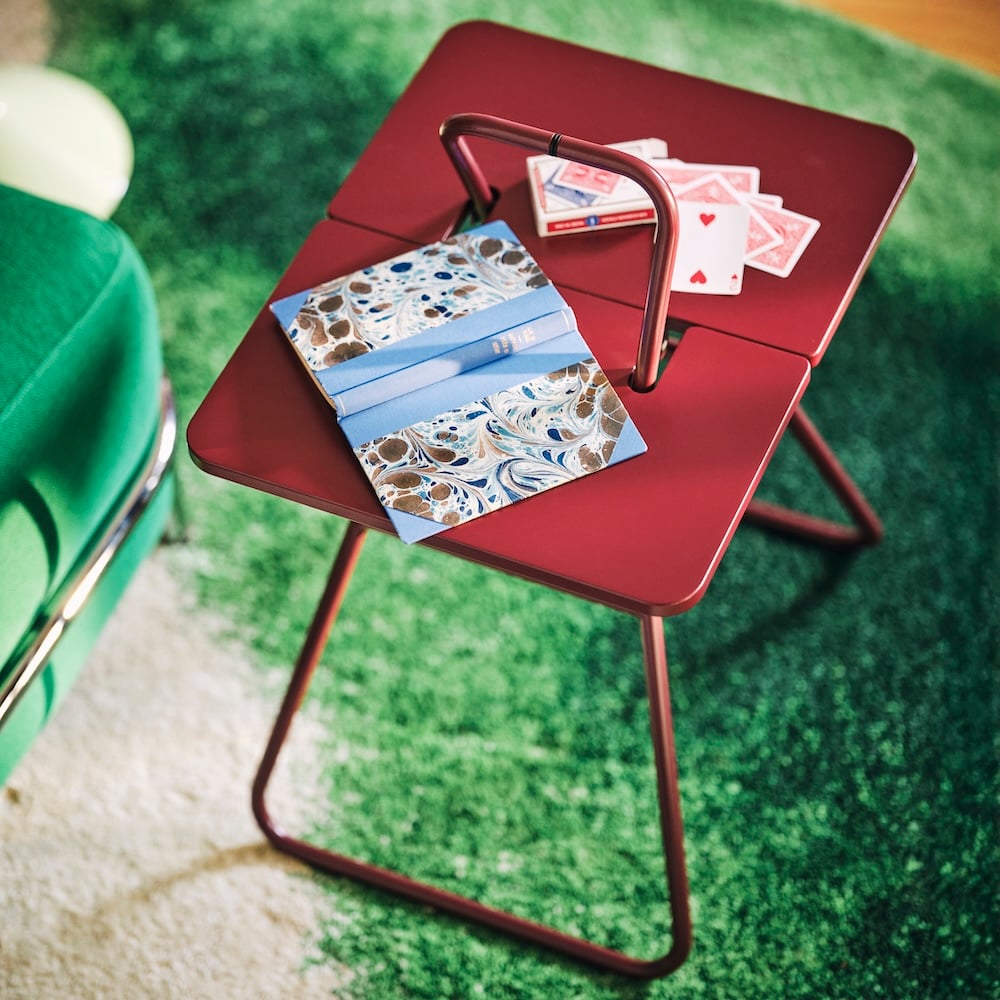
Matilda Lindstam Nilsson designed an armchair that unfolds into a bed; the lampshade by Lukas Bazle brings the soft glow of large rice-paper lanterns into smaller spaces; the table that clicks by David Wahl can be folded and carried like a briefcase; the vases by Maria Vinka appear to have ears, ready to listen in on conversations in any room; and finally, the textiles designed by Michelle Armas using the blooming ink technique add yet another burst of color.
Design for Everyone
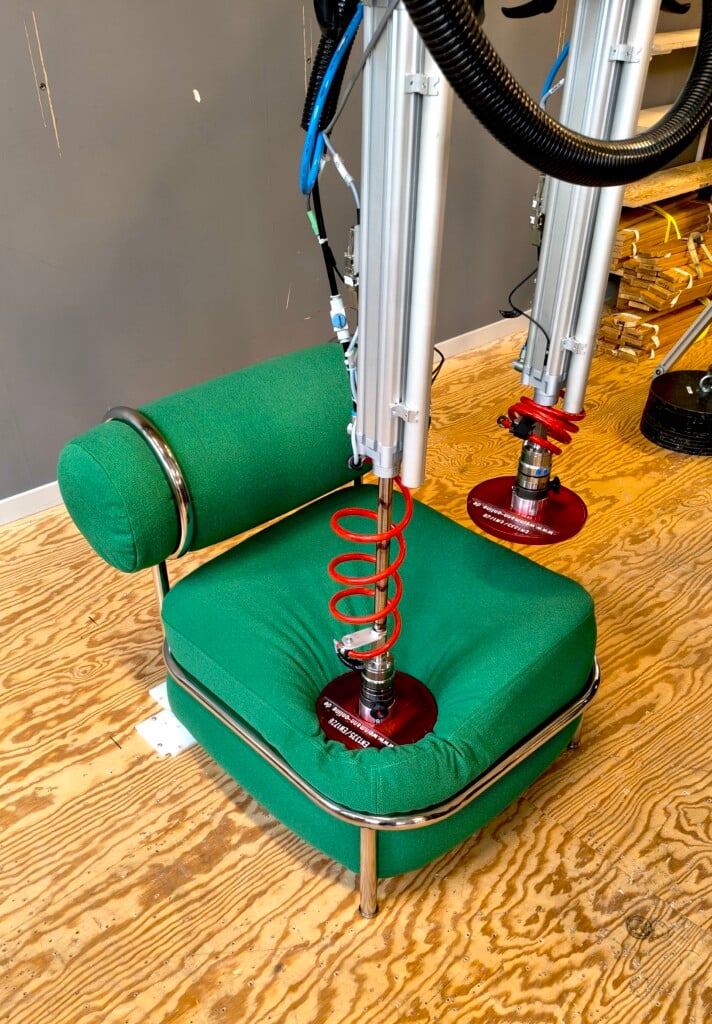
Visiting IKEA’s testing laboratories in Älmhult reveals something that remains invisible in the stores: every product is the result of dozens of prototypes, solved problems, and compromises between function and cost. The effort is not only aesthetic, but also structural, environmental, and logistical. How can this object be transported in a flat-pack box? How can less material be used without sacrificing strength? How can durability be ensured over time?
Friso Wiersma said something simple that is worth more than any corporate manifesto: the best part of working at IKEA is creating something that any of his friends or family members can afford to have in their homes. That is exactly why IKEA PS exists.
IKEA PS 2026 is not about beauty for the few. It is about creating objects designed to be lived with and used by everyone.
P.S. And, as always, it does so at a price everyone can afford.