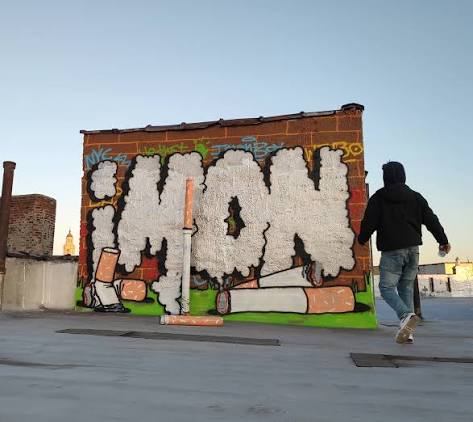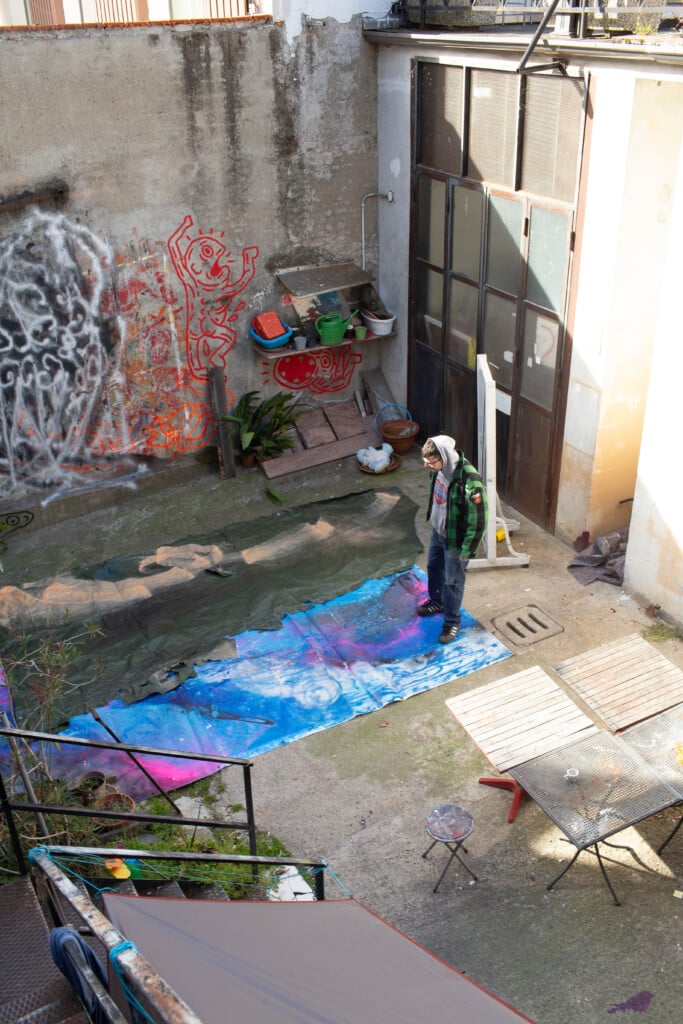
Within IN/FORM, the project transforming Sebino‘s spaces into a territory of dialogue between art and industry, the work of artist Mattia Ozzy B. comes from the street. Not as a stylistic reference, but as a lived dimension — a space he has inhabited, studied and progressively deconstructed throughout his entire practice.
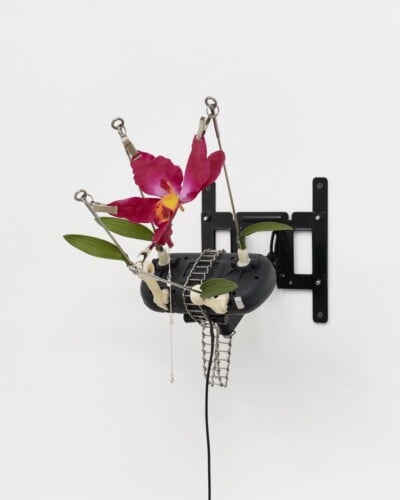
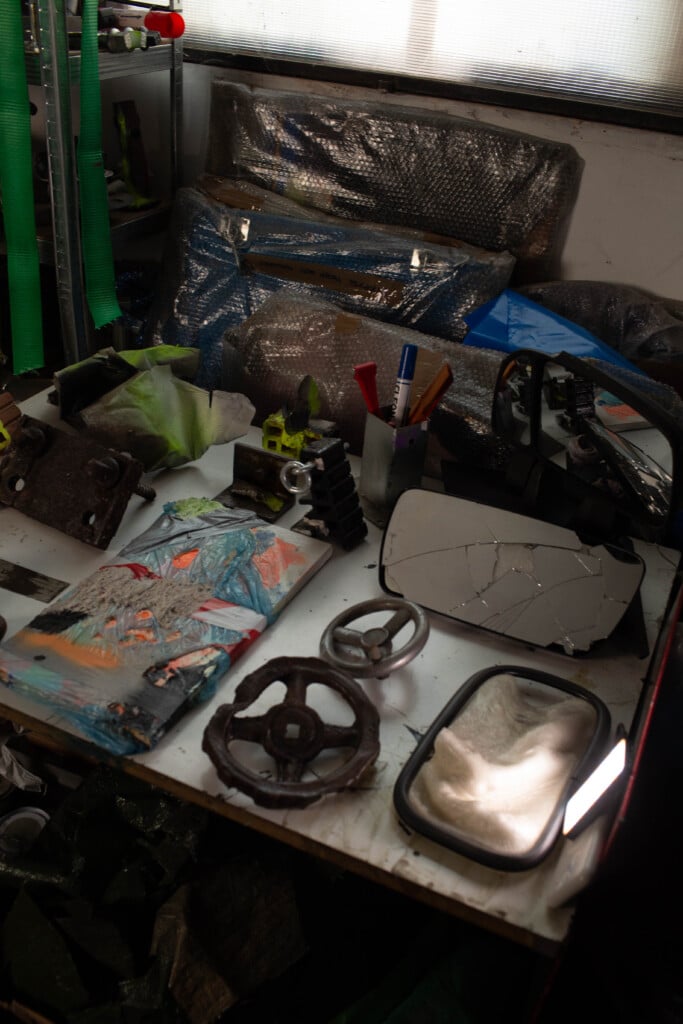
Ozzy B. defines himself as a multidisciplinary artist. His work is not purely painterly: it moves through sculpture, installation and analogue photography, always gravitating around the urban context. What connects these different practices is a consistent interest in found materials and discarded objects — the residues of a city that produces and abandons in equal measure.
The starting point is graffiti. But the trajectory from there is one of progressive abstraction: the letter gets deconstructed, the gesture remains. What Ozzy B. has retained from writing is not the sign itself but its energy — the physical relationship with space, the instinct of appropriation, the speed of a mark made without permission. From there, the work pushes toward something more material and compositional, closer to the broader currents of POS, vandalism and post-graffitism that he identifies as central references.
“I kept the gesture of the graffiti, but I tried to deconstruct the letter — focusing more on composition, chromatic choices and the choice of place.”
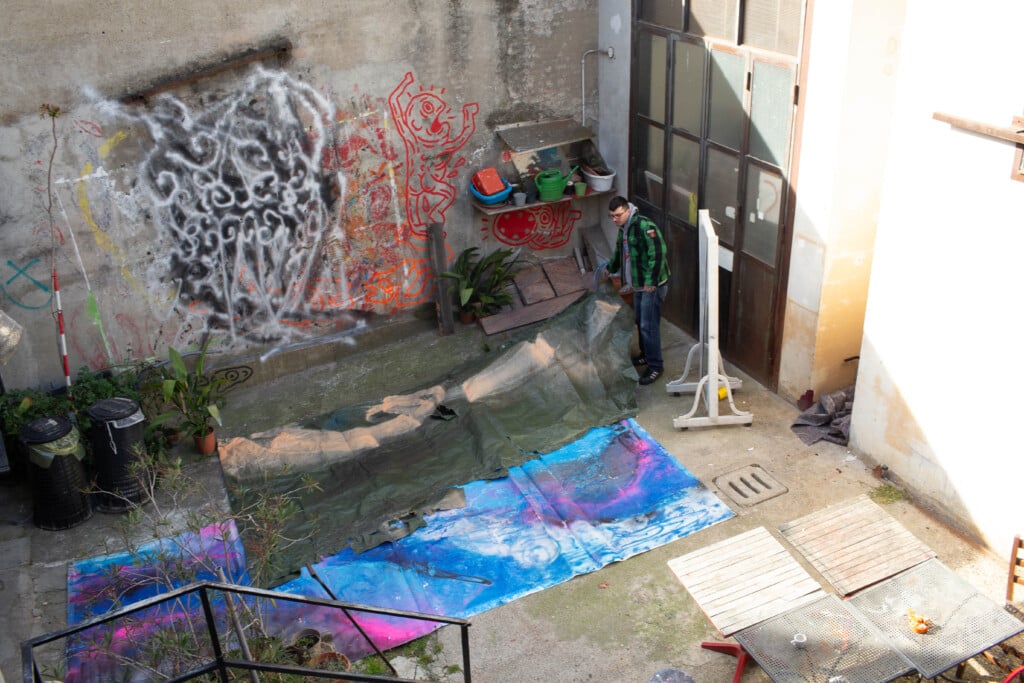
One of the recurring themes in his research is overproduction. Ozzy B. has long been drawn to ghost zones and non-places — those peripheral, in-between spaces where discarded objects accumulate as a byproduct of the exchange between centre and periphery. These sites become both subject matter and raw material: things found there enter the work directly, carrying their own histories of use and abandonment.
“I’m aware of being part of a collective dimension. I’m sure that by installing and working in the same space, a dialogue will emerge between us — and hopefully a confrontation too.”
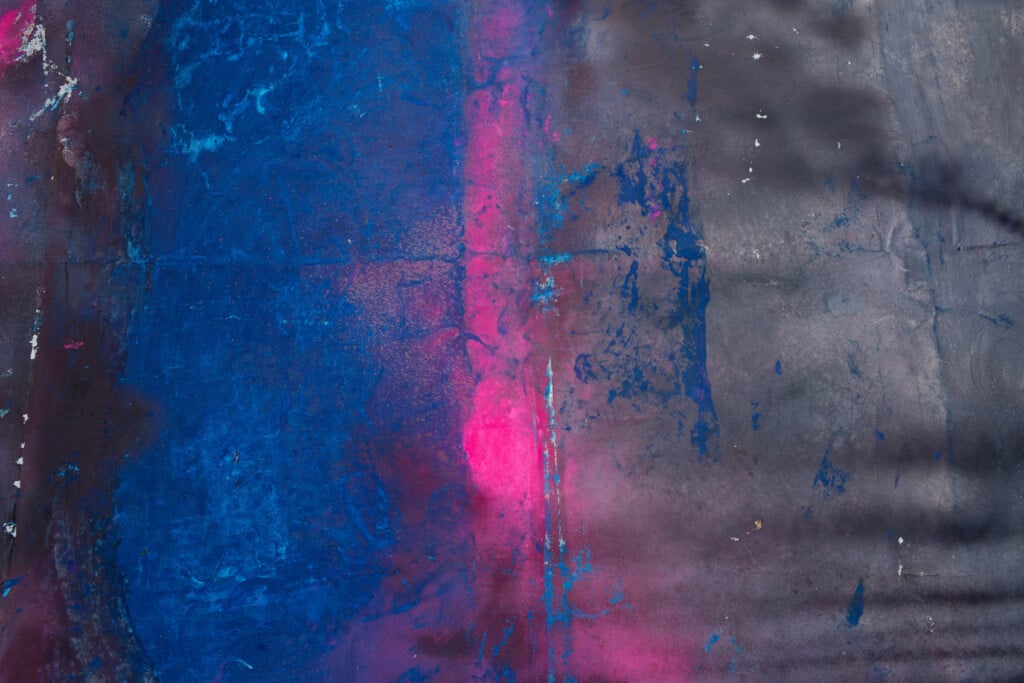
That last word — confrontation — is telling. For Ozzy B., art in shared space is never neutral. It presses against what surrounds it, responds to it, sometimes resists it. In an industrial environment already charged with the logic of production and utility, his presence introduces a different kind of accumulation.
“`