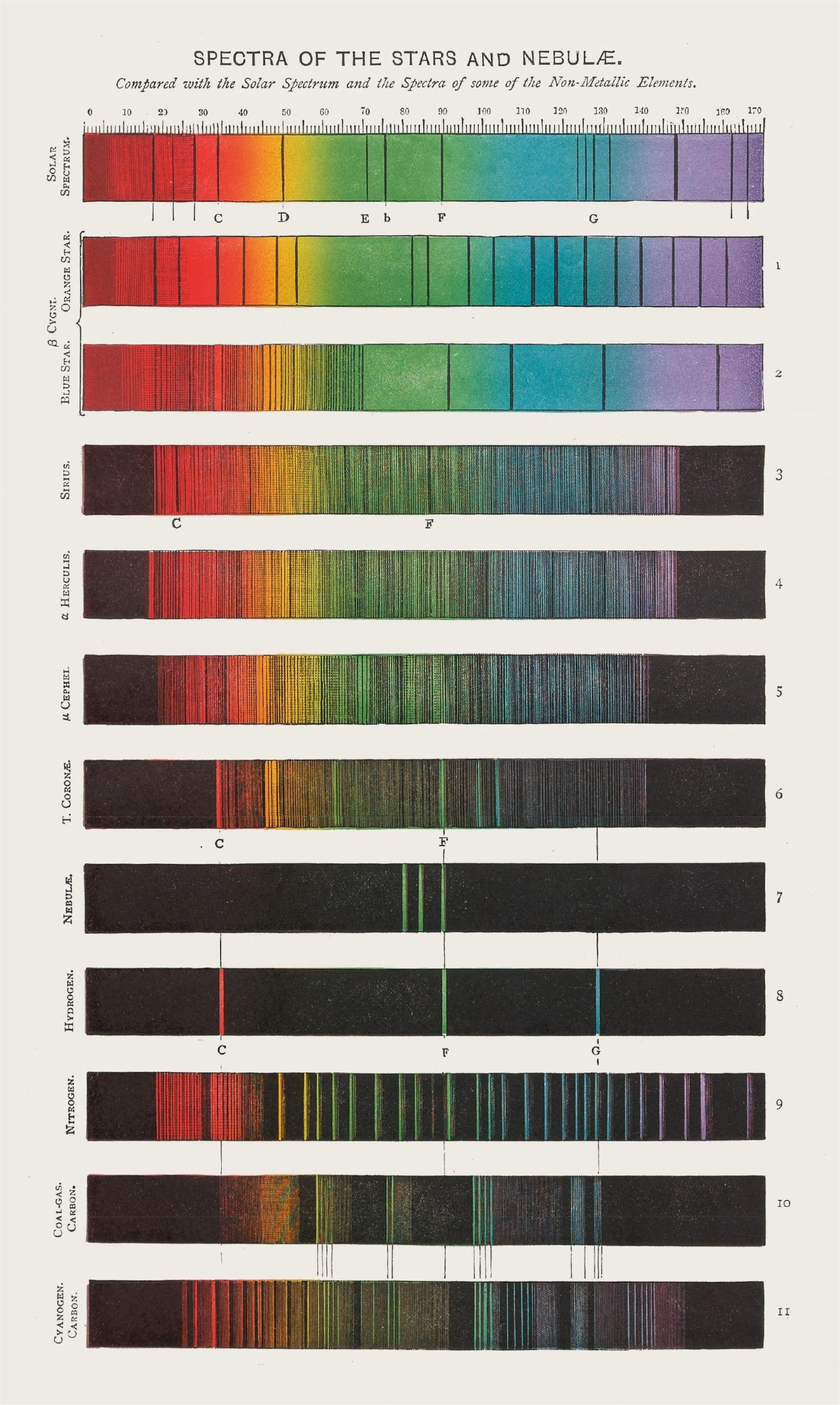
Before photography, before the phenomena of nature and space were so clear and comprehensible to man, an important role was played by scientific illustrations, which faithfully reported the discoveries of great scientists and doctors.
The illustrations in the majority of cases had no artistic function or intention, but only served to understand the phenomena. In order to do so, scientists felt the need to develop precise techniques that would not change colours and proportions.
Some of these illustrations retain such a high degree of fascination that the Taschen publishing house has decided to collect them in a volume entitled ‘Science Illustration. a History of Visual Knowledge from the 15th Century to Today‘ with 436 pages and a total of more than 300 illustrations selected by the authors Anna Escardó and Julius Wiedemann.

From medicine and biology to chemistry and astronomy, illustrations depicted the world before photography and microscopes could do so accurately. Thanks to those drawings we can now understand how Copernicus or Newton saw the world, how they intuited discoveries that changed human history.
The scientist has been a frequently depicted subject in the history of art, as have his working tools, not to mention the many works depicting autopsies and surgical operations. These subjects are also included in Taschen’s book, which starts in the 15th century to show us the fascination of illustrating science.