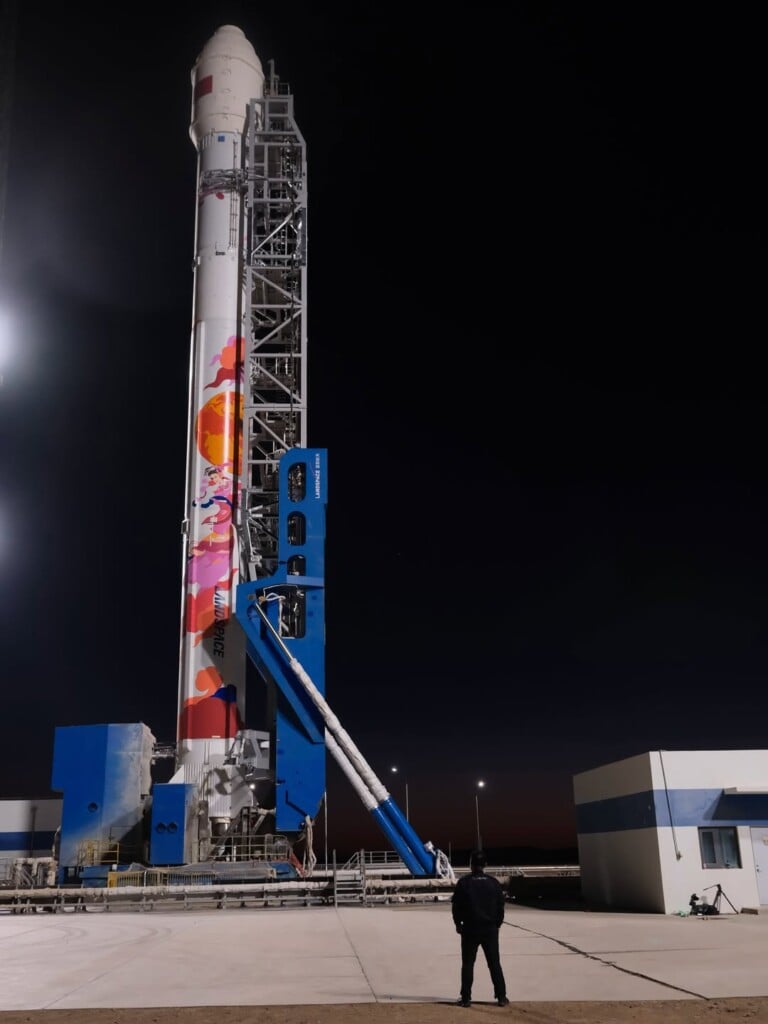
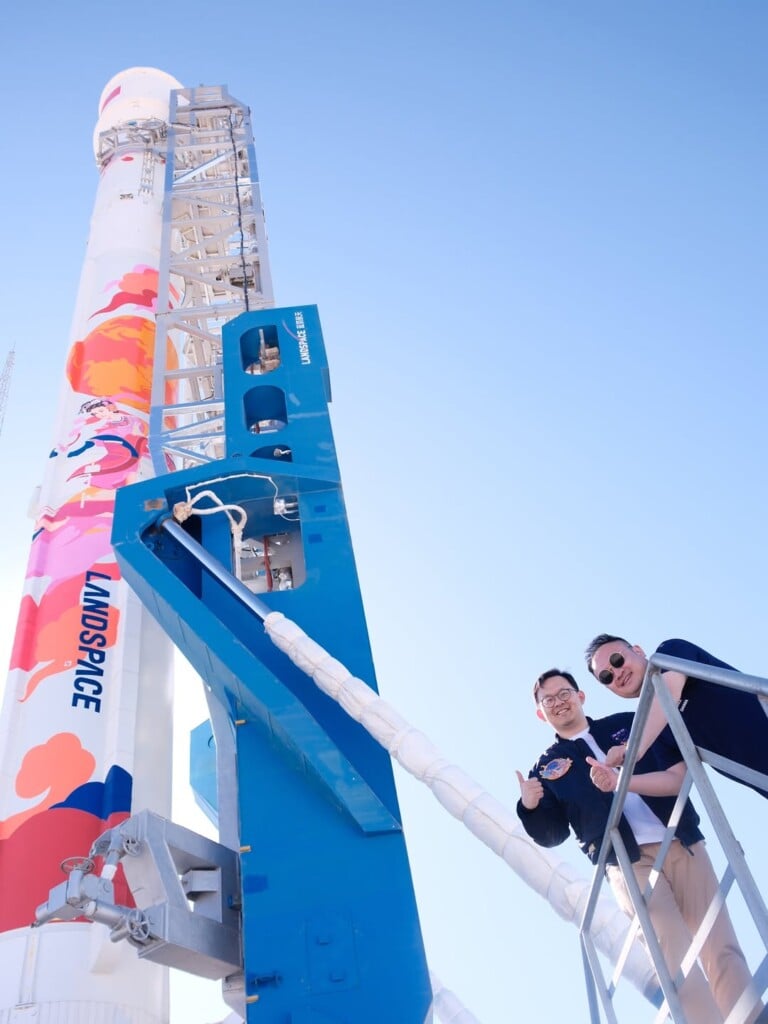
Jacky Tsai crossed the boundary between art and aerospace engineering as lightly as a rocket. On May 17th, the artist made a revolutionary gesture: he transformed a real missile into a work of art, covering it in iconography and colors that blend Eastern pop culture with space imagery. The result is an installation that literally launches creativity, capable of merging cultural references with symbolic power.
Tsai reimagines the anatomy of the missile without concealing its technical structure. He preserves its visual and physical power but transfigures it through an aesthetic that combines dragons, flowers, psychedelic tones, and patterns inspired by Chinese culture. The ultimate war object loses its original function, becoming a vehicle for imagination — a poetic medium that unsettles the viewer.
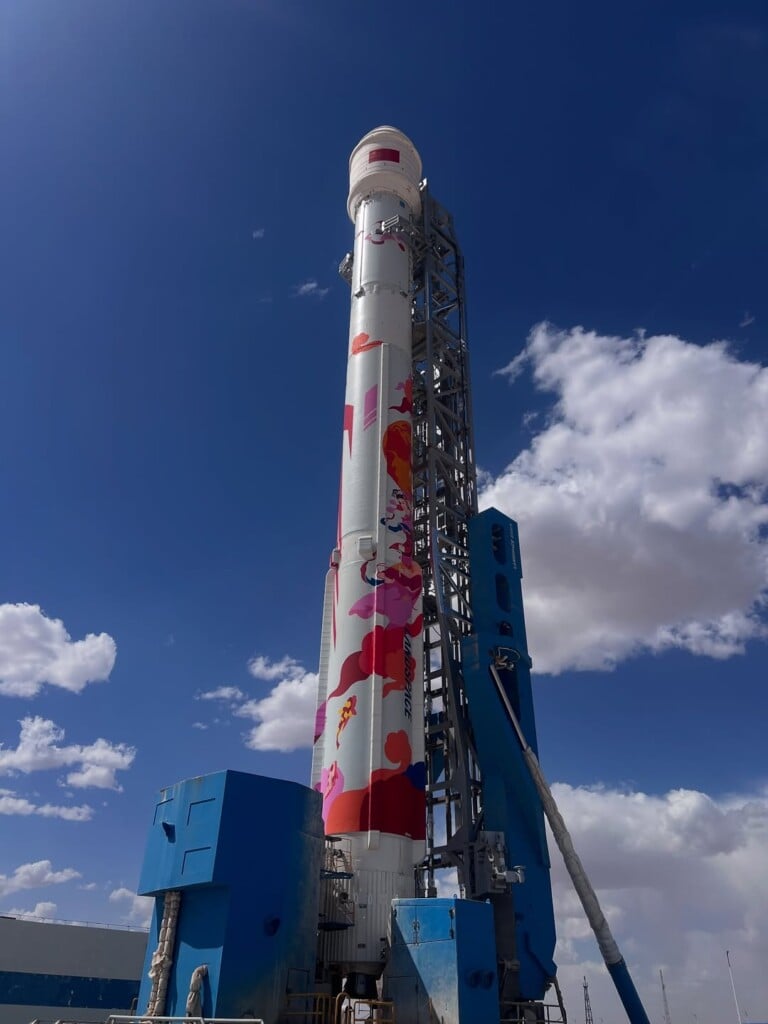
The first impact is one of contrast: the primal fear tied to missiles is replaced by a strange sense of wonder. The work softens mechanical aggression with a visual language that recalls both anime aesthetics and Eastern symbolism. It creates an emotional short-circuit that leaves no one indifferent. Tsai manages to create a dialogue between cultures, between East and West, between technology and craftsmanship, between destruction and creation.
The very act of exhibiting — and even more, of moving — such a charged object is profoundly performative. It delivers a powerful message: the missile, a symbol of threat, becomes a catalyst for beauty. The explosion is not physical, but symbolic. The artwork doesn’t strike territories — it strikes consciousness.
Jacky Tsai shows us that even the darkest and most controversial objects can be subverted through art. Aesthetics become a tool for rewriting meaning; cultures intertwine, blend, and expand into new territories. In this work, a Chinese missile becomes global art, expressed through a visual language that is shared and universally recognizable.
Looking at this installation means accepting the challenge of a different, deeper gaze. As if every object — even the most unsettling — could contain poetic potential. You just need to know how to listen. Or, like Tsai does, redraw it with the force of beauty.