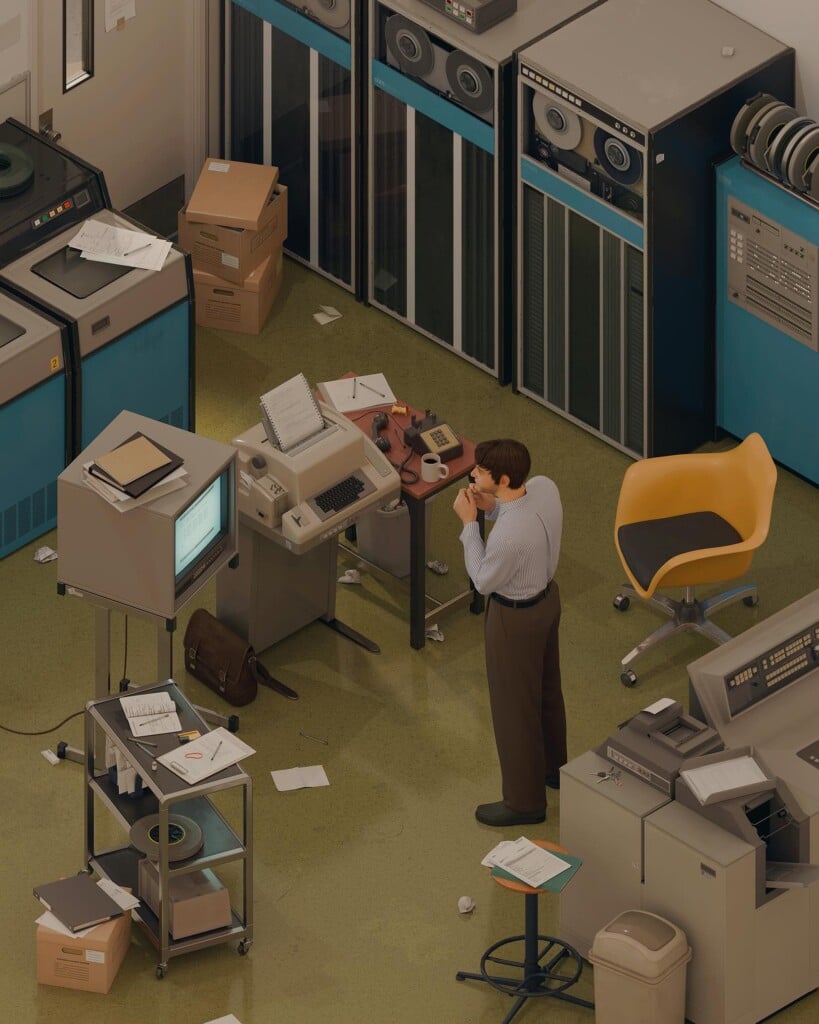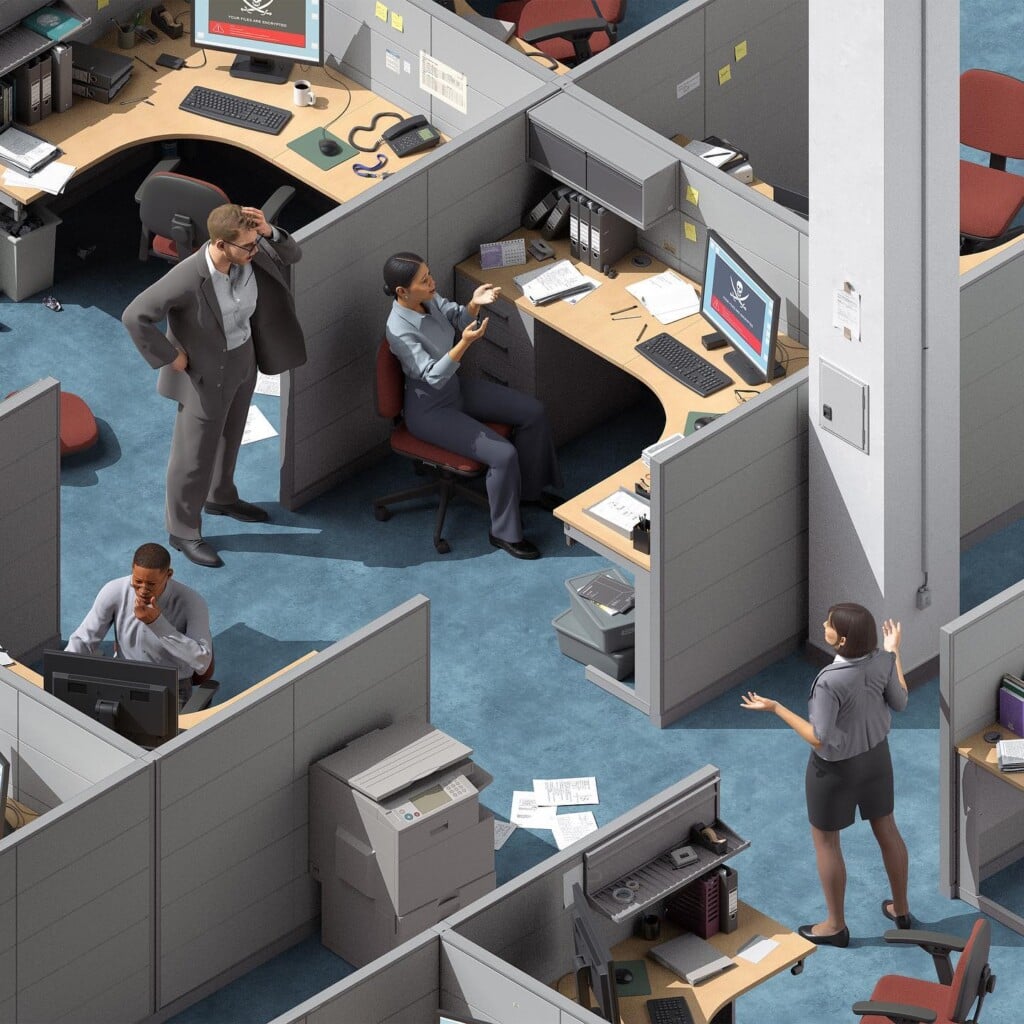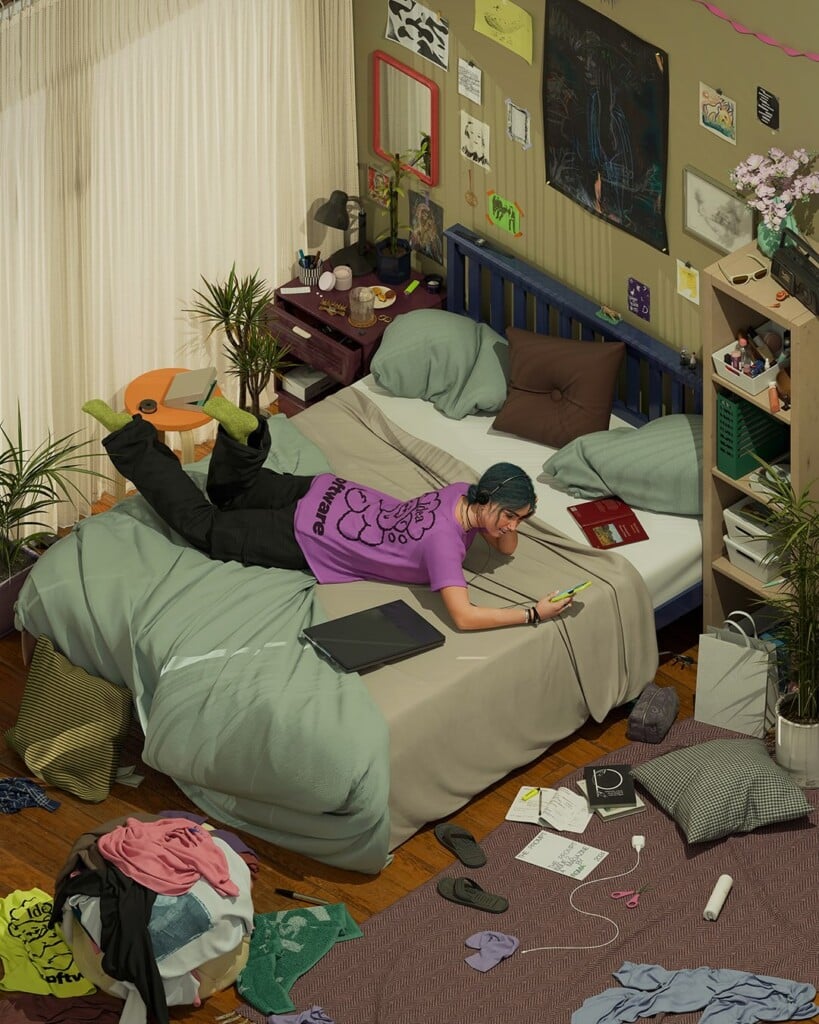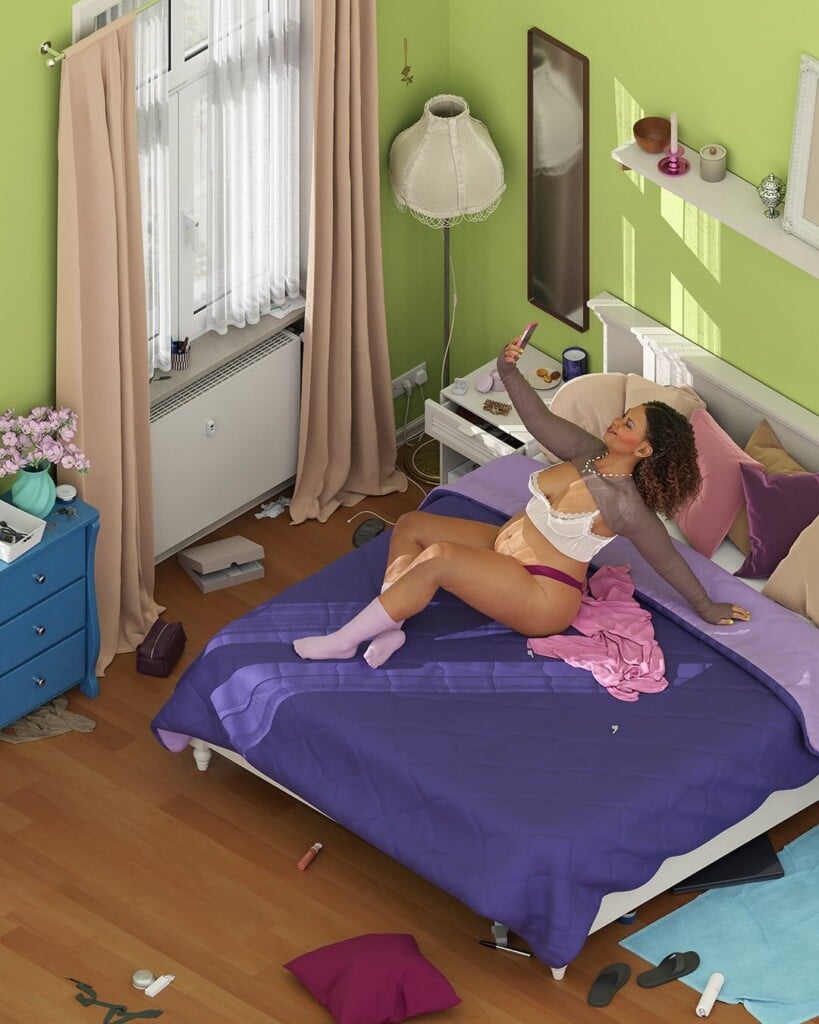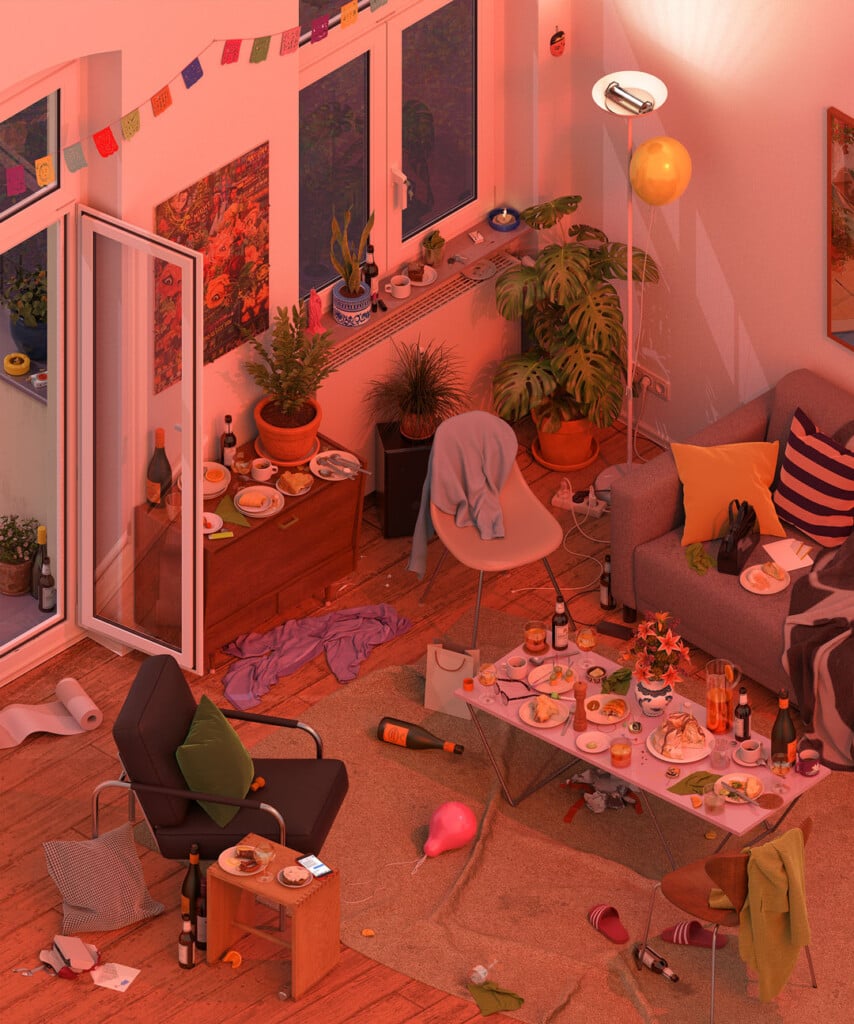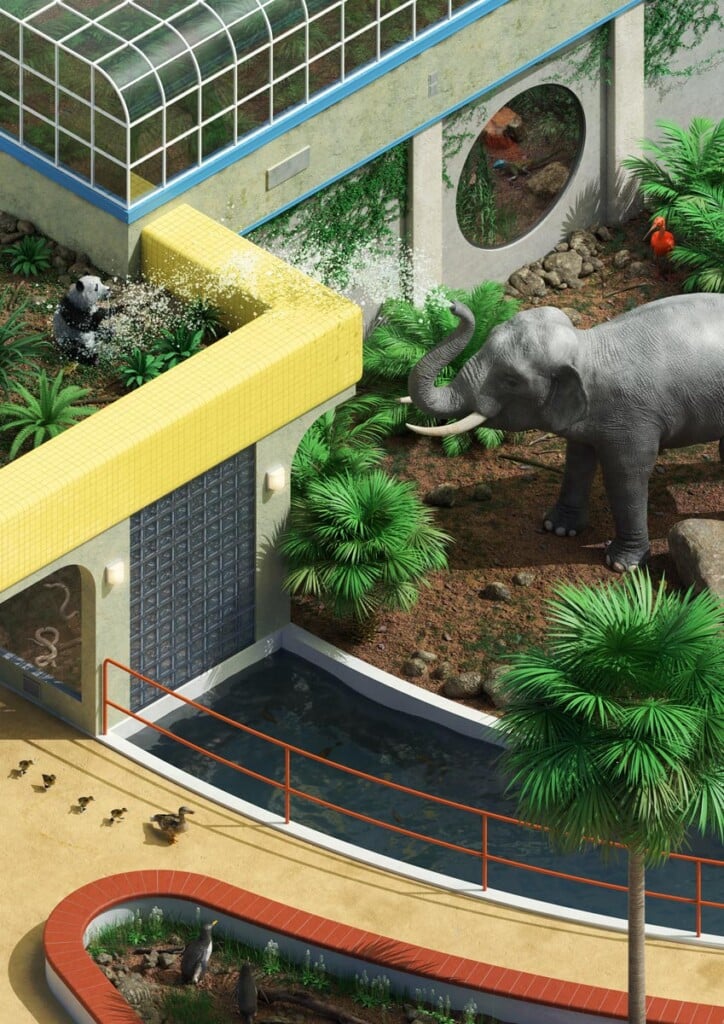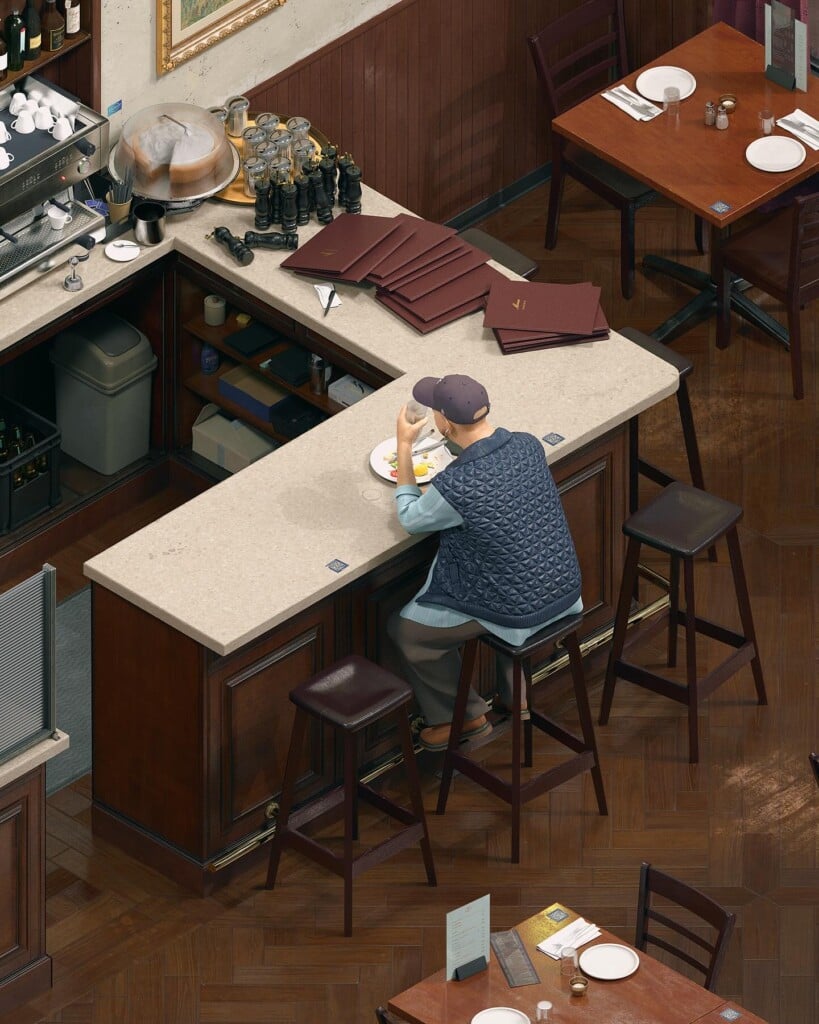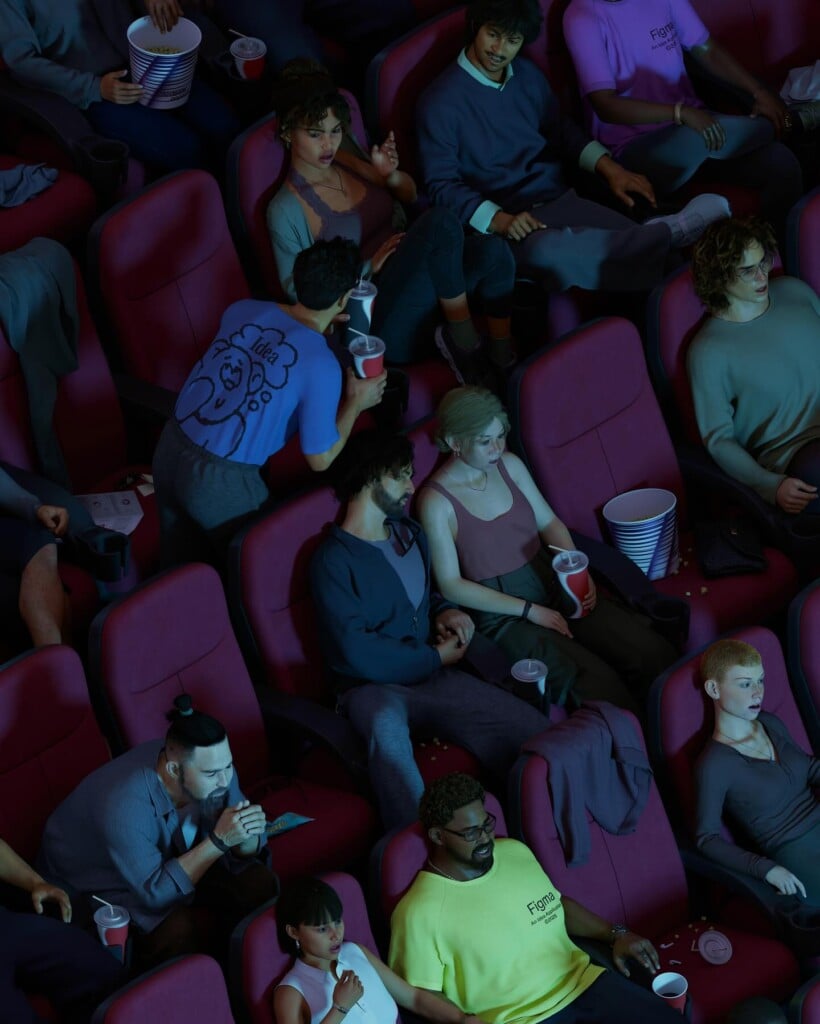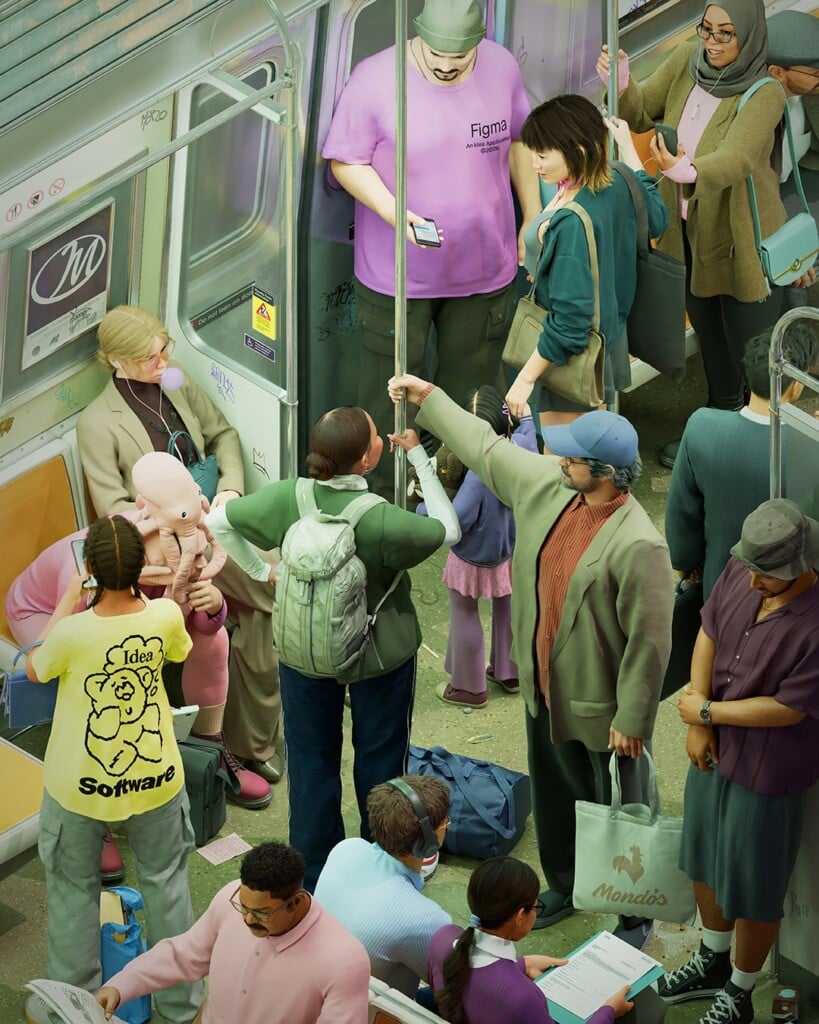
Max Guther draws the world as if he were watching it from an invisible vantage point suspended above everything, above every room, every street, every ordinary life. It’s practically impossible that you haven’t come across his work before, in fact the German illustrator and designer, based in Berlin, is today one of the most sought-after names in international publishing. The New Yorker, The New York Times Magazine, The Atlantic, GQ and Bloomberg Businessweek have called on him – and keep calling on him – to tell, through images, what words alone can’t explain.

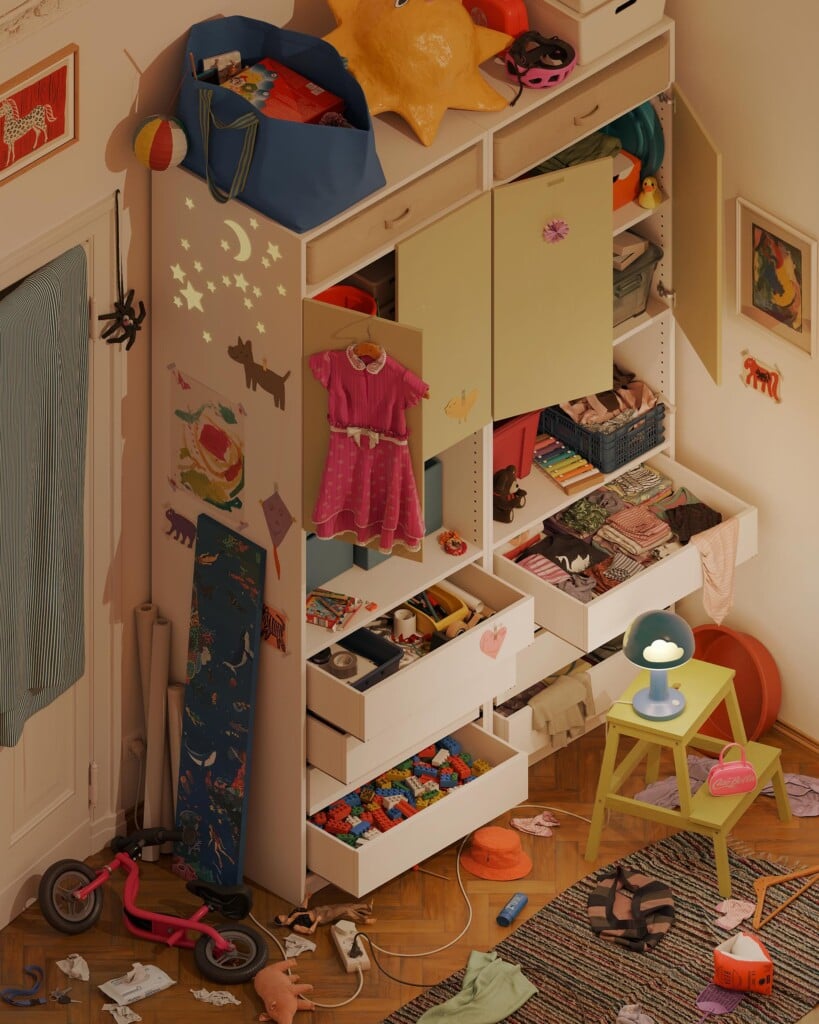
Guther’s stylistic signature is isometric perspective, the same one used by 90s video games to build miniature cities. There’s no vanishing point, and everything is visible at once, like in an architectural model or a dollhouse opened on one side to reveal what’s hidden inside its rooms. A device that, applied to smartworking loneliness, to the anxieties stirred up by social media and dating apps, or to digital surveillance, turns illustration into a small, quiet social autopsy.
Guther describes himself as obsessed with the smallest details of everyday life and human behavior, the kind you only notice once they’re missing. Details that render, with an almost unsettling realism, the truth of our most private habits.

Among his best-known works are the Google Doodle cover marking the thirtieth anniversary of the fall of the Berlin Wall, collaborations with Nike, Vitra, Camper and Balenciaga, plus numerous covers for the German magazine Zeit Campus. His archive, available on his website, is a catalogue of parallel worlds inhabited by tiny, busy characters, always watched from too far away to be judged.