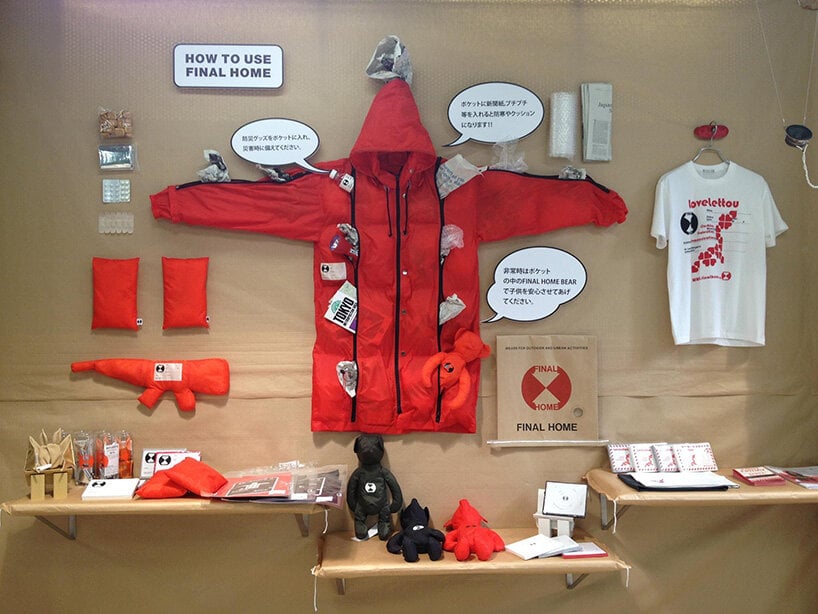
When home stops being a physical place, what remains? For Japanese designer Kosuke Tsumura, the answer is simple: home becomes something to wear. With FINAL HOME, a project launched in 1994 within the Miyake Design Studio, Tsumura imagines clothing as a survival system, capable of merging fashion, architecture, and design into a single portable structure.
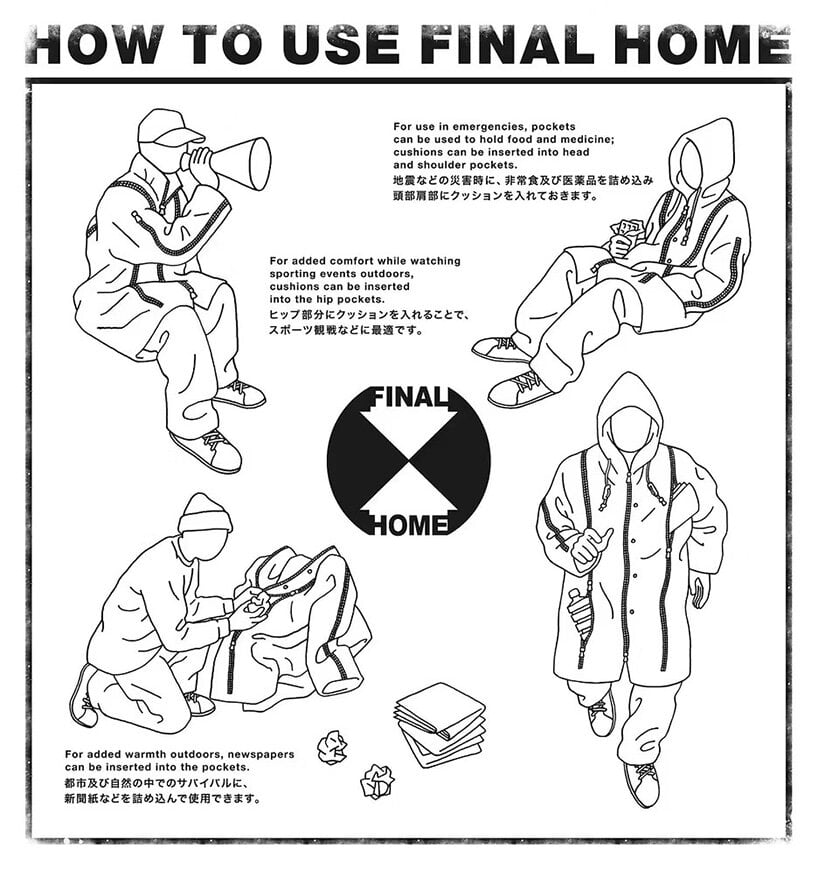
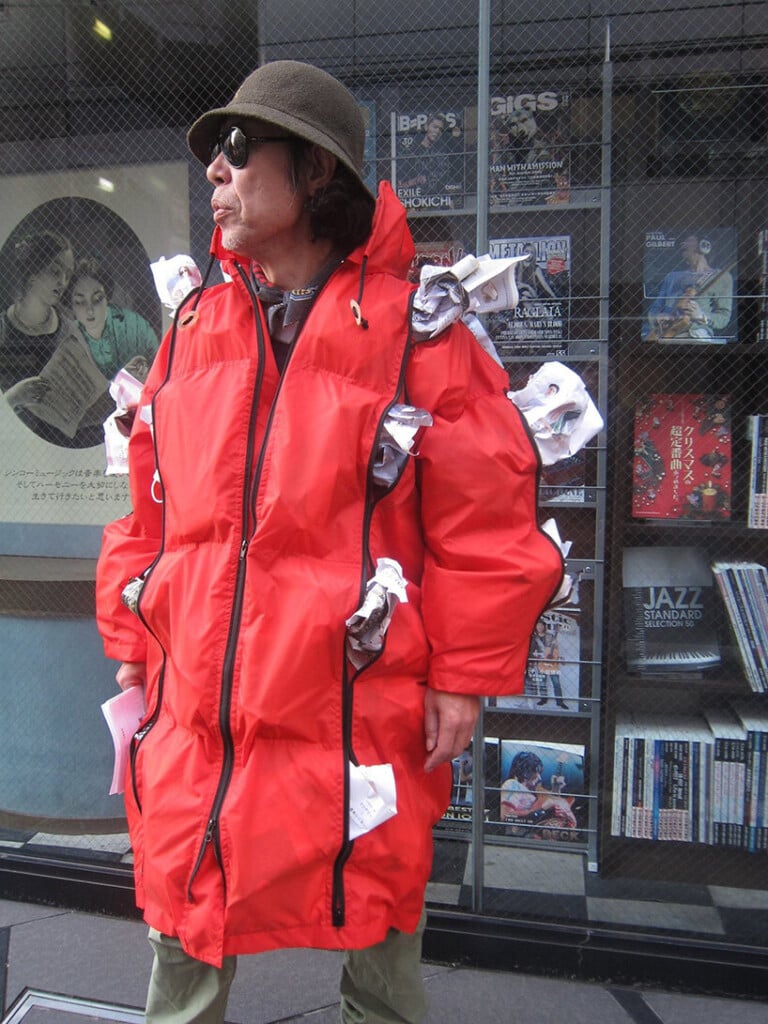
At the center of the project is Home1, a parka made from high-density nylon, defined by 44 pockets distributed between the outer shell and lining. It’s not just a technical garment, but a true wearable infrastructure: the pockets can be filled with newspapers, clothes, objects, or food, transforming the piece into insulation, storage, or protection. The air trapped between materials creates a manual climate system, while the oversized fit allows each wearer to adapt the jacket to their own needs.
Born in 1990s Japan, between the collapse of the economic bubble and the cyberpunk imagery of films like Akira and Blade Runner, FINAL HOME combines industrial materials, futuristic aesthetics, and survival logic. Nylon, plastic, and technical fabrics become tools to imagine a future where everyday objects take on new functions, while the concept of home shifts from place to body.
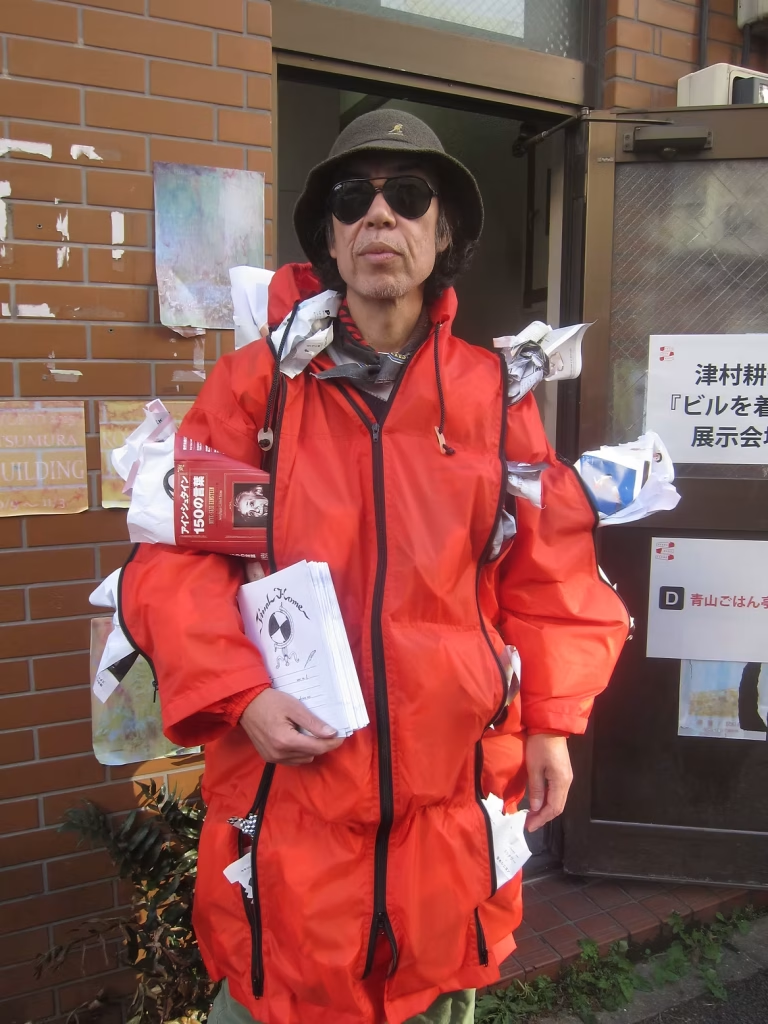
Over the years, the project has taken on an increasingly concrete dimension, especially after the 2011 Tōhoku earthquake and tsunami, which turned the idea of emergency from hypothesis into reality. FINAL HOME evolved into an open and modular system, introducing new materials, inflatable structures, and more recently Puzzle Ware, a series of interlocking elements designed to create garments, accessories, or temporary structures.
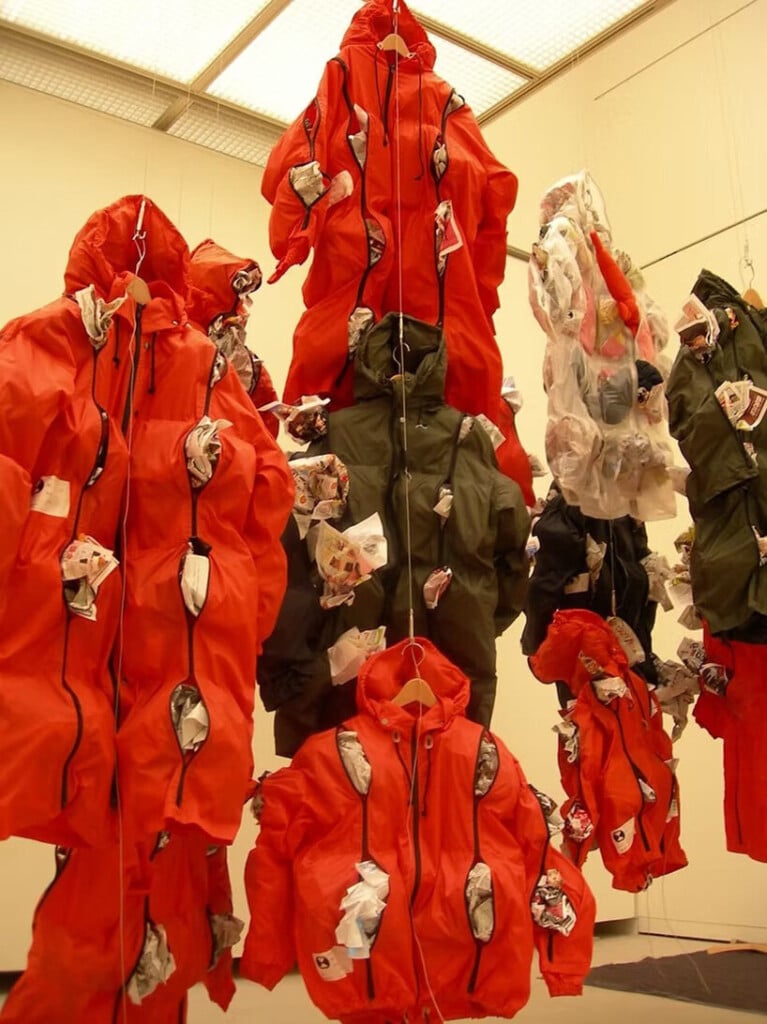
More than a collection, FINAL HOME is a radical idea: home is no longer a fixed place, but something mobile, adaptable, and shareable. In an increasingly unstable world, Kosuke Tsumura’s project anticipates a new way of living, where protection, design, and survival converge into a single gesture: wearing your own home.