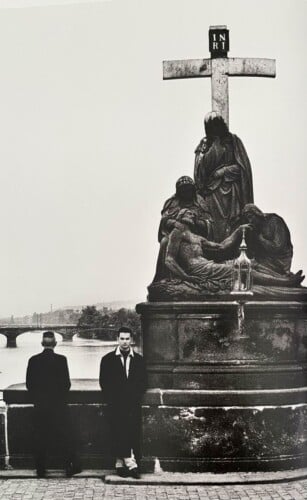
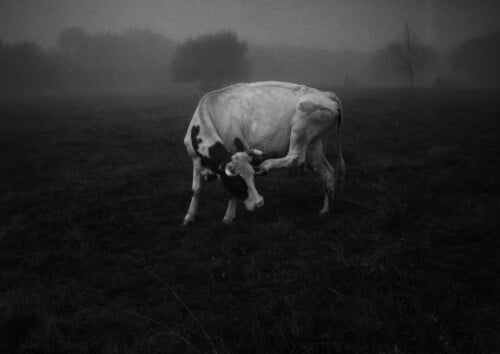
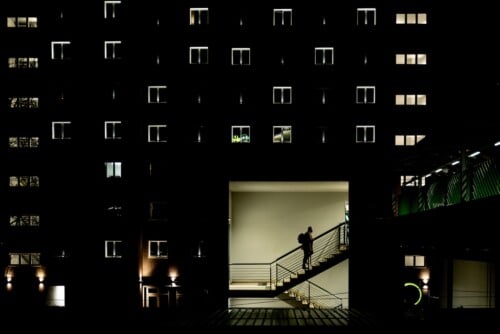
In the project Open Nights (2026), French photographer Léna Maria builds an immersive narrative that moves along the edges of the visible, exploring the night as a symbolic space and a ground of connection between the human and the non-human. Through the use of camera traps, devices sensitive to movement, heat, and vibrations, the artist gives up direct control over the image, relying instead on another kind of gaze that records what happens far from human presence, allowing the presences within the landscape to emerge on their own, season after season.


Night thus becomes a place of indeterminacy, a threshold where rational categories and clear-cut oppositions begin to dissolve. In this suspended space, what usually remains at the margins starts to take shape, suggesting new possibilities for connection and perception. In this context, the image takes on the form of an almost ritual act, a kind of visual spell capable of transforming the idea of disappearance into a promise of metamorphosis.


Guided by an ecofeminist perspective, the project questions the centrality of the human being, proposing a vision of nature not as a set of separate elements, but as a fluid system of relationships and interdependencies. The images, marked by earthy tones, oxidations, metallic reflections, and traces of erosion, become sensitive fragments of this complex ecosystem, almost like surfaces shaped by time and matter.


Open Nights follows a process in which the night ceases to be a space of absence and instead becomes a fertile place, where new forms of awareness and, perhaps, new possibilities for coexistence are built.