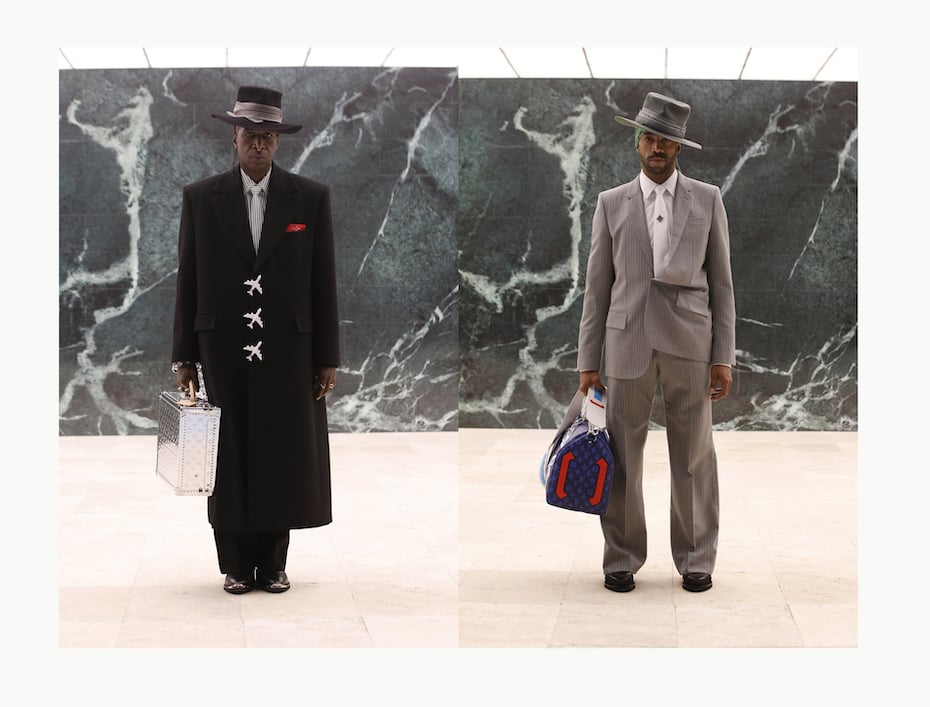
At Paris Fashion Week Mens, Louis Vuitton presented the Fall/Winter 2021-2022 men’s collection titled “Ebonics / Snake Oil / The Black Box / Mirror, Mirror” the sixth collection designed by Virgil Abloh, with a 13-minute fashion film.


A criticism of the society in which we live that judges each individual with an aberrant superficiality according to what are the archaic norms that the same society has constituted. Most often the judgment comes by observing how a person has dressed declining opinions on cultural background, gender identity or sexuality.
Vuitton’s FW21 collection aims to empty out the prejudices we build around each individual by changing the values we usually associate with clothing codes linked to certain archetypes.

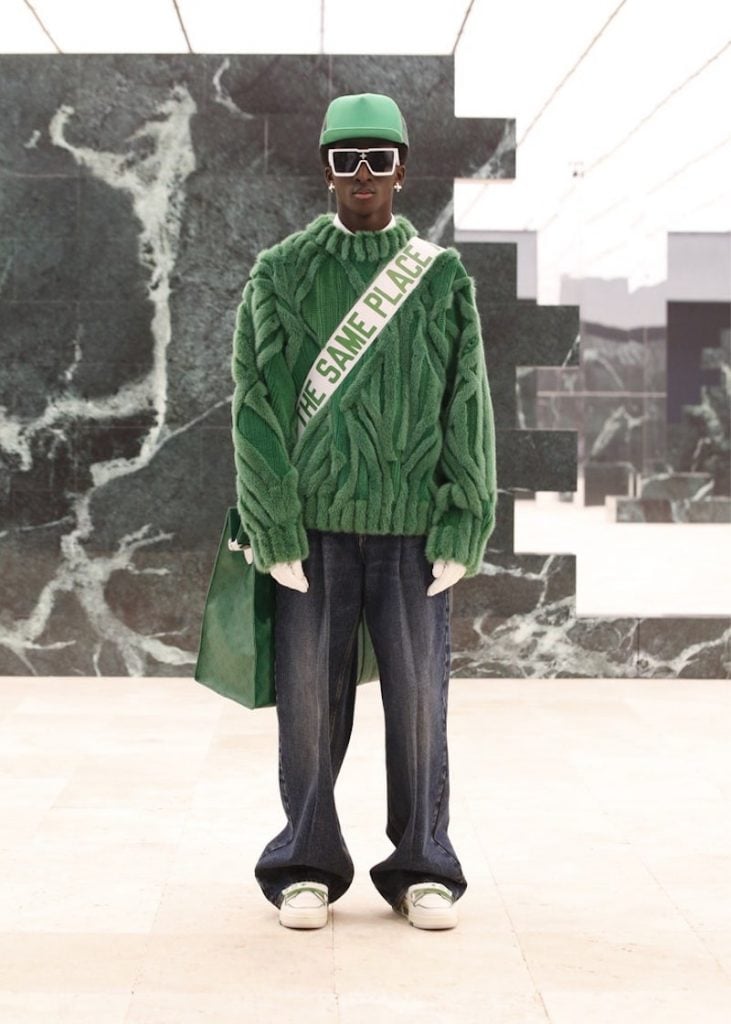
The show begins with a snowy landscape – a hill in Switzerland – and narration by American rapper, poet and writer Saul Williams wearing a suit with one of the most important pieces of the collection, a chrome monogrammed trunk. Starting from a forest in the distance we see what looks like a small town and immediately after we find ourselves inside a building where the rooms are replaced by large spaces covered with colored marble and flooded with light, we are inside Tennis Club de Paris where the set design was built.
The reference is to the 1953 essay “Stranger in the Village” by the writer James Baldwin in which he recounts the time he spent in a village in Switzerland and his life in the United States as an African-American, but in fact, the entire show is inspired by Baldwin’s essay and uses as its starting point the archetypes of our society, what Virgil calls “normal” characters: the artist, the salesman, the vagrant and the architect.
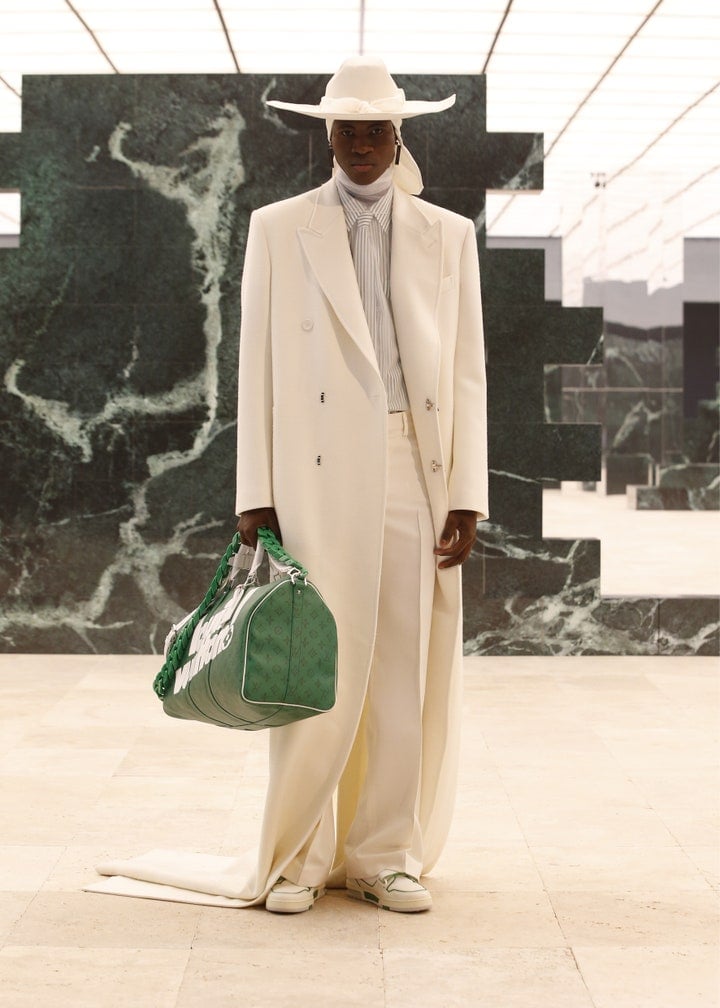

On the accessories and jewelry of this new collection, we find messages such as “YOU CAN TELL A BOOK BY ITS COVER”, “THE SAME PLACE AT THE SAME TIME”, “(SOMEWHERE SOMEHOW)”, created by one of the main exponents of conceptual art Lawrence Weiner. Another claim we often find in the collection is “TOURIST VS. PURIST”, where the tourist is the outsider who observes and would like to dominate everything related to art, fashion, architecture and that is opposed to the insider (the purist) who already fully dominates these aspects.


Virgil Abloh’s message is clear: reflect on the society in which we live where inequalities of gender, race and sexuality are continuing to martyrize the world.


There is a need to create a “new normal” where we can finally get rid of all prejudices, where we can create the same opportunities, the same dreams and the same freedoms for everyone regardless of race, sex or gender. Virgil hopes that to the classic question “what do you want to be when you grow up?”, any child can answer “everything I want” and that this is true and doable.