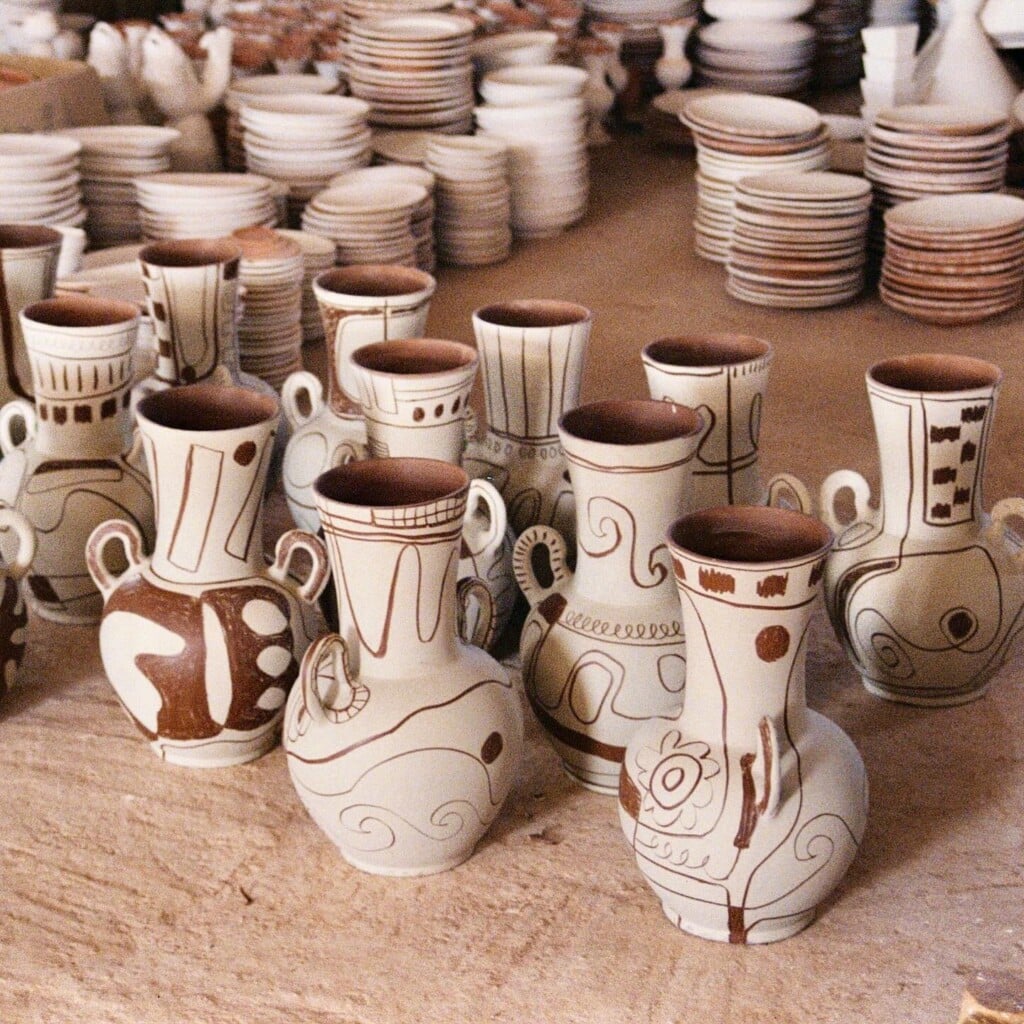
Founded in 2013 by Belgian designer Laurence Leenaert, the project is centered in Marrakech and was born from an increasingly close relationship with the city’s craft culture. It is not, however, simply a matter of Moroccan inspiration, because LRNCE has built around Marrakech a production and creative system in which design concretely passes through the hands of those who make it.
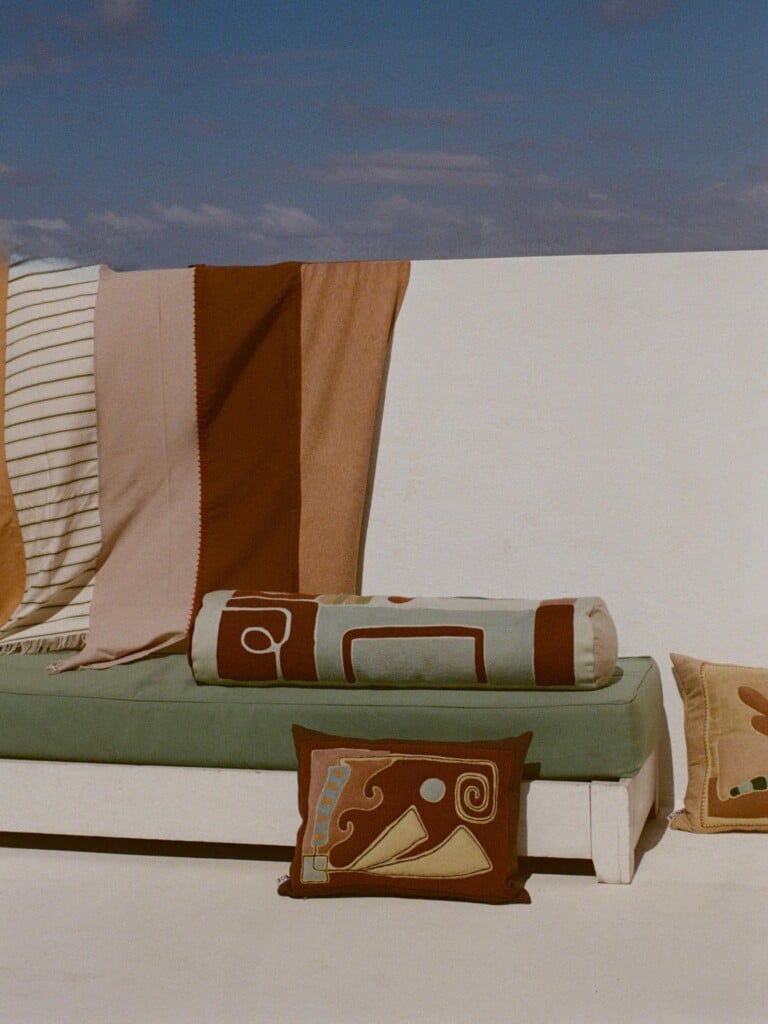
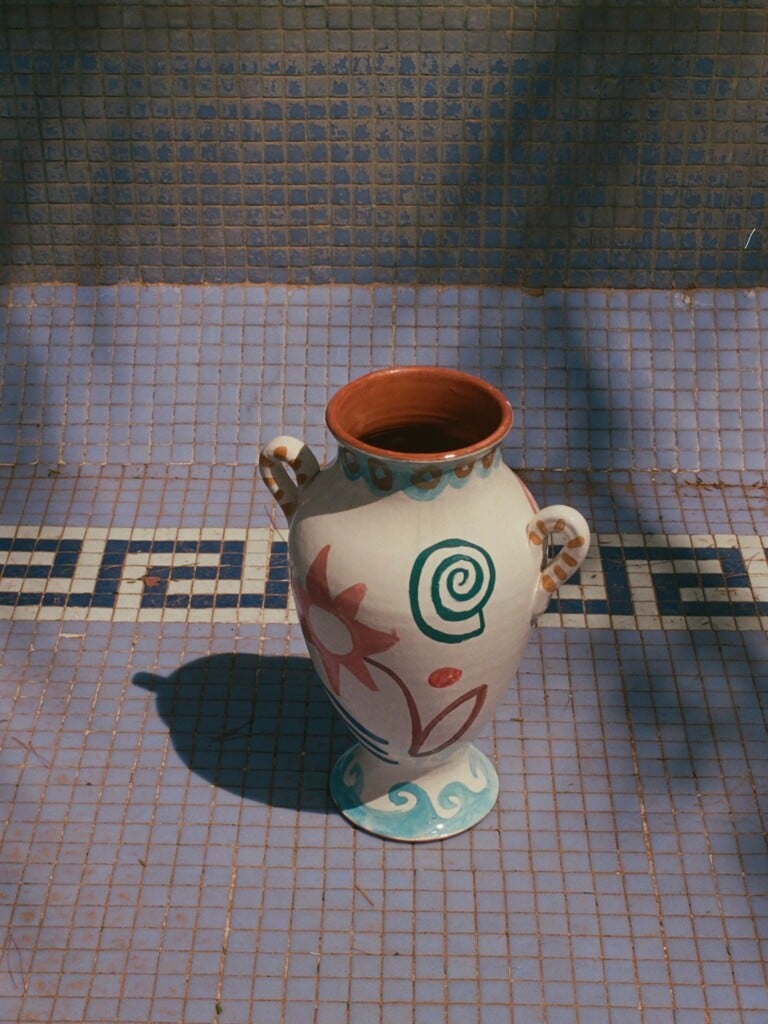
At the beginning there were mainly leather bags, then, almost as a natural expansion, ceramics, textiles, home objects, furniture, framed artworks, and clothing arrived. Today LRNCE works with a small in-house team and a network of over 40 artisans around Marrakech; with some of them the collaboration has lasted more than seven years. It is an important detail because it tells of a model different from serial production: here the relationship with those who make the object is not an invisible step in the supply chain, but an integral part of the project.
Looking at LRNCE’s work, the first thing that emerges is perhaps color, but stopping at the palette would be reductive, the true recurring element is the way in which shapes, patterns, and materials migrate from one object to another.
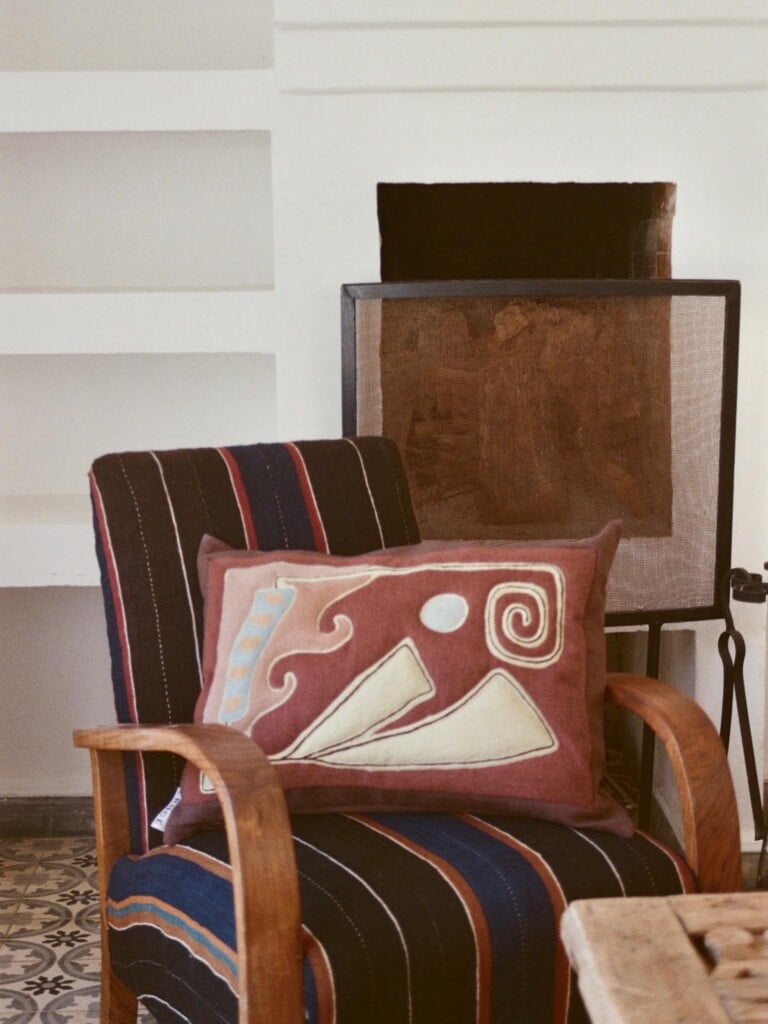
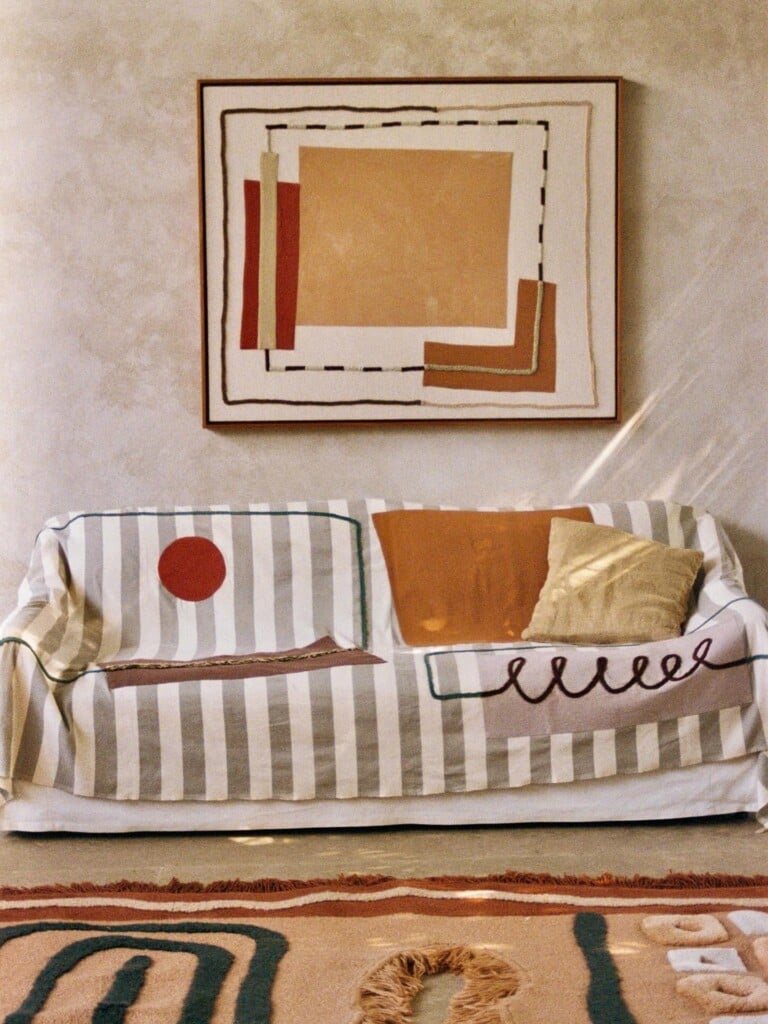
A drawing may first appear in a painting and later become the pattern of a vase, a fabric, or a cushion. A material may change function without losing its own identity. Laurence Leenaert herself works directly with the artisans of Marrakech, developing a visual repertoire that is not necessarily designed as a closed collection, but grows through associations and cross-references.
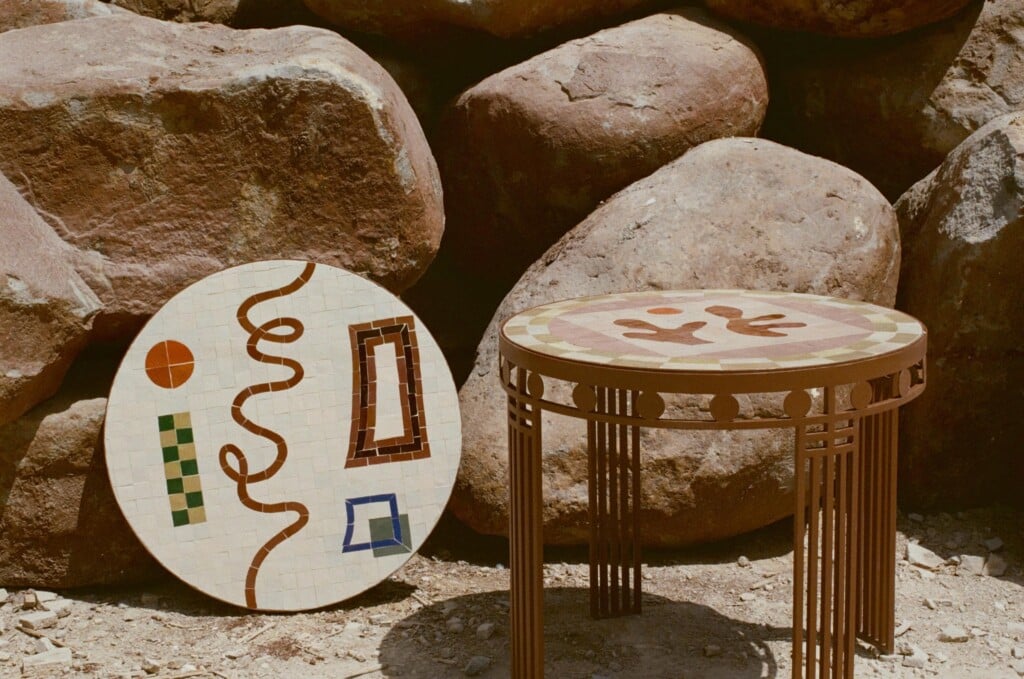
LRNCE moves away from the idea of simple “decoration”; the objects seem to belong to the same grammar, almost as if they were different chapters of a single project. A vase, a chair, a rug, or a textile piece do not necessarily have to resemble one another, but rather share a way of looking at matter.
LRNCE does not present the choice of handmade as a nostalgic statement against industry. It is, rather, a way of accepting that production has limits, and that precisely those limits can become part of the aesthetic.
The ceramics, for example, are made with terracotta clay from Safi; the embroidery uses Moroccan wool, and the textiles employ natural materials woven locally. LRNCE also states that it produces limited quantities, avoiding large collections and ordering minimum quantities from suppliers. Even textile offcuts are kept to be reused, transformed into new pieces, or redyed with natural dyes.
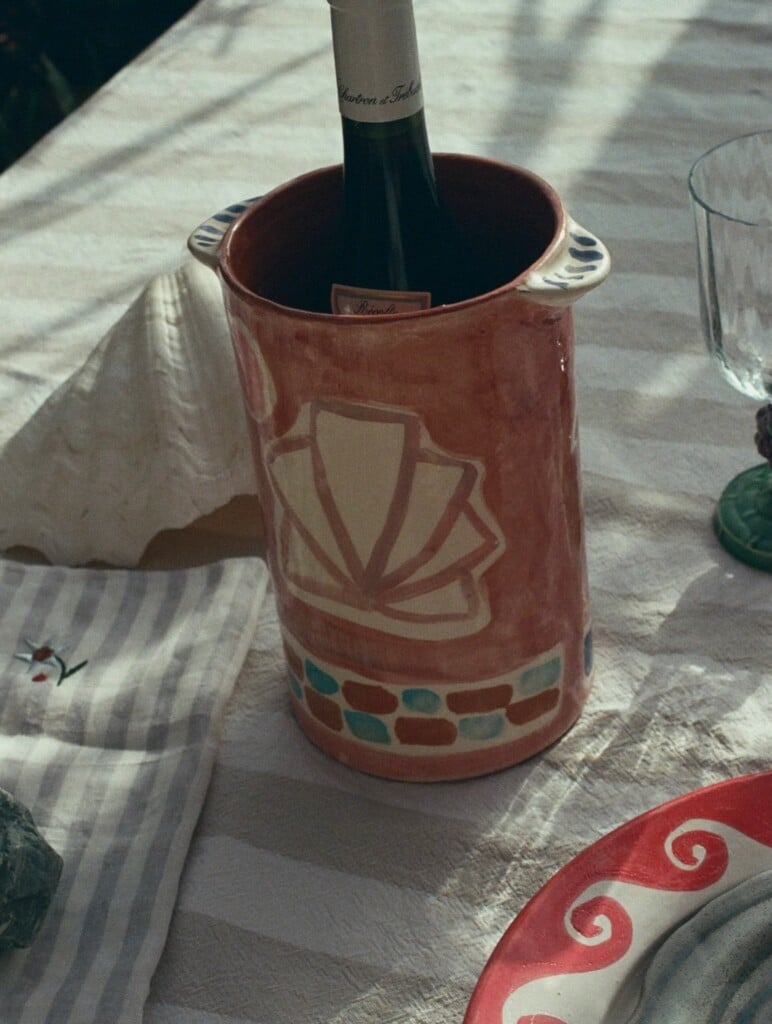
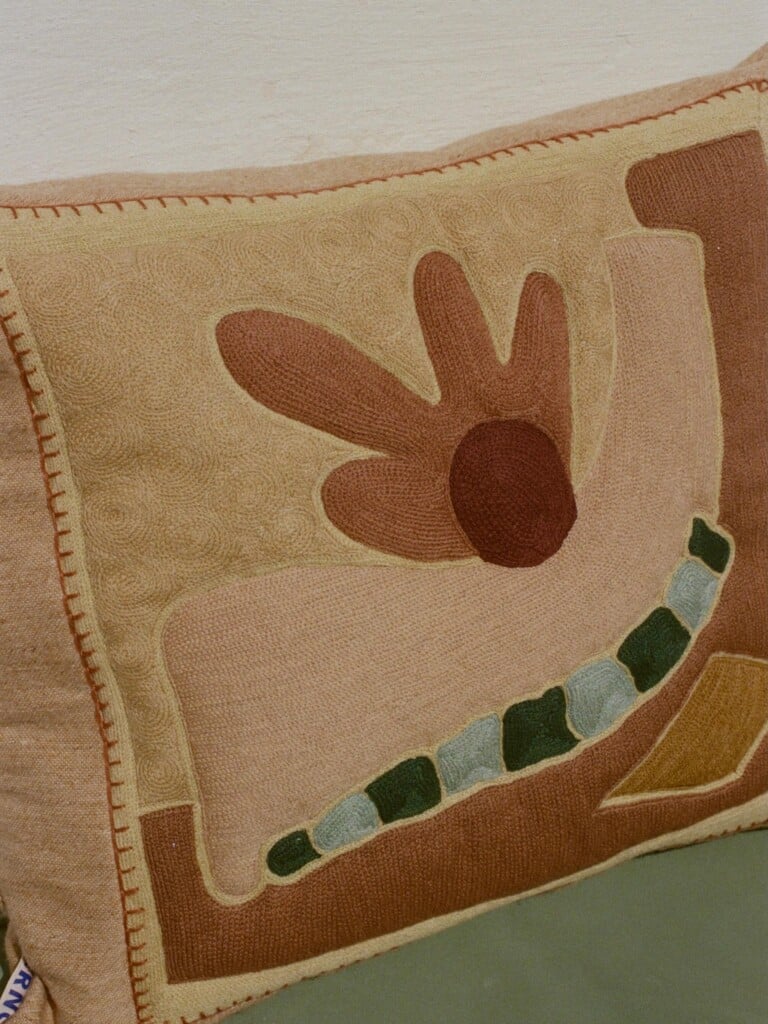
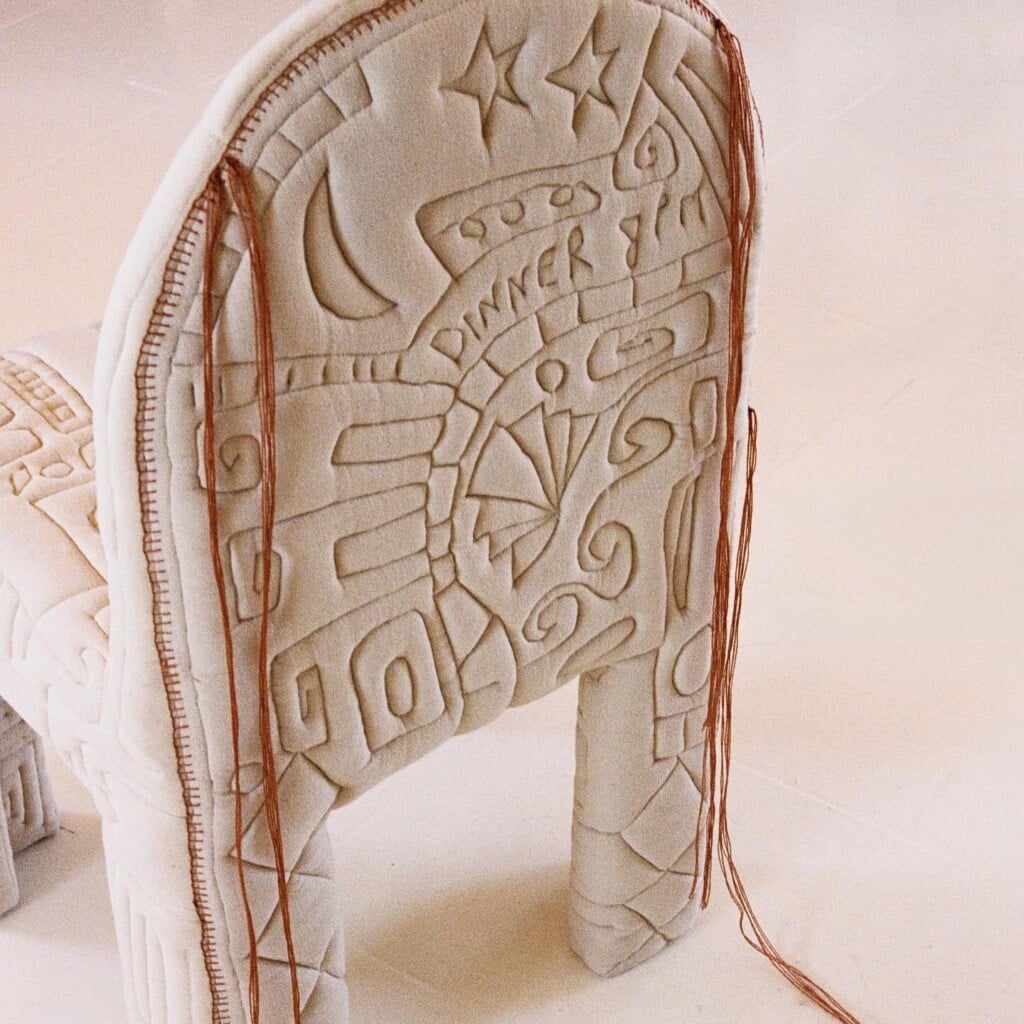
It is not, therefore, only the final result that is “handmade” — so is the time it takes to get there. The fact that everything is produced in Marrakech is central to LRNCE’s research. The studio is located in the industrial area of Sidi Ghanem, one of the city’s creative districts, where atelier, production, and retail space coexist. Geography, then, is not merely an aesthetic element. It is part of the very structure of the project. LRNCE speaks explicitly of a relationship built over the years with the artisans and the communities around them, through a process in which both sides learn and adjust their own way of working.
Rather than treating Moroccan craftsmanship as a visual vocabulary to be quoted, LRNCE uses it as creative infrastructure, and tradition is brought into dialogue with contemporary drawings, colors, and shapes.

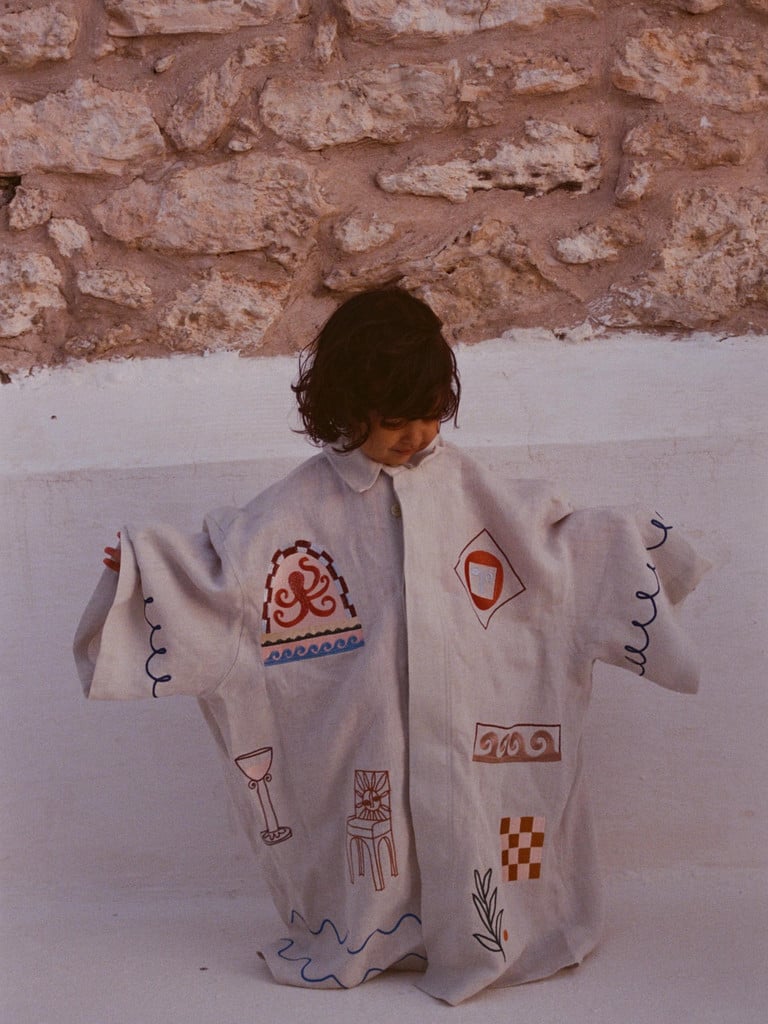
The coherence of the project becomes even more evident when observing how broad the studio’s field of action is. The catalog includes ceramics, rugs, blankets, tapestries, table linen, furniture, lamps, mirrors, and framed artworks, as well as a ready-to-wear line. The clothing, too, is designed in the Marrakech studio and made locally, using natural materials, hand-drawn designs, custom jacquard fabrics, and block-printed patterns.
It is as if LRNCE were not simply designing objects, but trying to build a total environment. This philosophy also extends to commissioned projects. LRNCE creates bespoke pieces for architects and interior designers, working on the dimensions and designs of rugs, ceramics, furniture, and textile works. Among the projects listed by the studio are works for hotels, restaurants, and private homes in various parts of the world. In Marrakech, LRNCE’s design thus seems to arise less from a desire to create “novelty” and more from the ability to observe what already exists, gently modify it, and still leave it with a trace of the hands that transformed it.