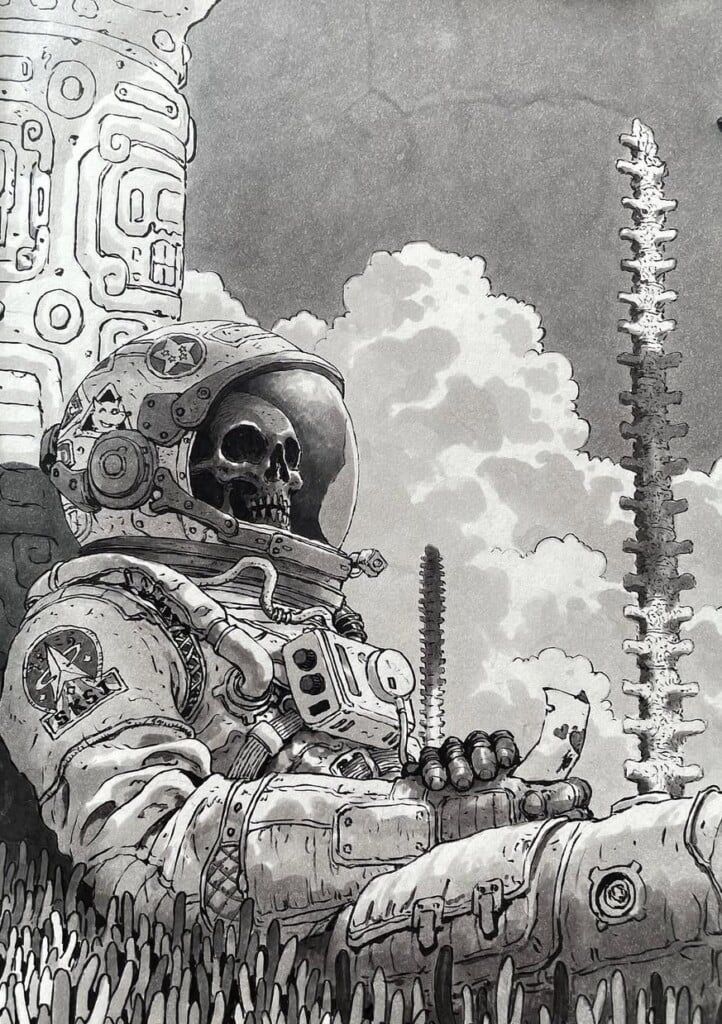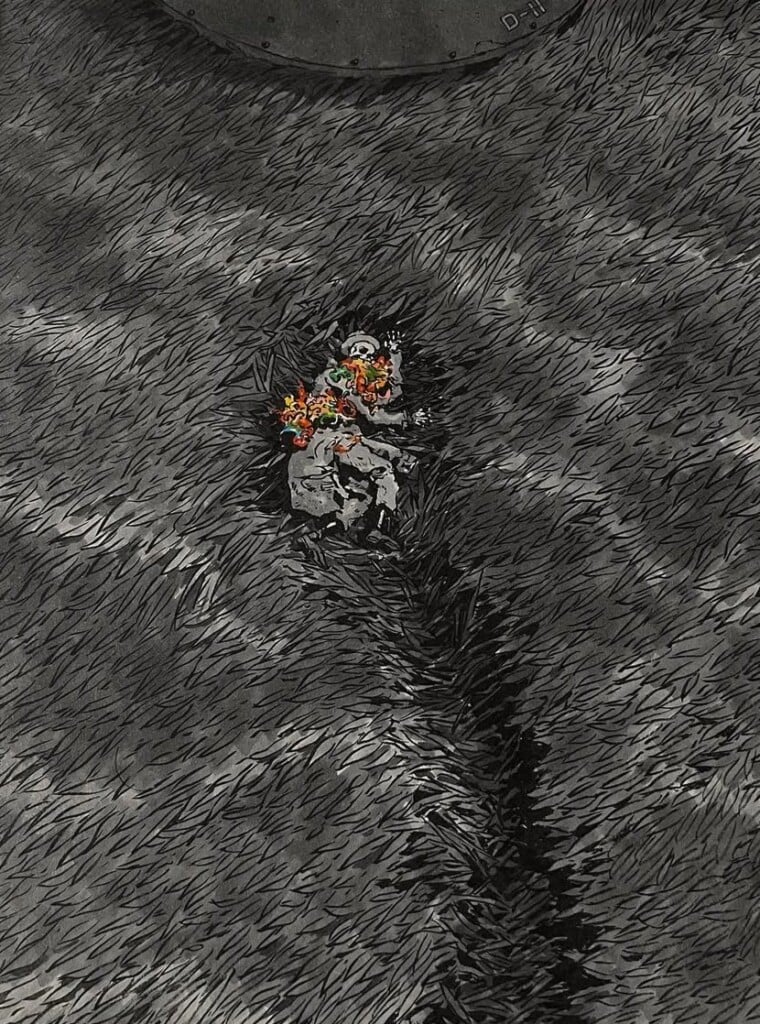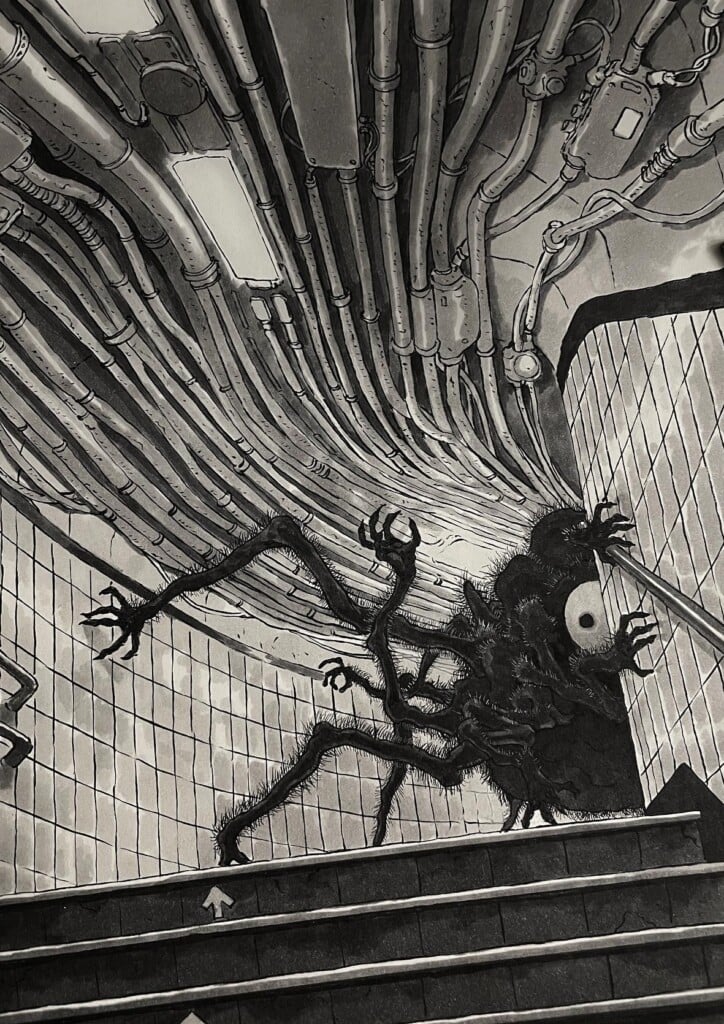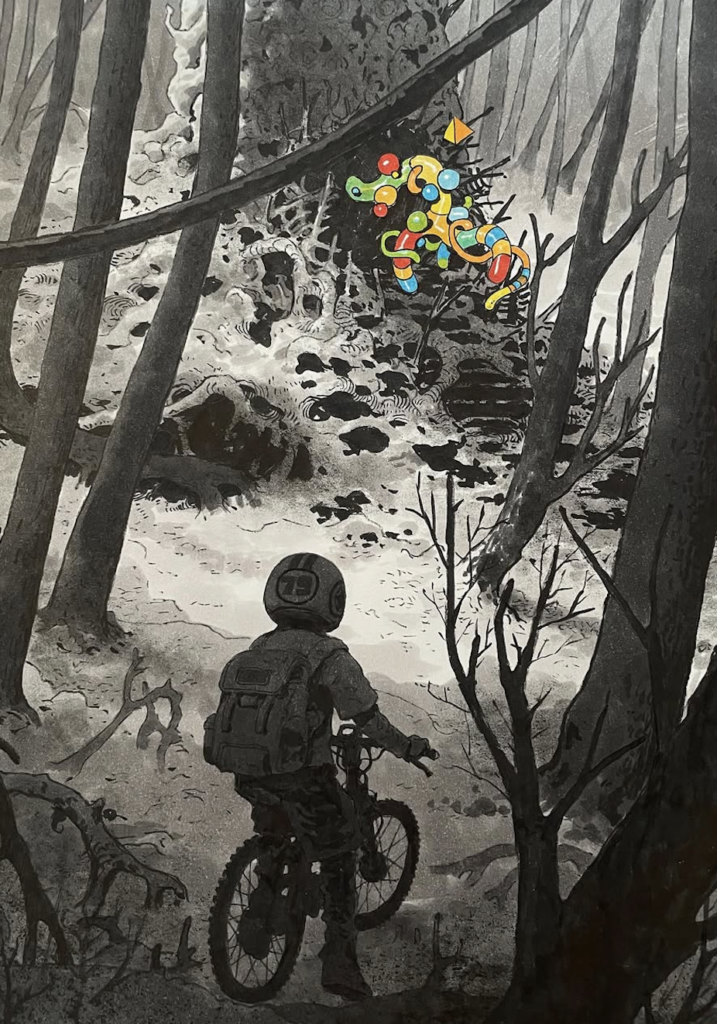
Submerged cities, fragmented creatures, machines in decay. The creative universe of Luan Tie, also known as Dirty Iron, unfolds in a suspended territory between science fiction and archaeological ruin, where the future already feels like an artifact and technology like a relic destined to be reabsorbed by nature. Based in Shanghai, the artist constructs dense, layered scenarios in which the organic and the artificial merge until they become indistinguishable.
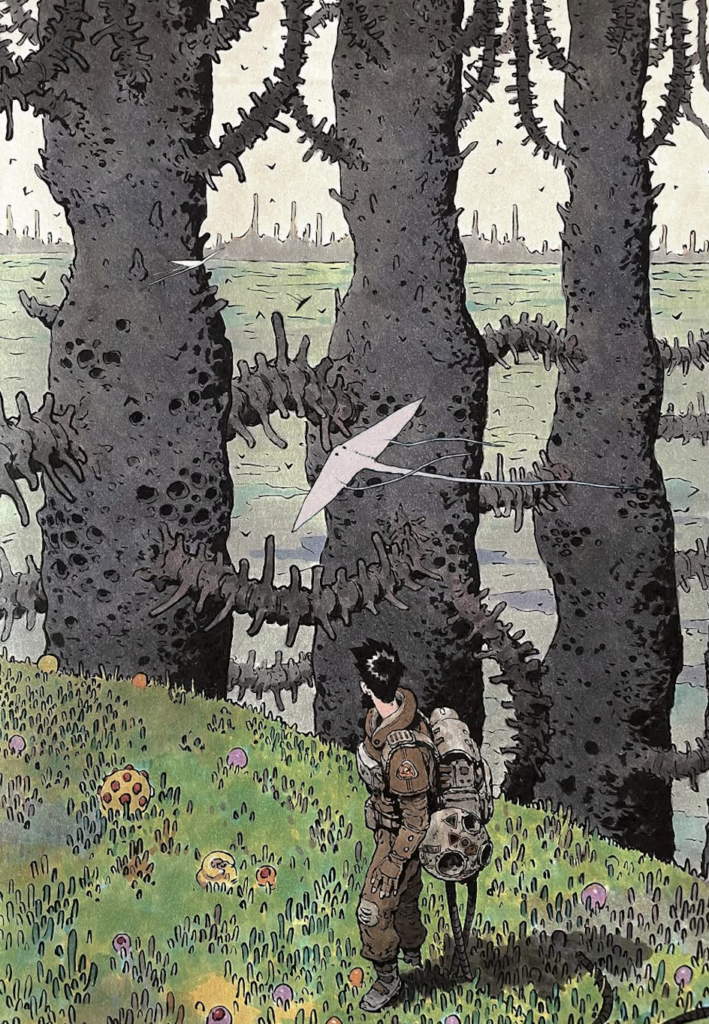
His visual language openly dialogues with visionary masters such as Moebius, Philippe Druillet, and H. R. Giger, yet never slips into imitation. While the legacy of European sci-fi comics and dark biomechanical aesthetics is perceptible, what ultimately emerges is a deeply personal voice—one that transforms dystopia into a quiet reflection on human fragility and on the inevitable return of time as a leveling force.
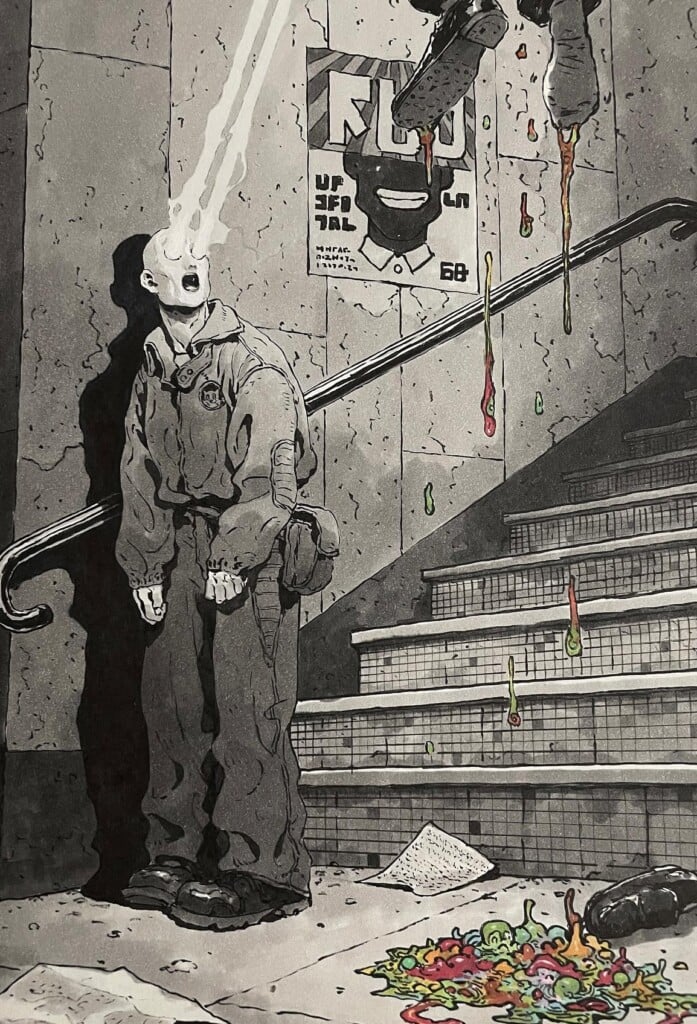
In Luan Tie’s works, architectures seem to collapse inward, submerged by still waters or overtaken by vegetation reclaiming its space. Machines are not tools of domination but poetic carcasses; bodies—often broken or hybridized—become symbols of an existential condition suspended between progress and dissolution. It is a layered aesthetic that draws us in image after image, page after page. Every detail contributes to building a visual ecosystem in which technology loses its absolute power and reveals itself to be as vulnerable as the human being who created it.
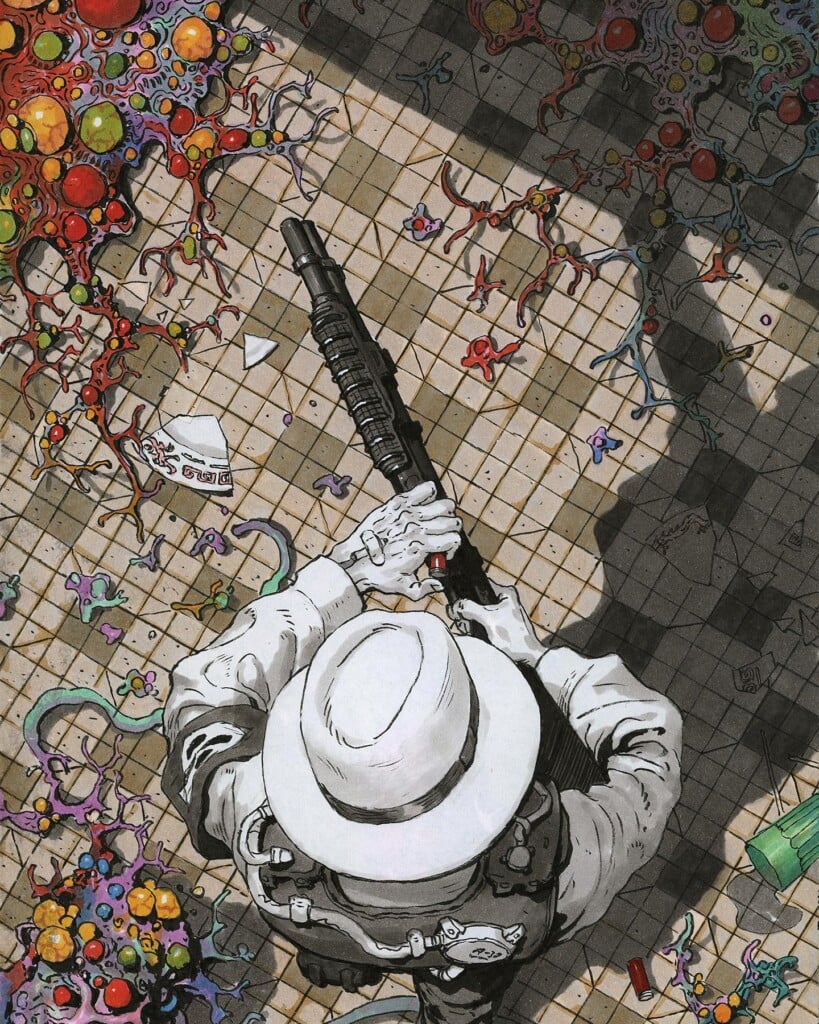
This vision finds a powerful synthesis in his latest publication, THE ART OF 14 / LUAN TIE, released by Banzaï Editions. The volume—the first dedicated to the artist in Europe—brings together a selection of recent works and includes an interview that offers insight into his creative process.
Visualizza questo post su Instagram
Leafing through it feels like moving across an archive of failed futures and parallel worlds. There is no nostalgia, no celebration of progress—rather, a visual meditation on the inevitable cycle of construction and decay. Luan Tie does not imagine spectacular apocalypses; instead, he chooses to show us what remains afterward, when nature silently begins to take everything back.