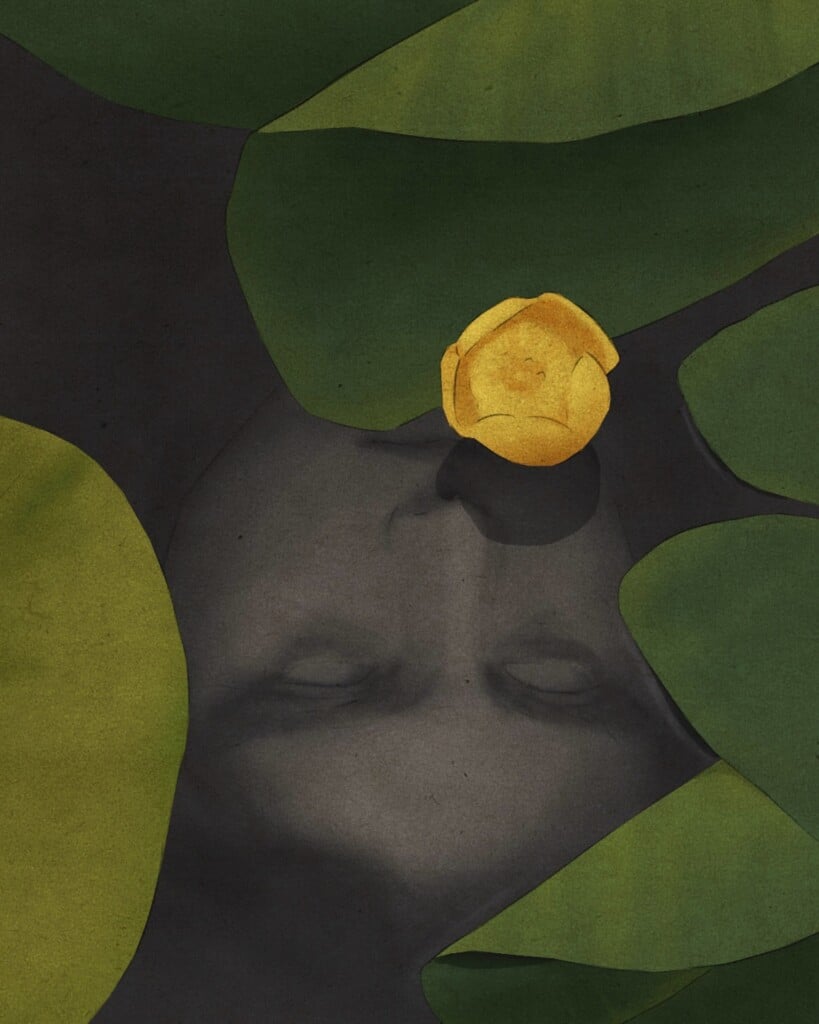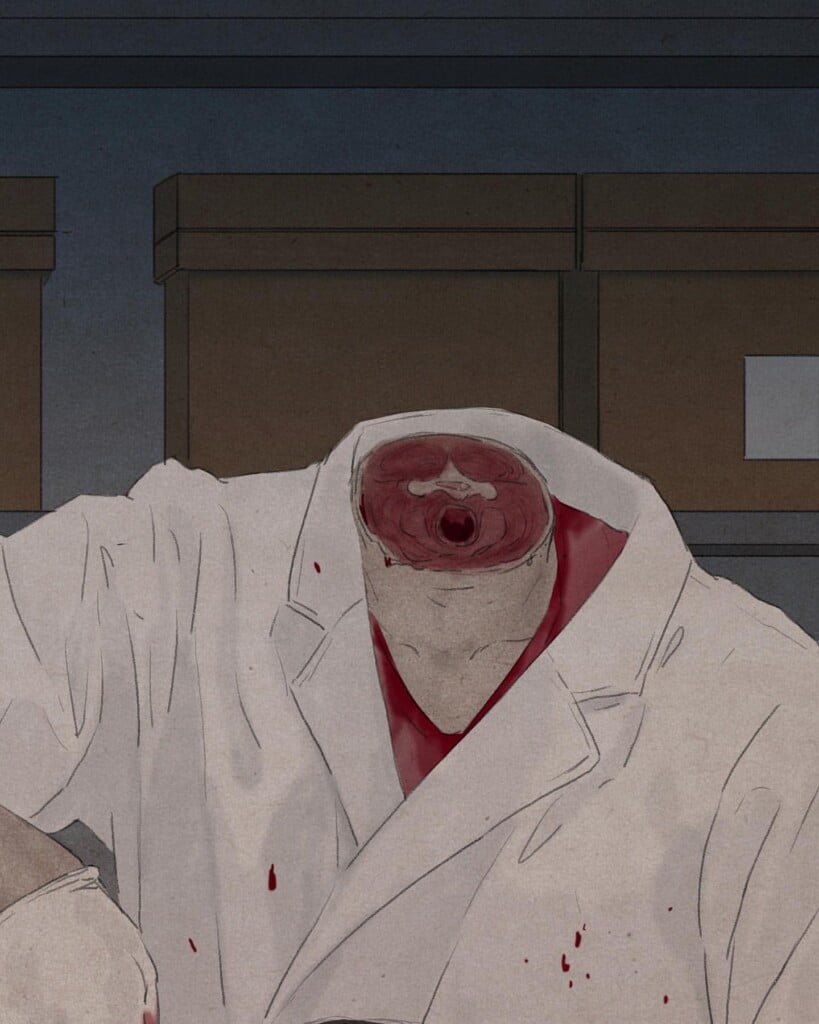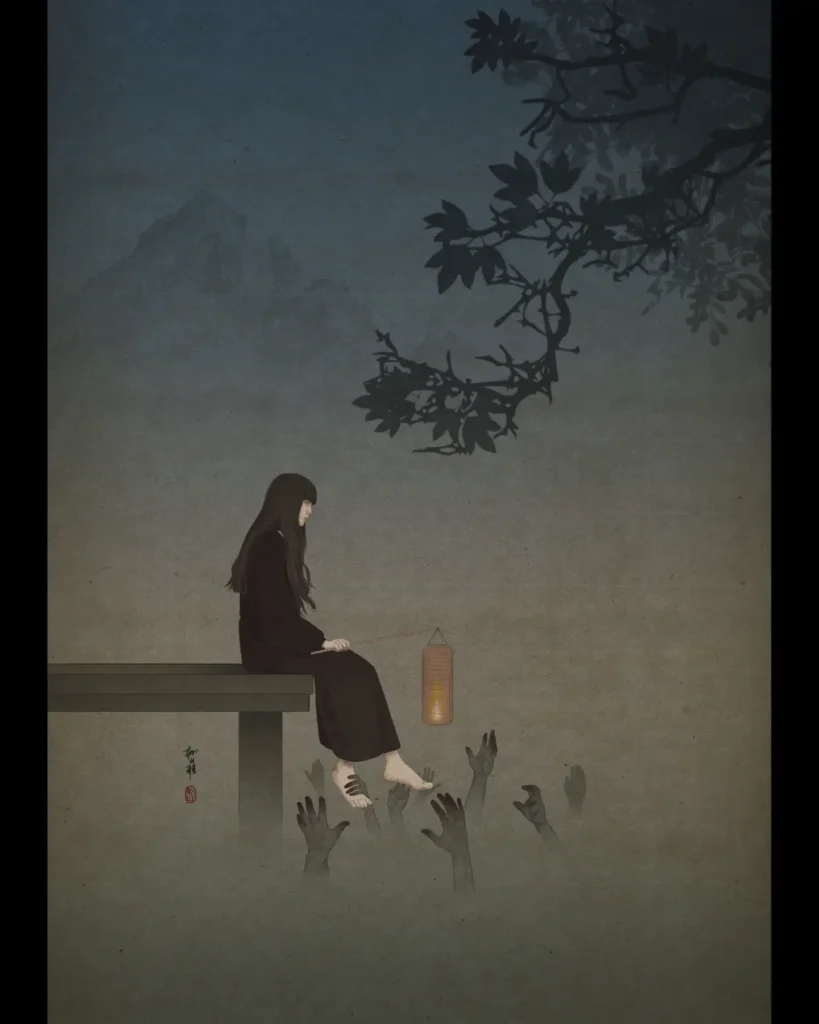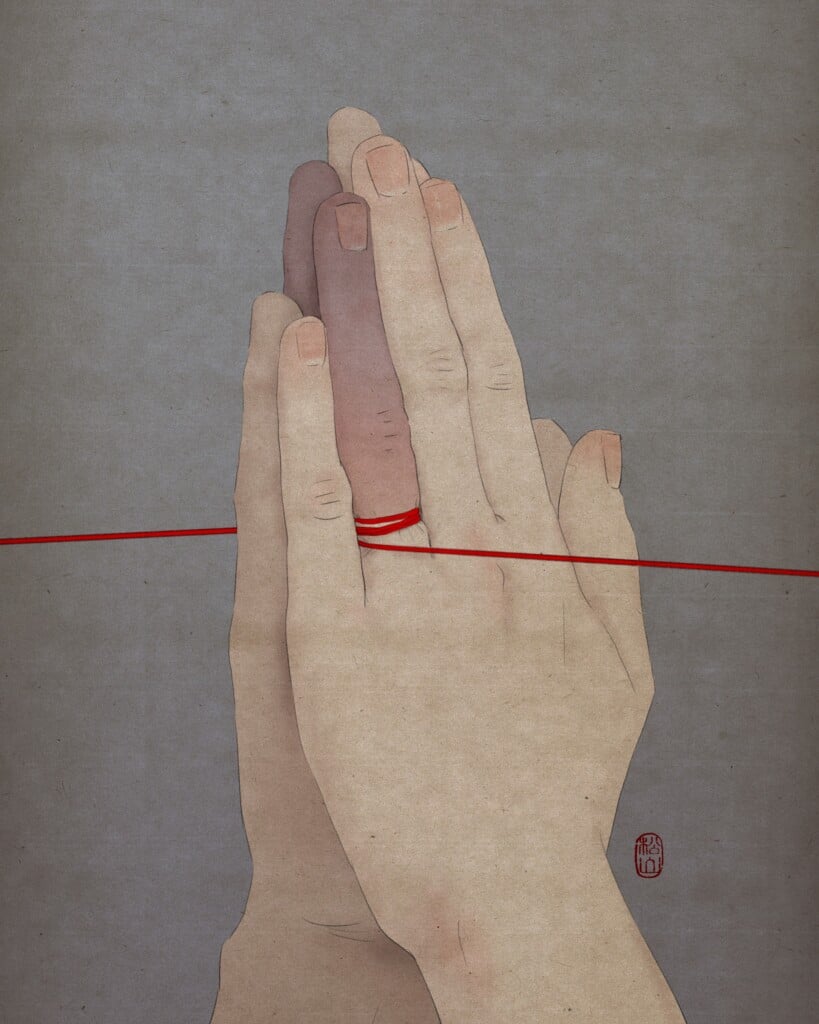
It is not fear that first catches the eye in the works of Matsuyama Miyabi, but their beauty. Female figures wrapped in kimonos, flowers, animals and suspended settings seem to belong to a refined, motionless universe. Then, looking at them longer, details emerge that completely change the scene: something dark is hiding beneath that perfect surface, turning delicacy into unease.
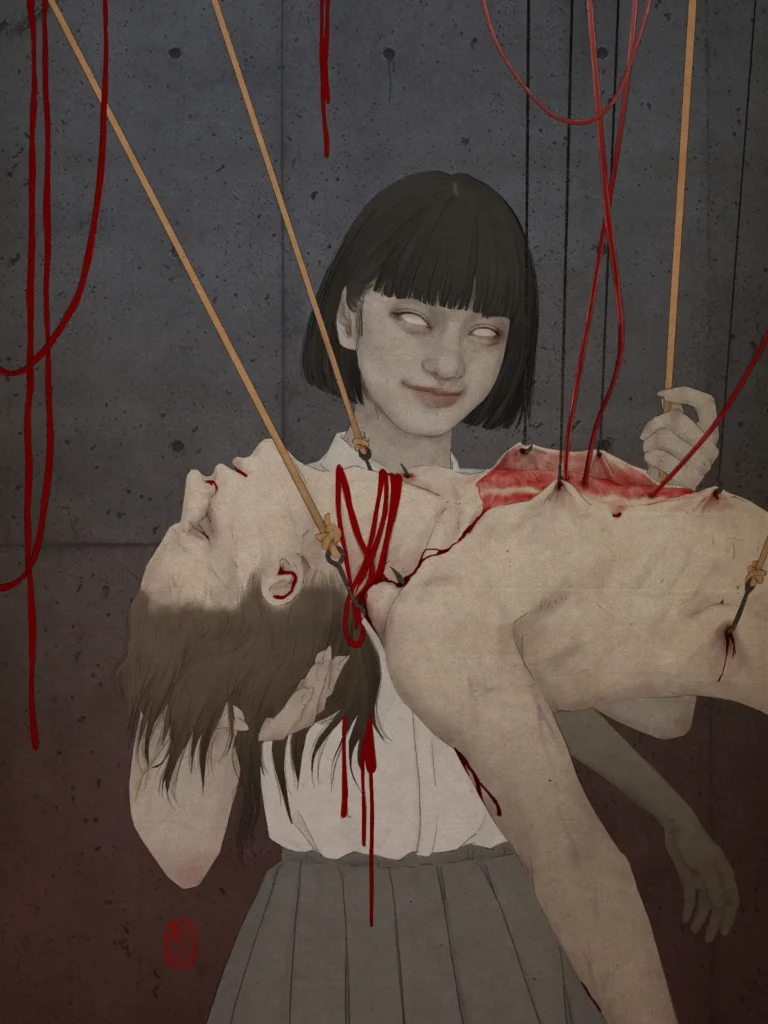
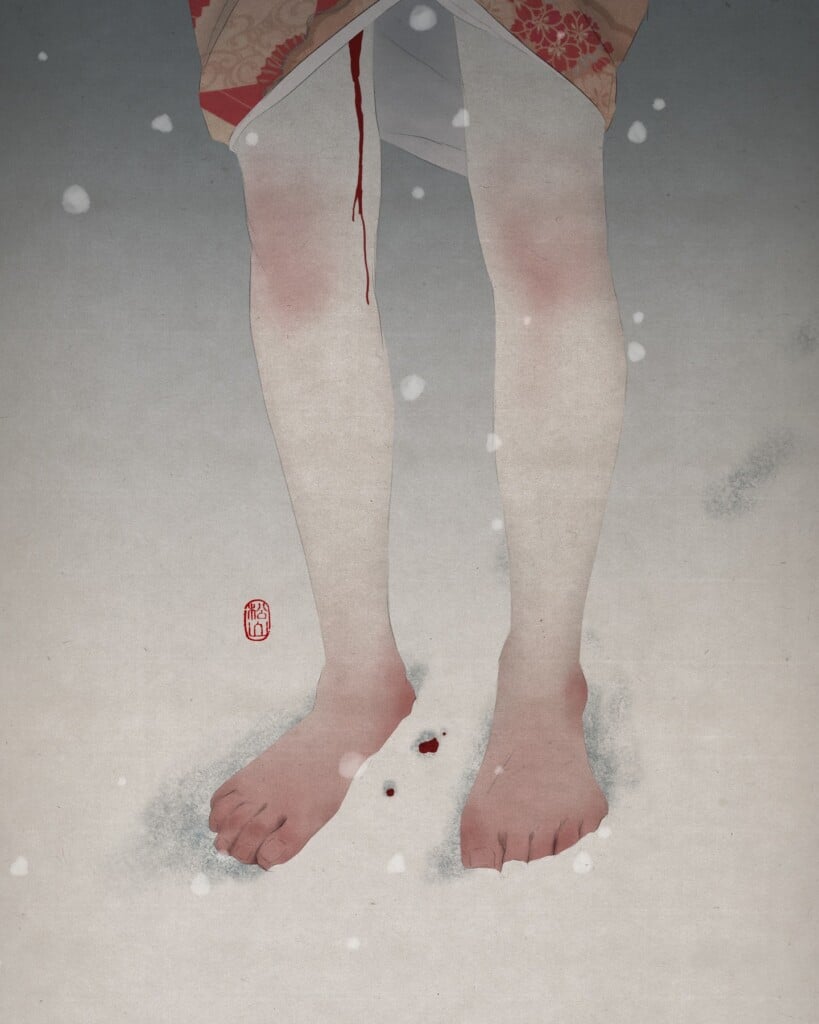
Her visual universe moves precisely in that thin zone where elegance and death, delicacy and violence, attraction and discomfort end up coexisting within the same image. It is an imagery that looks to the ukiyo-e tradition and to the representation of feminine beauty, but shifts it toward much darker, contemporary territory. The artist herself has defined her language as “Neo-Ukiyo-e”, while several of her works bring the aesthetics of the Edo-era floating world into dialogue with themes such as death, fate and fear.
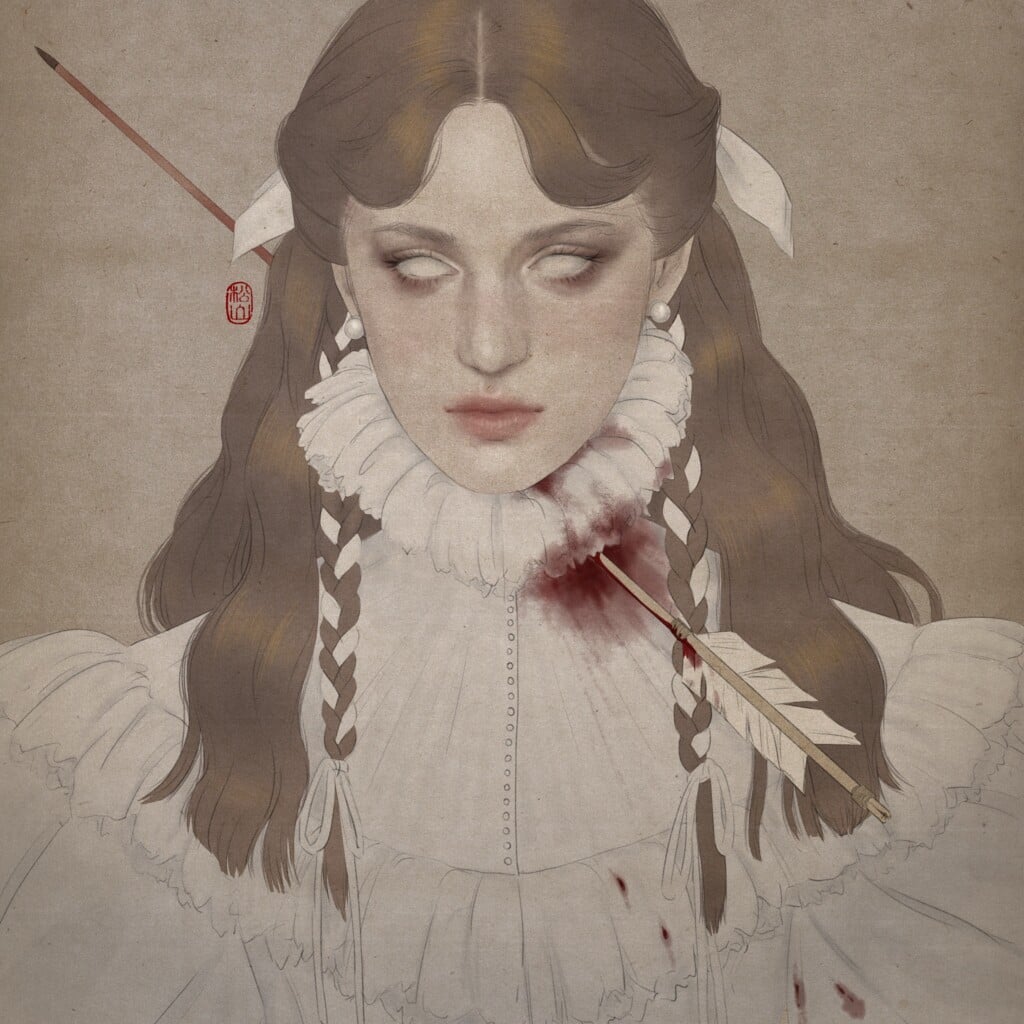
One of the most recognizable elements in Matsuyama Miyabi’s works is her female characters. The figures are often composed with great attention to the elegance of the pose, the hairstyle, the clothing and the ornamental details. But it only takes a look at the eyes to understand that this beauty is not reassuring. The white eyes, almost devoid of expression, are one of the recurring symbols of her work. The artist metaphorically associates them with humanity’s blindness: her characters look without truly seeing, turning the gaze into something closer to an absence than a presence.
It is precisely this contrast that makes her images so effective. A woman may wear an elaborate dress and have her hair decorated with flowers, while her face can simultaneously suggest absence, pain or threat. In other works, crows, skeletons, blood, ghosts, moons and animals appear, elements that do not seem simply added to create a dark aesthetic, but become part of a broader narrative about the fragility of life. Her body of work includes pieces such as The Last Supper, Dying Moon, The Wandering Ghost, Bubbles and Faces, where death and unease return through different settings and symbols.
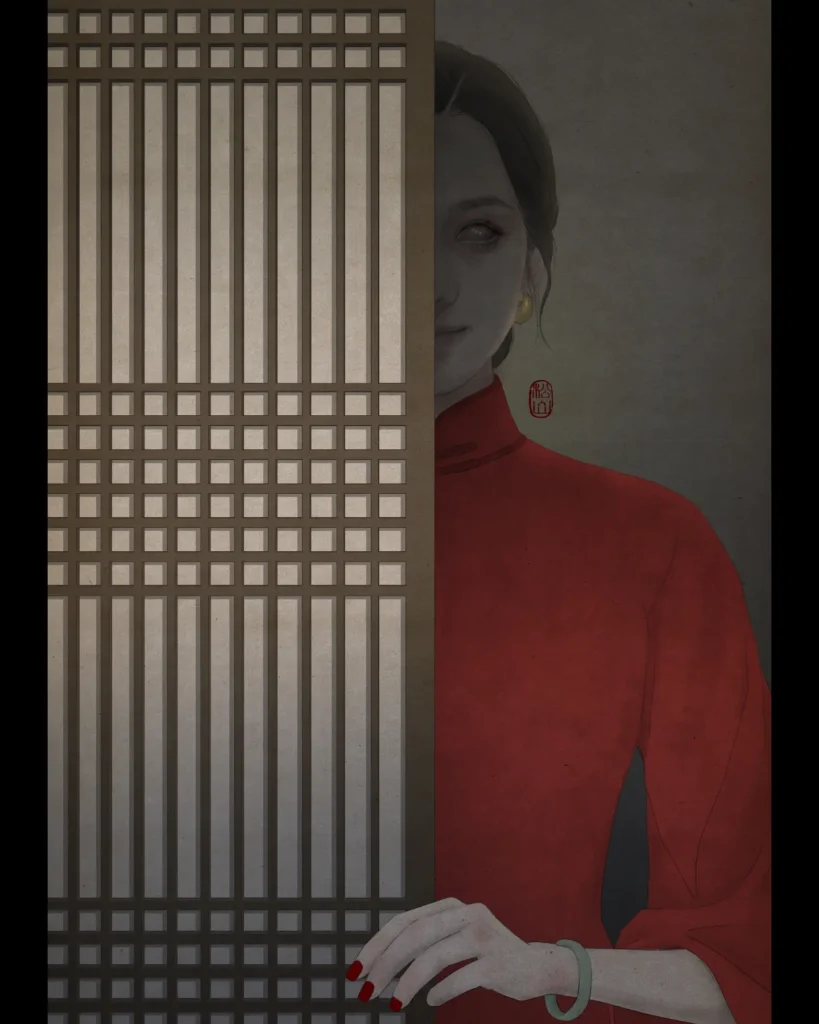
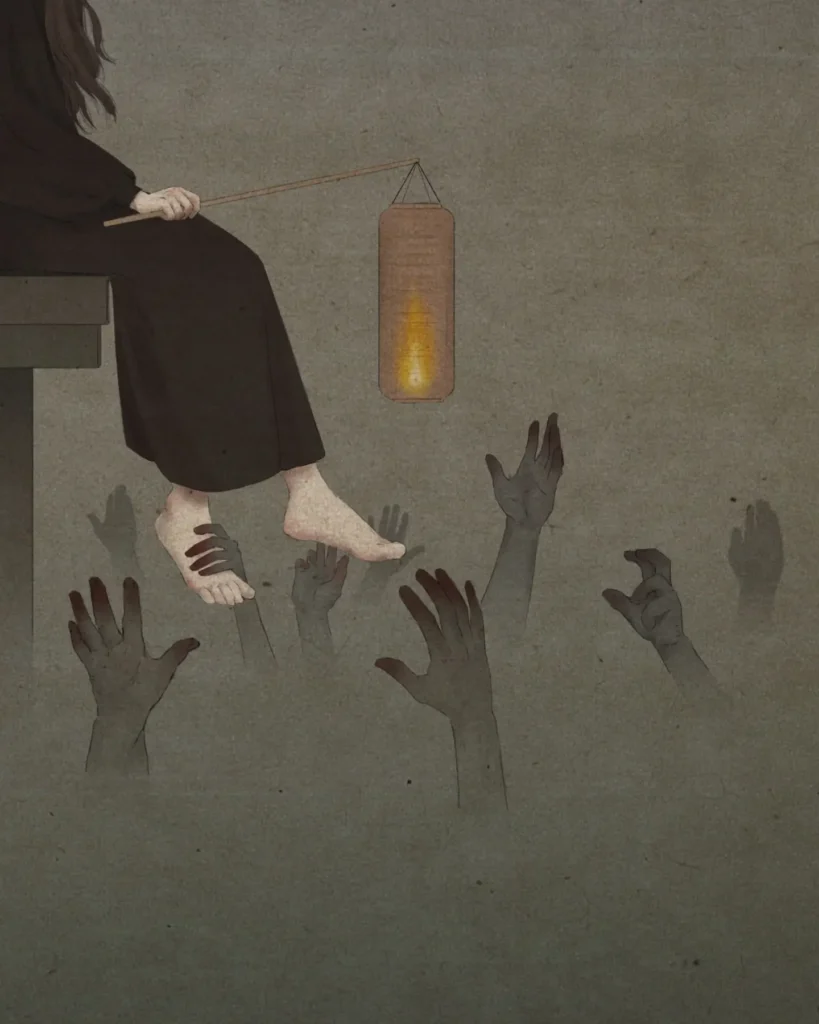
Color also contributes to creating this suspended feeling. Matsuyama does not build particularly saturated or bright images: her palette leans toward low, dusty, almost worn-out tones. Grays, beiges, blacks, dark reds, desaturated greens and deep blues build surfaces that seem to belong to an undefined time. Color thus does not just fill the scene, but strips it of contemporaneity. It is as if the images were already memories, photographs of something that happened long ago or that may still be about to happen.
And it is precisely here that her style becomes interesting: she doesn’t show everything. She leaves empty spaces, ambiguities, details that seem to break off before being explained. Behind this imagery there is not only the Japanese tradition. Among the influences the artist has cited are also Junji Ito and Zdzisław Beksiński, two very different references united by their ability to build unsettling, psychologically disturbing worlds. Horror cinema and thrillers are also part of her universe of references.
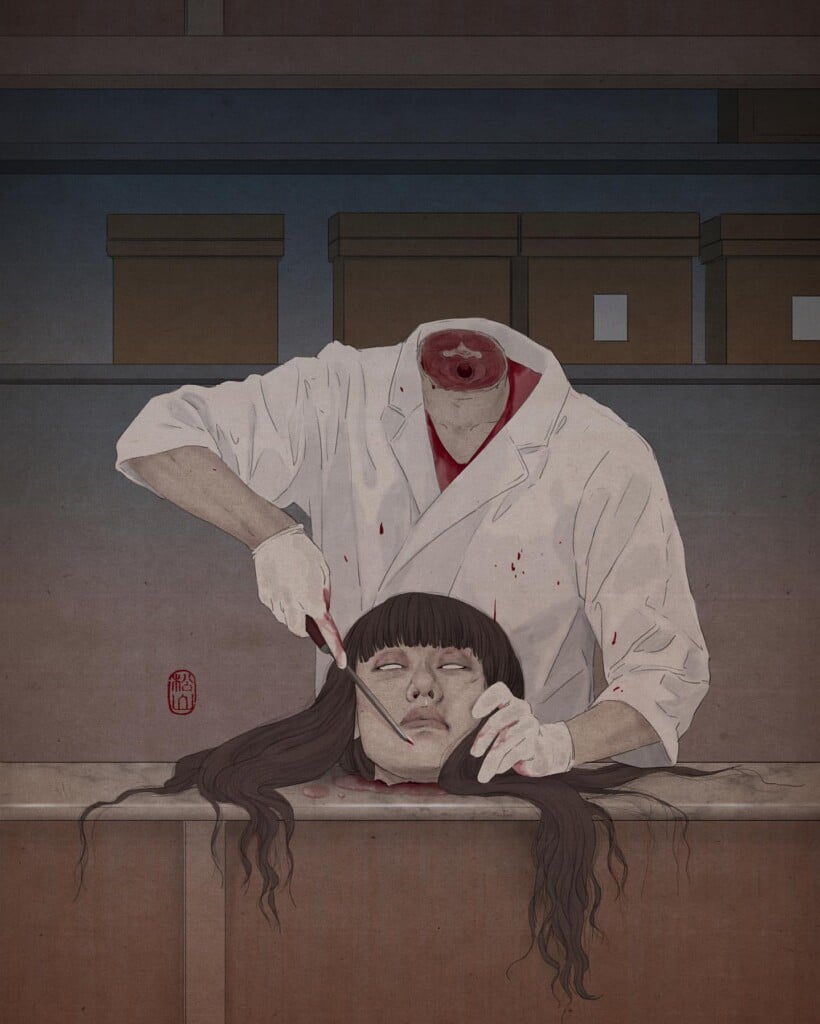
Matsuyama Miyabi has said she has been drawn to fear since childhood, and in particular to reflecting on death. She does not, however, see it only as a source of anguish: her practice holds together nihilism and existentialism, as if confronting the end were also a way of looking at life differently. This is why her works do not simply come across as “dark” illustrations. They are, rather, small suspended scenes, where every element — a woman, a crow, a flower, a moon, a bloodstain — seems to have a hidden second life.
This is perhaps the most interesting part of Matsuyama Miyabi’s work. She doesn’t try to choose between beautiful and unsettling. She places them side by side until they become almost inseparable. Her aesthetic takes forms traditionally associated with grace, the kimono, the flowers, the female faces, the ordered compositions, and slowly lets them slide toward something disturbing. The result is a world in which death does not arrive as a sudden rupture, but seems to have been present from the very beginning, hidden inside beauty.