For this second installment of Mise en Places, our series that takes you on a journey to discover restaurants where architecture and design blend with food philosophy, we move to western Ukraine, in Bukovel, at the heart of the Carpathian Mountains. Here lies Grybova Hata (which translates as “Mushroom Hut”), a long-standing destination for both tourists and locals. Last year, it was completely redesigned with a contemporary approach that tells the story of this region and its culinary traditions. The brand-new 230 m² dining hall was completed just a few months ago by the design studio YOD Group, with a concept where mushrooms, local hospitality, and sustainable materials converge into an emotional frame.
YOD Group reinterpreted the mushroom theme — a central ingredient in the restaurant’s offering — as a formal and material archetype for the project. The space is minimal, shaped by organic curves and a natural color palette. The design relies on just two primary materials: rough plaster and local travertine from the Ternopil area. These choices have transformed the interior into a tactile, informal landscape deeply rooted in the local territory.


Living textiles: when mushrooms become design
Sustainability is an essential part of the design process: recycled plastic lamps integrated with washbasins, bio-based textile elements made from mushroom mycelium, all crafted by local artisans.
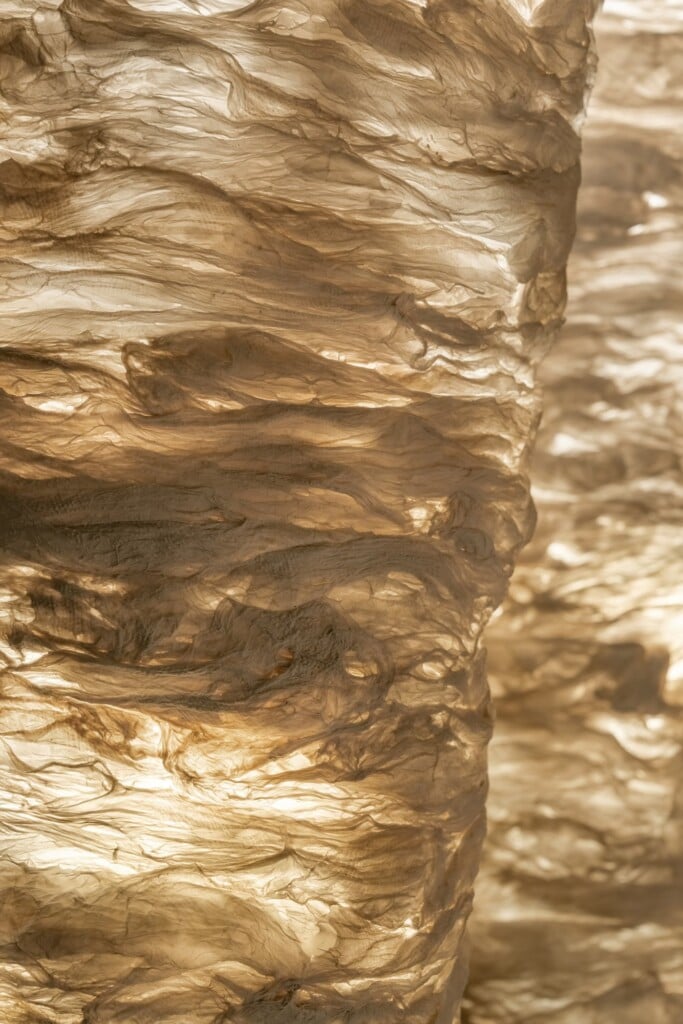
One of the highlights is the living fabric of the curtains made from mycelium. Seven panels were created using coconut and hemp fibers inoculated with fungal spores. After three weeks of controlled growth, a unique, organic, and unpredictable texture emerged — a truly living installation within the restaurant.


Architecture in service of the menu
The interior space is organized into three themed zones: one dedicated to cheese, one to meat, and one to herbal spirits. This layout clearly shows how the space is designed to guide guests through a curated culinary journey.
Architecture and cuisine unite and support each other, transforming a moment of relaxation and conviviality into a fully immersive experience to be lived with all senses. The spatial design interacts with the guest’s ritual: tasting, exploring, and engaging with the local landscape and cultural identity.

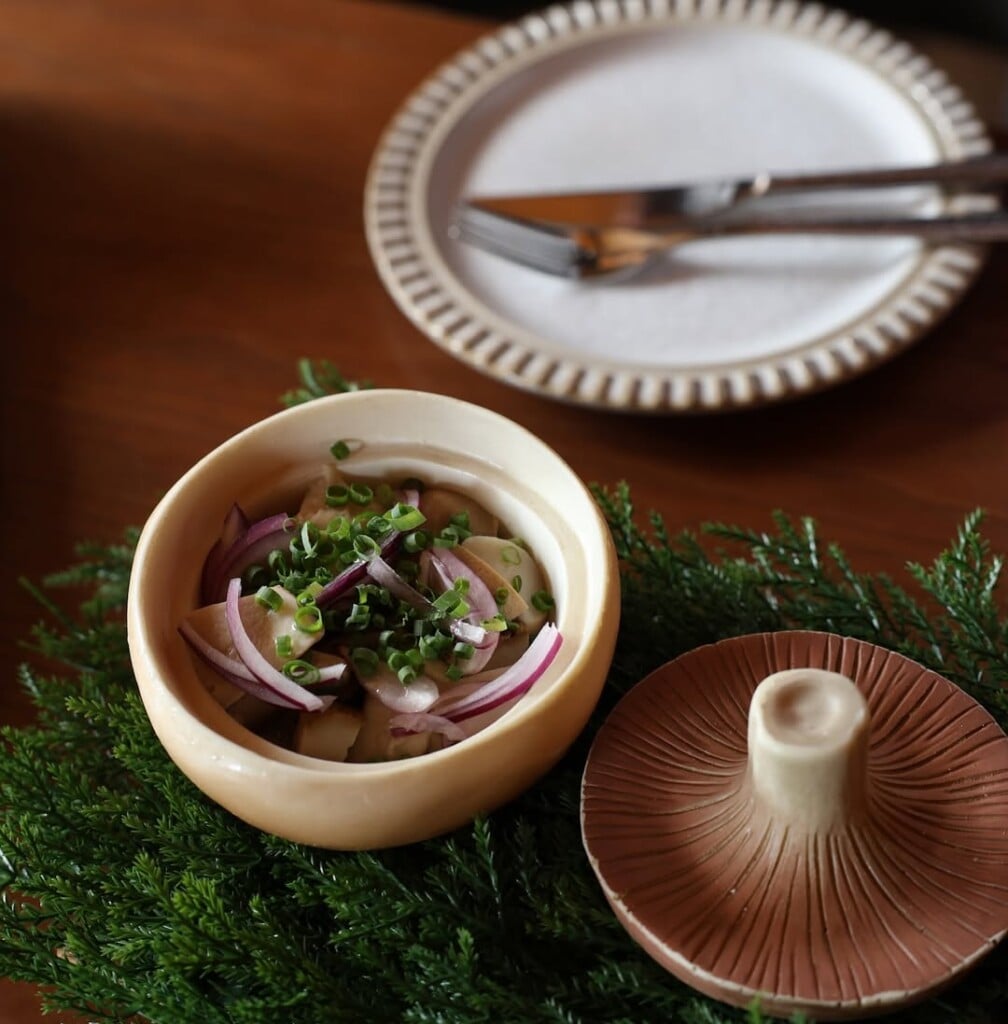
Grybova Hata is a perfect example of a restaurant where design and gastronomy are inseparable, where architecture tells the story of the territory, its ingredients, and cultural identity. In this case, it’s the mushroom that becomes idea, shape, material, and flavor.




Photos by Andrii Bezuglov