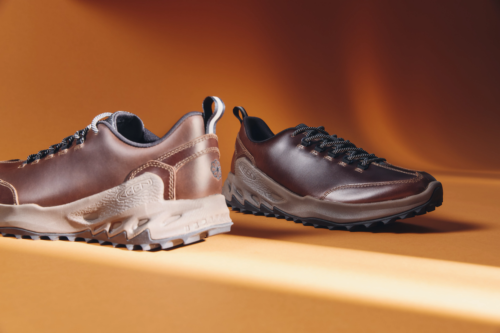
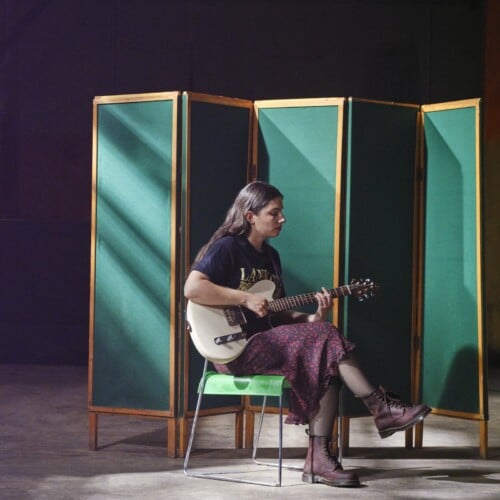
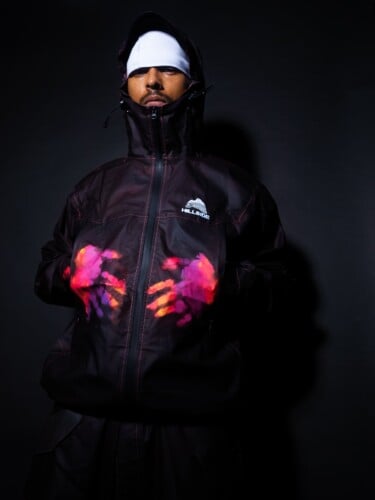
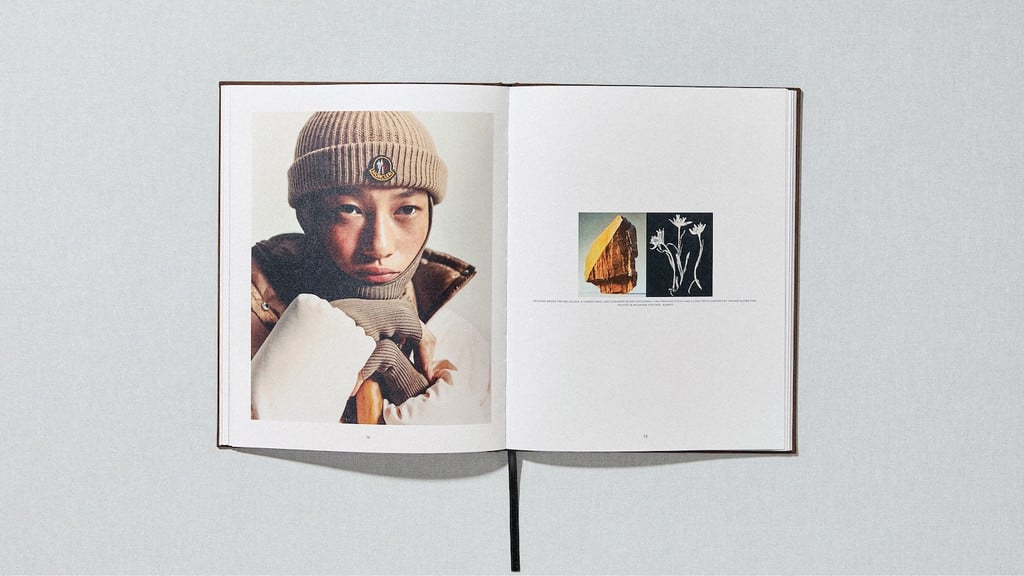
Before an expedition, the mountain is still only a promise: the summit can’t be seen, the route hasn’t been traced yet, and all that remains is getting ready to leave. It is precisely from this suspended space between what has been and what has yet to happen that The Alpine Diary, the story accompanying the new season of Moncler Re/Icons, takes shape.
More than a simple editorial project tied to the collection, The Alpine Diary builds a kind of journey through time. The starting point is Monestier-de-Clermont in 1952, the destination is Milan in 2026: in between there are mountains, expeditions, encounters, waiting, climbs and four garments that over the decades have passed through different ways of experiencing the mountains.
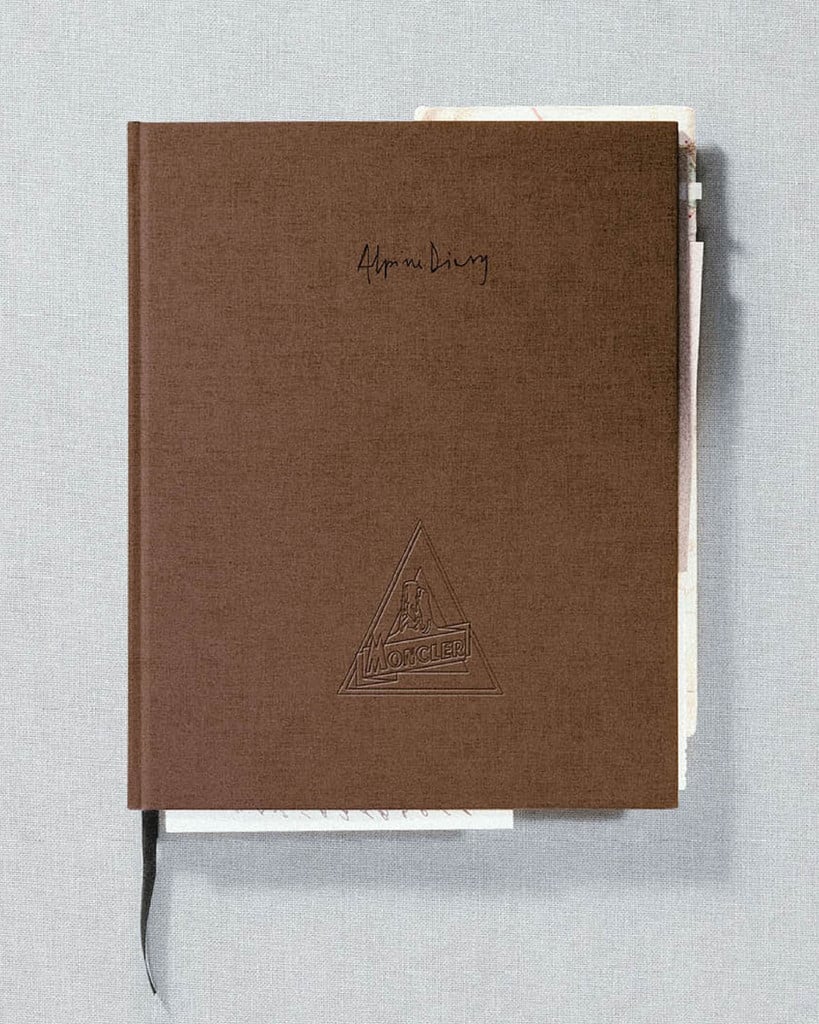
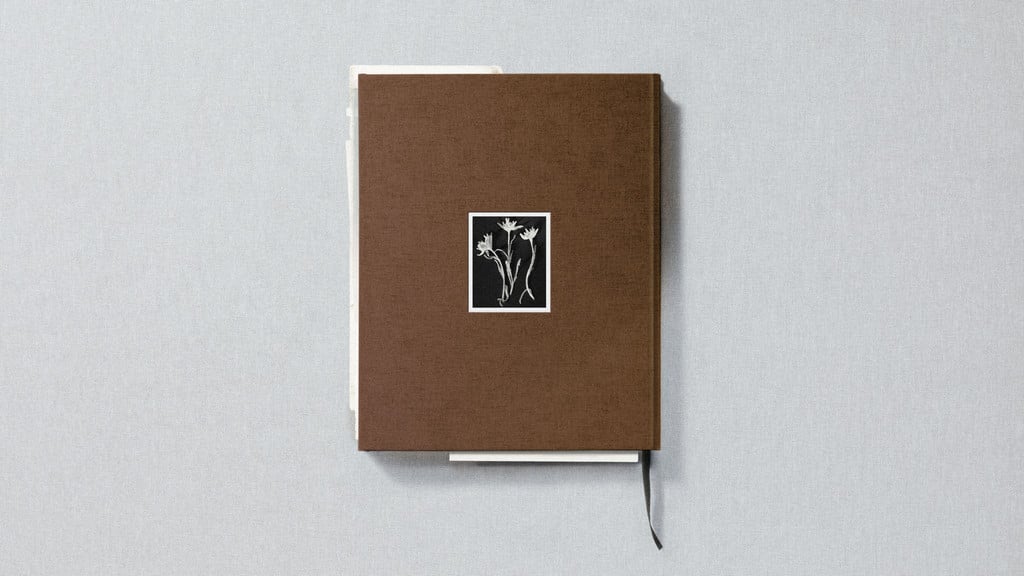
The diary is written from the point of view of an imaginary explorer of the 1950s and takes the form of a true expedition record. Notes, annotations, images and memories build a narrative that looks at the mountain not only as a landscape, but as an experience.
An adventure doesn’t necessarily coincide with reaching the summit. It is also made of preparation, unexpected events, silences, travel companions and the ability to keep going when the route changes. In the diary, this dimension emerges through a series of thoughts that describe the mountain as something that tests and, at the same time, teaches.
The principle is simple: every summit opens the way to the next. There is no real conclusion, but a continuous movement toward what is still unknown.
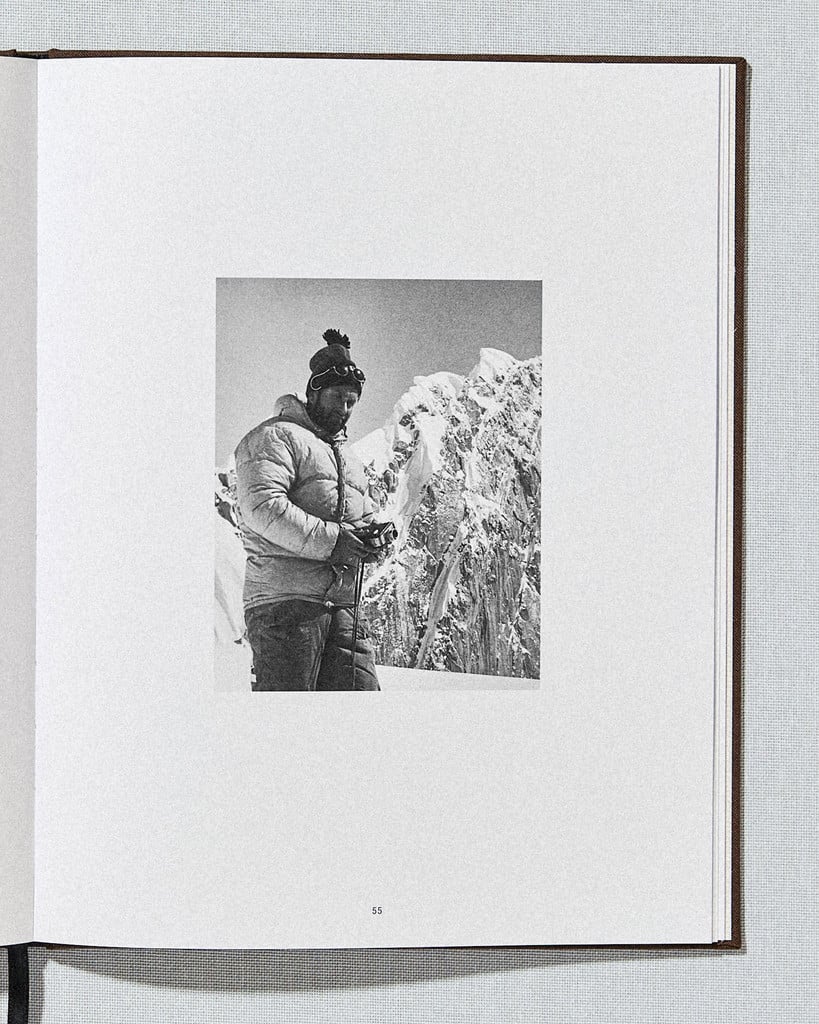
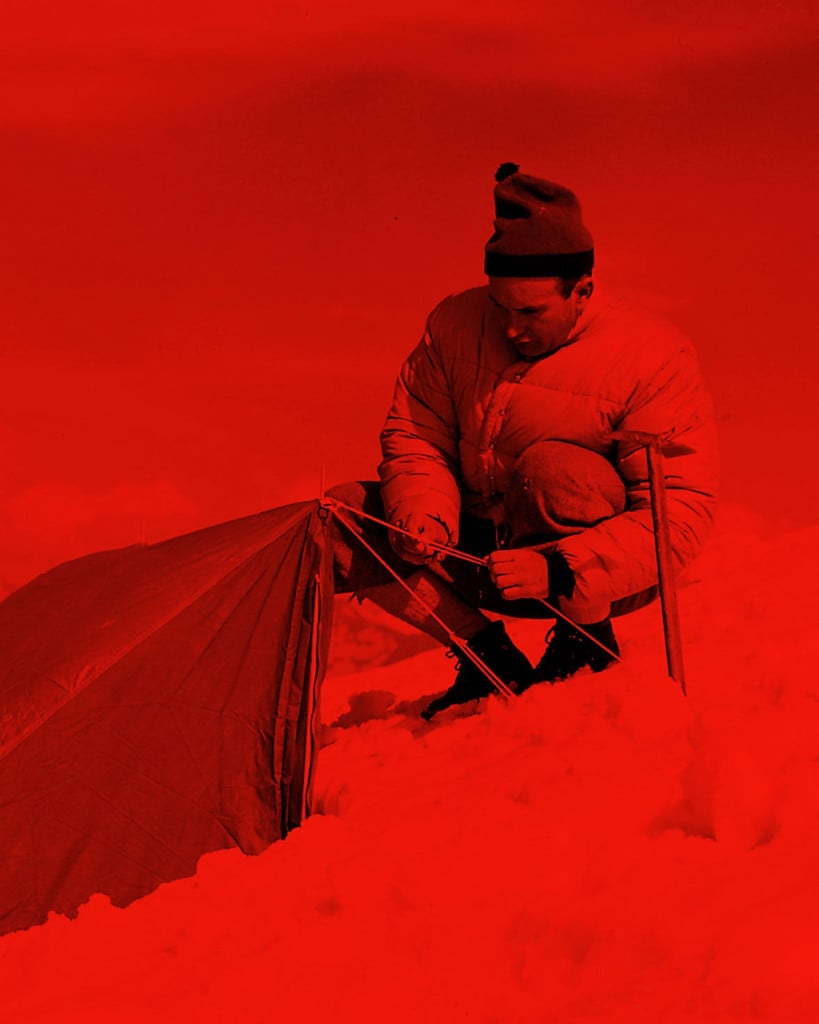
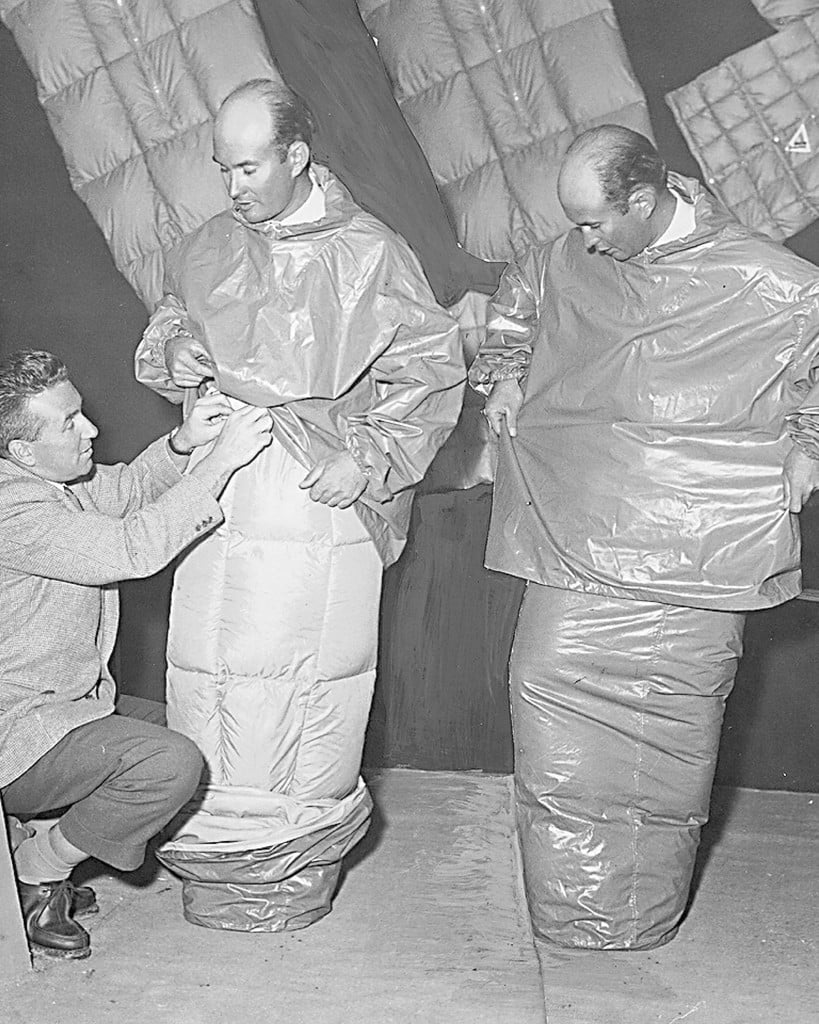
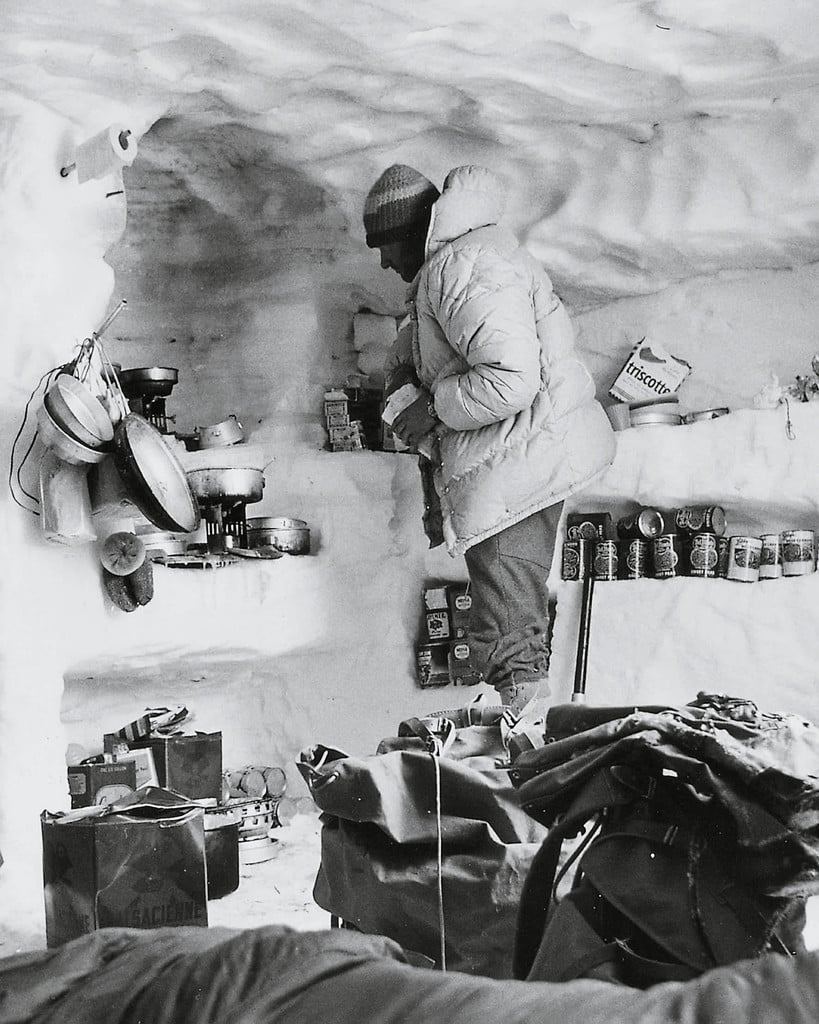
The archival photographs bring back to the center a phase in which technical clothing was not yet separate from the idea of exploration. Expeditions were true endurance tests and the garments had to meet extreme conditions.
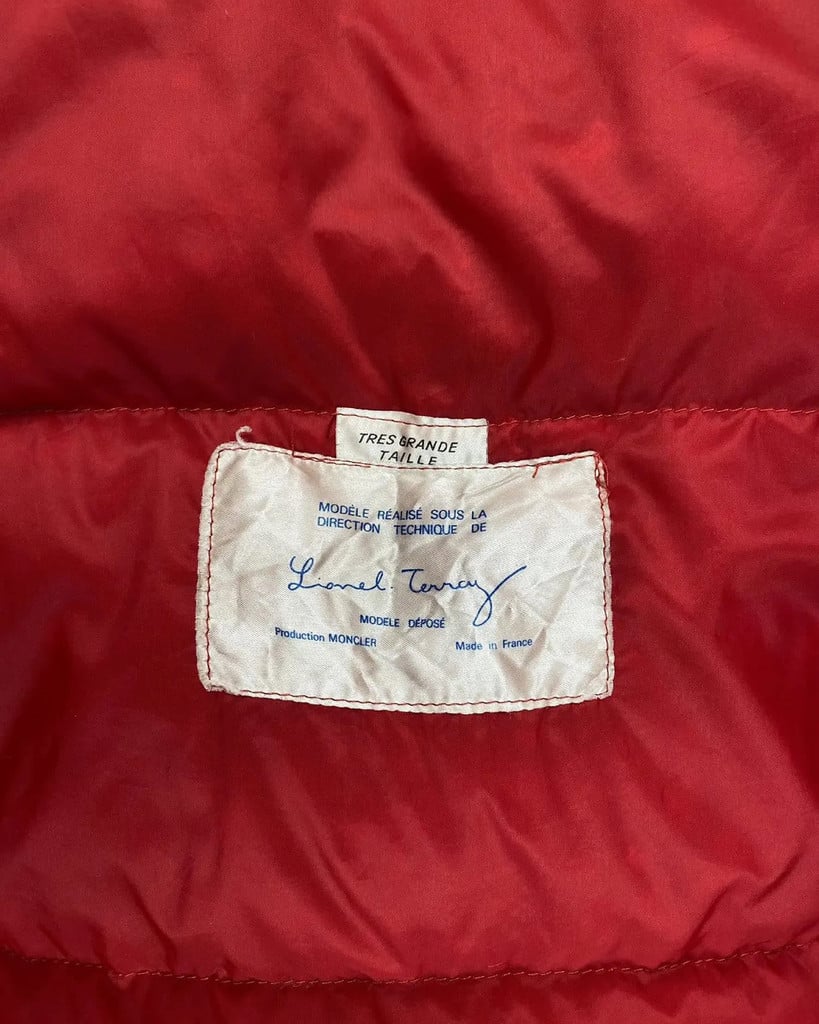
It is also in this context that the story of Moncler and its first collaborators from the world of mountaineering fits. Among them is Lionel Terray, a French mountaineer who in 1954 recognized the potential of Moncler’s first down jackets for high altitude and worked with the brand to develop a range intended for the most demanding ascents. The same year saw the Karakorum, created for the Italian expedition that would lead Achille Compagnoni and Lino Lacedelli to the first conquest of K2. Seventy-two years later, that same story returns in a new form.
The 2026 Karakorum doesn’t try to imitate the past. Rather, it preserves its memory, turning it into a contemporary garment: the structure is lightened and reinterpreted, but the original idea remains of a garment designed to accompany those who venture beyond known territory.
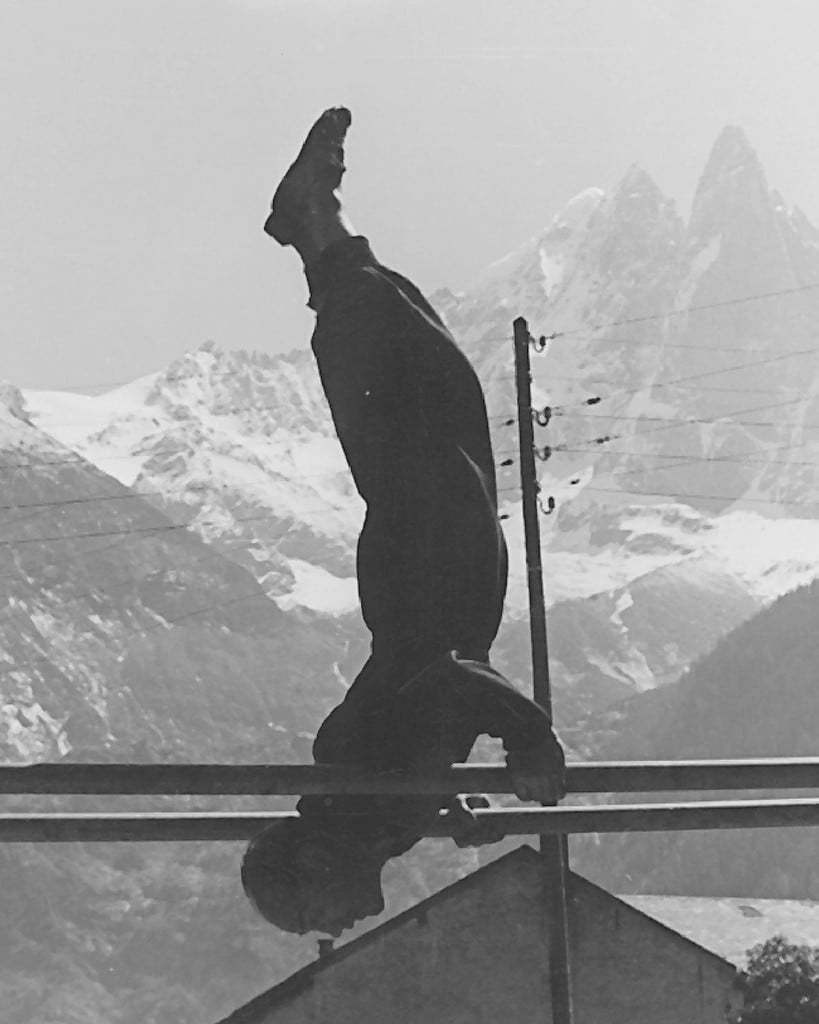
One of the most interesting aspects of The Alpine Diary is that adventure is not told as an individual feat. In the pages devoted to the mountain, an almost opposite idea to that of the solitary explorer returns: no one ever really climbs alone. A helping hand, a word spoken at the right moment, the sharing of a direction. The mountain thus becomes a place where the physical dimension of the ascent is intertwined with the human one. The path to the summit is also made of trust and collaboration.
It is a perspective that lets us read the collection beyond its aesthetic value. The garments are not just objects coming from an archive: they are traces of collective experiences and of a culture built around the need to be prepared, to adapt and to keep going.
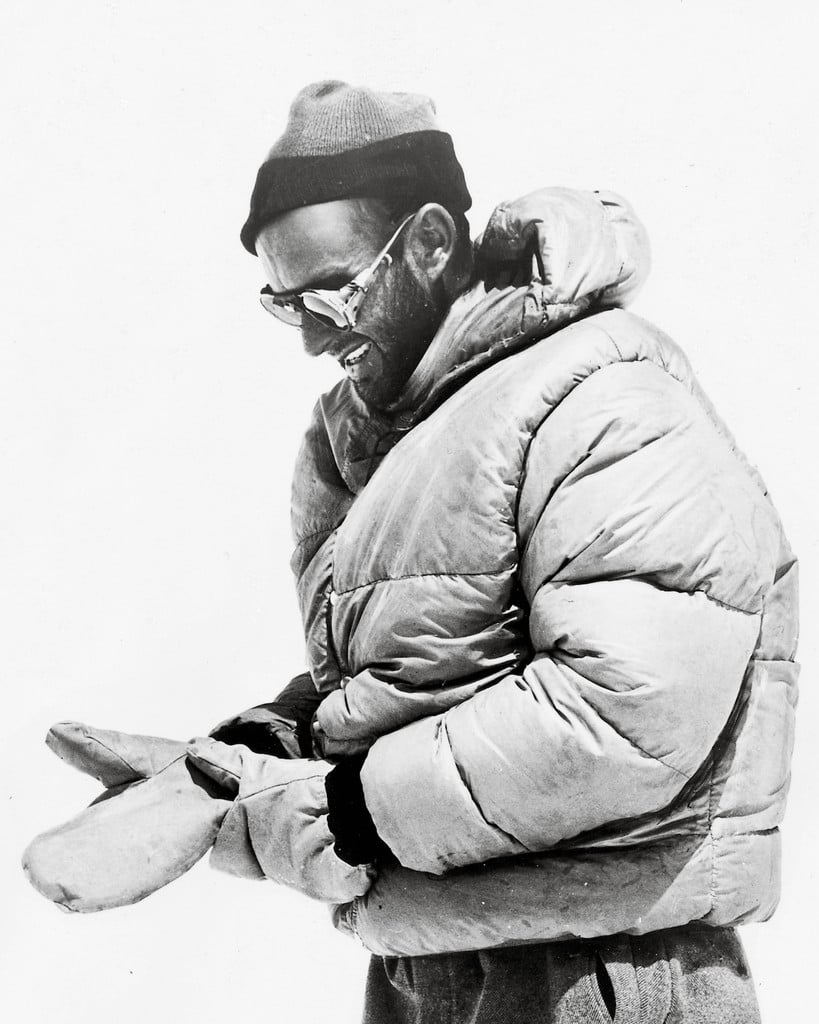
The Verone, born in the 1980s, is perhaps the clearest example. Conceived as a mountain down jacket, it was later adopted by Milan’s Paninari and turned into a sign of urban belonging. The garment changes setting, but keeps its relationship with the idea of protection and movement. In the new chapter of Re/Icons, this transformation is maintained. The Verone can be folded, carried and worn in different ways, with details that still recall its outdoor origins. The same features that once met the needs of an expedition now become part of a metropolitan everyday life.
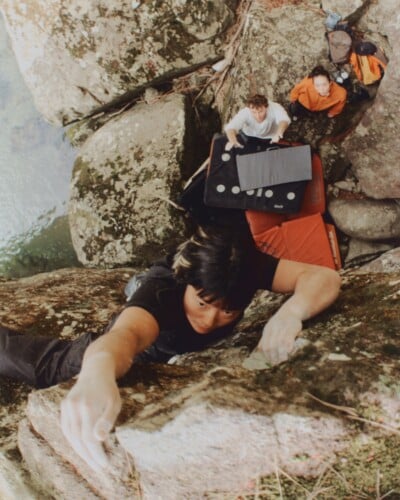
The “climb” can also be the everyday, metaphorical one, made of commutes, changes and new directions. The diary describes it as a will to keep moving forward, regardless of the landscape one finds oneself in.
Karakorum, Verone, Himalaya and Tibb belong to different moments in Moncler’s history, but within Re/Icons they are brought together as chapters of the same adventure. The Himalaya, introduced in 2009 and inspired by the legacy of the expeditions of the 1950s, brings the codes of exploration clothing back into the present. Its story is also tied to the first ascent of Makalu, made in 1955 by Lionel Terray and Jean Couzy, equipped with Moncler jackets. The Tibb, instead, carries yet another idea: that of adaptability. The vest can be worn over or under other layers and its reversible design responds precisely to the need to adapt to changing conditions. Four garments, then, but above all four ways of understanding movement: facing, adapting, continuing, transforming.
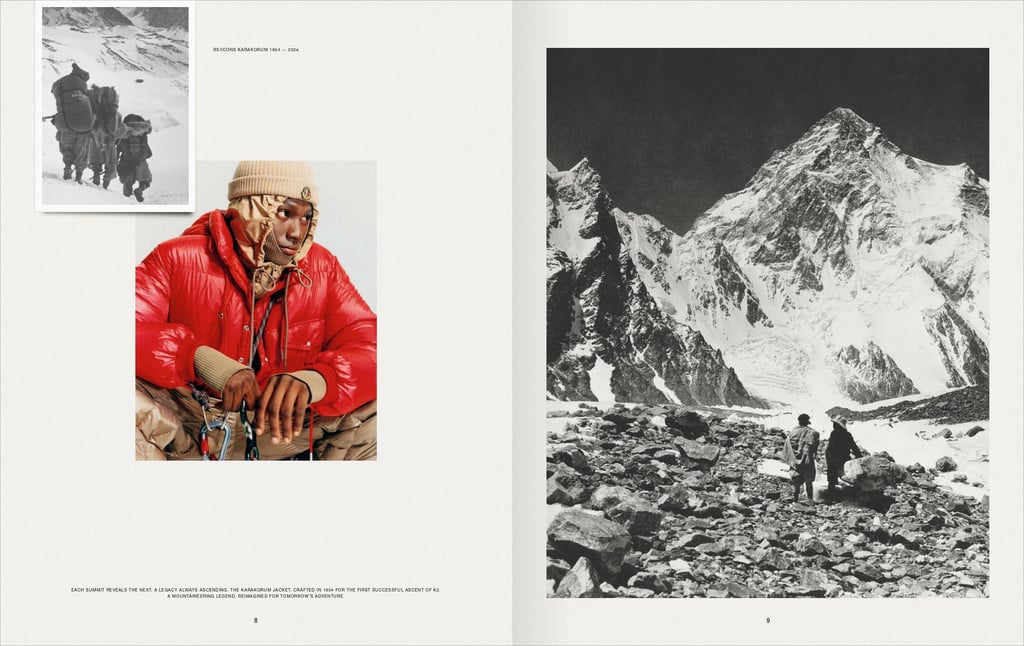
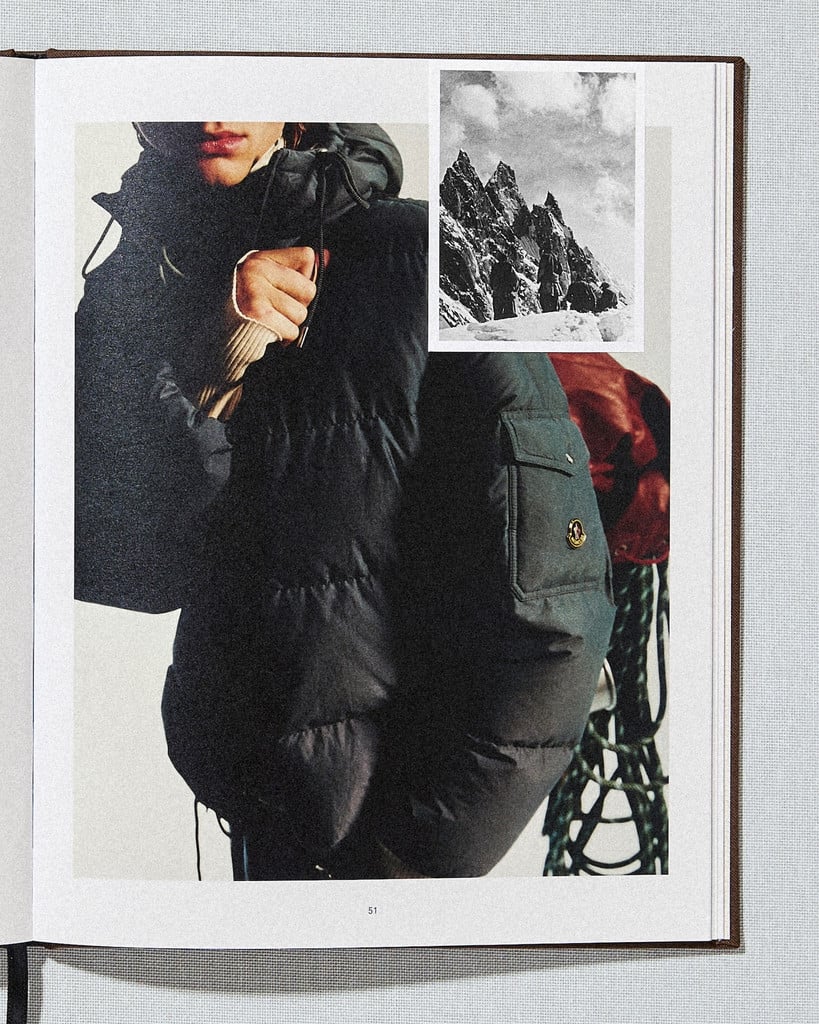
What makes The Alpine Diary particularly significant is the way the past is treated. Historical black-and-white photographs of the expeditions are placed alongside contemporary images of the collection. The result is not a simple nostalgic celebration: it is an archive set in motion again.
Some details of the new garments also work as small fragments of this memory. The photograph of K2 taken by Vittorio Sella in June 1909, for example, enters the collection by becoming a label, while some metal logos recall old alpine pins and badges. Sella had photographed a peak that at the time had not yet been reached, turning observation into a testimony of human ambition toward what had not yet been conquered.
The Alpine Diary doesn’t only tell what Moncler has been, but above all a tension toward what comes next. Its expedition-diary structure suggests that every journey leaves a trace behind, but also a new direction. The pages devoted to the four Re/Icons thus become so many fragments of a broader story, in which clothing is inseparable from the desire to explore.
From the expeditions on K2 and Makalu to the streets of Milan, the mountain continues to be present not necessarily as a physical place, but as a mindset: getting ready, setting out, facing uncertainty, finding one’s own rhythm and continuing to climb.