Two days ago OpenAI launched its first campaign for ChatGPT.
The campaign unfolds in three mini-films that show how the Artificial Intelligence tool, used by over 700 million people every week, can support everyday situations.
The first short film, titled Road Trip with ChatGPT, shows how to use it to plan a trip. The second, Pull-Up with ChatGPT, demonstrates how to create workout plans. Finally, the third, Dish with ChatGPT, explores how to design a menu for a special dinner.
So far, nothing too surprising. All of us, at least once, have “fallen into temptation” and asked ChatGPT what to visit in a foreign city or what to cook for dinner by telling it what we had in the fridge.
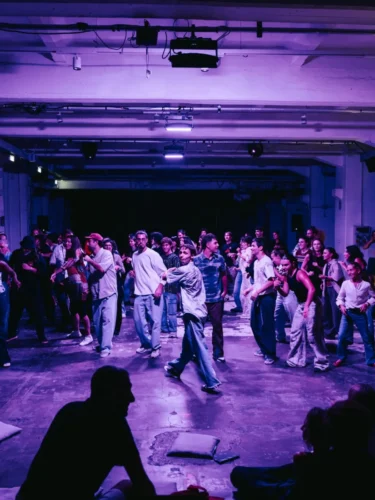
The most striking aspect of the campaign is not what it tells, but how it tells it. The three mini films, directed by Miles Jay through the agency Smuggler and produced with the support of Isle of Any, were entirely shot on 35mm film. A choice that surely raises eyebrows.
The company that just hours ago launched Sora 2, the new AI-powered video creation engine that many have already associated with the word “revolution,” chose an analog medium for its first campaign for ChatGPT. I don’t want to overstate it, but it’s practically as if Apple had presented the new iPhone 17 with a campaign shot using a Samsung.
The spontaneous question is “Why?” Why would the leading company in the field of Artificial Intelligence go to such lengths to create a campaign that completely distances itself from the AI aesthetic we may have grown used to?
And also, why disappoint the expectations of millions of consumers who, under the YouTube videos, hopefully commented that they thought they were made with Sora 2?
Perhaps, like many of us, someone at OpenAI’s top also knows that AI-generated videos might work well for Instagram or TikTok, but when it comes to good advertising, it’s about empathy and emotions — and nothing will ever beat the texture of film and Someone Somewhere (In Summertime) by Simple Minds playing in the background.