Behind the colorful stripes and elegant irony of his brand, Paul Smith has always been much more than a fashion designer. His career, spanning over fifty years of British visual culture, is also the story of a man who has used fashion as a meeting point between graphics, music, art, and everyday life.
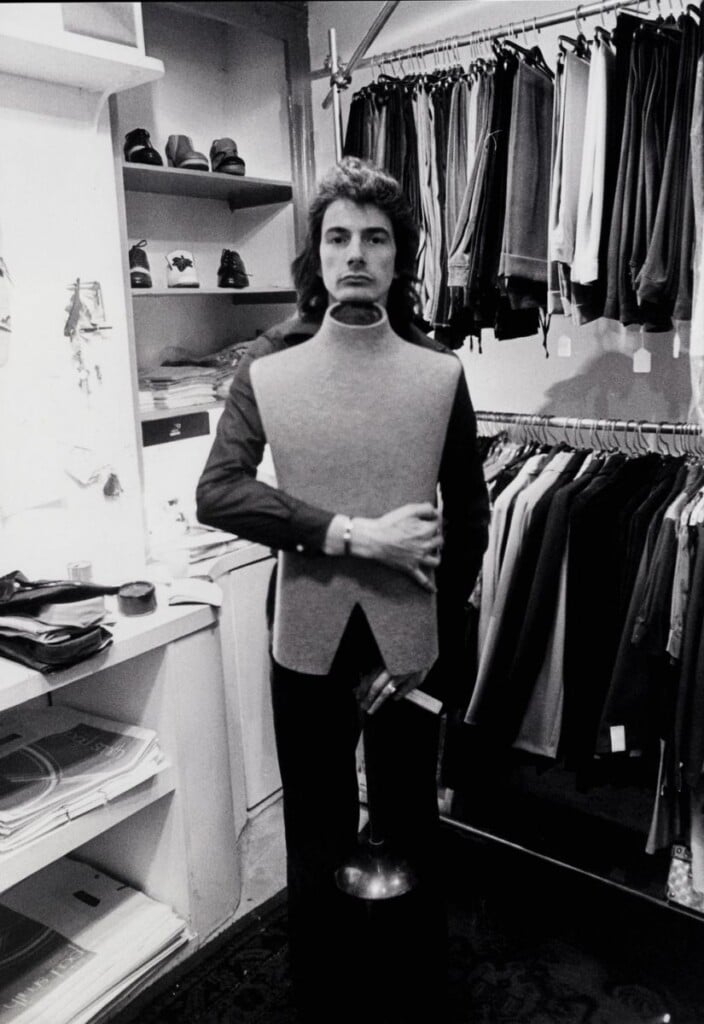
When he opened his first store in Nottingham in 1970, Paul wasn’t just selling clothes. His space was a small laboratory of ideas: an ante litteram concept store where pieces by Kenzo and Margaret Howell coexisted with records, prints, and flea-market finds. At a time when minimalism dominated British fashion, Smith combined color and wit with the precision of a graphic designer.
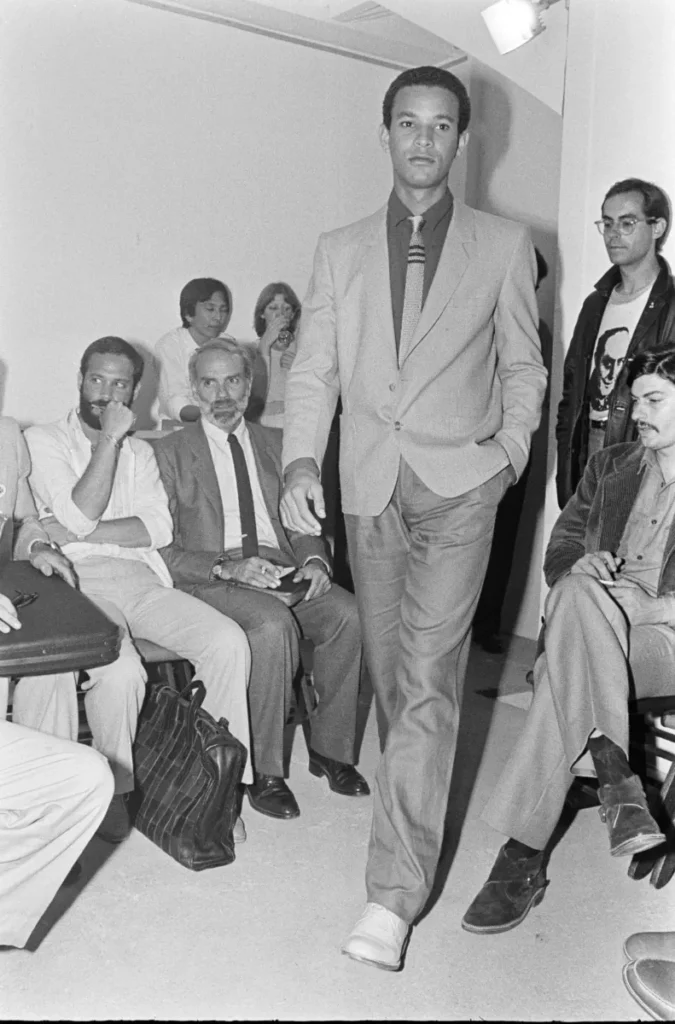
His vision was born right there, in the dialogue between surfaces, images, and materials. Before becoming a fashion icon, Paul Smith was a young man fascinated by the visual power of advertising graphics, rock posters, and album covers. This attention to visual detail became the key to his stylistic language: a shirt was no longer just a garment but a printed canvas, a small pop manifesto.
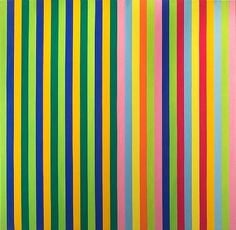
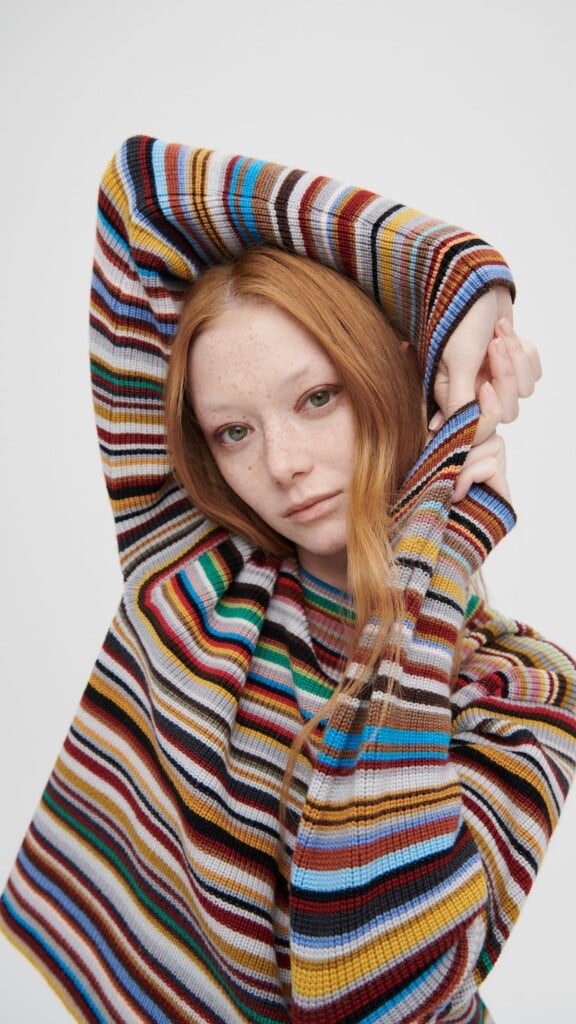
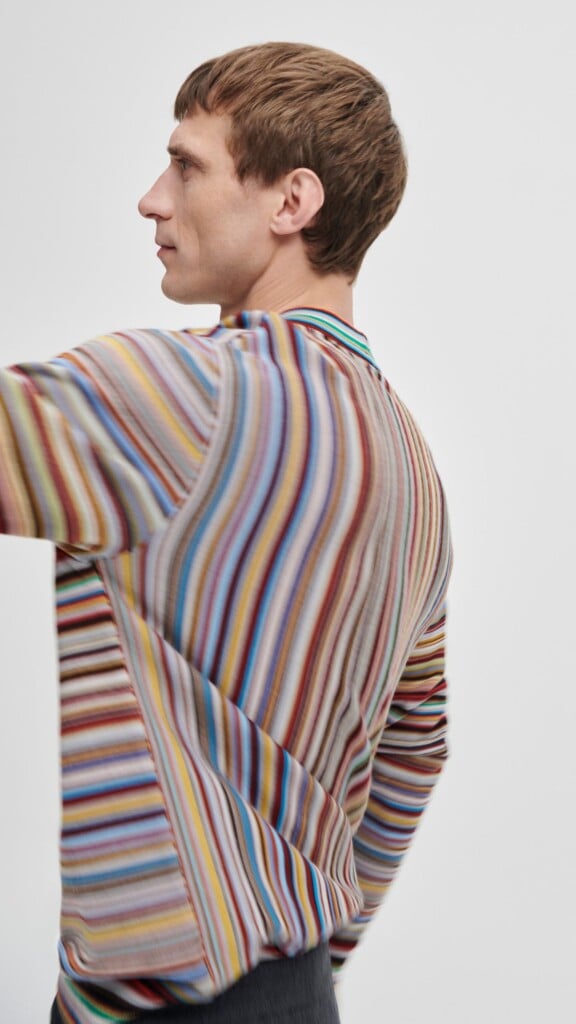
In the 1980s and 1990s, Smith was among the first to experiment with photographic printing on fabrics, creating shirts featuring seed packets, apples, or plates of spaghetti. It was a direct, ironic, and profoundly British way to talk about everyday culture — as if the graphics of a package or poster could become a sartorial gesture. At the same time, his obsession with composition and color led him to reinvent even the most traditional codes, like tweed or stripes: in 1997, his “Signature Stripes” were born, now an integral part of his visual language — a pattern living halfway between abstract painting and road signage.
Paul Smith’s visual culture extends far beyond fashion. He is an tireless collector of images, objects, and graphic curiosities: his Covent Garden studio is a sort of contemporary archive where ideas arise from spontaneous juxtapositions — a ticket found on the street, a vintage postcard, a concert poster. Everything that communicates visually can potentially become part of his world.

Perhaps it’s precisely this ability to move freely between different worlds that has allowed him to collaborate with seemingly distant realities. From his historic partnerships with the Rolling Stones and David Bowie to more recent ones with Oakley and Ahluwalia, Smith continues to demonstrate how fashion can be a universal form of visual communication. The new collaboration “Paul Smith loves Barbour” is another example: a meeting between two British icons in a collection inspired by the countryside. Here, the classic Barbour wax jacket meets the lively, colorful imagination of Paul Smith, becoming a symbol of balance between heritage and modernity.
At the same time, the Paul Smith Foundation continues to invest in the future of design. Through its Fashion Residency at Studio Smithfield in East London, the program supports emerging creatives in building sustainable business models. The 2025/26 cohort includes Ukrainian designer Masha Popova, Indian-born Harri, Swedish designer Petra Fagerström, Chinese-American Joyce Bao, Brazilian Renata Brenha, and menswear designer Eden Tan. This year, the foundation has also partnered with the Council of Fashion Designers of America (CFDA) to welcome, for the first time, an American designer to the program.
The spirit of curiosity and dialogue that has always driven Paul Smith continues to extend far beyond fashion. At the Japan Mobility Show 2025, he will unveil the latest chapter of his collaboration with MINI, a project that combines the automotive innovation of the BMW Group with the ironic and optimistic aesthetic of the British designer. The premiere will take place during the BMW Group Keynote on October 29, 2025 (9:55 a.m. JST) at the BMW Group stand in the West Exhibition Hall, confirming once again Paul Smith’s ability to find his language wherever there is room for an idea to be reimagined.