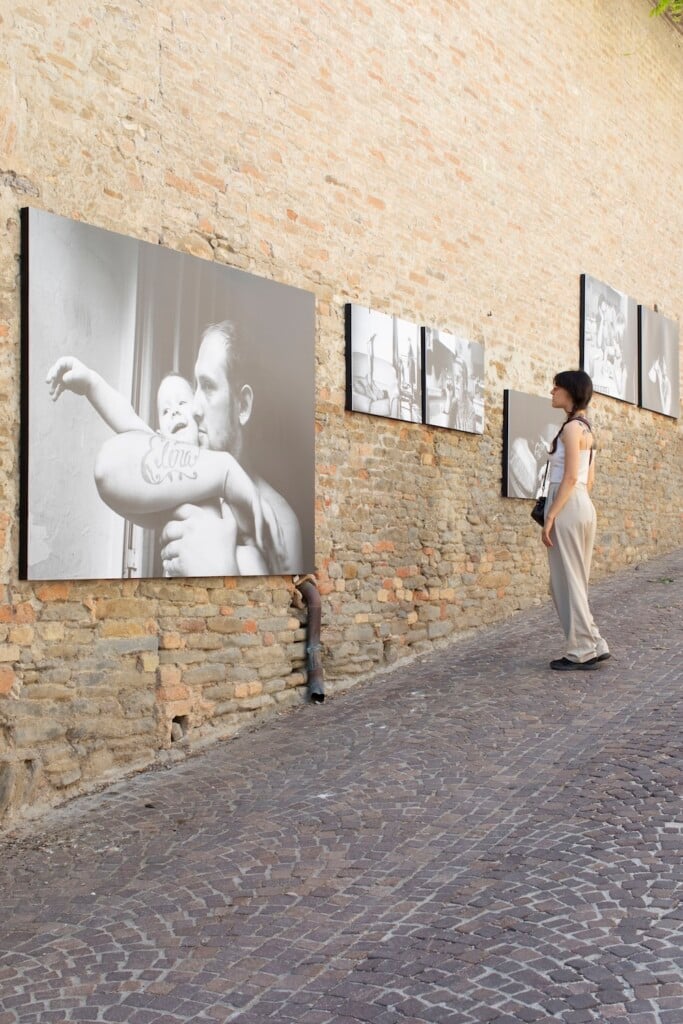
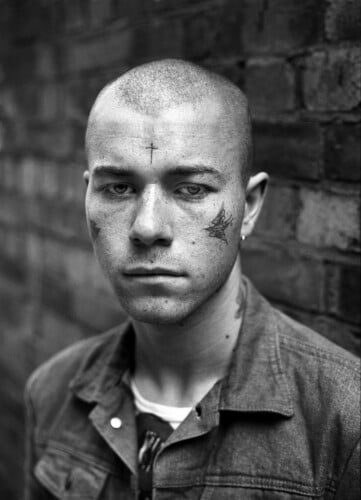
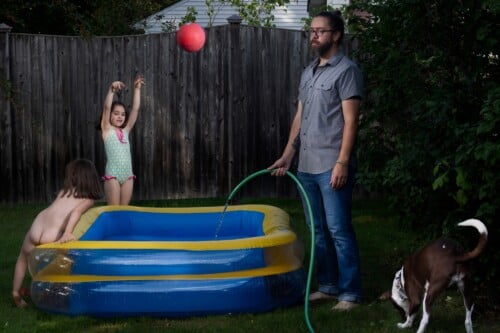
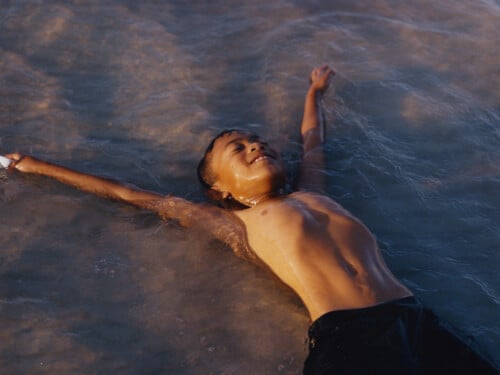
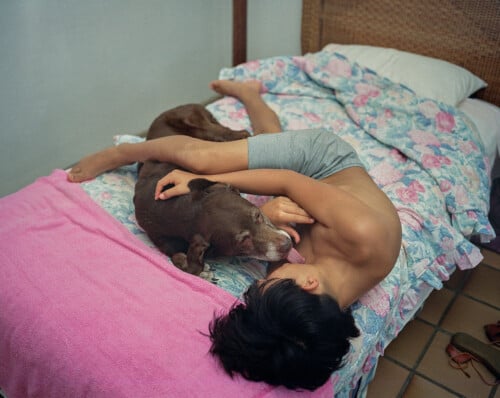
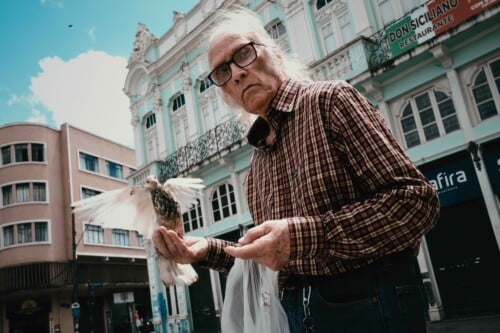
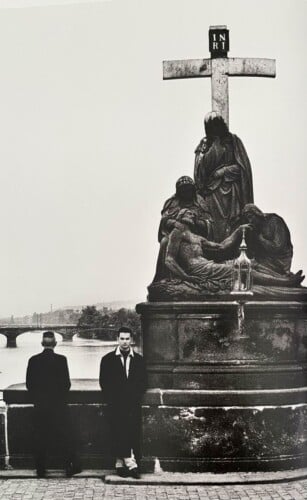
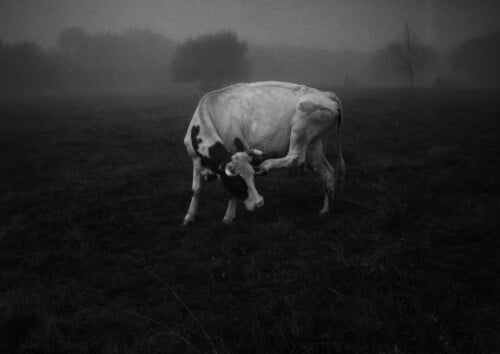
For several years now, there’s been one more reason to visit the village of Neive in the Langhe, in Piedmont, recognized as a UNESCO World Heritage Site: the LanghePhotoFestival. This event represents an extraordinary occasion dedicated to the art of authorial photography, transforming this UNESCO-listed gem into a vibrant stage for art and culture.
Founded with the aim of celebrating and elevating contemporary photographic language, the festival offers exhibition experiences both outdoors and in historic venues, as well as talks and site-specific projects. The added value? The dialogue between local identity and the powerful visual storytelling of the photographic projects set within breathtaking landscapes.
We talked about this young festival, founded in 2023, with its founder and artistic director, Alberto Selvestrel.

The relationship between images and the village is central to LanghePhotoFestival, which has built its strong identity also through its urban fabric. Which project, more than any other, managed to deeply engage with Neive and the Langhe landscape, turning the place into an active narrative device? And how do you work to ensure that the territory never becomes just an aesthetic backdrop?
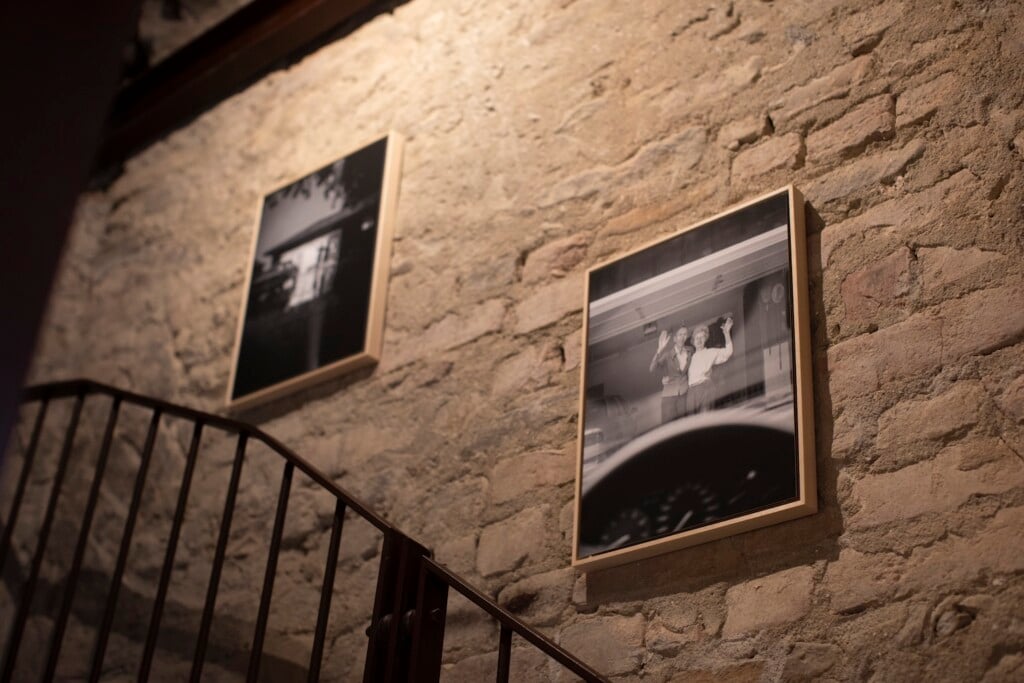
From our point of view, the project that best dialogued with the space was Deanna Dikeman’s Leaving and Waving, which we installed inside Neive’s medieval tower. The exhibition developed vertically along the inner walls of the 20-meter-high tower. Visitors experienced the photographs while climbing toward the top of the building, which opens onto a panoramic view of the surrounding hills. The spiral ascent suggested ideas of temporality and elevation, and the 23 images selected from the project summed up, year after year, step after step, the last 27 years of the photographer’s parents’ lives. Walking up that staircase was a deeply moving experience for many visitors.

Some distributed festivals, in Italy and beyond, have shown how a village can become a narrative journey, and Neive’s intimate scale certainly facilitates this experience. But more specifically, how do you design the sequence of exhibitions so that visitors experience the festival as coherent and integrated, rather than as a collection of independent shows? How do you define the match between project and location?
We often look for a project that is enhanced by the space, as in the case of the tower I mentioned earlier. We tailor each exhibition to the space, since we personally handle the production of every displayed piece. We try to create a symbiosis between space and installation in order to offer visitors an experience that cannot be replicated elsewhere. The route between exhibitions changes year by year, based on the rhythm we want to give the show. This allows us to play with the themes addressed and balance them as effectively as possible.
Outdoor installations raise technical issues that only a few festivals consistently face—one of the most notable being Image Vevey, with its long experience of open-air exhibitions. The challenges involve engaging with places rich in prior meanings, as well as managing budgets that sometimes require extra effort. Do you collaborate with artists to adapt projects to natural light, spaces, and the experience of viewing them within the village?
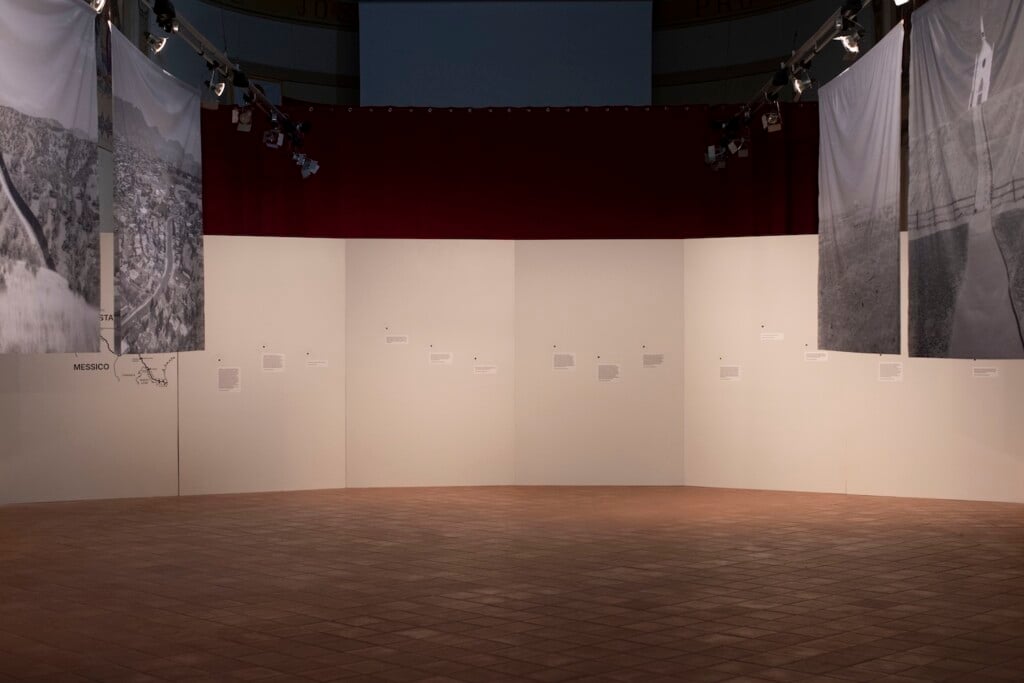
We dedicate a long exchange with each artist to fully immerse ourselves in their story and successfully convey it to festival visitors. Over the years, our experience has allowed us to understand the strengths and critical aspects of the village’s various alleys: lighting, exposure to weather conditions, and audience impact. Based on this, we suggest to each artist the space we believe best suits their project, and every image is placed where it can best connect with the historic location hosting it.
In several festivals set in small contexts, the local community can become an extension of the curatorial process and play a decisive role in activating the narrative of the territory itself. How do Neive’s residents participate in or influence the construction of the festival? Are there any significant episodes that have enriched the interpretation of a project?
Along the festival’s exhibition path—both for large-format outdoor displays and for exhibitions inside historic buildings—the images take over the village spaces, animating them for several months. Our priority is that Neive’s residents experience the festival positively. We’re therefore always very happy when we receive positive feedback about the images in the village or when we discover that our event, free for all Neive residents, has been an opportunity to explore parts of the village they had never visited before.
Unlike urban festivals, visitors here arrive by choice, not by chance. Does this peculiarity influence your curatorial decisions and the types of projects you aim to highlight in future editions?
The festival has evolved over the years by refining a very specific idea that we hope to continue communicating in future editions. The goal was not to attract a particular type of audience, but to highlight a certain type of photography, encouraging audiences to reflect on photographic language from different perspectives. We will continue in this direction, striving to best balance the various types of projects on display and to further promote our vision of photography.
In the international landscape, open calls have very different identities: some are theme-based, others completely open. Fully open calls often don’t make it immediately clear to photographers whether their work might be suitable, precisely because the information is often very general, risking making all projects eligible and none truly fitting. What is the main function of your open call: discovering new voices, finding languages that dialogue with the village, or building a generational balance within the program? What aspects really weigh in the selection process, and what do you look for in the submissions you receive?
For us, the open call is undoubtedly an opportunity to discover new authors.
This format breaks down the idea of an established name as a measure of value, since each project is viewed and evaluated without knowing the identity of its creator.
We look for projects where the photographer’s authorial vision clearly emerges and, consequently, we reward research and experimentation.
Some international festivals stand out for their ability to activate long-lasting professional relationships. What concrete experience do artists—not only those selected, but also photographers who choose to visit the festival—have here in terms of exchange, networking, and professional growth that they wouldn’t experience elsewhere?
It’s difficult to answer. Every festival experience is unique and offers different opportunities or insights. We uphold our ethics throughout the entire process, from project selection to relationships with photographers and visitors. The festival provides the opportunity to create broad networks, and it has already happened that photographers exhibited here later resonated within the contemporary scene and were contacted by other institutions. The festival thus becomes a platform from which each photographer can receive different opportunities.
In an international landscape that is rich but often highly standardized, the festivals that grow are those with a recognizable voice. What space do you want to occupy in the coming years, and what role will your open call play in consolidating an increasingly distinctive identity? What new developments are you preparing for the next edition?
The commitment to research into photographic language will always guide the future of LanghePhotoFestival. We will continue in this direction, highlighting how photography is a complex language that requires humility and time to be understood.