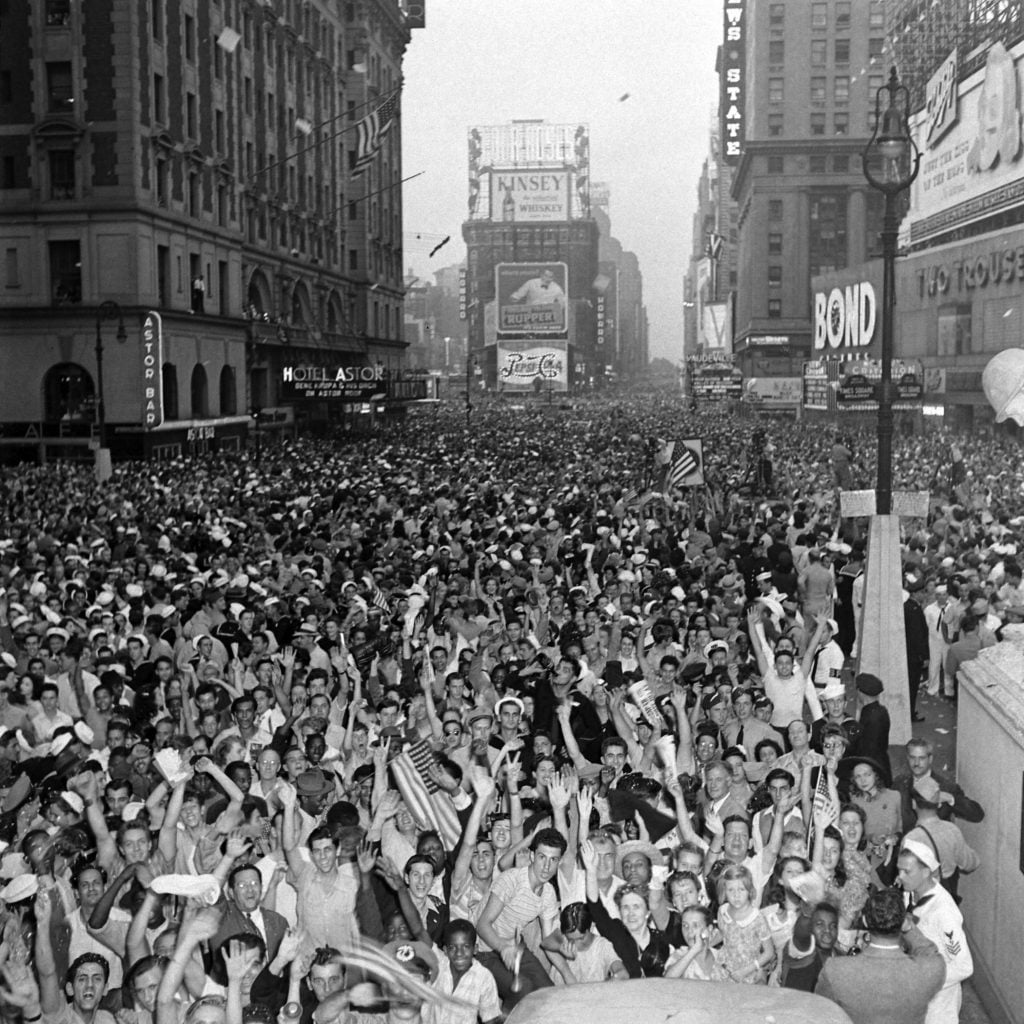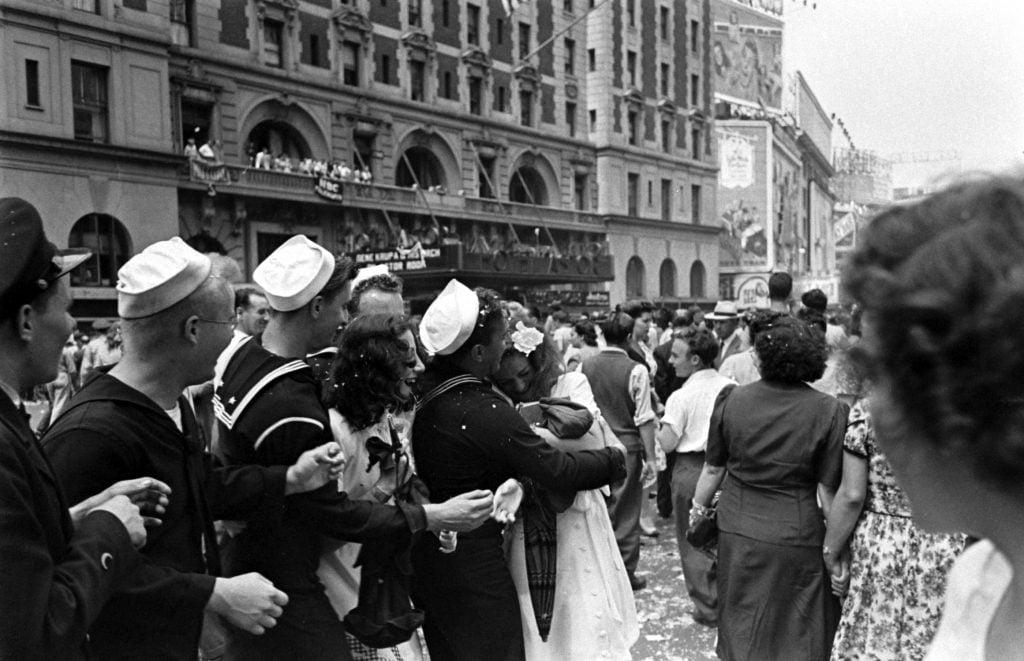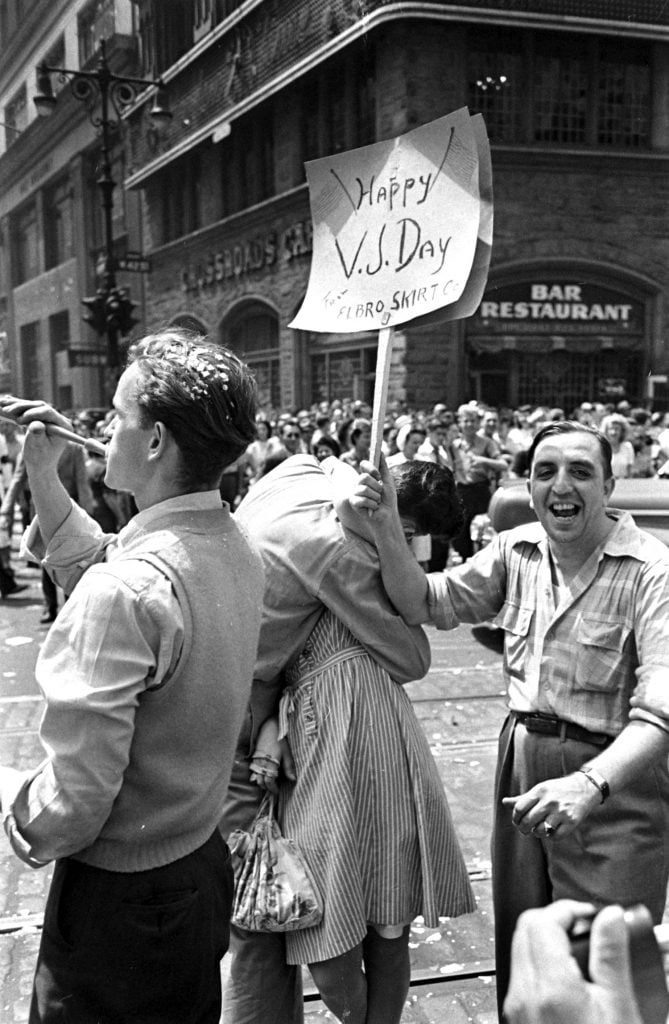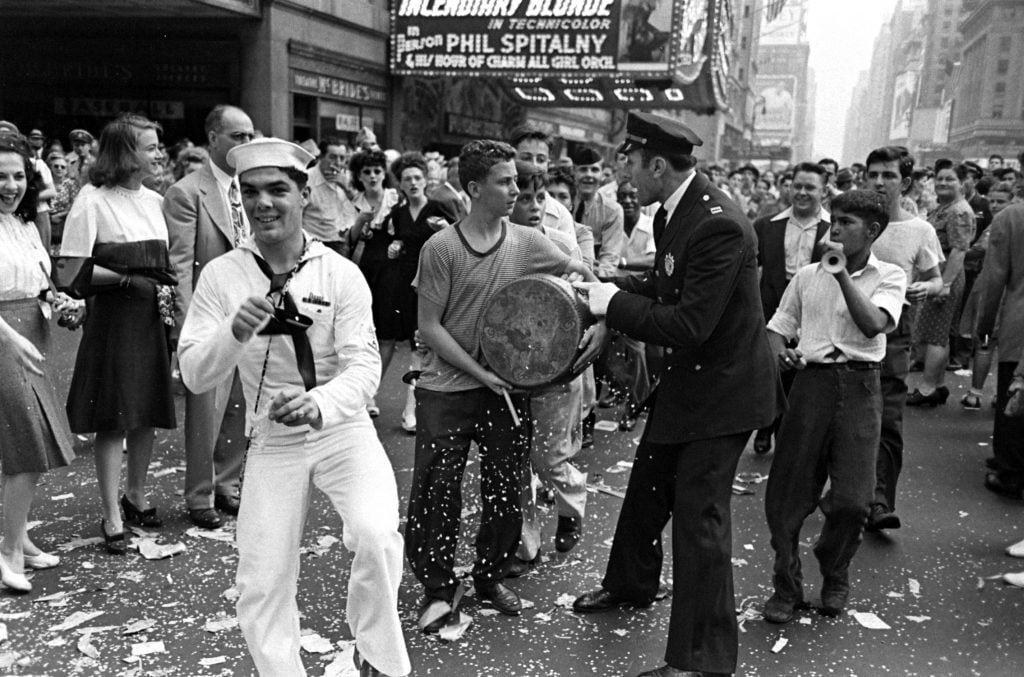
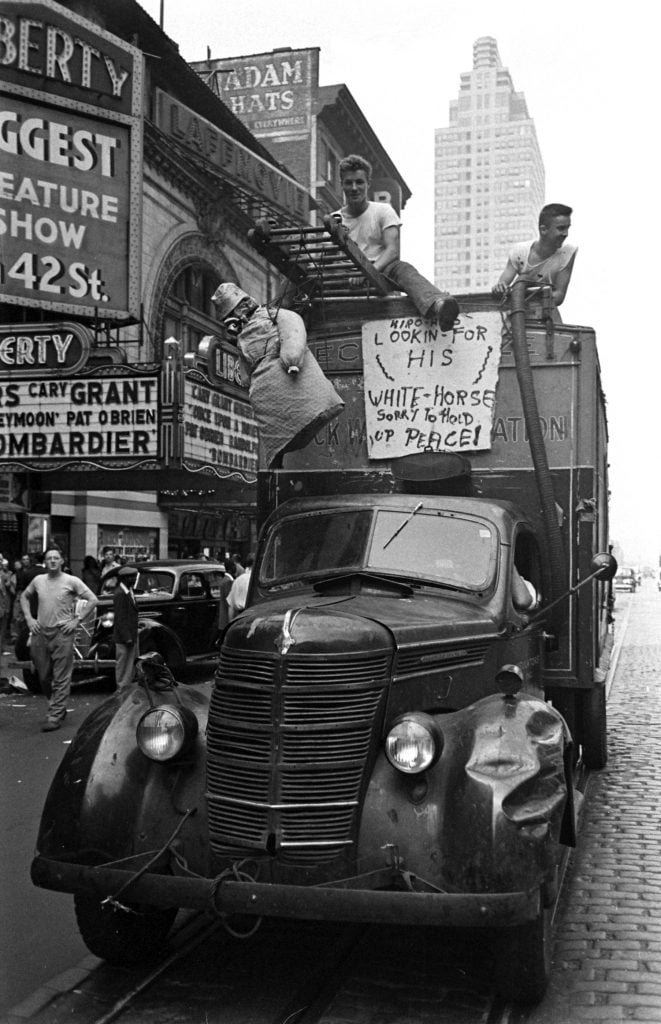
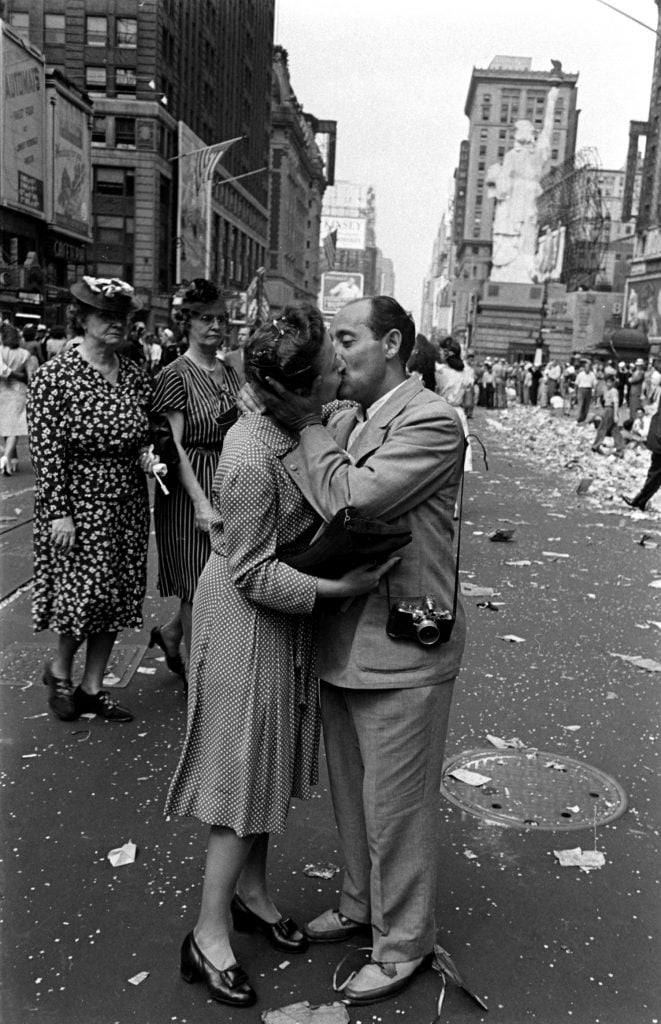
New York, August 14, 1945. After almost six years of war, news reaches the United States that Japan has accepted surrender. The official signing will come on September 2, but in the streets the war already seems over. Thousands of people flood Times Square: soldiers, workers and passersby hug, shout, drink and celebrate together.
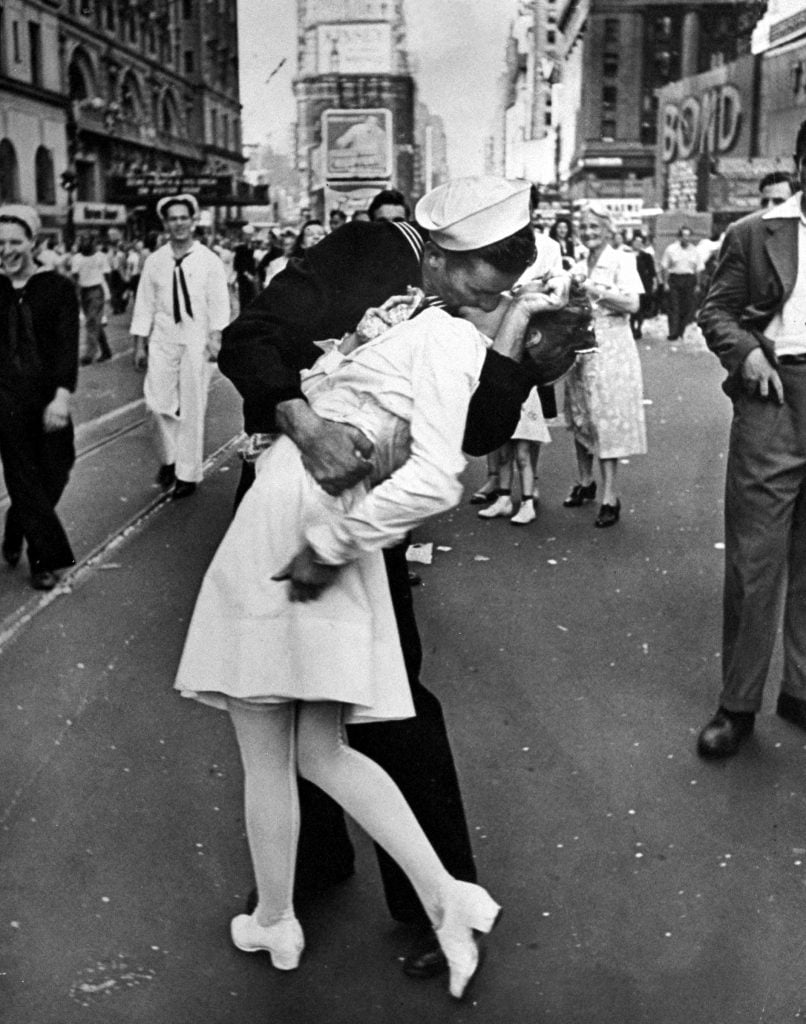
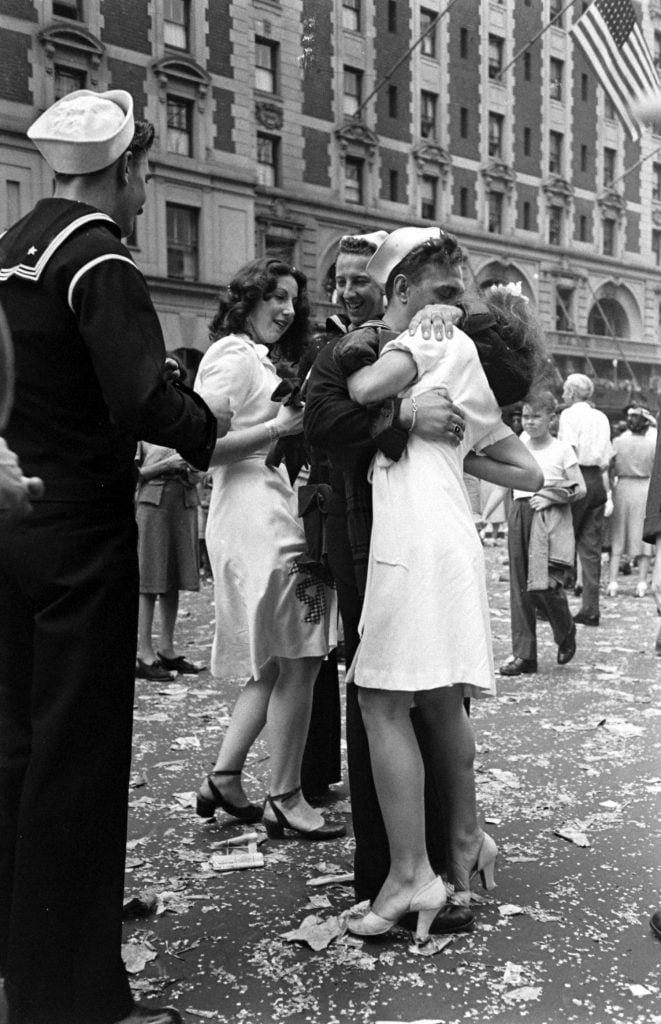
Alfred Eisenstaedt is there for LIFE, with a Leica, photographing what happens around him. At one point he sees a sailor crossing the crowd and kissing several women. Then he comes across a young woman dressed in white. Eisenstaedt shoots. That photograph would become one of the most recognizable images of the end of World War II. And it’s easy to see why. The two bodies occupy the center of the frame and form a sharp diagonal. The sailor, dressed in dark, bends over the woman, who is entirely in white, while Times Square keeps moving around them. The contrast between the two figures immediately separates them from the crowd and makes the gesture readable in a fraction of a second.
Eisenstaedt himself said he was drawn precisely by the contrast between the sailor’s dark uniform and the woman’s white. We can hardly see their faces. And perhaps that is also why the photograph works so well. The two people can stop being specific individuals and become symbols: a sailor, a nurse, the end of the war and a kiss. A story that was almost ready-made. Except she wasn’t a nurse. The Times Square kiss that we decided was romantic
The woman generally identified in the photograph was Greta Zimmer Friedman, who was 21 and worked as a dental assistant. She was not the girlfriend of the man kissing her. The two were not a couple and did not know each other. Years later Friedman recounted that the sailor had suddenly grabbed her. For her, it had not been a romantic moment.
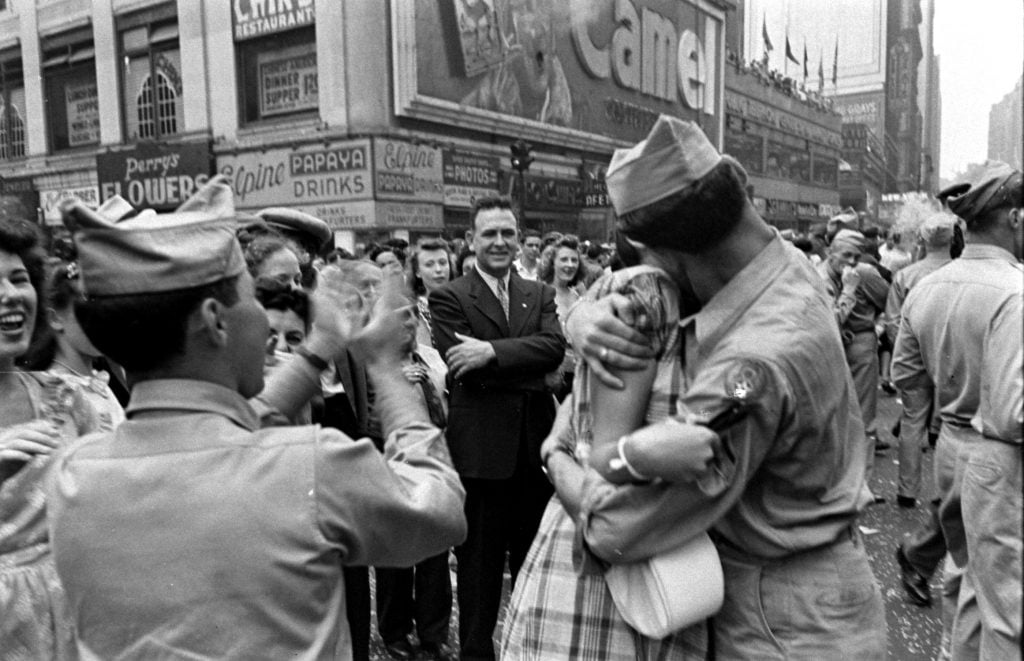
And this is where the photograph starts to behave differently. What for decades looked like an almost cinematic embrace begins to show its physical force as well. The woman’s body is bent backward. The sailor holds her almost completely, gripping her with both arms. She, on the other hand, does not return the gesture in the same way.
The scene hasn’t changed. What has changed is the information we see it with. For decades everything in the image seemed to push us toward the same interpretation: Times Square in celebration, the war just ended, a man and a woman and a kiss exactly at the center of the photograph. The composition works so well that this story seems almost inevitable. But a photograph can show us exactly what happened without necessarily telling us what that moment meant to the people inside the image. Eisenstaedt doesn’t invent the scene. The sailor really is kissing that woman. The crowd really is celebrating the end of the war. What the photograph cannot tell us is whether she wanted to be kissed.
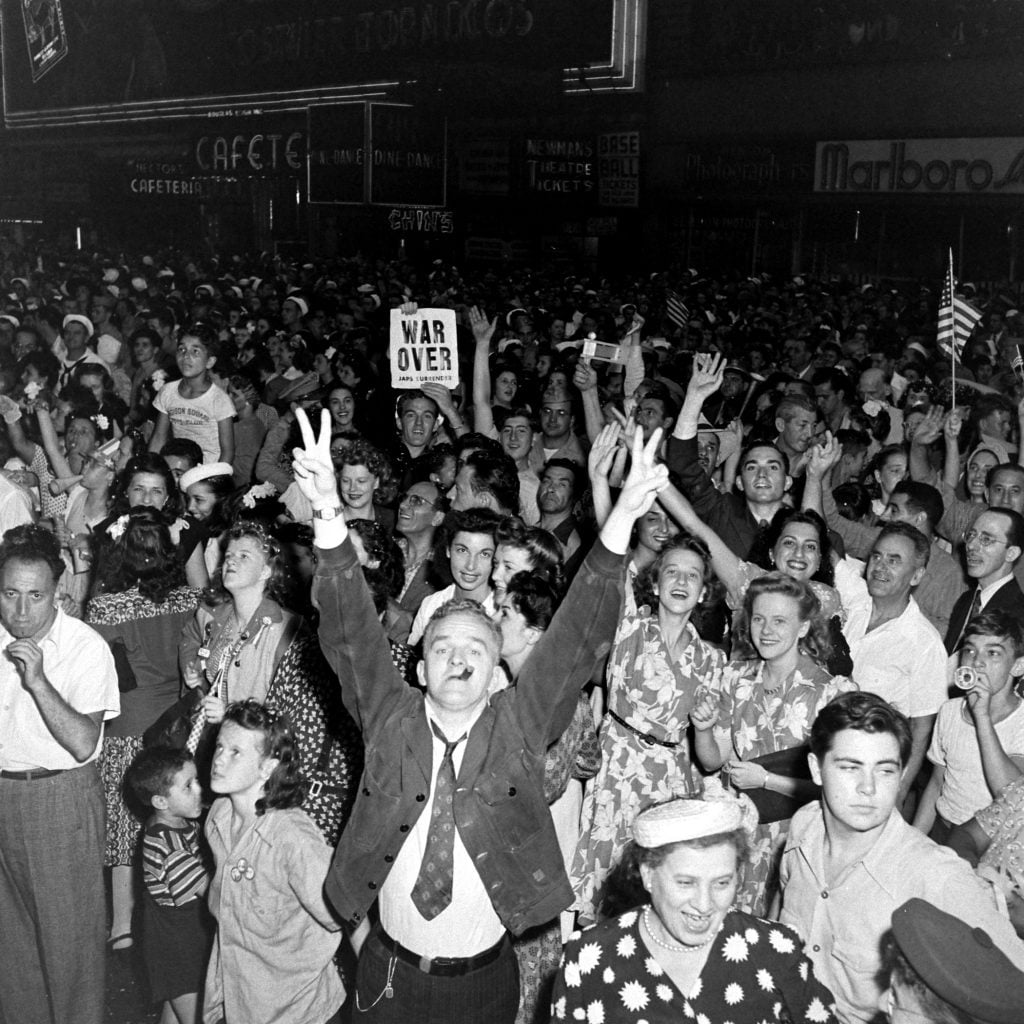
That part remains outside the frame. And perhaps this is exactly what makes V-J Day in Times Square even more interesting today. Not because a new interpretation must erase everything that came before, but because the same photograph manages to contain very different things: the collective euphoria for the end of the war, an extraordinarily effective visual composition and the personal experience of the woman photographed.
It is also a very simple example of how much the meaning of a photograph can be constructed after the shot. Eisenstaedt froze a fraction of a second. LIFE, the public and the following decades turned it into a story made of homecoming, liberation and love. The photograph, meanwhile, has remained exactly the same. It is our reading that has changed. Eighty years later we keep looking at that kiss. Only now we know something more about what was happening outside the frame.
This article was produced in collaboration with @superottomag and written by Gabriel Pisano.