Serena Biagini‘s passion for photography knows no bounds, and not even a pandemic and the lockdown were able to curb her desire to create and tell the world through images.
Born in 1983, Serena Biagini is an Italian fine artist and photographer who now lives and works in Modena. Her journey into the world of photography began very early, at the age of 5, when she received a Polaroid camera as a gift.

Since then she has never stopped shooting, experimenting with different techniques, switching to digital and back to analogue and focusing on different subjects. Her wide-ranging production often includes portraits of women and artistic nudes, but when it comes to changing and questioning everything, Serena Biagini doesn’t hold back.
This is what happened last year during the lockdown, when she turned her attention to the wishes of her followers and transformed them into original and impactful shots. These very photographs will be on show until 25 July at Ph.ocus – About Photography in the “Please, Stay Home” section, and we had a chat with the photographer for the occasion.
Don’t miss our interview with Serena Biagini below and follow her on Instagram not to miss her upcoming work.
How did you get into photography and what is the path that led you to where you are now?
I approached photography in a completely casual and self-taught way.
I always like to say that when I was 5 years old, as a Christmas present, I asked my father for a Polaroid Supercolor 635 Esprit, which attracted me because of the immediacy of the immediately visible result.
Since then I have always had a camera with me to document the “events” that are important to me: school trips, birthdays, holidays and family moments.
It was only in 2004, however, that I began to seriously study the functioning of the camera (initially a Fuji), to experiment and to feel more and more the need to use photography as an expressive tool.
With the advent of digital technology, I abandoned analogue photography, more for convenience and for the possibility of printing only the photographs of greatest interest; this was until 2016 when, by chance, I started shooting with my old Polaroid camera again with a decidedly more mature and conscious approach and, from that moment on, my work has been a combination of digital and instant photography.
The year in which I realized what I wanted to shoot, what subjects I preferred to portray, was 2014 and, between ups and downs, as in every growth process, I continue to evolve and experiment with new techniques and new means of expression.


Young women are often the focus of your photographs. What does femininity mean to you and what aspect of it do you want to portray through your photographs?
Femininity, for me, is being aware of the love you have for yourself and being able to express this love through a part of yourself, sometimes unconsciously. An imperceptible movement in the expression of the face, in the movement of the body, a look, details that strike for their spontaneous beauty.
In my shots I try to tell this story, beyond the role that the model plays, I try to capture the true essence, that nuance of love.
This is why, before and during each work session, I establish a dialogue with the girls and try to put them at their ease as much as possible to bring out that intimate confidence that I then want to immortalize.
Where do you get your inspiration from? Are there any photographers or artists that you follow and/or are a reference point?
The photographer I admire most of all is certainly Paolo Roversi. I love the skilful and creative use he makes of light, both in his current photographs and in his old Polaroids, which I find wonderful. I recently had the pleasure of visiting his personal exhibition “Studio Luce” curated by Chiara Bardelli Nonino at the MAR in Ravenna and I was delighted.

Other photographers that I love very much are Francesca Woodman, Sarah Moon, Man Ray, Luigi Ghirri, Paolo Ventura and I find wonderful atmospheres in the Polaroids that the director Andrej Tarkovskij left us.
In addition to photography, I get a lot of inspiration from cinema and in particular from David Lynch, my favourite director, from painting, sculpture and performance art.
For Paratissima you are exhibiting in the “Please, Stay Home” section. Tell us something about the shots that will be on show.
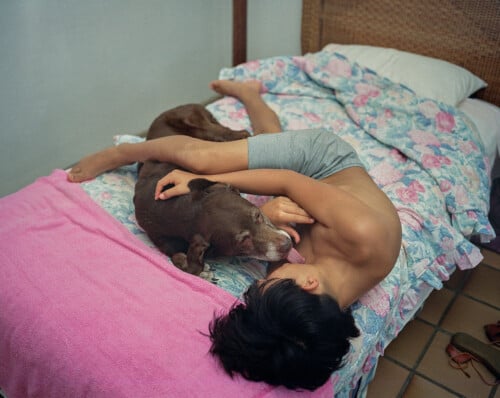
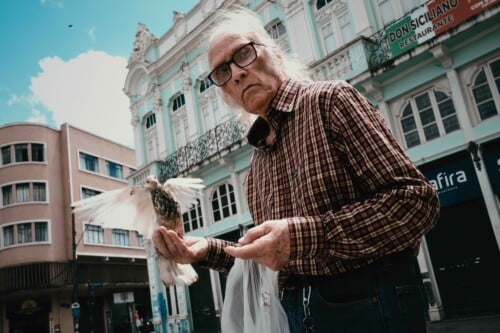
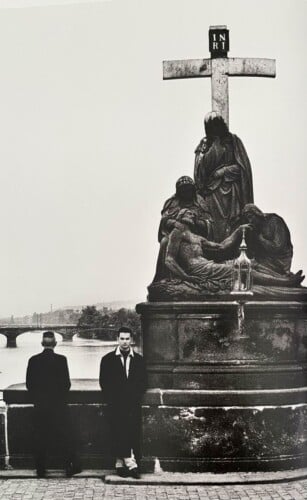
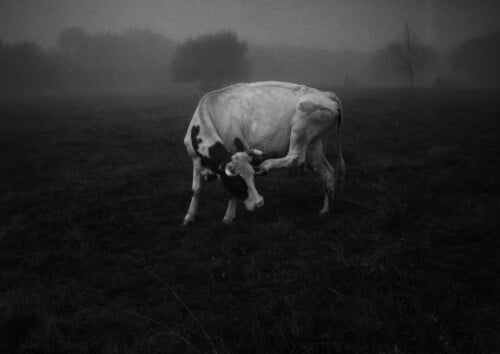
The project I am exhibiting at Paratissima is called “I Wish”.
The idea came about during the lockdown when I felt the need to stay connected to the outside world and think positive.
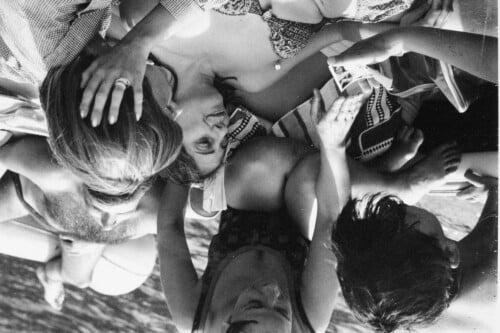
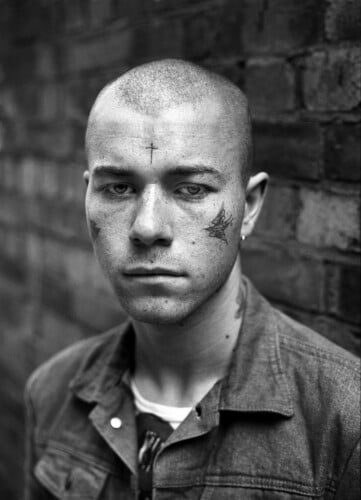
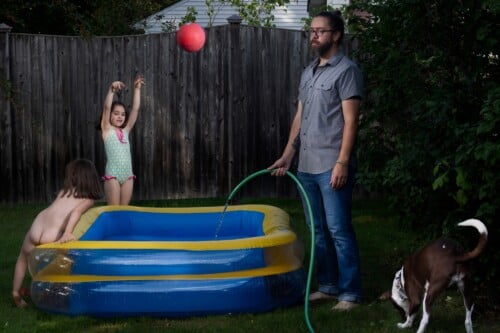
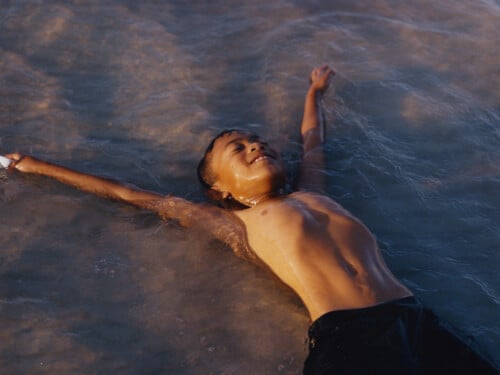
In the first few days of the lockdown, when uncertainty reigned supreme, I proposed a survey on Instagram to my followers asking them what would be the first thing they would like to do once the lockdown was over.
I received lots of responses, which I divided into macro themes until I selected the most representative phrases that had struck me the most.
Through my archive, family photos and ad hoc images, I tried to represent and compose these wishes of others.
The final result, which can be seen at Paratissima, is a series of diptychs made up of the phrase proposed by the users but typed out with an old Olivetti, and the photograph I created to represent it.

I Wish I Wish


Is there a photograph you have taken to which you are most attached? Tell us about it.
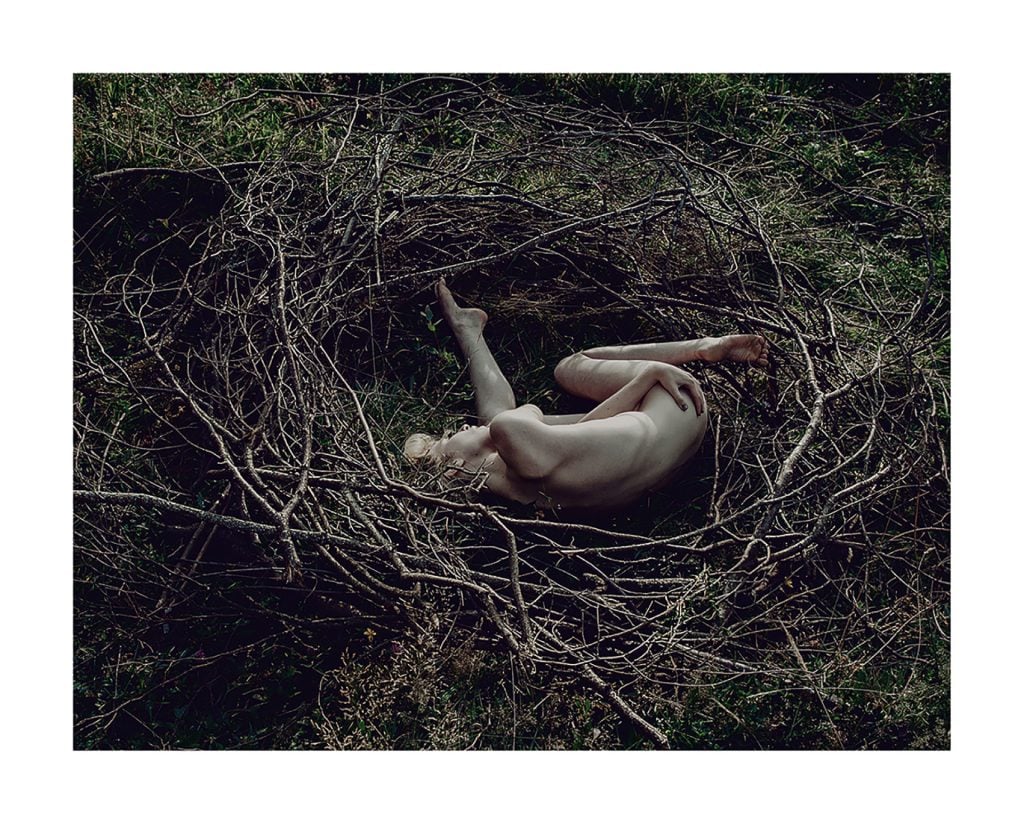
I am particularly attached, not so much to a single photograph, but rather to a series of mine called “The Nest” which depicts a woman, naked and defenseless, moving performatively inside a nest built from dry branches.
I took these images in 2014, but it was only last year, during the lockdown, that I had the opportunity to take the work in hand again, and it immediately became clear to me that the series – in its dramatic dynamic, confined within a precise boundary that is a little bit like a house and a little bit like a prison – was taking on a new, profound meaning that was different from what I had initially thought, even though it had probably always had this meaning, albeit unconsciously. Re-working the series was also a cathartic and reflective moment for me.



I Wish I Wish