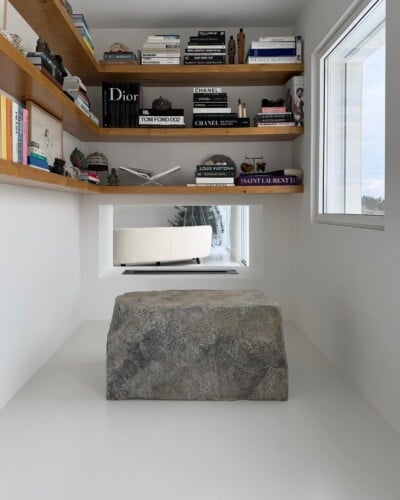
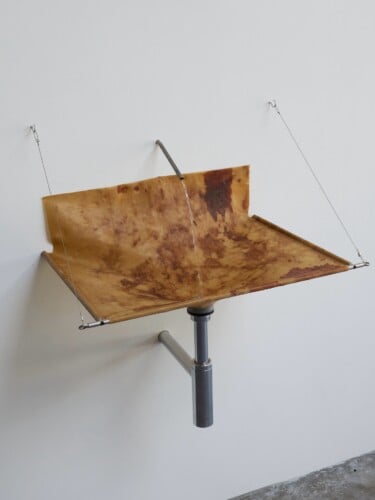
Shinkogeisha is one of those projects that captured us instantly. Based in Kyoto, this design studio founded by Hiroshi Mitachi is a perfect hybrid of craftsmanship and technology, analog and digital, nature and machine. Their creations seem to come from a parallel universe—one where humanity has learned to coexist with the artificial without losing touch with materiality.
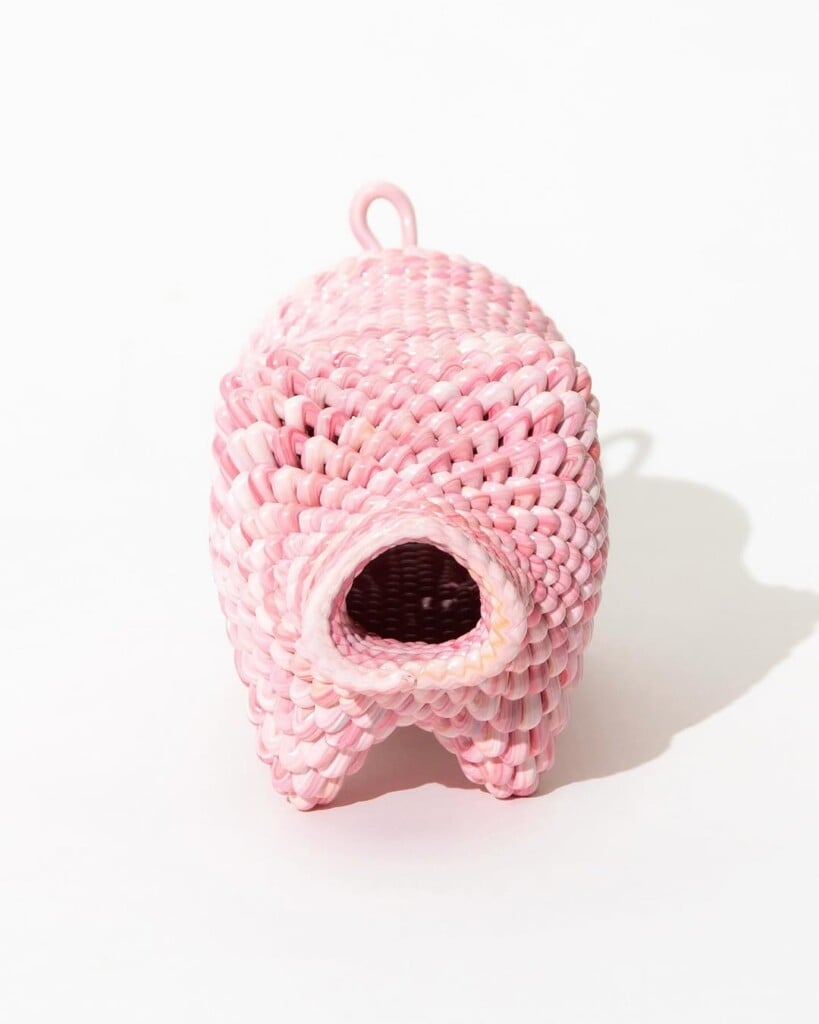
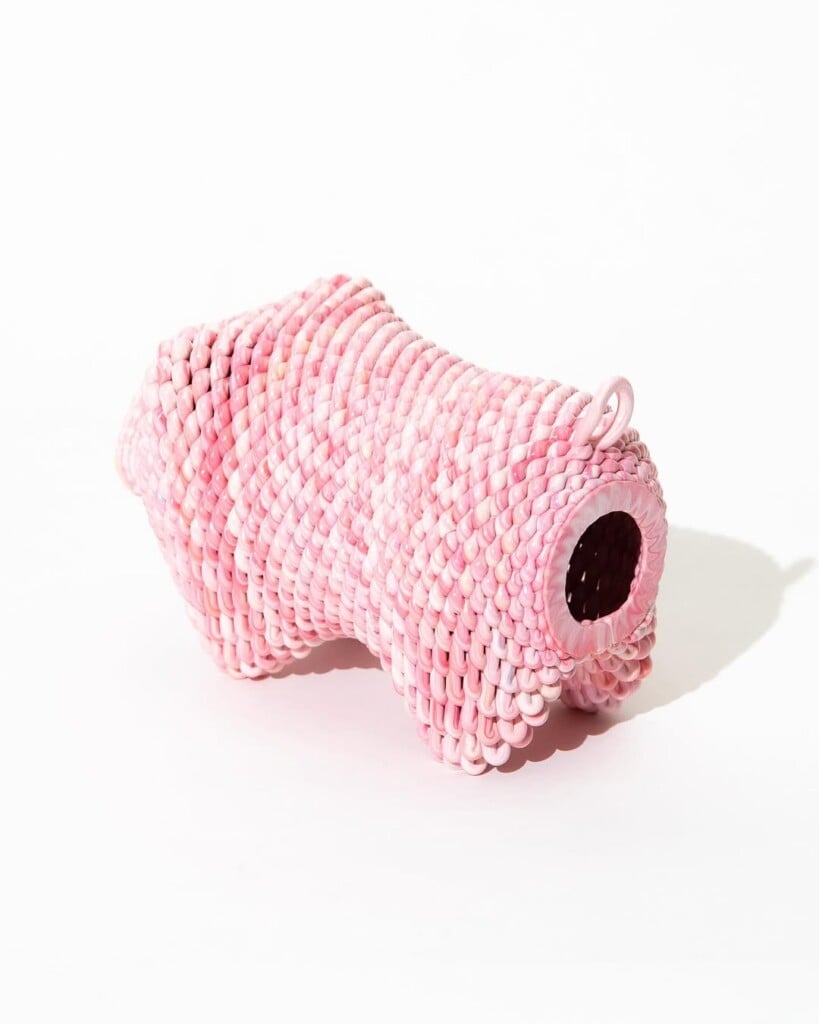
What stands out immediately is the Nosemono series, a collection of objects in which natural elements like stones and branches are combined with 3D-printed structures. It’s not just an aesthetic exercise, but a true dialogue between opposing forms: the roughness of rock blending with the smooth curves of plastic, organic chaos perfectly fitting into computational logic. The result is a curious design that still maintains function, whether it’s a tray, a vase, or a lamp.


The philosophy behind each object is that of a “new craftsmanship”: a system in which the artist also becomes the maker, where the machine doesn’t replace the hand but expands its possibilities. Open-source 3D printers become tools of creative freedom, capable of shaping a custom, personal, and slow form of production. In opposition to the logic of mass production, Shinkogeisha offers a radically human micro-industry.

There’s also a radio with a knitted-texture resin case, a clock that looks like it came out of a post-apocalyptic manga, and a tape dispenser embedded in a stone found by a river. “Already seen” is not in their visual vocabulary. And yet, there is always an emotional tension that makes everything strangely familiar.



Shinkogeisha isn’t just any design studio—it’s a way of thinking about design as a cultural gesture. It proves that craftsmanship isn’t nostalgia, but potential. That technology can be used to create objects with a soul, capable of telling stories, sparking questions, and changing the way we live and consume.