“Every Iranian artist, in one way or another, is political.”
Photographer Shirin Neshat knows this well, opening with these words as she recounts her story during the Art in Exile conference in 2010, organized by TED Conference. Shirin was still a young woman when she moved from Iran to the United States to attend university. She would return home only in 1990, after the Islamic Revolution, finding herself faced with a reality very different from the one she had left years earlier.
It is precisely to confront the shock of these changes that the artist turns to art, the only medium of
expression and protest capable of telling the story of the radical and troubling transformation that Iranian society — and Iranian women in particular — was going through. This is also the only way she knows to escape the feeling of estrangement and to make up for the absence of home, to remain connected to her country.
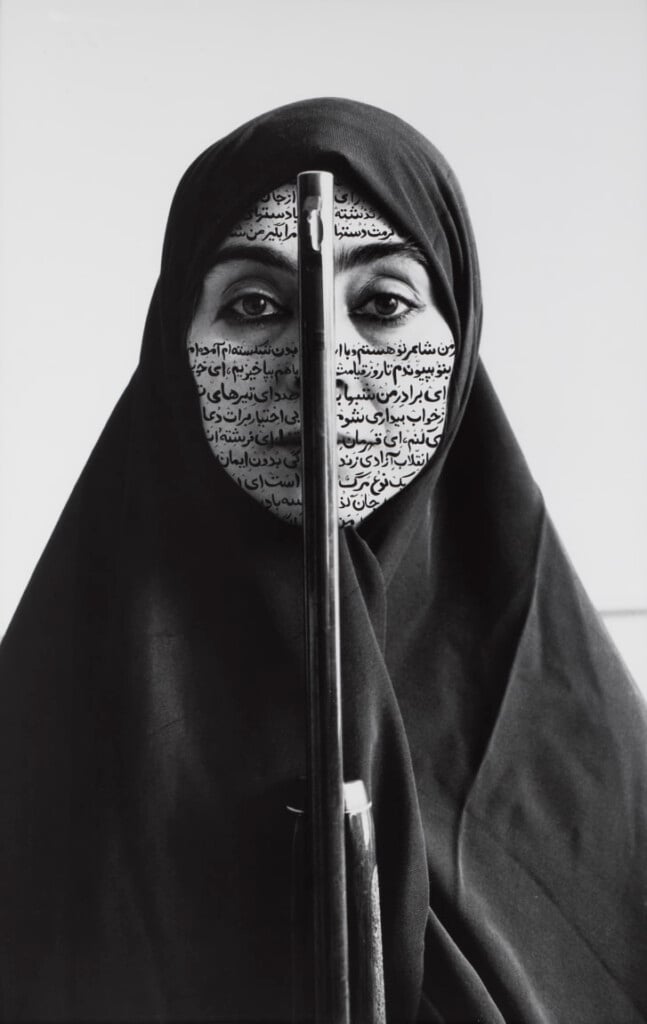
The starting point of her artistic production is photography. One of her most famous and
significant series is Women of Allah (1997), a set of provocative images composed of black-and-white female portraits, marked by a detail that immediately captures the viewer’s gaze: their faces, hands, and feet are covered in Persian script, hand-painted by the artist herself. These are not words from religious texts, but poetic verses written by Iranian women authors.
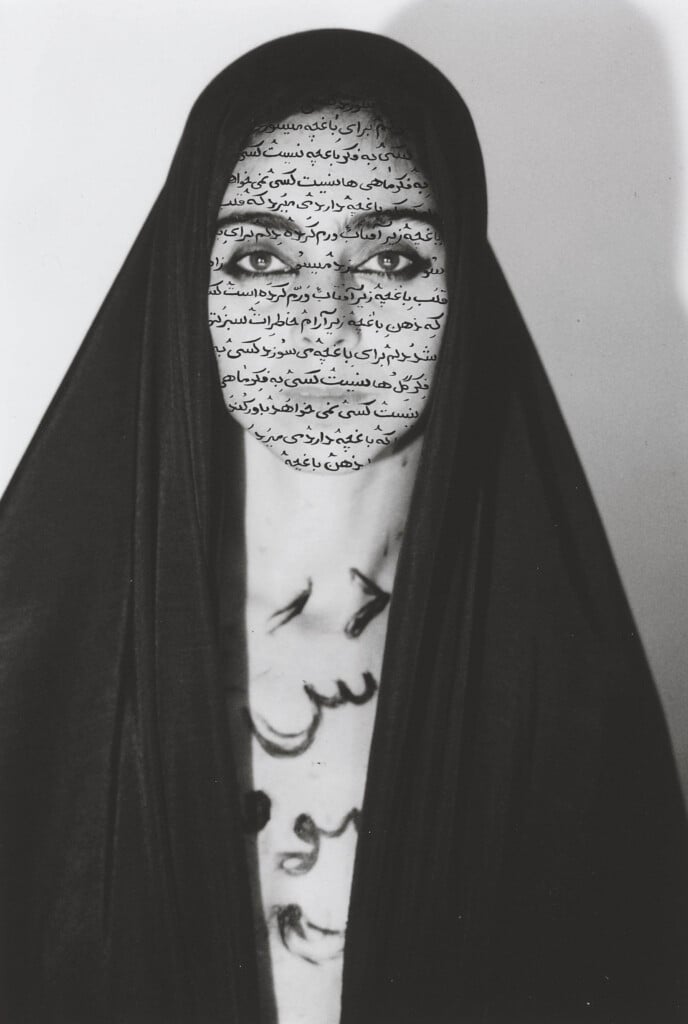
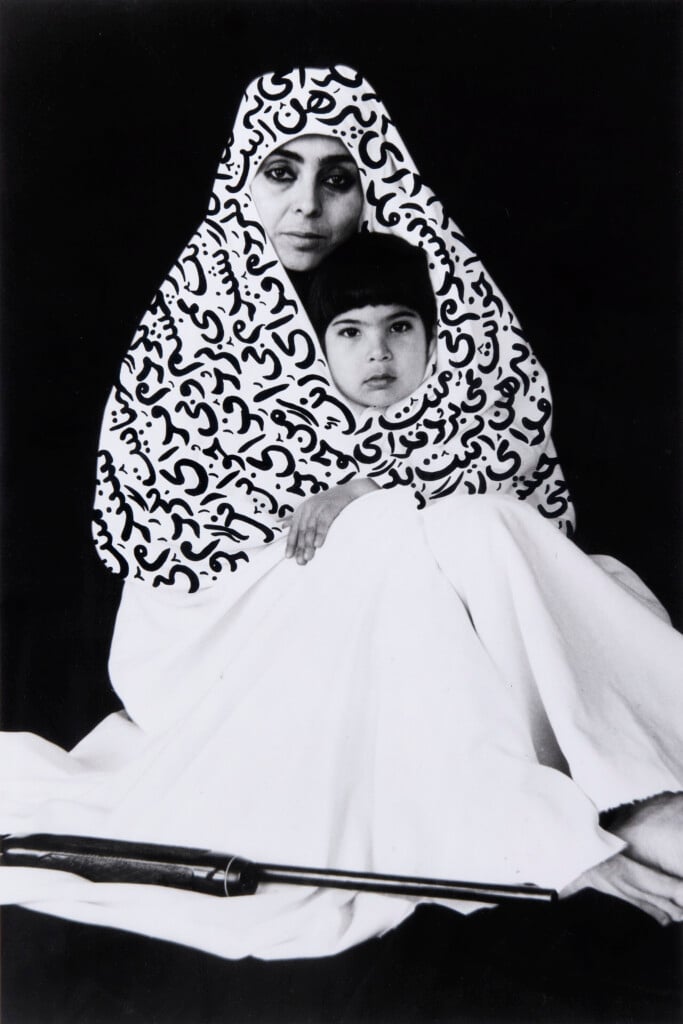
In this way, Shirin Neshat seeks to reclaim the right to speak for these women forced into silence, pushed aside and hidden behind a veil that, in post-revolutionary Iranian society, had become synonymous with imprisonment and erasure. In this way, the photographer gives a voice to those who do not have one but who, in reality, have much to say and tell: through poetic calligraphy, the women in the series are finally able to do so.
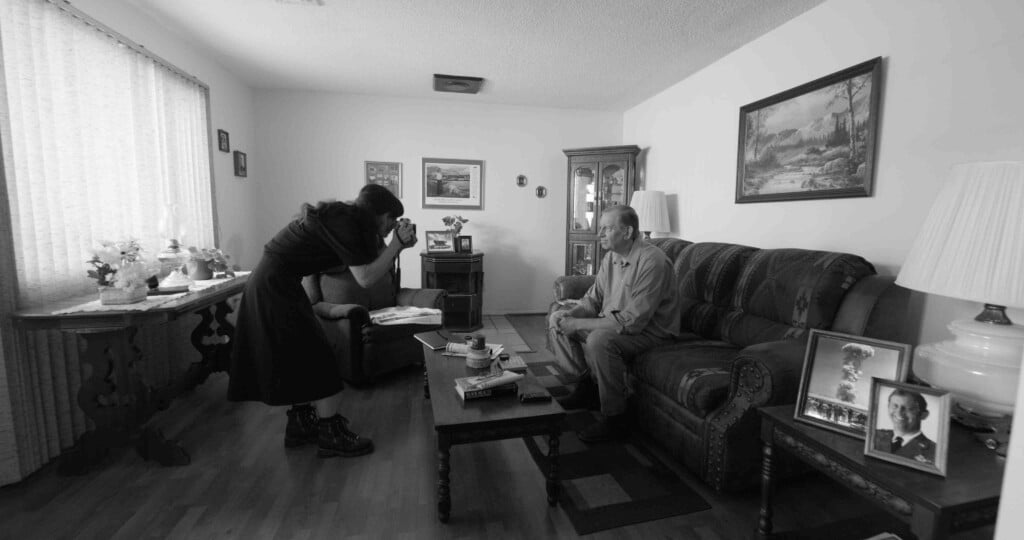
The issue of women would also return in the film that, in 2009 in Venice, earned her the Silver Lion for Best Director: Women Without Men. What deeply shapes Shirin’s life and, consequently, her work is not only the female and political condition of her country of origin. Alongside this, the artist must also grapple with another recurring theme in the lives of those who are forced to leave home and move to an unfamiliar place: exile and the feeling of never truly belonging anywhere.
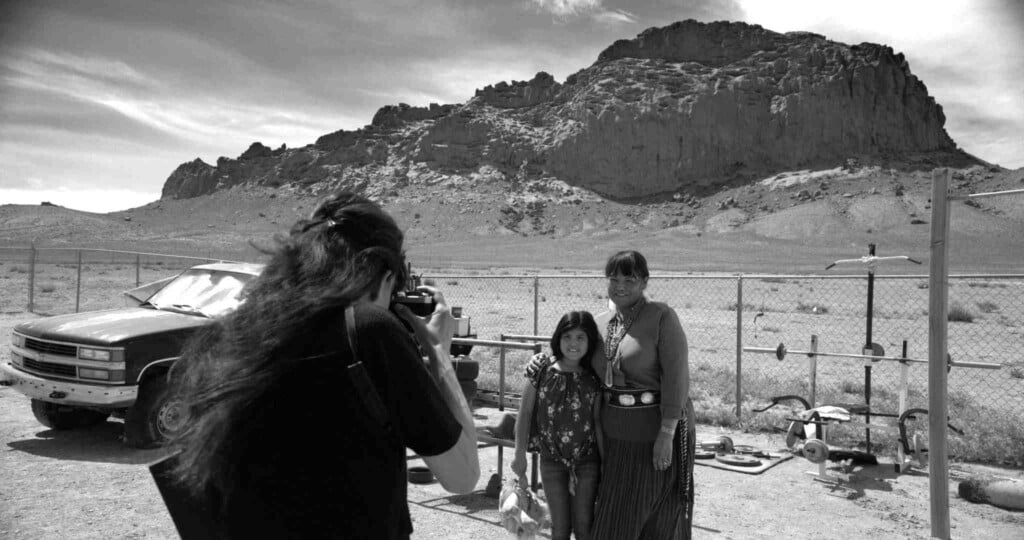
An outsider in America because she is too Iranian, a foreigner in the new Iranian reality because she is too Westernized. And so, the artist struggles to feel at home in both places that make up her existence. This theme returns in the feature film she directed, Land of Dreams (2021), a dystopian and satirical film that explores the themes of dreams and belonging against the backdrop of an increasingly troubling future America. The protagonist — the artist’s alter ego — travels across the United States in her car accompanied by Persian music, a symbol of Shirin’s two halves: her Iranian soul and her American one. It is both a tribute to the country that welcomed her and served as a refuge, and at the same time a criticism of and concern for a government increasingly intent on closing in on itself and pushing foreigners away.
“Living in one land, dreaming in another” — her confession.
This article was produced in collaboration with Luigi Falanga and Gaia Forlin, aka @super8otto.