We were already talking about how irreverent Tony Futura’s pop art was nine years ago. His work emerges from a hybrid space where the global symbols of visual culture are dismantled, recontextualized, and transformed into objects charged with irony, nostalgia, and implicit critique.
Today, that approach has not changed; it has simply evolved, adapting to the times and continuing to engage with an increasingly fast and layered collective imagination.
An artist and designer based in Berlin, Tony Futura builds his visual world starting from highly recognizable elements: logos, mascots, sports icons, childhood characters, packaging, and symbols of American culture. Nike, McDonald’s, the NBA, Mickey Mouse: everything is absorbed and reworked into digital collages, sculptures, and objects that seem to come from a parallel reality, familiar yet slightly unsettling.
His visual language moves between nostalgia and contemporaneity. There is a strong ’90s aesthetic running through his work, made of simple graphics, bold colors, and direct references to street and sports culture, but the final result is never mere revival.
Tony Futura uses these elements to build new, often ironic narratives that question the value and meaning of the images we consume every day.


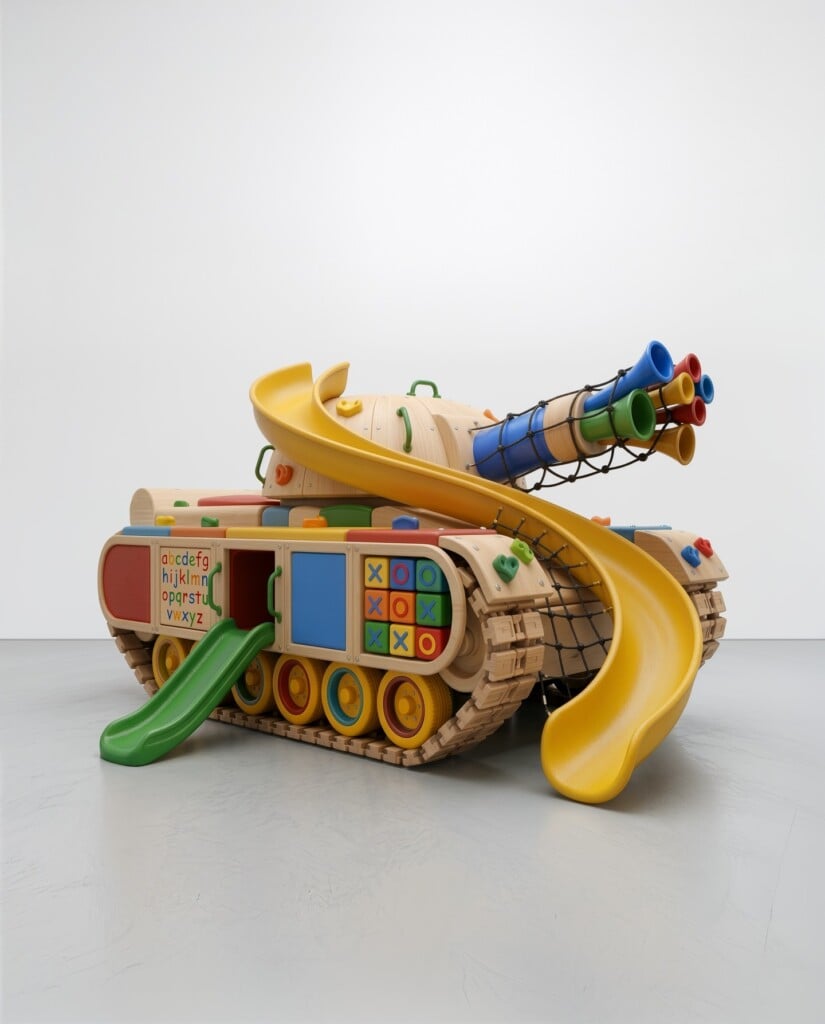
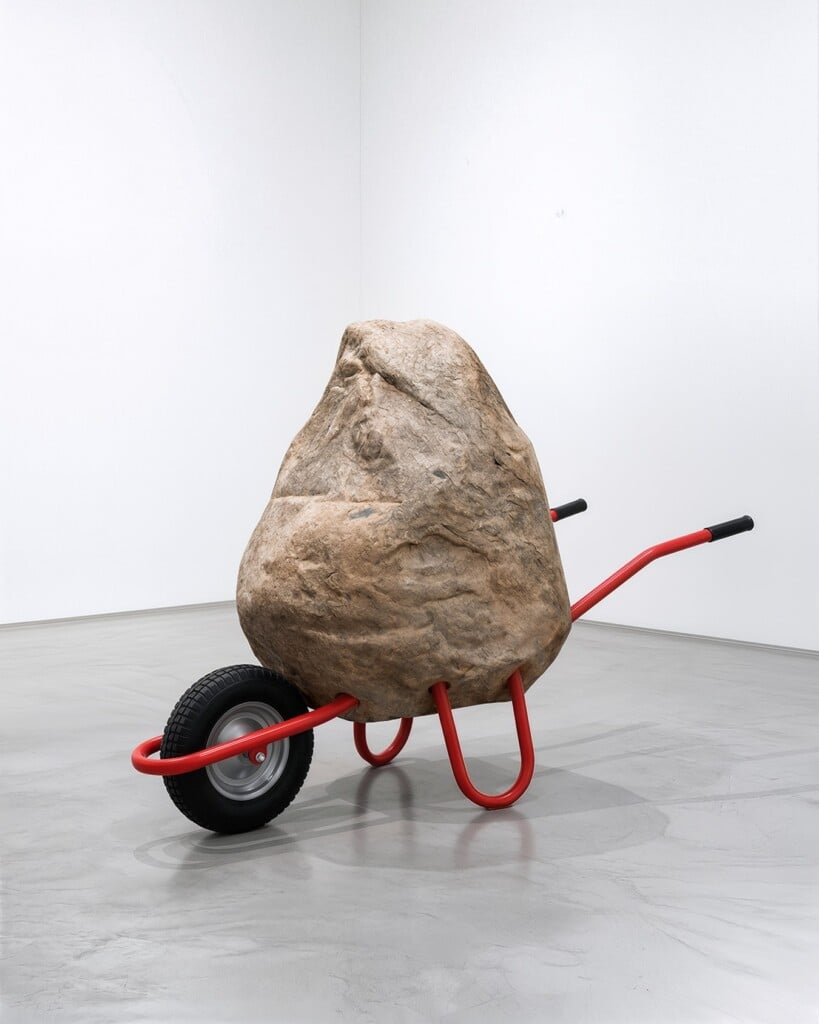
One of the most recognizable features of his work is the ability to transform ordinary objects into almost surreal sculptures. Basketballs become conceptual objects, sneakers turn into symbols, and sports mascots take on new identities. His works often look like industrial products from an alternative universe, where pop culture has been reworked until it becomes something entirely different.


Despite the immediacy of his images, Tony Futura’s work always retains a conceptual dimension. His digital collages, often minimalist, play with unexpected juxtapositions and the symbolic power of objects, creating images that function at once as visual memes, artworks, and commentaries on contemporary culture.


At a time when the global visual imagination is becoming increasingly uniform, Tony Futura manages to build a personal language starting precisely from what is universally recognizable. The result is a body of work that speaks about consumption, nostalgia, and visual identity, doing so with lightness, irony, and a strong aesthetic sensitivity.

His visual universe continues to expand between digital and physical, between art and design, showing how pop culture, when viewed from a different perspective, can still be fertile ground for new forms of contemporary expression.