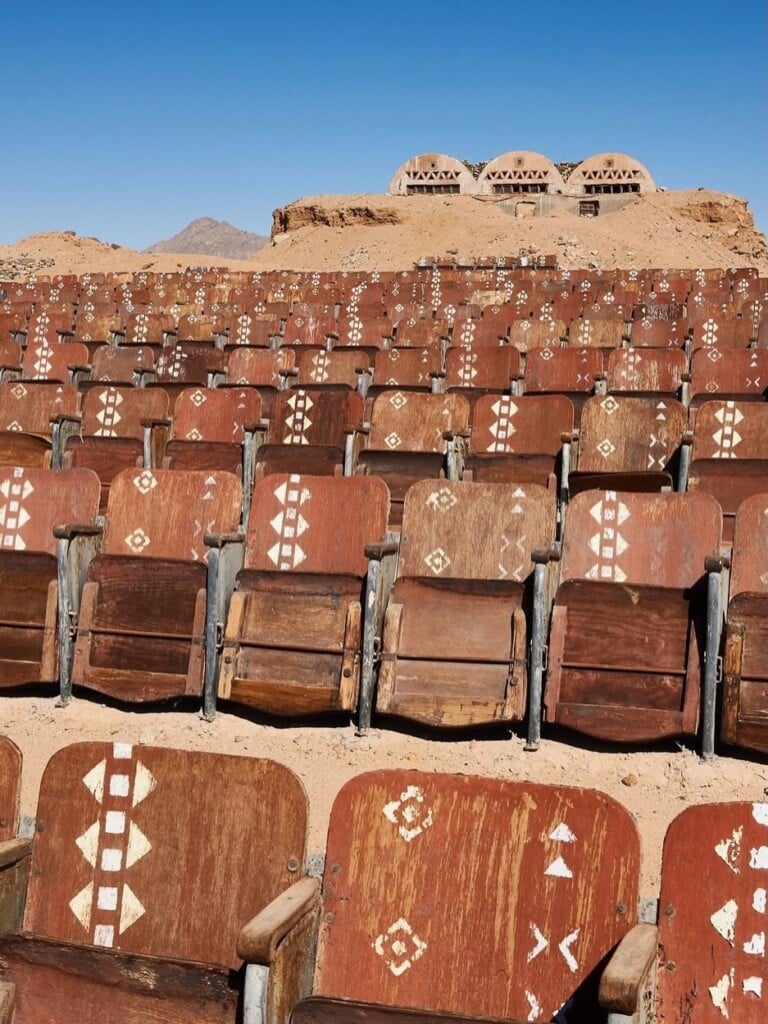
In the heart of the Sinai Desert, far from any city and immersed in a landscape that seems suspended outside of time, there is a place that looks like it came out of a dream, or perhaps from a film that was never screened. Rows of chairs facing nothingness, a structure now worn down by the wind, and all around it only sand, mountains, and silence.
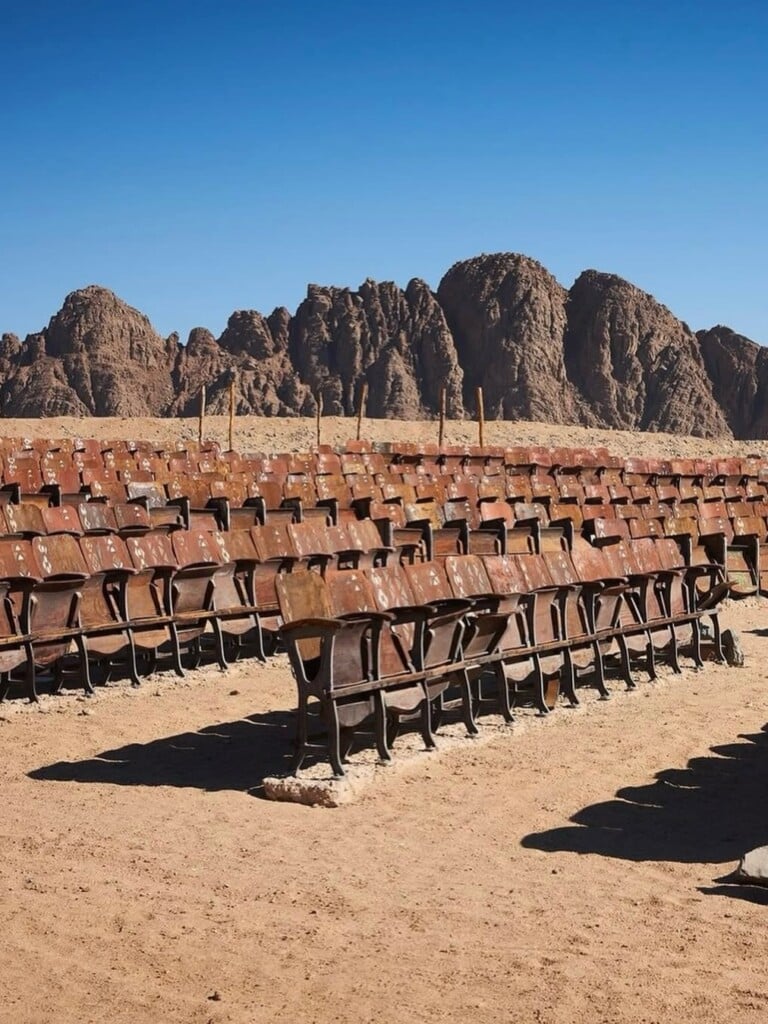
In the late 1990s, a French traveller decided to turn that remote corner of Egypt into a radical cinematic experience. The project was as simple as it was surreal: to build an open-air cinema in the middle of the desert, where the screen would light up beneath a sky full of stars, with no interference, no cities, no distractions.
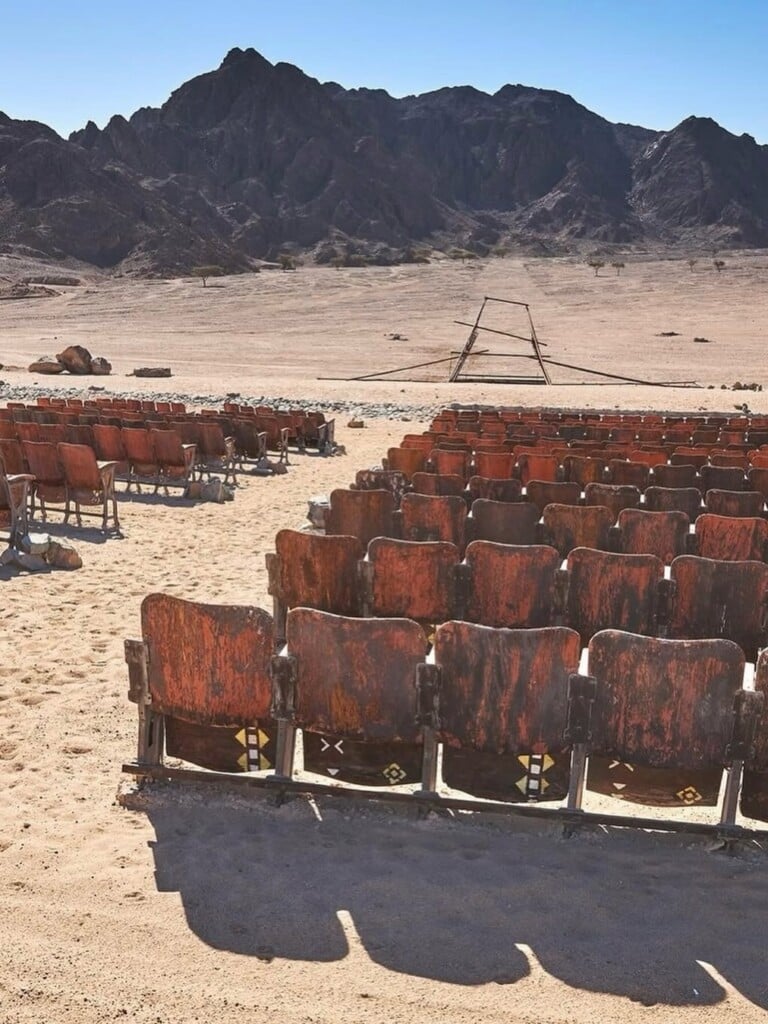
To make it happen, dozens and dozens of chairs, a large screen, and an electric generator were transported there. What emerged was an unlikely movie theatre, nestled among the mountains, designed to offer a completely different way of experiencing cinema, where nature became an integral part of the screening itself. Then came opening night, and that is when the project began to fall apart.
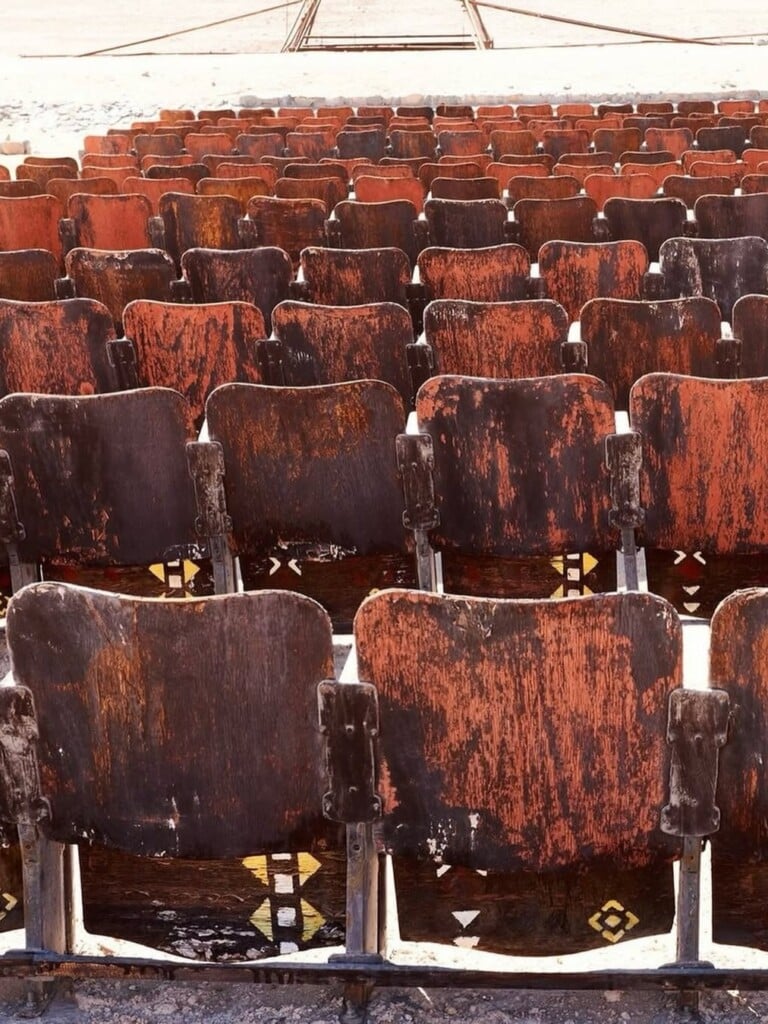
According to the most common versions of the story, the generator stopped working just as everything was ready. Other accounts speak of sabotage or unexpected obstacles. Whatever the truth may be, the result was the same: the film never started. The cinema was abandoned almost immediately.
Since then, the desert has done its work. The wind has worn away the wood, the sand has swallowed the neat rows of chairs, and the screen has remained there, motionless, facing an audience that never arrived. Today, what remains is not just a ruin, but a kind of unintentional installation. A place suspended between utopia and failure, between idea and reality.
A cinema without films, without spectators, where the only possible projection is that of the imagination. And perhaps that is precisely the point: a project born to show images that has itself become an image.