It’s sad but true: summer is over, and no day marks the return to routine quite like September 1st, when offices reopen their doors once again.
It arrives at just the right moment, the one where many of us wonder why we have to sit for 8 hours at an anonymous desk, in a space lit by neon lights, the latest project signed Opposite Office.
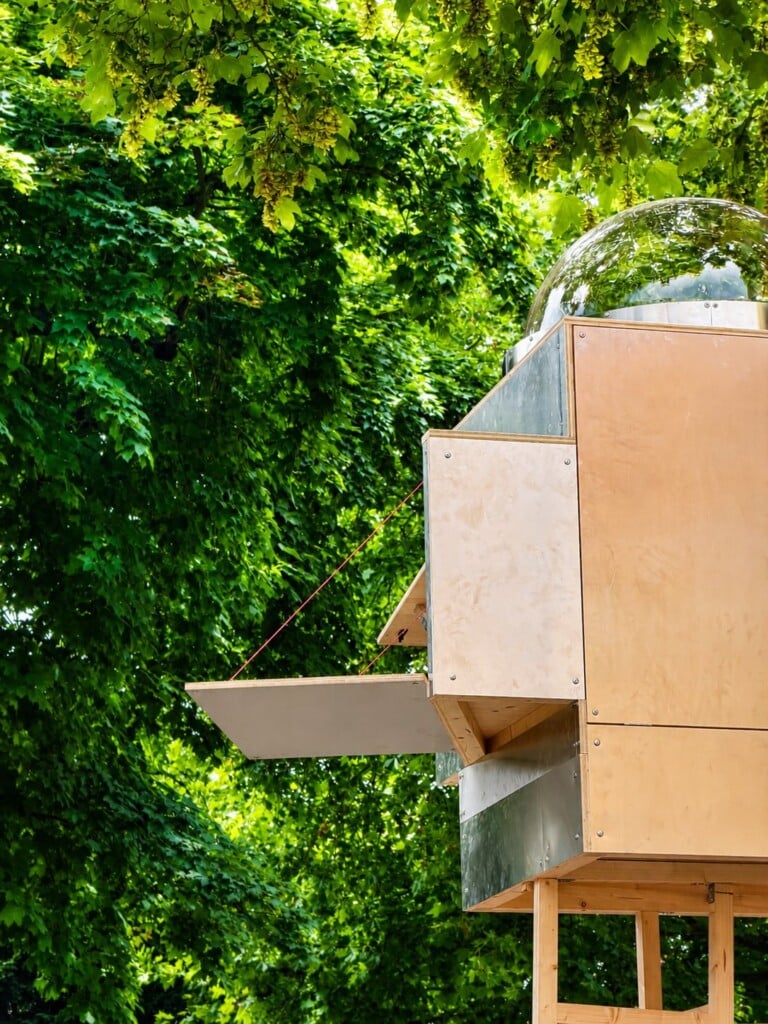
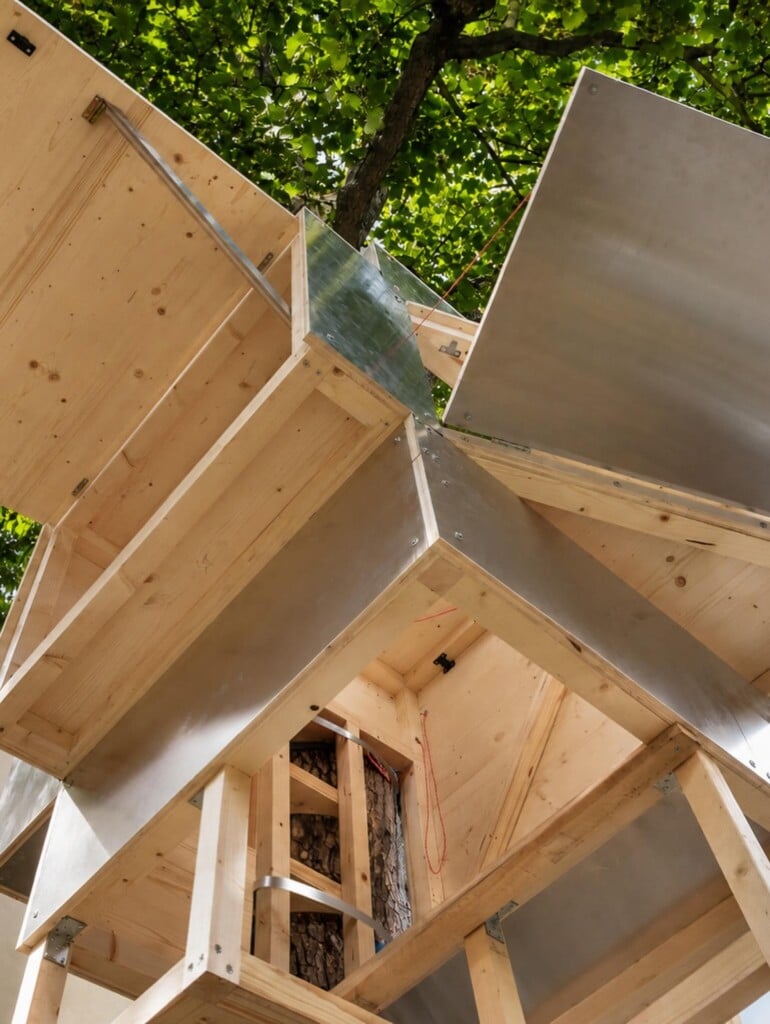
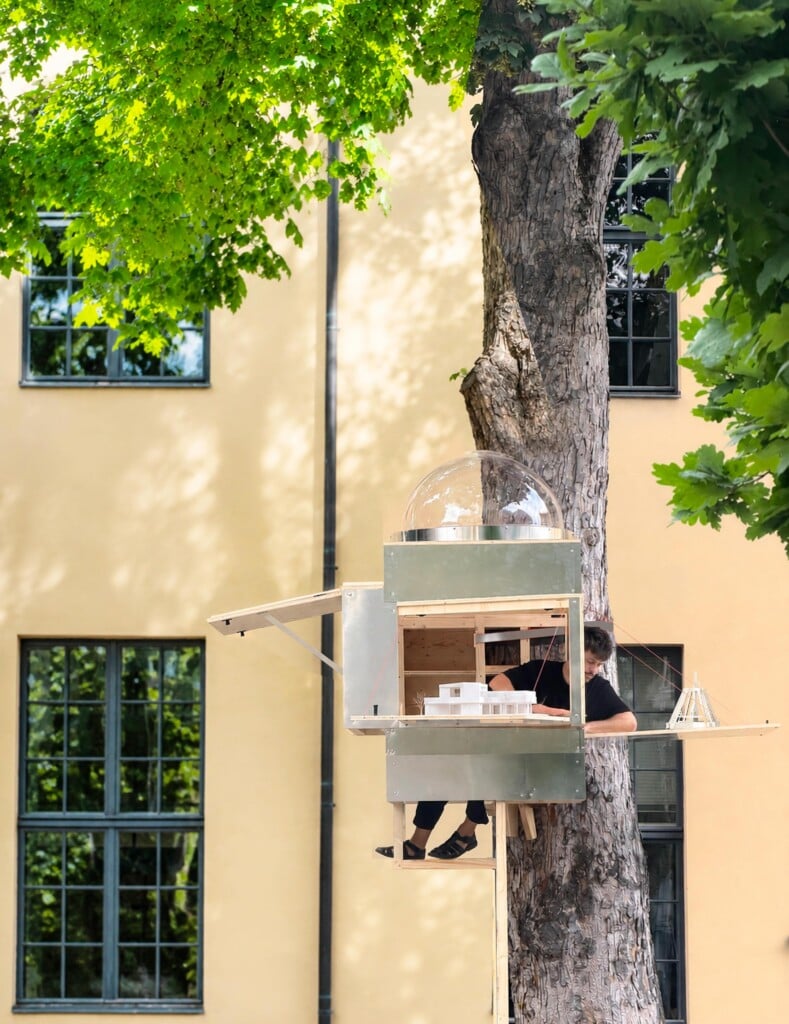
The Berlin-based studio has presented its Baumhaus Office inside the Bauhaus-Universität in Weimar, what we could easily call a treehouse office. Yes, it seems treehouses have gone out of fashion, and now the world of architecture is experimenting with ways to bring everyday work up into the trees.
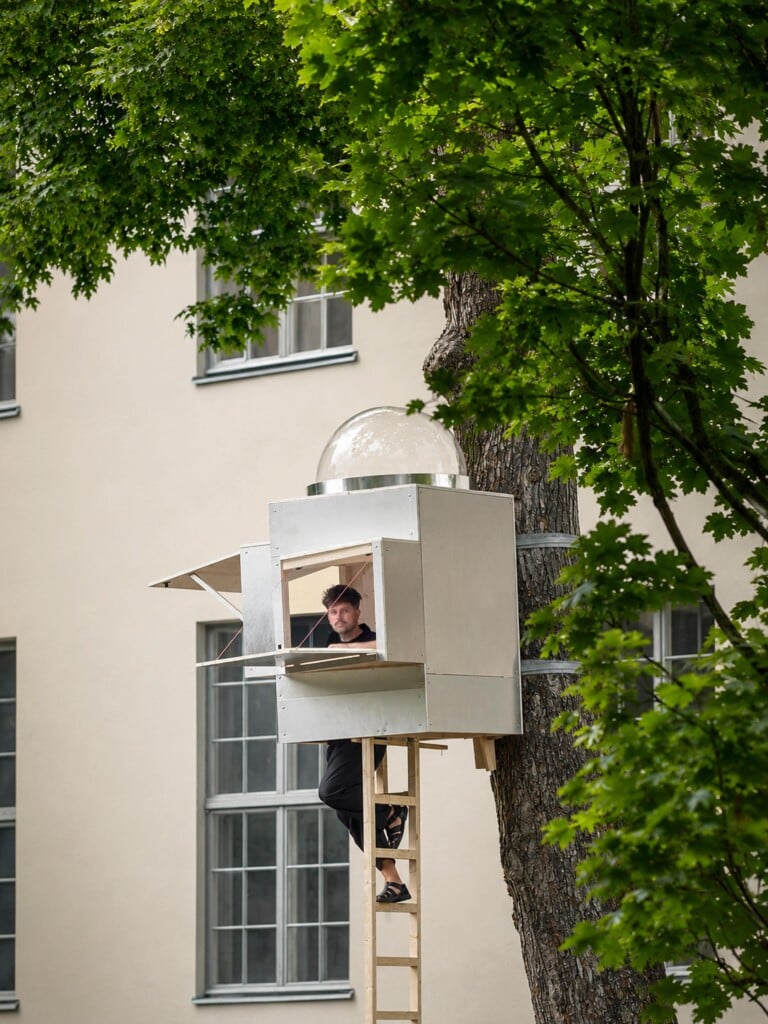
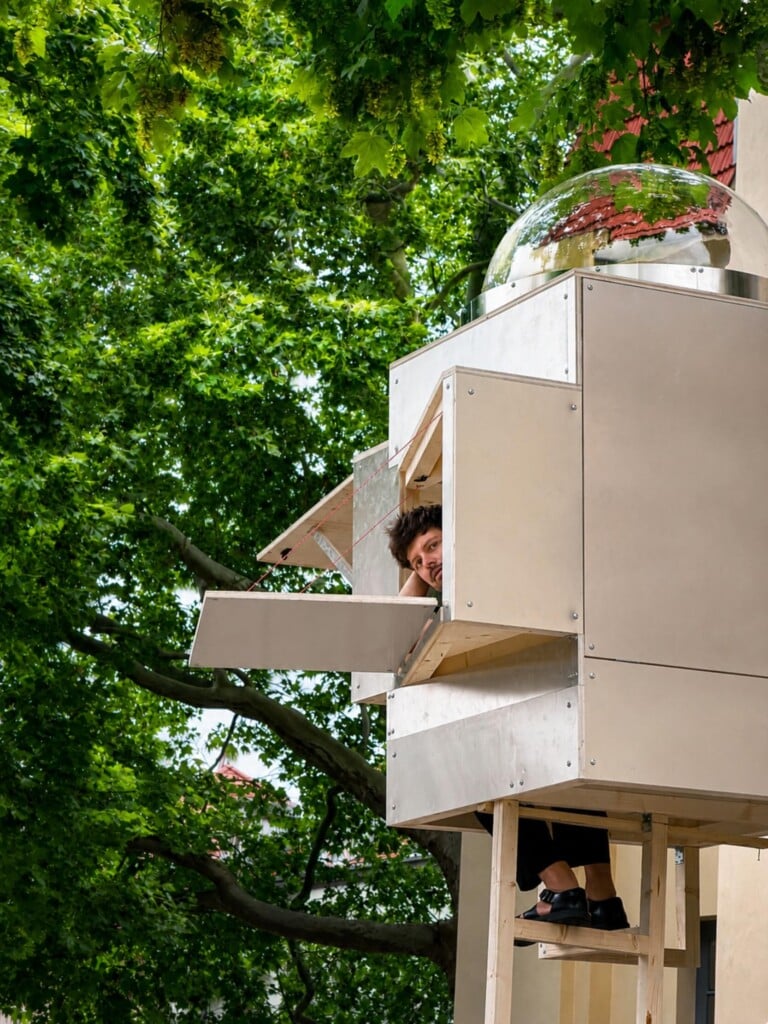
Let’s start with the chosen name, Baumhaus Office. It’s a play on words between Baumhaus (treehouse, in German) and Bauhaus, the name of the university hosting the project. In fact, the chosen tree stands right within the historic campus of the Bauhaus-Universität in Weimar, and is one of the oldest in the city, planted centuries ago by Johann Wolfgang von Goethe himself during one of his stays in Weimar.
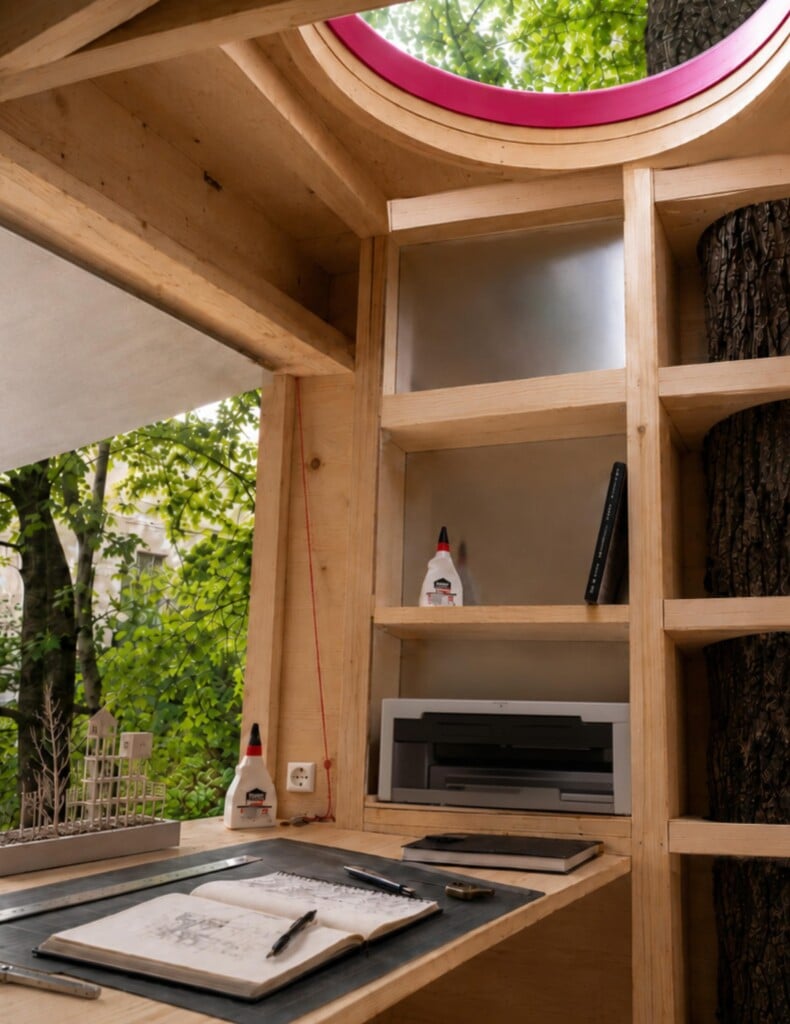
From a technical standpoint, the structure covers about one square meter and is designed to host up to three people at a time, complete with a desk, a workstation, and a small space for model-making (since it was designed by architects, for architects). The Opposite Office team calls it a fully-fledged office, however extremely compact, positioning itself in complete contrast to a world of open-plan offices full of common areas and vast empty spaces.
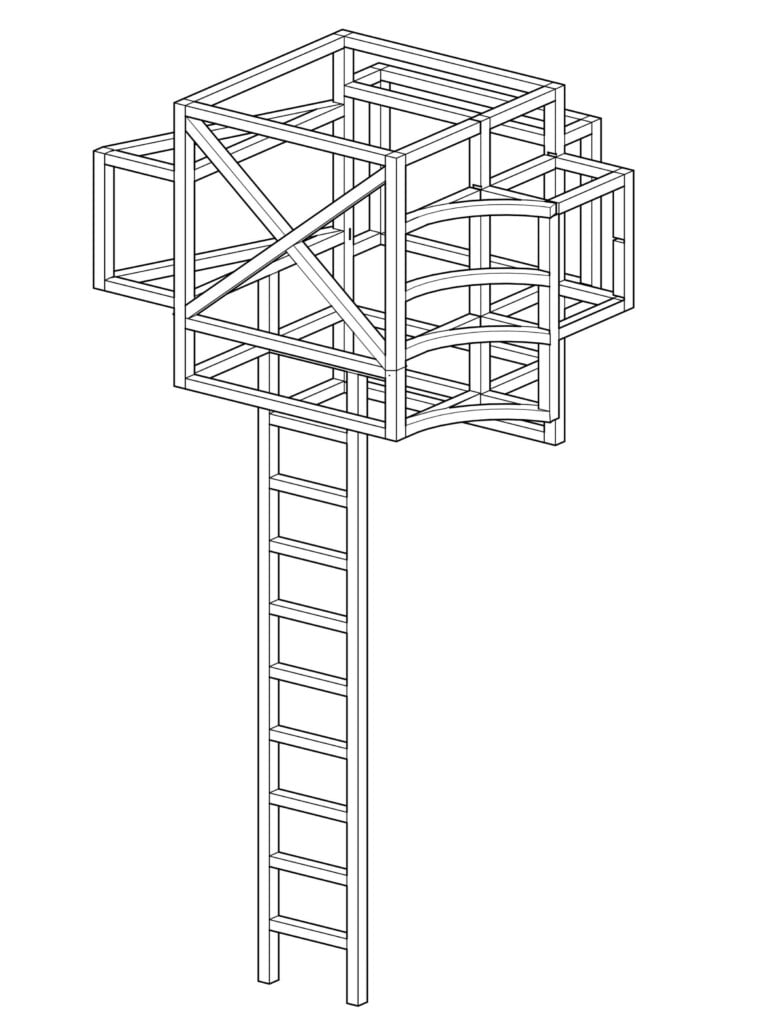
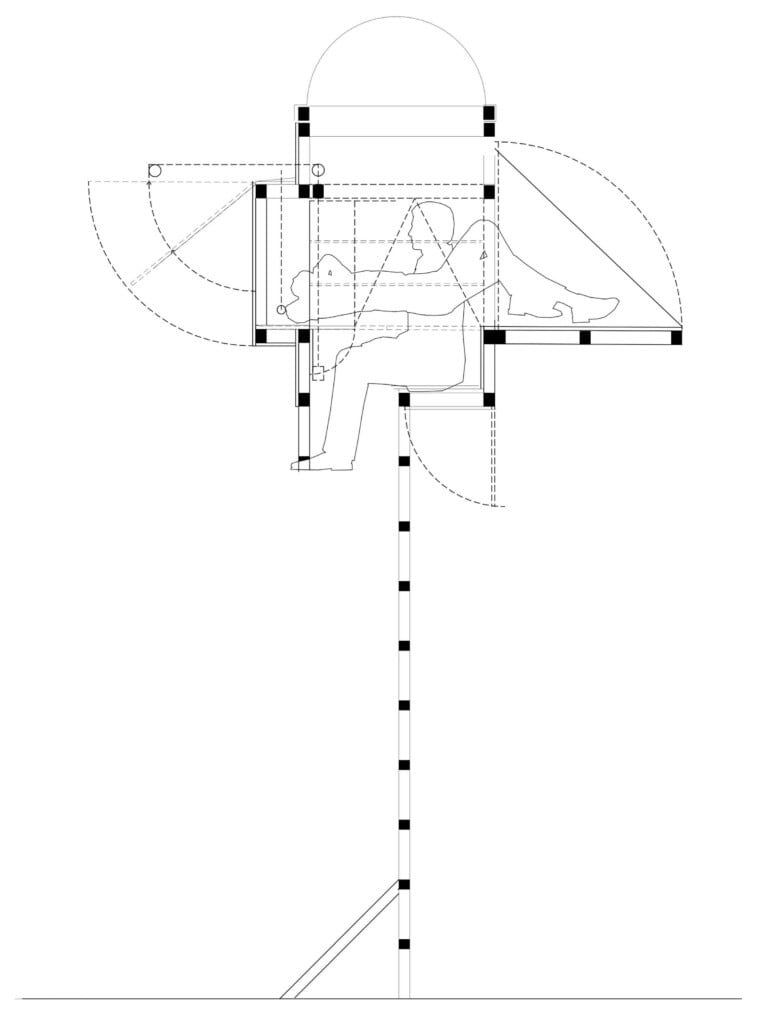
Behind a project that looks more like a university student challenge, though, lies a very concrete line of reasoning about costs. Munich, where Opposite Office is based, is one of the most expensive office real estate markets in Germany. The studio, which develops most of its projects across a variety of international locations anyway, simply asked itself why it should keep covering the costs of a fixed, oversized headquarters. The answer was to move its operational base directly to where the architecture gets made, into public and institutional spaces (in this case, even for free, thanks to the collaboration with the university).
With its Baumhaus Office, the Berlin studio seems to be asking us: how much space do we really need to work? Finding an answer is probably difficult because it comes down to each person’s individual needs, and therefore to subjective factors. We’d probably get a much more consistent answer if the question were: would you rather go back to working shut inside a room, or in a treehouse office?