Born in 1996, Willem de Haan is one of those artists who slip into our everyday spaces like an unexpected breeze: he turns a bench, a subway station — or even an entire canal — into something surreal. A prodigious student who graduated from Arnhem in 2017, de Haan now creates public interventions that play with logic, spatiality, and above all, a subtle and intelligent sense of humor.
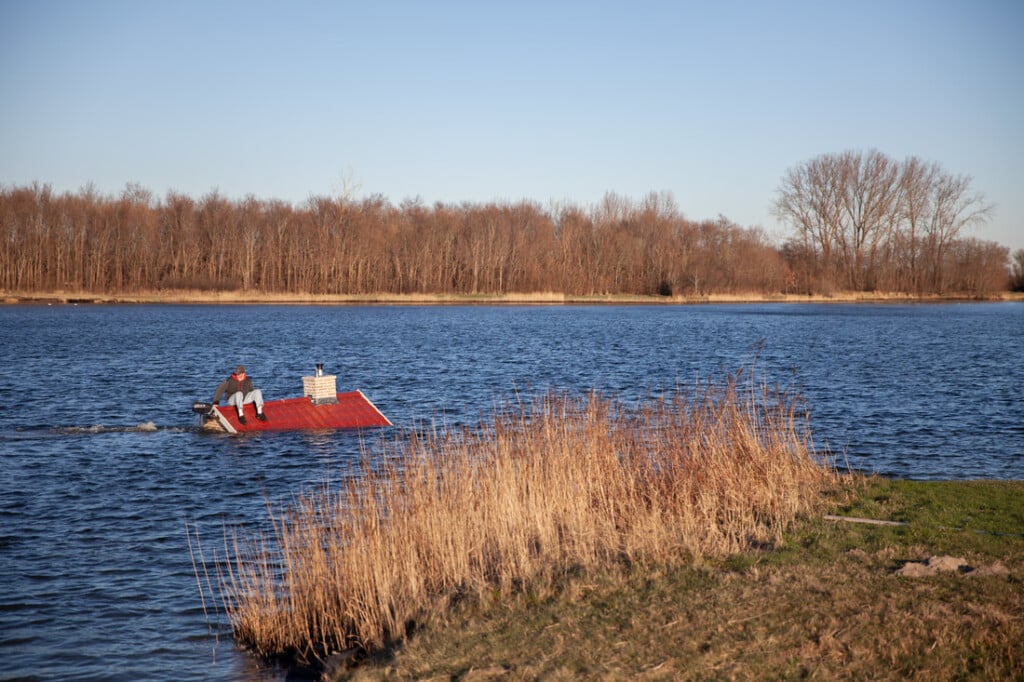
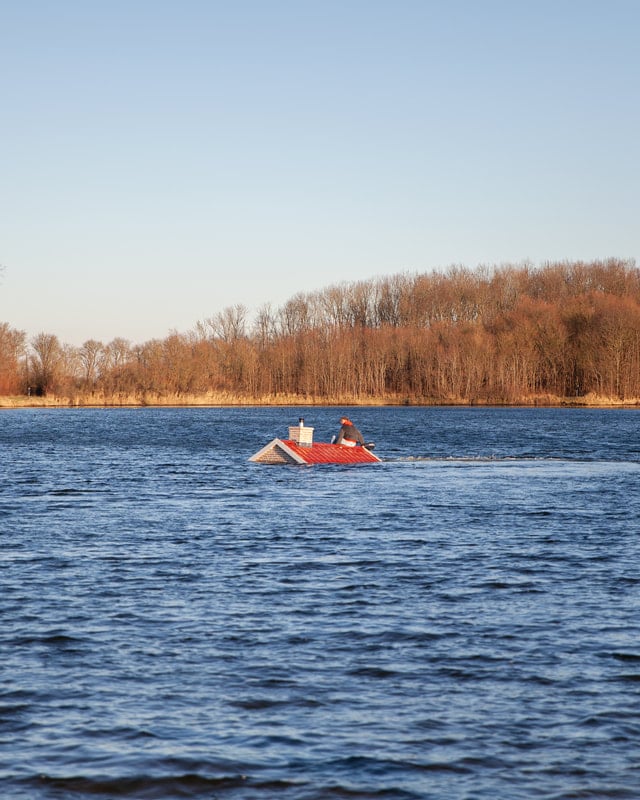
Among all his works, Motor Home is one of the most poetic and peculiar. It’s a small house with a red roof, almost completely submerged in water, yet equipped with an engine that transforms it into a vehicle. A paradoxical image, as if the memory of a flood were turned into a symbol of resilience.
Willem de Haan first presented his Motor Home last year, conceived for the Watersnoodmuseum in Ouwerkerk, a local museum that tells the story of the devastating 1953 flood in the Netherlands.
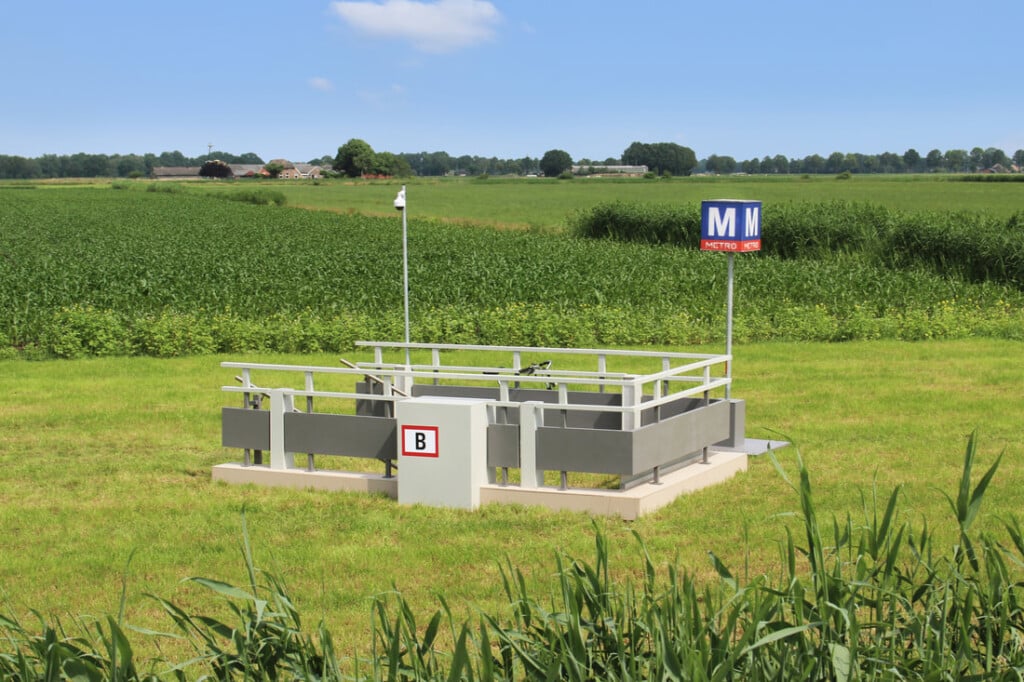
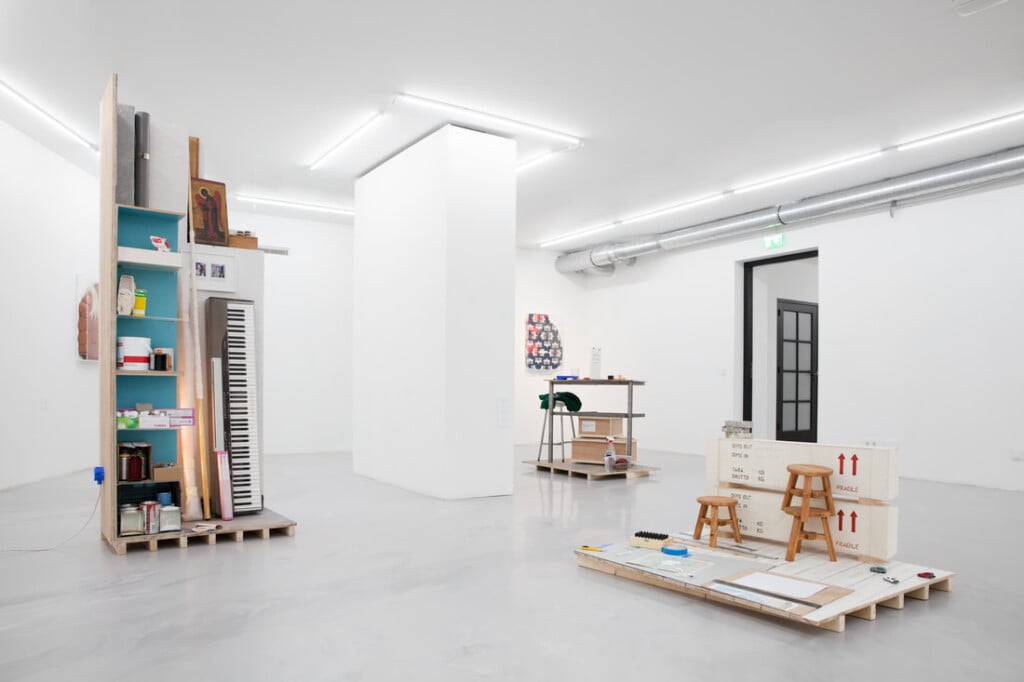
De Haan’s genius lies in form: he takes a familiar object, decontextualizes it, moves it, and inserts it into unexpected settings. Like when he transplanted a subway stop into a meadow or recreated entire art studios inside galleries.
Now we’re talking again about Motor Home because it has reappeared in the canals of the town of Alkmaar for this year’s Triënnale Alkmaar, which focuses on the theme “The Future is Now”. By walking along the main canal, one can spot this tiny house, almost entirely submerged, sitting there — ready to either sink completely or set off toward its next destination — in the hope that Motor Home remains the only house beneath the waterline.