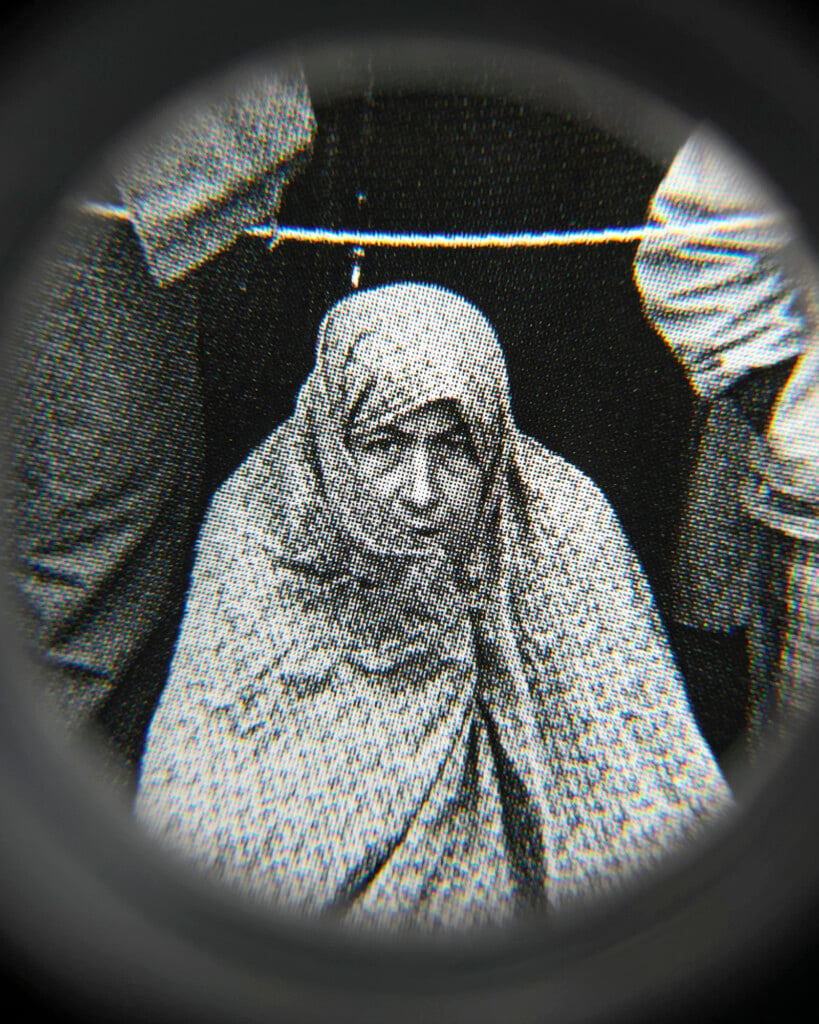
In the work of photographer Amin Yousefi, everything focuses on the detail of a gaze: that of a person who, in the midst of the 1979 Iranian Revolution, notices the presence of a camera and looks straight into the lens. A brief, perhaps instinctive gesture that spans the decades and reaches us, turning the viewer into someone who is, in turn, being watched.
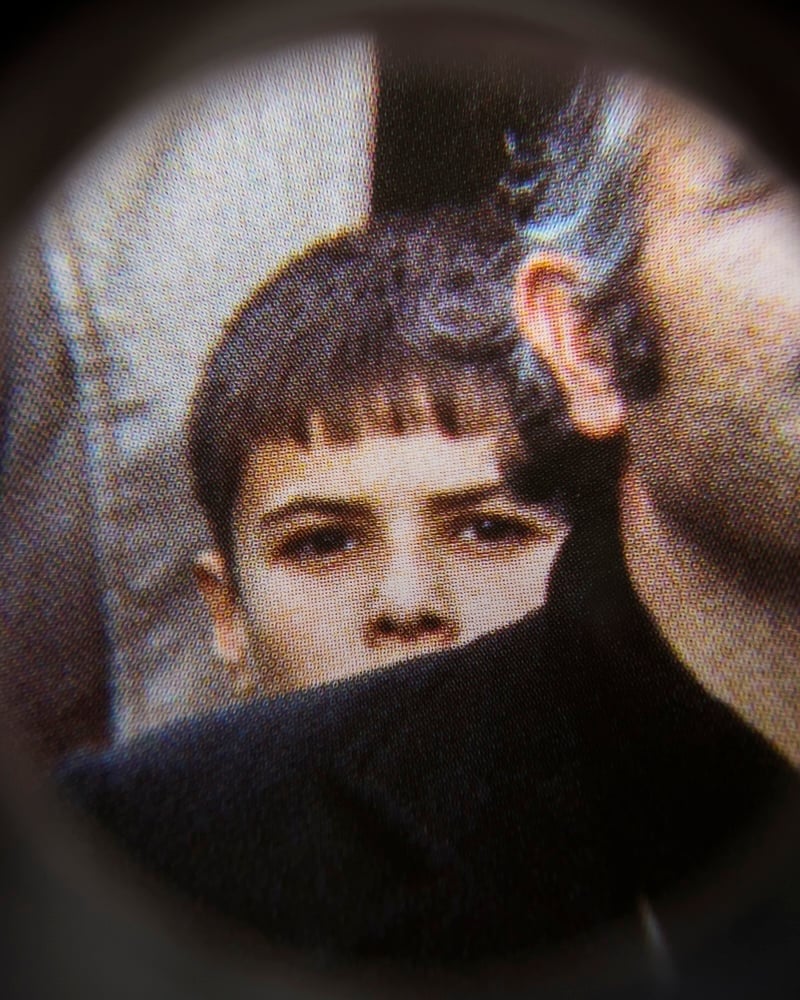
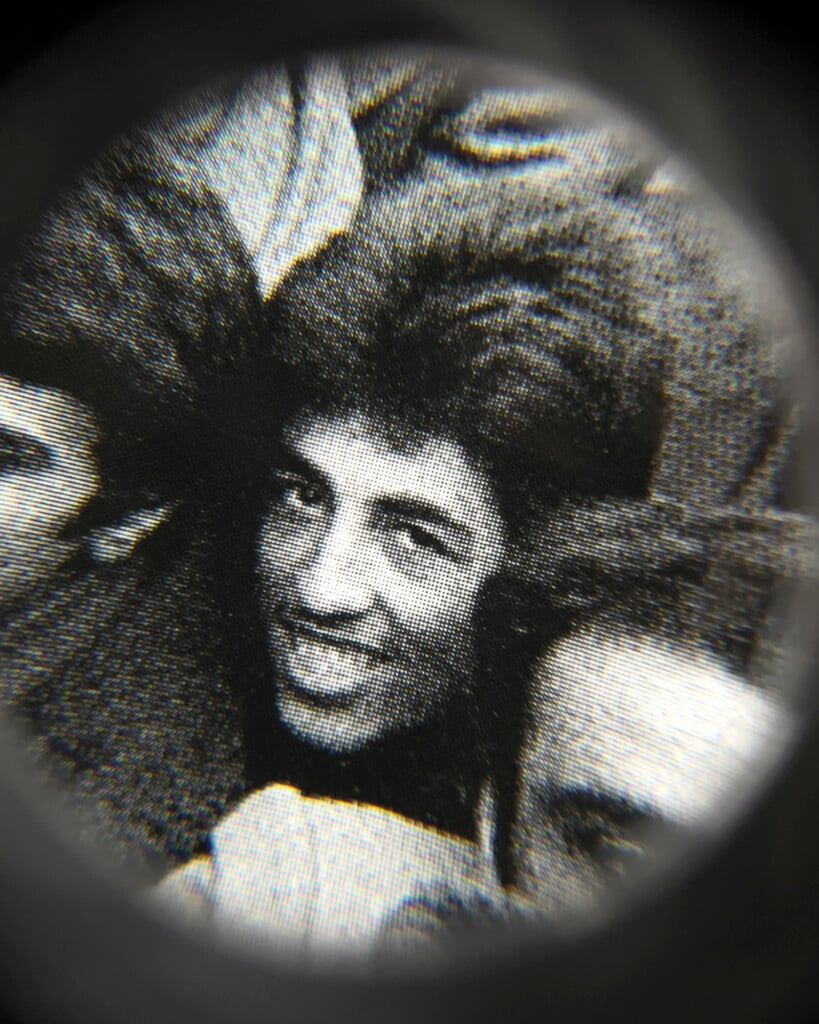
It is from this encounter, taking place almost half a century later, that Eyes Dazzle as They Search for the Truth takes shape, the book with which the Iranian artist and photographer returns to the images of one of the most significant moments in his country’s contemporary history. Published by Luhz Press in 2026, the volume gathers 65 photographic plates and two texts by Yousefi himself and by critic and curator David Campany. Rather than reconstructing the events of the Revolution, the project focuses on what the images retained at the edges of the scene: faces, expressions and presences that seem to want to leave a trace of themselves in history.
The question from which everything starts is simple, but has no definitive answer: why were those people looking at the camera? And above all, what does it mean to find ourselves today on the other side of that gaze?
Searching for a face within history
Born in 1996 in Abadan, in southwestern Iran, and now based in London, Amin Yousefi develops a practice that spans photography, archives, documents and political memory. His interest lies not only in what an image shows, but also in how it is produced, preserved and interpreted over time. In his work, photographs are not fixed testimonies: they can change meaning depending on who looks at them, on what is isolated within them and on the context in which they re-emerge.
The idea behind Eyes Dazzle as They Search for the Truth was born during the pandemic, when Yousefi was working at Ag Gallery in Tehran. With the gallery closed to the public, its activity had concentrated on photographic archives: every week, images and negatives arrived to be sorted and digitized. Among the many prints passing before his eyes, one small-format photograph caught his attention.
It depicted a student assembly in Langarūd, in northern Iran. At first glance it seemed to document a demonstration like many other images from the revolutionary period. It was only by looking at it through a magnifying glass that Yousefi noticed some students staring directly into the lens. Their expressions, he recounts in the text included in the book, suggested a certain unease at the photographer’s presence. That detail kept coming back to him: if those people had noticed the camera, were they aware of being photographed? Were they trying to communicate something, or were they simply reacting to an unfamiliar presence? And how many other photographs of the Revolution held similar gazes, left unseen for years?
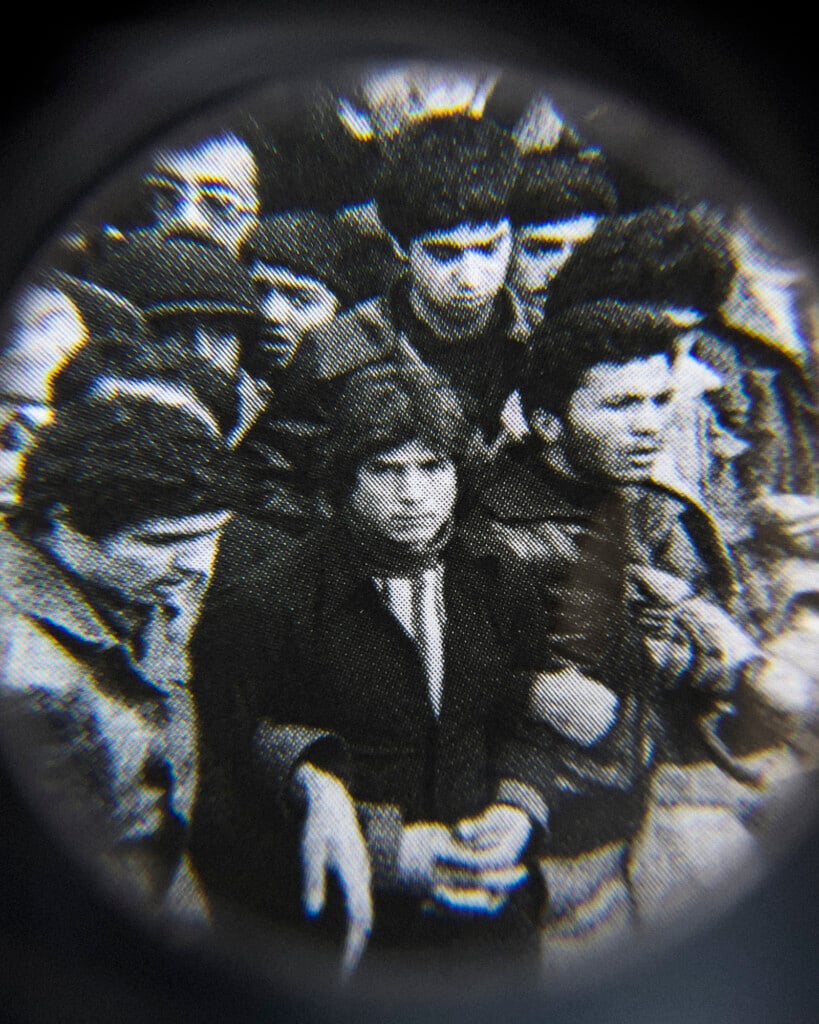
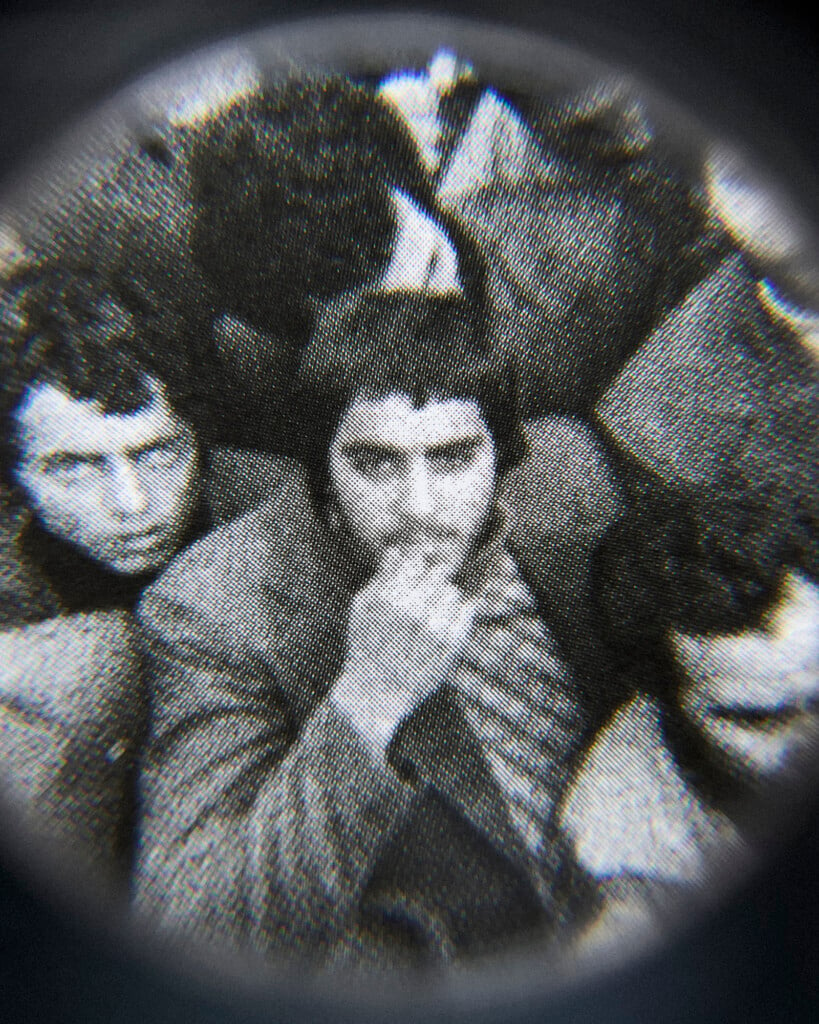
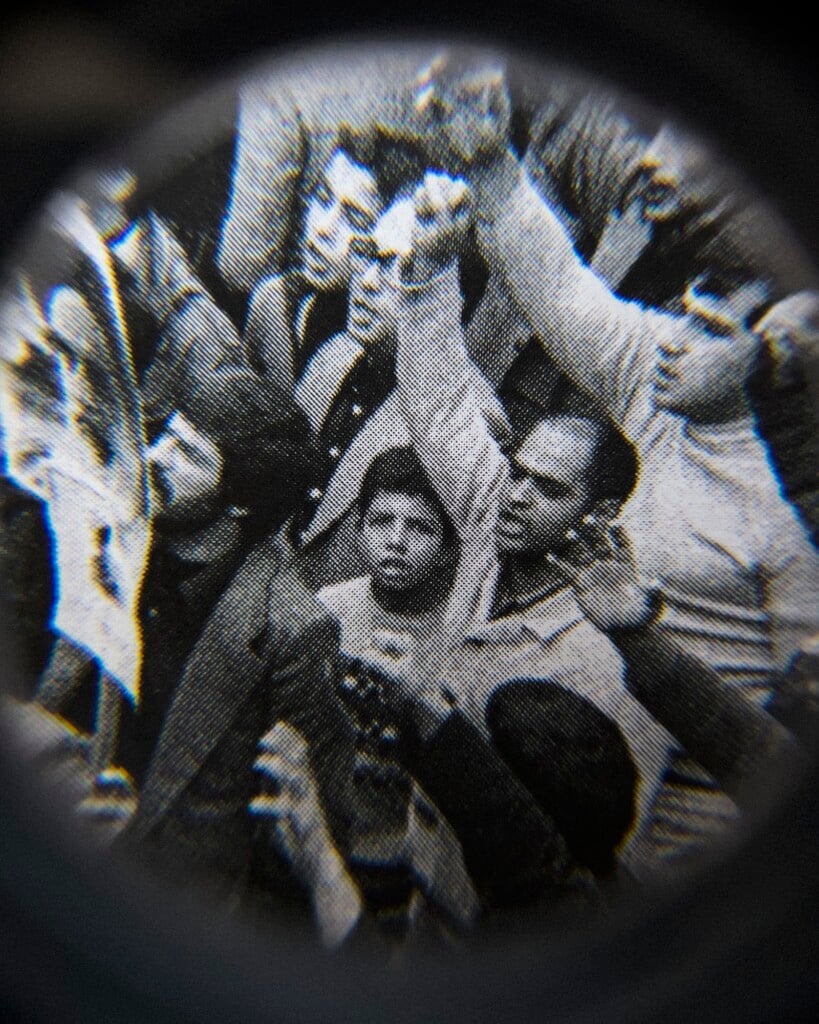
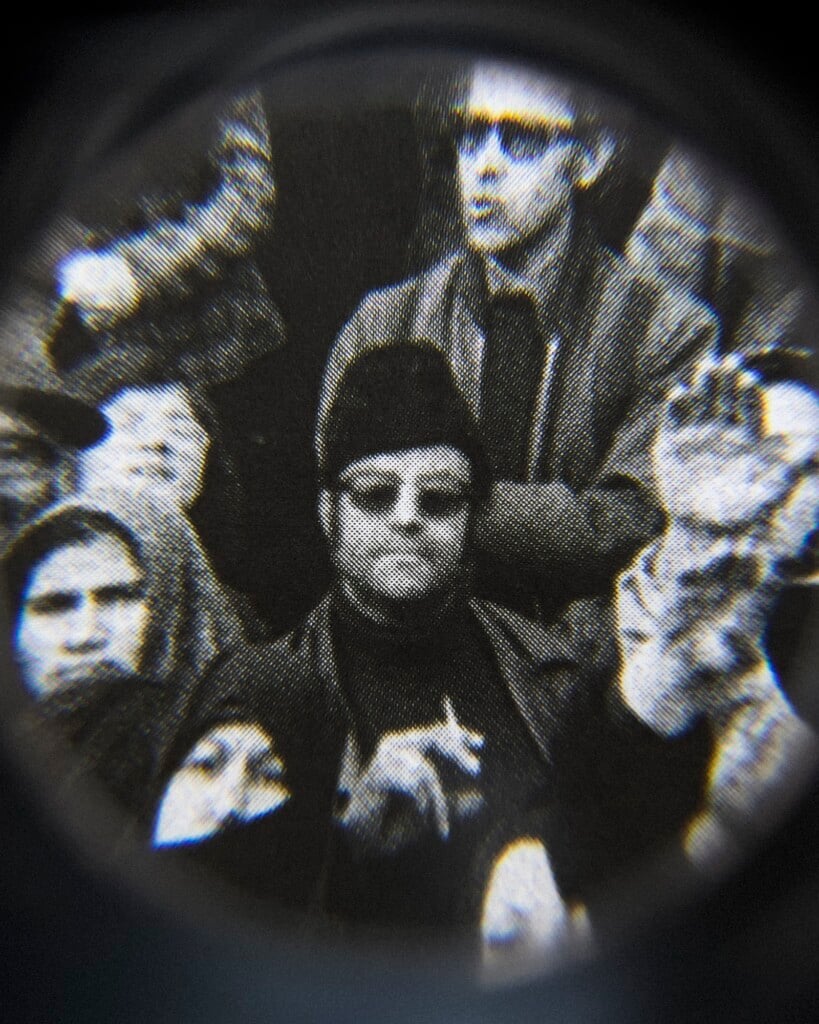
These questions launched a search through photobooks dedicated to the events of 1978 and 1979. Yousefi reworked existing images, looking among the crowd for people who seemed to notice the lens. He did not reconstruct the scene or produce new portraits in the traditional sense of the term: he selected details from photographs taken by others, bringing them back to the center of attention. The result is a second crowd, made up of individuals who occupied a marginal space in the original images. Separated from the context that surrounded them, they become protagonists of an encounter with those who look today.
A lens that changes the point of view
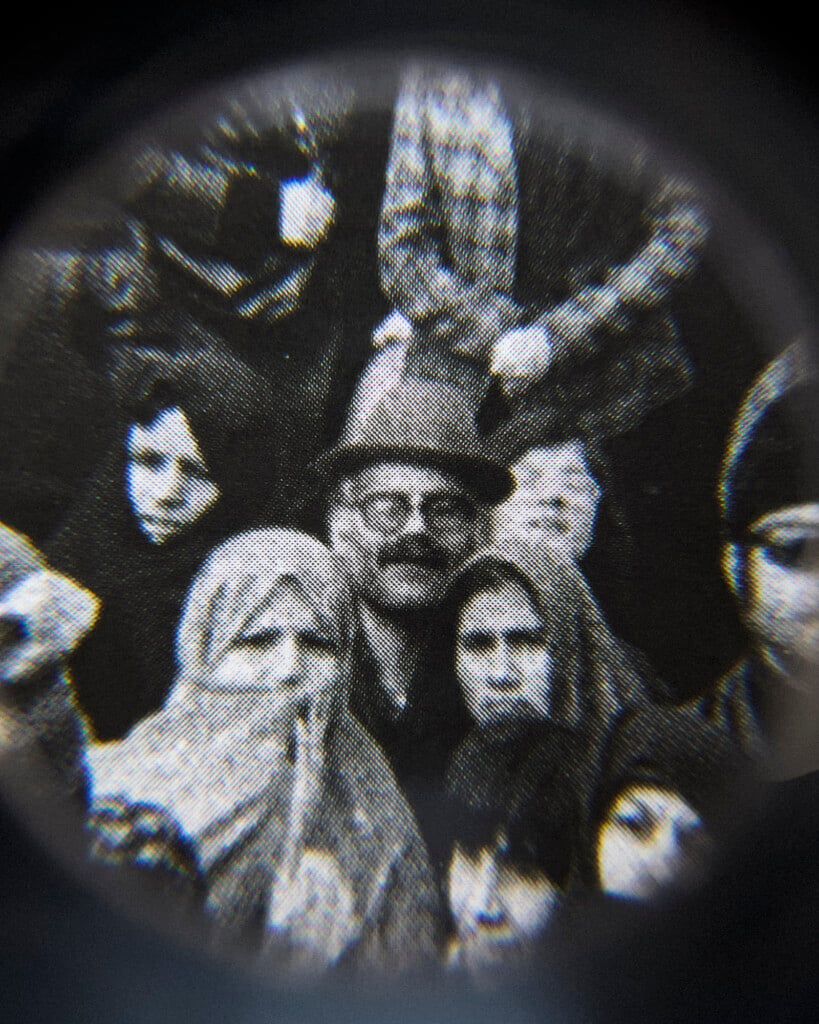
The choice to work with a magnifying glass is not merely a visual solution. It is the device through which Yousefi builds the entire project. The images are photographed through an optical lens, which creates a curved halo around the faces and reveals the typographic texture of the printed photographs. The result preserves the imperfections of the original material, but transforms them into a new surface, suspended between historical document and contemporary portrait.
In this process, temporal distance is not erased: it becomes an integral part of the image. The faces belong to a moment that Yousefi did not experience firsthand, yet his work creates a contact with people who would otherwise have remained anonymous within a collective documentation. Magnification allows us to recognize them, but not to truly know them. We can observe their expressions, try to interpret them, imagine what was happening at that precise instant. We cannot know for certain what they were thinking.
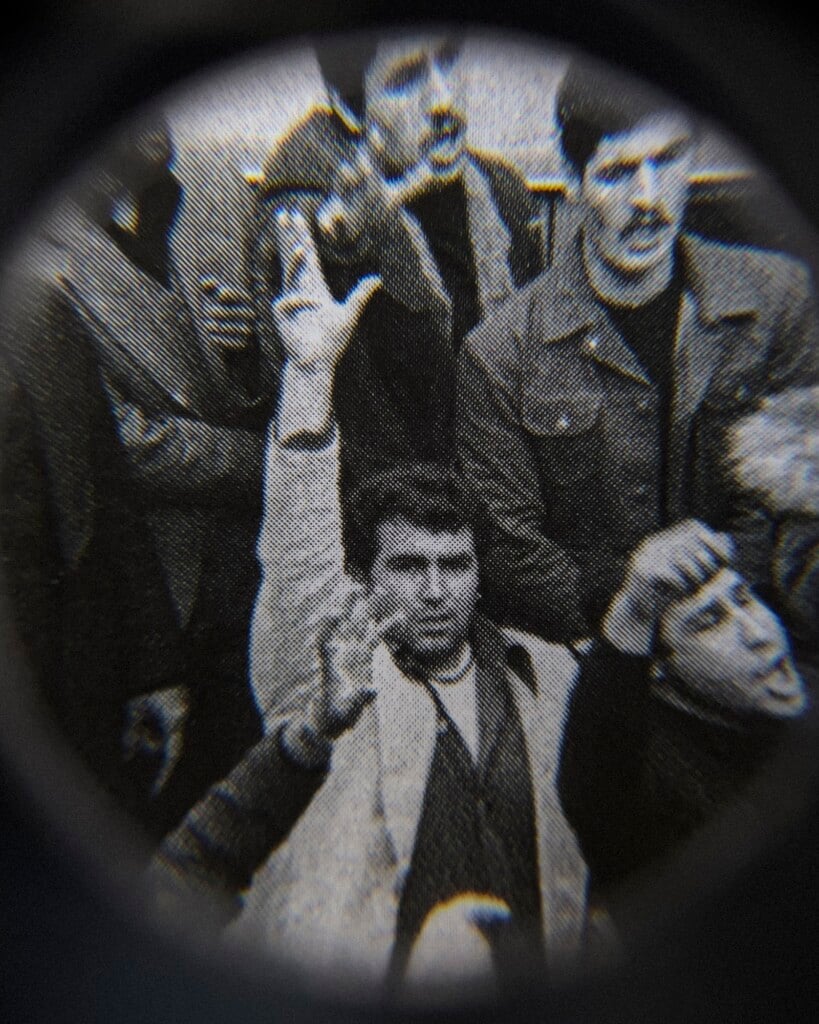
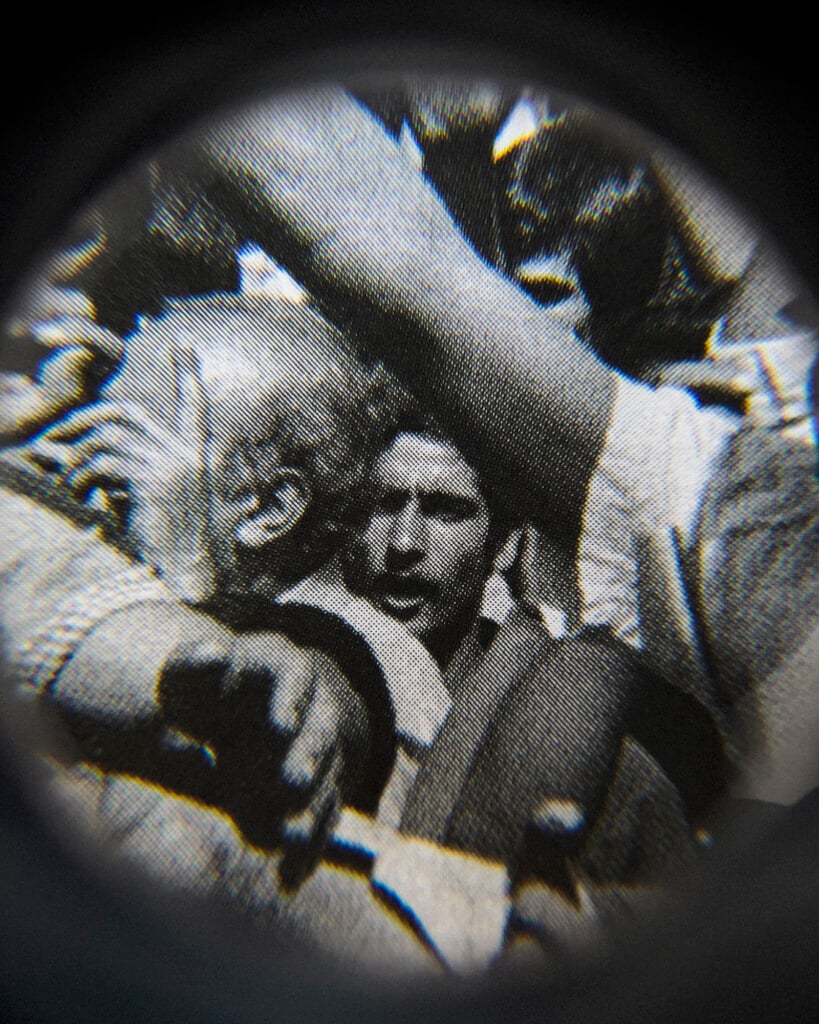
It is precisely here that the project avoids turning into a mere exercise in nostalgia. Amin Yousefi does not claim to deliver a definitive truth through the rediscovered faces. On the contrary, he shows how easy it is to attribute meanings to an image when we lack all the information needed to understand it. In the text accompanying the book, the artist imagines that those people may have wished to be remembered, to leave a trace of their passage through history. But he also acknowledges the impossibility of establishing whether their gazes expressed enthusiasm, worry, shame or regret. Every interpretation remains a hypothesis. The work therefore moves along a delicate boundary: on one side, photography as testimony to something that really happened; on the other, the awareness that no image can fully contain a human experience.
When looking becomes a form of control
There is another element running through Eyes Dazzle as They Search for the Truth: the relationship between photography and power. Photographing a demonstration means documenting an event, but it also means making visible people who, in certain political contexts, could be identified, surveilled or controlled. A gaze turned toward the lens thus takes on a dual nature. It can be an attempt to enter the image, to take part in the construction of one’s own public memory. But it can also be a reaction to the awareness of being observed and recorded. The same camera that preserves a presence can become the instrument through which that presence is exposed.
Yousefi relates this ambiguity to the distance that normally separates the photographer from the photographed. In a traditional image, it is the photographer who chooses where to stand, what to include in the frame and when to press the button. Here, instead, the people portrayed seem to interrupt this hierarchy: by looking directly into the lens, they call the attention of whoever is behind the camera and, decades later, of whoever looks at the photograph.
The book as an encounter between eras
Eyes Dazzle as They Search for the Truth brings this research into an editorial object of 148 pages, with 65 photographic plates. The volume is edited and designed by Zoe Lemelson and includes two texts: one by Yousefi and A Stack of Decades, by David Campany. Campany’s text expands the reflection on time and on the capacity of photographs to produce meanings that go beyond the intentions of those who took them. An image can outlive the moment of its making, move through different contexts and meet viewers the original photographer could never have imagined. In this sense, the book does not merely collect a photographic project, but creates the conditions for those gazes to keep circulating.
The choice of the book is particularly significant, because unlike a continuous stream of news or digital images, a photobook imposes a rhythm, invites us to linger and allows the photographs to be encountered more than once. Each page becomes a new opportunity to return to a face and ask what it is communicating to us, while knowing that the answer will never be complete.
In Yousefi’s practice, the archive is a place where images can be put back into circulation, questioned and read from different perspectives. His work was selected for Foam Talent in 2024 and received recognition such as the Royal Photographic Society award for achievement in fine art photography under 30, in the same year. In Eyes Dazzle as They Search for the Truth, however, the most important result is the way historical images come back to question us. Those faces offer no explanations of the Revolution, nor can they tell on their own everything that happened afterwards. They remind us, rather, that behind every great event there are individuals with experiences, doubts and expectations that rarely find space in the official narrative of history.